
Introduction
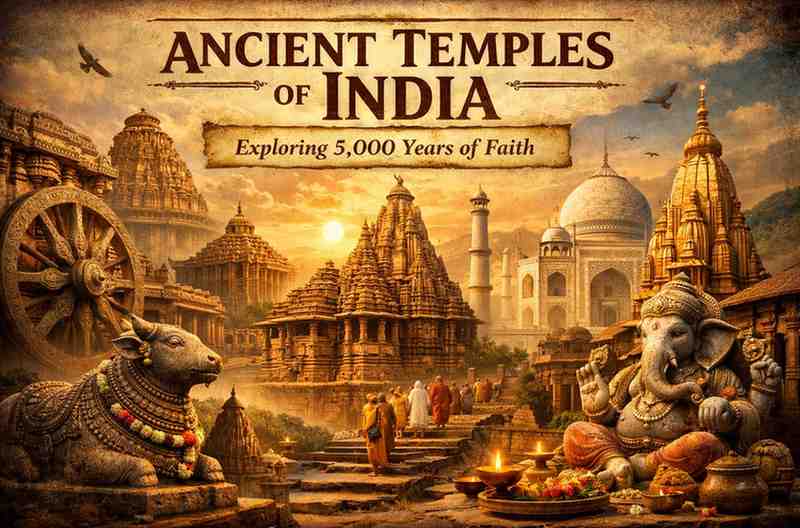
The ancient temples of India stand as timeless monuments of faith, spirituality, and architectural genius. Spanning over 5,000 years, these sacred structures have nurtured religious traditions and cultural heritage, drawing millions of devotees and historians alike.
Early Beginnings of Indian Temples
Roots in the Harappan Civilization
The origins of temple worship can be traced back to the Indus Valley Civilization, where early shrines and ritualistic sites laid the foundation for temple culture.
Transition to Rock-Cut and Structural Temples
From humble rock shelters to elaborate stone constructions, Indian temples evolved through the centuries, influenced by emerging religious and artistic sensibilities.
Architectural Evolution Through the Ages
Gupta Period: The Dawn of Classical Temple Architecture
The Gupta era marked the beginning of sophisticated temple designs characterized by charming sanctums and ornate pillars.
Contributions of Pallava, Chola, Rashtrakuta, and Hoysala Dynasties
Each dynasty enriched temple architecture with unique styles: the Dravida, Nagara, and Vesara forms, exhibiting intricate carvings, grand gopurams, and complex layouts.
Marvels of Rock-Cut Monolithic Temples
Iconic temples like the Kailasa temple at Ellora illustrate monumental craftsmanship, carved out of a single rock and narrating epics through stone.
Legendary Ancient Temples and Their Stories
Mundeshwari Devi Temple: The Oldest Functional Temple
Dated over 1,300 years old, this temple represents one of India’s oldest surviving sanctuaries still in worship.
Dwarkadhish Temple: The Dwelling of Lord Krishna
This temple connects deeply with Mahabharata legends and Krishna’s eternal legacy.
Brihadeeswara Temple: The Grandeur of Chola Architecture
Built by Raja Raja Chola, it is a masterpiece showcasing Tamil Nadu’s temple art and engineering.
Shore Temple, Mahabalipuram: A UNESCO World Heritage Site
An emblem of Pallava dynasty’s architectural innovation with beautiful seaside views.
Sthaneshwar Mahadev Temple: Rooted in Antiquity
Believed to be over 5,000 years old, this temple is tied to early Vedic traditions and enduring faith.
Cultural and Religious Significance
Centers of Faith, Learning, and Pilgrimage
Temples have historically served not only as places of worship but as hubs of philosophical learning and cultural gatherings.
Miracles, Legends, and Spiritual Experiences
Countless stories of divine interventions and miracles enrich the aura surrounding these sacred sites.
Temples as Art Galleries and Storytellers
Sculptures, inscriptions, and frescoes narrate mythological tales and vibrant cultural histories.
Modern-Day Relevance and Preservation
Also Read ;- 5 Prominent Gurdwaras in Saskatchewan
Heritage Sites and Pilgrimage Destinations
India’s ancient temples continue attracting global visitors seeking spiritual and cultural experiences.
Conservation and Archaeological Efforts
Preserving these temples is crucial for maintaining India’s historical continuity and cultural identity.
Conclusion
The ancient temples of India encapsulate the nation’s spiritual essence and architectural excellence, symbolizing 5,000 years of unwavering faith and cultural heritage. These magnificent monuments continue to inspire devotion and awe through ages.
Early Beginnings of Indian Temples
Roots in the Harappan Civilization
The earliest traces of temple-like structures date back to the Indus Valley Civilization (circa 3300–1300 BCE), where archaeological findings in Mohenjo-Daro and Harappa reveal altars and sanctified platforms suggesting ritualistic worship. Though not classical temples as known today, these early constructions laid a spiritual foundation that informed subsequent temple architecture. The worship of deities linked to fertility, nature, and proto-Shiva figures during this era signifies a deep-rooted faith that evolved with time.
Transition to Rock-Cut and Structural Temples
By the first millennium BCE, Indian religious practices began shifting towards more formalized worship structures, evolving from open-air altars to rock-cut caves. The Ajanta and Ellora caves, carved between the 2nd century BCE and 6th century CE, mark significant milestones, combining religious function with artistic expression. These caves served as monastic retreats that eventually inspired the grandeur of fully constructed temples using stone and brick.
Architectural Evolution Through the Ages
Also Read :- 6 Prominent Gurdwaras in Quebec: Montreal, Laval & LaSalle Focus
Gupta Period: The Dawn of Classical Temple Architecture
The Gupta Empire (circa 4th to 6th century CE) witnessed the development of the classical Hindu temple style. Gupta temples were typically small but focused on refined proportions, with a square sanctum (garbhagriha), a circumambulatory path, and a pyramidal tower (shikhara). This period saw the formal codification of temple layouts rooted in Vastu Shastra, combining religious symbolism with spatial harmony.
Contributions of Pallava, Chola, Rashtrakuta, and Hoysala Dynasties
The South Indian dynasties propelled temple architecture to new heights. The Pallavas pioneered structural temples with free-standing vimanas (towers) and elaborate pillared halls, exemplified by the Shore Temple at Mahabalipuram (7th century CE). The Cholas, celebrated for their monumental scale, constructed majestic temples like the Brihadeeswara Temple (11th century CE), demonstrating refined stone craftsmanship and bronze sculpting. Rashtrakutas and Hoysalas contributed distinctive styles, the former famous for the Kailasa temple, and the latter for intricate star-shaped platforms and sculptural detail.
Distinct Styles: Dravida, Nagara, Vesara
Indian temple architecture evolved into three primary styles reflecting regional and cultural diversity:
- Dravida Style: Predominant in South India, characterized by pyramid-shaped towers, ornate gopurams (gateway towers), and extensive mandapas (pillared halls).
- Nagara Style: Common in North India, known for beehive-shaped shikharas and often a sanctum with multiple smaller spires.
- Vesara Style: A hybrid combining elements of both Dravida and Nagara styles, seen mainly in Deccan temples.
Marvels of Rock-Cut Monolithic Temples
The Kailasa temple at Ellora (8th century CE) is a masterpiece of rock-cut architecture, carved entirely out of a single mountain. It illustrates epic tales from the Ramayana and Mahabharata, showcasing technical mastery and religious devotion. Such temples symbolize the harmonious blend of artistic innovation and spiritual grandeur.
Legendary Ancient Temples and Their Stories
Also Read ;:- Akshardham Temple Delhi 2026: Architecture, Light Show & Darshan Guide
Mundeshwari Devi Temple: The Oldest Functional Temple
Located in Bihar, the Mundeshwari Devi Temple dates back over 1,300 years and is believed to be one of the oldest Hindu temples in continuous worship. Dedicated to goddess Durga, it embodies early Gupta architectural elements and remains a vibrant spiritual center.
Dwarkadhish Temple: The Dwelling of Lord Krishna
Situated in Gujarat, the Dwarkadhish Temple is intimately linked with Krishna, a central figure of Hindu mythology and the Mahabharata epic. This temple commemorates the ancient city of Dwarka, reputedly founded by Krishna himself, making it one of the holiest pilgrimage sites.
Brihadeeswara Temple: The Grandeur of Chola Architecture
Located in Thanjavur, Tamil Nadu, this temple constructed by Raja Raja Chola I in the 11th century stands over 216 feet tall. Its massive vimana and majestic sculptures reflect the zenith of Chola artistic and religious expression, dedicated to Lord Shiva.
Shore Temple, Mahabalipuram: A UNESCO World Heritage Site
Built by the Pallava dynasty, the Shore Temple is among the earliest stone temples, overlooking the Bay of Bengal. Its intricate carvings depict various deities, blending religious symbolism with coastal environmental aesthetics.
Sthaneshwar Mahadev Temple: Rooted in Antiquity
Believed to be more than 5,000 years old, this temple in Haryana is associated with Vedic traditions and is considered a powerful site for Shiva worship, showcasing the continuous chain of faith from ancient times to the present.
Cultural and Religious Significance
Centers of Faith, Learning, and Pilgrimage
Temples have traditionally been more than just religious sanctuaries; they were centers of education, culture, and community. Many temples hosted scholars, musicians, dancers, and philosophers, fostering the growth of arts and sciences deeply intertwined with spirituality.
Miracles, Legends, and Spiritual Experiences
Indian temples harbor numerous miracles and legends that enrich their spiritual ambiance. Stories of divine interventions, healing powers, and experiences contribute to the magnetic allure for devotees and visitors.
Temples as Art Galleries and Storytellers
The walls of ancient temples serve as visual scriptures, etched with narratives, historical events, and symbolic motifs. Sculptures of gods, goddesses, animals, convey religious teachings through artistic brilliance, allowing stories to be passed across generations.
Modern-Day Relevance and Preservation
Heritage Sites and Pilgrimage Destinations
Today, these ancient temples attract millions of pilgrims and tourists worldwide, serving not only religious purpose but also promoting cultural tourism and local economies.
Frequently Asked Questions – Ancient Temples of India
1. What makes the ancient temples of India so unique?
The ancient temples of India are unique because they combine spiritual philosophy, sacred geometry, astronomy, and intricate architecture. Many temples are aligned with cosmic events and reflect thousands of years of cultural continuity.
2. How old are the oldest temples in India?
Some of the oldest surviving Hindu temples date back over 2,000 years, while temple traditions in India extend beyond 5,000 years through Vedic and pre-Vedic heritage.
3. Which are the most famous ancient temples of India?
Famous ancient temples of India include Kashi Vishwanath (Varanasi), Brihadeeswarar Temple (Thanjavur), Konark Sun Temple, Meenakshi Temple (Madurai), Kedarnath, and Somnath.
4. Why were ancient Indian temples built?
Ancient Indian temples were built as centers of worship, learning, healing, and community life. They were designed to help devotees connect with divine energy and attain spiritual growth.
5. What architectural styles are seen in ancient temples of India?
The main styles include Nagara (North India), Dravidian (South India), and Vesara (Central India). Each style reflects regional culture, climate, and spiritual traditions.
6. Are ancient temples of India scientifically designed?
Yes, many ancient temples of India follow Vastu Shastra and sacred geometry. Their layouts often align with solar and lunar movements, energy centers, and natural elements.
7. Can anyone visit ancient temples in India?
Most ancient temples in India are open to all devotees and travelers. However, some temples may have specific entry rules based on tradition and ritual practices.
8. What is the spiritual importance of visiting ancient temples?
Visiting ancient temples is believed to purify the mind, reduce negative karma, and deepen devotion. Pilgrimage is considered a powerful path to inner transformation.
9. How have ancient temples survived for thousands of years?
They have survived due to advanced stone engineering, periodic renovations by dynasties, and the continuous faith of devotees who preserve these sacred spaces.
10. Why are ancient temples of India still relevant today?
The ancient temples of India remain relevant as living centers of faith, culture, and wisdom. They connect modern life with timeless spiritual truths and heritage.
Conservation and Archaeological Efforts
With age taking its toll, extensive efforts are underway by government and private agencies to conserve, restore, and protect these invaluable monuments for future generations. Archaeological research continues to uncover hidden histories, enhancing our understanding of India’s spiritual heritage.
4 Comments