
Introduction and Overview
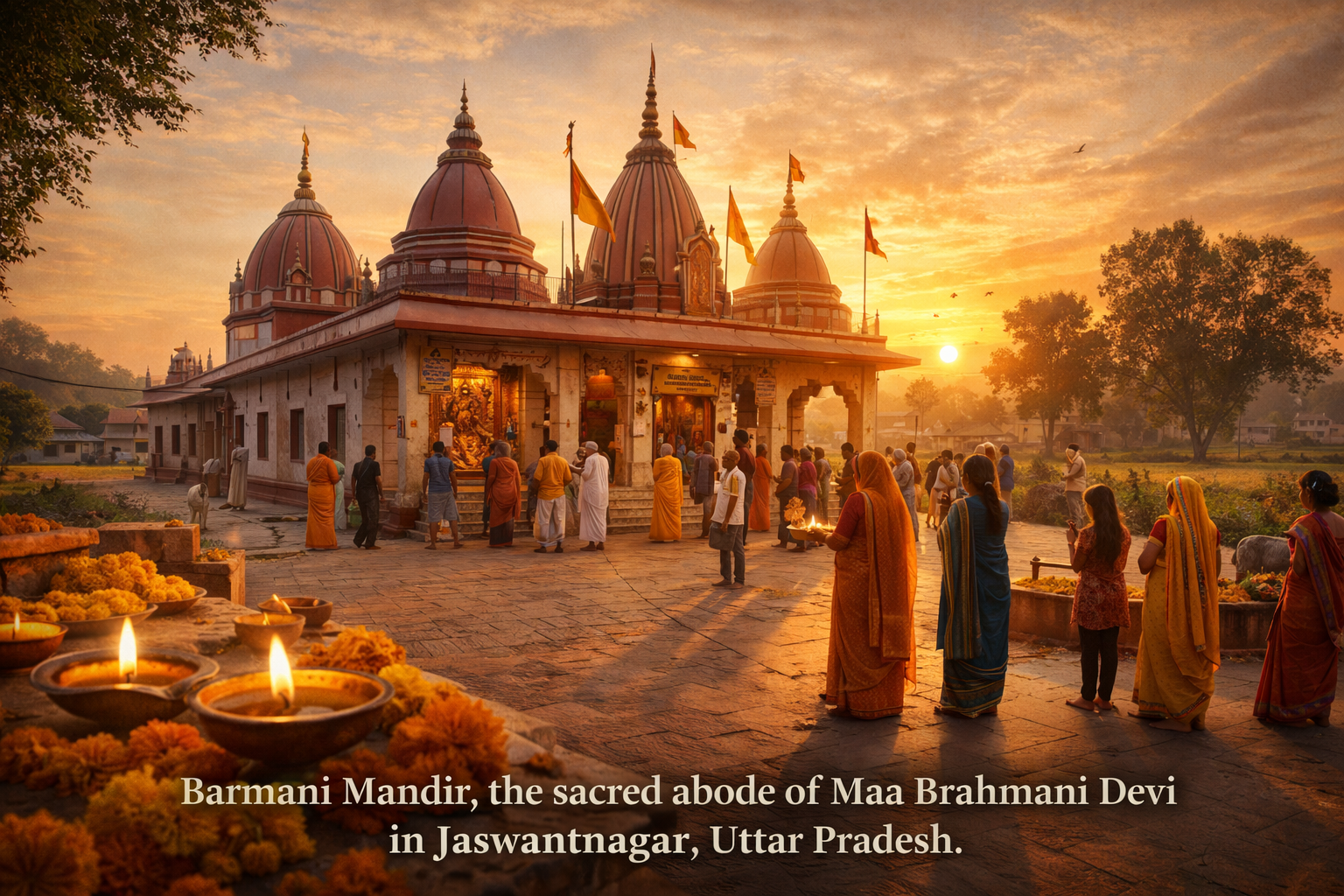
Barmani Mandir, also known as Maa Brahmani Devi Mandir, is a revered spiritual center located near Jaswantnagar in Etawah district, Uttar Pradesh. This temple holds immense significance for devotees from Etawah, Firozabad, Agra, Bhind, Gwalior, Mainpuri, Auraiya, and surrounding regions. Known affectionately as Barmani, the temple is a hub of faith and religious activities dedicated to Maa Brahmani Devi. She is believed to be a powerful manifestation of Shakti—the divine feminine energy. Nestled amidst the ravines on the banks of the Yamuna River, the temple offers a serene and spiritually charged atmosphere. It attracts millions of devotees and pilgrims every year.
The temple complex is unique in its architecture and sacred symbolism. It includes the presence of divine constructions attributed to Adi Shilpi Vishwakarma, the legendary architect of the gods. The site is not only a place for worship but also a center of cultural festivities and communal gatherings. This is especially true during major Hindu festivals and fairs.
Also Read :- Ancient Temples of India: Exploring 5,000 Years of Faith
History and Legends
The roots of Barmani Mandir stretch back to approximately the 1500s. It was said to have been constructed under the patronage of Maharaja Bhadavar. According to prevailing legends, the origins revolve around the royal family of Bhadavar and a mystical interaction involving Maa Brahmani Devi herself.
One prominent story narrates that Maharaja Bhadavar brought Maa Brahmani from Myanmar (formerly Burma) under a unique condition. The condition was that the deity would establish herself permanently where the king looked back during the journey. As the king reached the spot near the Yamuna River ravines, he heard a divine voice and turned back. To his amazement, the idol of the goddess assumed a grand form at that very location. Honoring the condition, Maharaja Bhadavar established the temple at this site.
Another version recounts a divine dream the king received. In it, Maa Brahmani instructed him to excavate her idol buried near the Yamuna riverbanks. Upon following the vision, the idol was unearthed and enshrined in the temple that stands today.
Historically, the temple is noted for its link to the Bhadavar royal family. They continue to regard Maa Brahmani as their Kuldevi (family deity) and perform rituals here periodically, maintaining the spiritual lineage.
Significance of the Temple
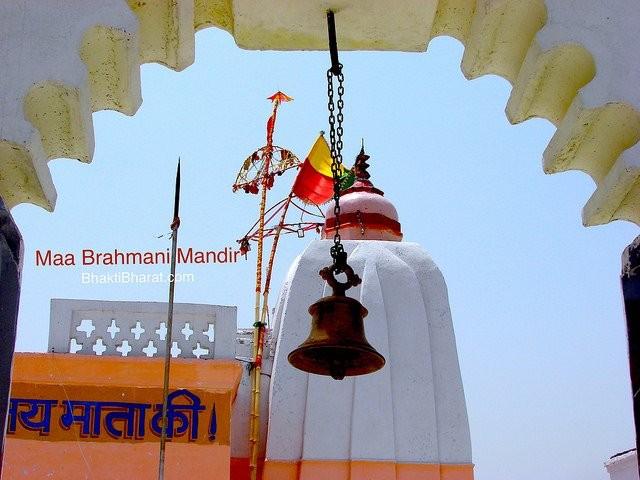
Barmani Mandir is not merely a religious structure but a powerful Siddhpeeth—a seat of spiritual energy considered sacred in Hinduism for intense divine vibrations. Devotees believe that the blessings of Maa Brahmani Devi protect their families, fulfill wishes, and grant strength in times of hardship. The temple acts as a beacon of faith for millions across multiple districts. They seek solace and spiritual upliftment here.
Maa Brahmani is worshipped as a fierce and nurturing mother goddess. She embodies Shakti’s protective and creative forces. The temple’s association with the royal family of Bhadavar and its ancient construction by divine architect Vishwakarma adds to its sanctity.
Visitors hold the belief that the temple is especially potent during Navratri and other sacred occasions. During these times, the spiritual aura intensifies, attracting throngs of pilgrims. They participate in elaborate worship and offerings. The festival fairs held here symbolize community harmony, devotion, and rekindling of ancient traditions.
Also Read :- Akshardham Temple Delhi 2026: Architecture, Light Show & Darshan Guide
Architectural Features and Physical Description
The temple’s structural magnificence stands out due to its historical roots and divine symbolism. The sanctum sanctorum (garbhagriha) was reportedly constructed by Adi Shilpi Vishwakarma himself. He established intricate spiritual symbols, including the Bisa Yantra, a mystical geometric figure believed to invoke cosmic powers.
Characteristic features include:
- Twelve Gates (Dwadash Dwar): The temple boasts twelve entrances, symbolizing various divine energies and cosmic functions.
- Nine Planets (Navagrahas): Idols of the nine celestial bodies integral to Hindu astrology are placed within the temple precincts. This enhances its spiritual potency.
- Nine Wells: Around the temple complex, nine sacred wells add to the mystical ambiance. They are used for ritualistic purposes and believed to carry healing qualities.
- Orientation and Layout: The temple faces north, an unusual orientation for temples dedicated to goddesses. They usually face east, adding to its uniqueness.
- Adjacent Temples: The complex also houses temples dedicated to Lord Shiva and Shri Hanuman Lal. This complements the worship of Maa Brahmani with integrated religious practices.
The temple’s location amidst dense forests and ravines along the Yamuna adds a scenic tranquility. This enhances the devotee’s spiritual experience amid natural beauty.
Festivals and Fairs
Barmani Mandir hosts three major fairs annually aligned with the Hindu calendar months of Chaitra, Ashadh, and Ashwin (Kwar). Among these, the Chaitra Navratri fair draws the largest crowds, attracting millions of devotees from Uttar Pradesh and nearby states. The atmosphere during these fairs is vibrant and joyous, filled with devotional singing, flag offerings (neja), and communal celebrations.
Devotees offer thousands of flags as an expression of their faith and gratitude to Maa Brahmani Devi. The local police and administration maintain strict security during fairs. They use CCTV cameras and additional manpower to ensure a safe and peaceful environment for the mass gatherings.
Also Read :- 6 Prominent Gurdwaras in Quebec: Montreal, Laval & LaSalle Focus
Devotee Practices and Rituals
Devotees observe diverse acts of devotion to please Maa Brahmani, including:
- Walking several kilometers or rolling on the ground as acts of humility and penance.
- Offering flags and other symbolic items as gratitude for fulfilled wishes.
- Participating in collective prayers, aartis, and bhajans (devotional songs).
- Many undertake fasts or vow to visit the temple during Navratri and other auspicious occasions.
Within the temple courtyard, besides Maa Brahmani’s sanctum, temples dedicated to Lord Shiva and Shri Hanumant Lal encourage integrated worship and community participation. The temple environment fosters a deep connection among devotees, blending traditional rituals with heartfelt spirituality.
Visitor Experiences
Visitors often describe an overwhelming sense of peace and spiritual enrichment upon entering the temple precinct. The temple’s location by the Yamuna River ravines enhances the tranquil setting, providing a perfect backdrop for meditation and prayer.
Many travelers recount their long pilgrimage journeys and how they felt spiritually renewed by Maa Brahmani’s blessings. Devotees frequently report miraculous experiences and fulfillment of personal wishes, further strengthening the temple’s reputation as a powerful Siddhpeeth.
Nearby Attractions to Barmani Mandir
Barmani Mandir is situated in the culturally rich and scenic region of Jaswantnagar, Etawah district, offering several nearby points of interest that visitors can explore:
- Yamuna River: Flowing close to the temple, the Yamuna River ravines provide a tranquil natural environment perfect for meditation, nature walks, and spiritual reflection. The riverbanks add to the divine ambiance surrounding the temple.
- Pilua Mahaveer Temple: Located within 8-10 kilometers from Jaswantnagar, this historic temple dedicated to Lord Mahaveer is a popular pilgrimage spot and is known for its architectural beauty.
- Dr. Ram Manohar Lohia Ecological Garden and Company Garden, Etawah: About 13-14 kilometers away in Etawah city, this sprawling garden offers a serene environment with lush greenery, ideal for relaxation after temple visits.
- Etawah Safari Park (Lion Safari): Approximately 15 kilometers from Jaswantnagar, the safari park is a must-visit for wildlife enthusiasts, offering a chance to see lions, tigers, and other animals in naturalistic habitats.
- Pakka Talab (Etawah Lake): A local natural water body around 14 kilometers from Jaswantnagar, it is favored for picnics, leisurely walks, and bird watching.
- Shri Hanuman Ji Temple: Located within or near the Brahmani Mandir complex, this temple dedicated to Hanuman complements the religious circuit and offers devotees a chance to offer prayers to multiple deities in one visit.
- Raja Sumer Singh Fort, Etawah: This historic fort in Etawah is a testimony to regional history and architecture and is accessible for day trips from Jaswantnagar.
These attractions collectively offer a rich blend of natural beauty, history, and spirituality, making a trip to Barmani Mandir an immersive experience beyond religious worship.
Also Read :- 5 Prominent Gurdwaras in Saskatchewan
Frequently Asked Questions about Barmani Mandir
1. Where is Barmani Mandir located?
Barmani Mandir is located in Jaswantnagar, Etawah district, Uttar Pradesh. It is dedicated to Maa Brahmani Devi and is a major local pilgrimage site.
2. Who is Maa Brahmani Devi?
Maa Brahmani Devi is considered a powerful form of Shakti. Devotees worship her for protection, prosperity, and removal of obstacles.
3. What is the history of Barmani Mandir?
The temple is believed to be centuries old and deeply connected with local folklore and faith. It has been a center of devotion for generations.
4. What are the temple timings of Barmani Mandir?
Generally, the temple remains open from early morning around 5:00 AM to evening 9:00 PM. Timings may vary during festivals and Navratri.
5. Which is the best time to visit Barmani Mandir?
The best time to visit is during Navratri and major Hindu festivals when special पूजा and भंडारा are organized.
6. Is Barmani Mandir a Shakti temple?
Yes, Barmani Mandir is considered a Shakti peeth by local devotees and is spiritually powerful for देवी उपासना.
7. Are there any special rituals performed here?
Special aarti, chunri chadhana, coconut offering, and Navratri पूजा are commonly performed by devotees.
8. Can outsiders visit the temple?
Yes, the temple is open to all devotees regardless of caste or background, provided temple discipline is followed.
9. How can one reach Barmani Mandir?
Jaswantnagar is well connected by road and rail. From Etawah, the temple can be reached easily by local transport.
10. Why is Barmani Mandir famous?
Barmani Mandir is famous for its spiritual energy, local miracles, and deep-rooted faith of devotees in Maa Brahmani Devi.
4 Comments