
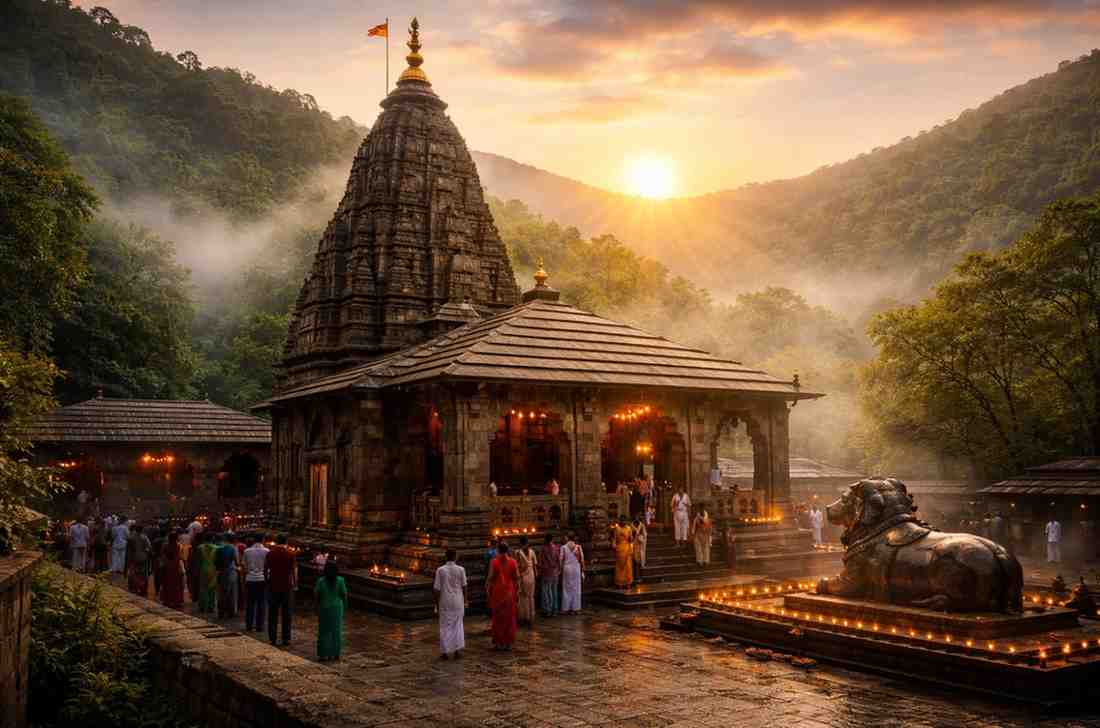
Devotees revere Lord Shiva at the Bhimashankar Jyotirlinga Temple, which the temple situates in the scenic Sahyadri Hills of Pune district, Maharashtra.
It is one of the 12 Jyotirlingas, which are sacred manifestations of Shiva as a fiery pillar of light, symbolizing his eternal nature. The temple holds immense historical and spiritual significance due to its association with powerful legends, ancient architecture, and serene natural surroundings.
History of Bhimashankar Temple 2025
Bhimashankar Temple dates back to the 13th century, built in the traditional Nagara style, showcasing the excellent craftsmanship of ancient Vishwakarma sculptors. The temple has seen renovations and enhancements over centuries, notably by the Maratha Empire’s statesman Nana Phadnavis in the 18th century, who built the assembly hall (sabhamandap) and the temple’s shikhara (spire). The great Maratha ruler Chhatrapati Shivaji Maharaj also endowed the temple to facilitate religious worship.
Legend tells of the demon Tripurasura, who gained immense power and terrorized the gods and humans alike. To defeat him, Lord Shiva manifested here as a Jyotirlinga and vanquished the demon, restoring peace. Another tale involves Bhima, who, after receiving power from Lord Brahma, became arrogant and challenged devotees of Shiva. In response, Shiva appeared and destroyed Bhima, and then resided here as the Jyotirlinga Bhimashankar.
Festivals and Rituals at Bhimashankar Temple 2025
- Maha Shivratri: The most important festival here, usually celebrated in February or March. Devotees observe night-long vigils, chant hymns, and participate in elaborate pujas and sacred rituals to honor Lord Shiva. The temple becomes electrified with spiritual energy and devotion during this time.
- Kartik Poornima: Celebrated in November or December with great enthusiasm, the temple is beautifully illuminated, and special prayers and processions, including the Lord’s palanquin, take place, symbolizing Lord Shiva’s divine presence.
- Ganesh Chaturthi and Diwali: These popular Hindu festivals are celebrated with grandeur at Bhimashankar, involving special pujas, decorations, and festivities enhancing the temple’s spiritual atmosphere.
- Other significant celebrations include Akshaya Tritiya, Dhantrayodashi, Lakshmi Puja, and Holi (Hutashani Purnima), each marked by unique rituals and large gatherings.
Architecture of Bhimashankar Temple
The Bhimashankar Temple showcases the splendid Nagara style of architecture blended with regional influences.
- Constructed originally in the 13th century with later expansions in the 18th century by Nana Phadnavis, it features a graceful, modest structure surrounded by the dense Sahyadri forest hills.
- Its garbhagriha (sanctum sanctorum) houses the naturally formed Jyotirlinga, reputed to be self-manifested from basalt rock estimated to be millions of years old.
- The temple complex showcases intricate stone carvings on walls, colossal pillars, and elaborate door frames depicting gods, goddesses, and various mythological motifs.
- The sabhamandap (assembly hall) and the towering shikhara (spire) are later additions, highlighting the Maratha architectural patronage.
- Architectural elements reflect a mix of ancient Vishwakarma craftsmanship and Indo-Aryan styles, with influences similar to Hemadpanthi architecture of the Deccan region.
- The temple’s courtyards and surrounding spaces provide a serene environment for worship and meditation.
Bhimashankar Wildlife Sanctuary and Trekking
Surrounding the temple is the Bhimashankar Wildlife Sanctuary, a protected biodiversity hotspot and a haven for nature lovers and trekkers:
- The sanctuary is home to the Endangered Indian Giant Squirrel, exotic birds including barbets and kingfishers, and lush green forests with enchanting streams and waterfalls.
- Popular trekking routes include:
- Ganesh Ghat Route: A longer, moderately challenging path ideal for nature walks with panoramic views.
- Siddhi Ghat Route: A steep and more demanding trail featuring iron ladders and adventurous climbing, suitable for experienced trekkers.
- The Nagphani Point (Duke’s Nose) offers breathtaking cliff views resembling a serpent’s hood.
- The sanctuary trails are ideal during the monsoon (June to September) when the area flourishes with greenery and flowing waterfalls, though caution is advised due to slippery paths.
- Visitors are advised to hire local guides for safe navigation and deeper insight into the area’s flora, fauna, and legends.
- Entry into the sanctuary may require permits, and visitors should check for updated guidelines from the forest department.
Additional Travel Tips for Bhimashankar Temple 2025
Visit early mornings, especially on weekdays and outside festivals, to avoid crowds and enjoy tranquility. Guests can choose from several accommodation options near the Bhimashankar Temple, including guesthouses and moderate hotels, and should book ahead during peak seasons.Local transport includes buses and taxis from Pune, but private vehicles offer more flexibility. For trekking and sanctuary visits, carry water, snacks, sturdy shoes, and suitable clothing for seasonal weather. Respect temple customs, maintain cleanliness, and avoid disturbing wildlife.
Legends and Mythological Stories of Bhimashankar Temple
The Bhimashankar Jyotirlinga is steeped in fascinating legends, which enrich its spiritual aura:
- One legend narrates that in the Treta Yuga, Kumbhkaran (brother of Ravana) had a son named Bhima, who sought revenge against devotees of Lord Shiva after his father’s death. Bhima, granted immense power by Lord Brahma after severe penance, became arrogant and imprisoned King Kamrupeshwar for worshipping Shiva. Despite captivity, the king continued his devotion by making a Shiva Linga. Bhima tried destroying the Linga but Lord Shiva appeared, protected his devotee, and killed Bhima. The gods requested Shiva to reside there as a Jyotirlinga, named Bhimashankar.
- Another tale involves the demon Tripurasura, who was granted near-immortality by Shiva on condition to protect people. However, Tripurasura misused this, terrorizing the innocent. Shiva, with Parvati’s help in the form of Ardhanarishvara (half Shiva, half Parvati), defeated the demon at this site. This victory is commemorated by the temple’s establishment.
These legends highlight the divine justice and mercy embodied by Lord Shiva at Bhimashankar, emphasizing the temple’s sacredness.
Also Read :- Akshardham Temple Delhi 2026: Architecture, Light Show & Darshan Guide
Restoration and Renovation Efforts
Bhimashankar Temple has undergone several restoration phases to preserve its heritage and accommodate growing pilgrim numbers:
- The original temple, believed to be 13th century, faced natural wear and modern needs. Major renovations took place during the Maratha period including works by Nana Phadnavis and Shivaji Maharaj’s patronage, who ensured temple upkeep and expansions like the assembly hall and shikhara.
- Recently, the Maharashtra government has approved a ₹288.71 crore infrastructure development plan for Bhimashankar, focusing on modernizing pilgrim facilities ahead of the 2027 Kumbh Mela. This includes a proposed helipad, large parking spaces, improved temple surroundings, upgraded toilets and waiting areas, electric vehicles for differently-abled visitors, and better trekking routes.
- The plan also emphasizes restoration of smaller temples in the complex and pedestrian-friendly footpaths to blend eco-tourism with spiritual tourism.
- These efforts aim to balance heritage preservation with modern convenience, ensuring safety and enhancing the pilgrimage experience while maintaining cultural authenticity.
Visitor Experiences in 2025
Also Read :- Ancient Temples of India: Exploring 5,000 Years of Faith
Devotees and tourists visiting Bhimashankar in 2025 compliment the temple’s unique blend of spirituality, history, and nature:
- Many describe the temple atmosphere as intensely spiritual, peaceful yet powerful, with the Jyotirlinga’s presence felt deeply by visitors. The continuous chants, temple bells, and natural sounds enhance the experience.
- Trekking through the forest trails, visitors note the refreshing climate, varied wildlife sightings, and scenic views of the Sahyadri hills. Monsoon visits are favored for vivid greenery and cascading waterfalls, though some caution about slippery paths.
- Several visitors report the temple queue management improving with new infrastructure works, though occasional congestion during festivals remains. The local market outside the temple offers traditional food and souvenirs.
- Overall, Bhimashankar is praised for being a holistic spiritual retreat combined with adventure and nature exploration, making it a must-visit for pilgrims and nature enthusiasts alike.
Significance of Bhimashankar Jyotirlinga
Bhimashankar is one of the 12 Maha Jyotirlingas and holds great spiritual importance for Shiva devotees. Its Jyotirlinga is believed to be naturally formed from ancient basalt rock, adding both geological and divine significance. Worshipping here is said to purify the mind and soul, help overcome arrogance and negativity, and grant blessings like liberation (moksha). The temple’s tranquil location within the Bhimashankar Wildlife Sanctuary enhances its spiritual atmosphere, allowing visitors to deeply connect with nature and divine energy.
The temple also features an ancient Roman-style bell gifted by Chimaji Appa, symbolizing historical conquests and cultural exchanges.
Travel Tips for Bhimashankar Temple 2025
- Best Time to Visit: The temple is open year-round. For a peaceful experience, early morning visits are recommended, especially to attend Kakada Aarti around 4:30 AM. Monsoon season brings lush greenery and beautiful waterfalls but can also mean slippery roads and crowded weekends.
- How to Reach: Bhimashankar is approximately 110 kilometers from Pune and accessible by road. The nearest major city is Pune, with regular transport options. The temple is reachable by car, taxi, or bus, with the closest railway station in Pune.
- Trekking Routes: Two main trekking paths lead to the temple:
- Ganesh Ghat: Longer but gradual and scenic, suitable for moderate fitness levels.
- Shidi Ghat: Steep and challenging, involving iron ladders and suitable for experienced trekkers.
- Stay & Food: Bhimashankar offers options ranging from budget lodges to moderate guesthouses. Local eateries serve traditional Maharashtrian cuisine. Booking in advance during festivals and weekends is advisable.
- Preparation: Carry trekking shoes, warm clothing (especially in winters and monsoon), rain gear, and water. A local guide is recommended for the sanctuary trek to ensure safety and navigation.
- Temple Tips: Arrive early to avoid long queues, especially on weekends and special occasions like Maha Shivratri. Respect local customs, maintain cleanliness, and donate generously for temple upkeep.
Also Read :- 6 Prominent Gurdwaras in Quebec: Montreal, Laval & LaSalle Focus
Frequently Asked Questions – Bhimashankar Jyotirlinga
1. Where is Bhimashankar Jyotirlinga located?
Bhimashankar Jyotirlinga is located in the Sahyadri hills of Maharashtra, near Pune. It lies within the Bhimashankar Wildlife Sanctuary and is surrounded by dense forests and hills.
2. Why is Bhimashankar Jyotirlinga so important?
Bhimashankar is one of the 12 sacred Jyotirlingas of Lord Shiva. It represents Shiva’s infinite light form and is believed to grant liberation, strength, and spiritual protection.
3. What is the legend associated with Bhimashankar?
According to legend, Lord Shiva defeated the demon Tripurasura here. From the sweat of Shiva emerged the Bhima River, making this place both spiritually and mythologically significant.
4. What is the best time to visit Bhimashankar Jyotirlinga?
The best time to visit Bhimashankar is between October and March when the weather is pleasant. Monsoon months offer lush greenery but can be challenging for travel.
5. How can devotees reach Bhimashankar Temple?
Bhimashankar can be reached by road from Pune and Mumbai. The nearest railway station is Pune, and the closest airport is Pune International Airport.
6. What are the temple timings at Bhimashankar?
The temple generally opens early in the morning around 4:30 AM and remains open till 9:30 PM, with aarti and abhishek performed at fixed intervals.
7. Is there any special puja performed at Bhimashankar?
Rudrabhishek and Maha Abhishek are popular rituals at Bhimashankar Jyotirlinga. Mondays, Pradosh Vrat, and Mahashivratri are especially auspicious.
8. What should devotees wear while visiting the temple?
Devotees are advised to wear modest and traditional clothing. During monsoon and winter, warm and waterproof clothing is recommended due to cool and wet weather.
9. Are there accommodation facilities near Bhimashankar?
Yes, there are dharamshalas, budget hotels, and MTDC guest houses near the temple that provide basic and comfortable stay options for pilgrims.
10. What makes Bhimashankar unique among the Jyotirlingas?
Bhimashankar is unique because it combines spiritual power with natural beauty. Being the origin of the Bhima River and located in a wildlife sanctuary, it offers both divine and ecological significance.
Conclusion
Bhimashankar Temple in 2025 continues to be a profound pilgrimage destination combining rich mythology, historical grandeur, and natural beauty. Its status as a Jyotirlinga makes it a focal point for devotees of Lord Shiva seeking spiritual solace and blessings. The temple’s heritage, combined with the tranquil Sahyadri Hills setting and wildlife sanctuary, offers visitors a unique blend of devotion, adventure, and nature immersion.
1 Comment