
Introduction
The festival holds a special place in Indian culture and spiritual life. Celebrated by millions across India and around the world, it is known as the Festival of Lights and represents hope, renewal, and the triumph of goodness. Exploring its deeper roots reveals how ancient traditions, spiritual philosophy, and cultural values have shaped this timeless celebration.
From sacred scriptures to regional folklore, its rich heritage explains why the festival continues to inspire devotion, joy, and unity across generations.
Also Read :- What Is Diwali: A Complete Guide to the Festival of Lights
The Meaning of Diwali
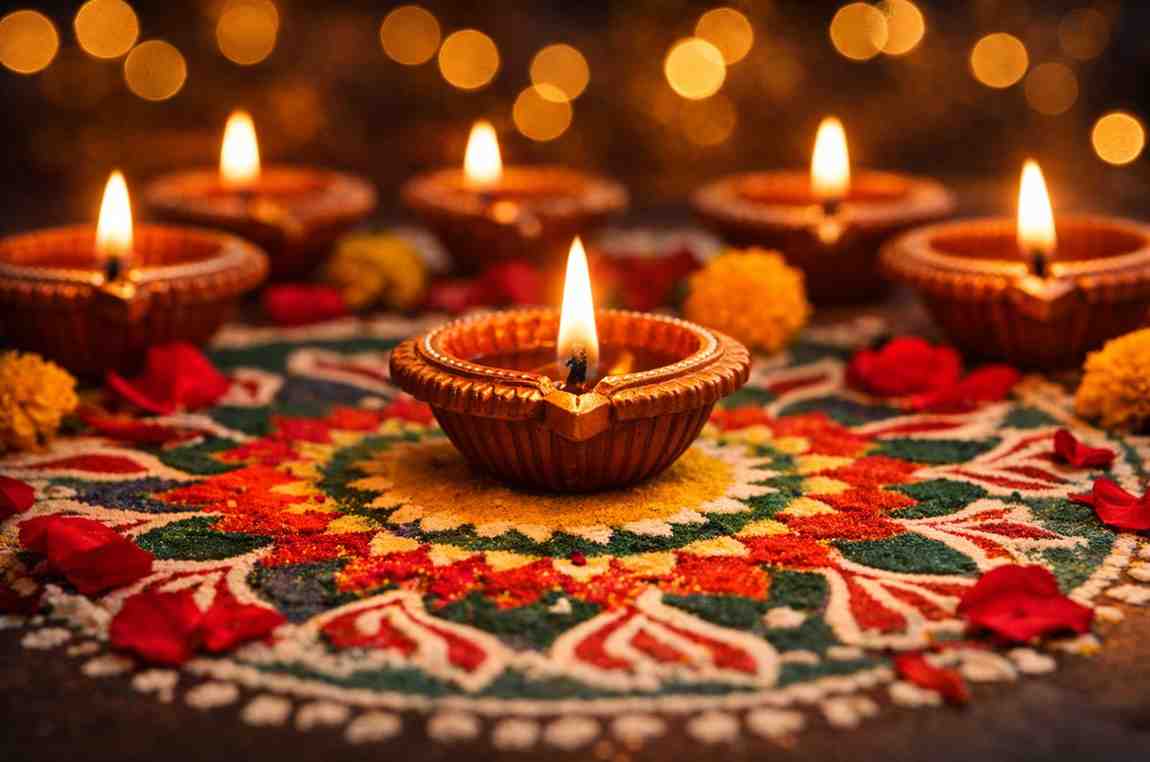
The word Diwali is derived from the Sanskrit term Deepavali, which means “a row of lamps.” These lamps symbolize light that removes darkness on both external and internal levels, showing that illumination is not just decorative but deeply spiritual.
This light represents:
• Knowledge overcoming ignorance
• Hope replacing despair
• Truth prevailing over falsehoodAt its essence, the festival teaches that even a single flame has the power to dispel great darkness, making it a profound metaphor for life, awareness, and inner transformation.
Also Read :- Shadow Work Explained: Guide to Inner Healing and Integration
Spiritual Philosophy Behind the Festival
One cannot fully understand the festival without recognizing its spiritual depth. It places strong emphasis on inner purification and conscious living, where homes are cleansed, hearts are opened, and minds are prepared for renewal.
On a spiritual level, it encourages:
• Self-reflection
• Gratitude
• Forgiveness
• Inner awakening
This philosophy transforms the celebration from a social gathering into a meaningful spiritual journey rooted in awareness and personal growth.
Also Read :- What Is Shadow Work? Meaning, Benefits & Practice It Safely
Historical Roots of Diwali
The historical foundation of the festival stretches back thousands of years. Ancient texts, epics, and oral traditions have shaped its legacy, offering diverse interpretations across regions and belief systems.
Rather than having a single origin, the celebration evolved over centuries through storytelling, devotion, and cultural exchange, giving it a rich and multifaceted character.
Also Read :- Spiritual Awakening Symptoms: Signs, Stages & What to Expect
Diwali in the Ramayana Tradition
One of the most widely known explanations comes from the epic Ramayana. According to this tradition, the festival commemorates the return of Lord Rama, Goddess Sita, and Lord Lakshmana to Ayodhya after fourteen years of exile and the defeat of Ravana.
The people of Ayodhya welcomed their king by lighting oil lamps across the city, establishing the visual tradition that continues to be followed today, especially in North India.
Also Read :- Stages of Spiritual Awakening: A Step-by-Step Inner Transformation
Goddess Lakshmi and Prosperity
Another major element in Diwali Meaning and History is the worship of Goddess Lakshmi, the deity of wealth, fortune, and abundance. It is believed that she visits homes that are clean, well-lit, and filled with positive energy.
This belief explains why people:
- Clean and decorate their homes
- Light lamps at entrances
- Perform prayers seeking prosperity
The association with Lakshmi reinforces how Diwali Meaning and History connects material well-being with spiritual discipline.
Also Read :- Signs of Spiritual Awakening: 21 Powerful Inner Changes Explained
Krishna and the Defeat of Narakasura
In southern India, Diwali Meaning and History is closely linked to Lord Krishna’s victory over the demon Narakasura. This event symbolizes the destruction of ego, cruelty, and injustice.
The story emphasizes that:
- Arrogance leads to downfall
- Righteous action restores balance
- Compassion triumphs over oppression
This narrative adds moral depth to Diwali Meaning and History, highlighting ethical living.
Also Read :- What Is Spiritual Awakening? Meaning, Signs, Stages & Purpose
Jain Perspective on Diwali
From the Jain perspective, the festival commemorates the day Lord Mahavira attained nirvana, signifying liberation from the cycle of birth and death. For followers of Jainism, it represents spiritual enlightenment and the ultimate freedom of the soul.
Lamps are lit to honor wisdom, discipline, and non-violence—values that continue to influence the celebration across different religious traditions.
Also Read :- How to End a Karmic Relationship: Signs, Healing & Letting Go
Sikh Historical Significance
In Sikh tradition, Diwali Meaning and History is associated with Bandi Chhor Divas. This day commemorates the release of Guru Hargobind Ji along with other imprisoned kings.
The event symbolizes:
- Justice
- Courage
- Freedom from oppression
This historical moment adds another dimension to Diwali Meaning and History, showing how the festival transcends religious boundaries.
Also Read :- Why Karmic Relationships Are So Intense: Spiritual, Emotional & Psychological Reasons Explained
The Five Days of Diwali
Understanding Diwali Meaning and History also requires exploring its five-day structure:
- Dhanteras – Wealth, health, and new beginnings
- Naraka Chaturdashi – Victory over darkness
- Main Festival Day – Spiritual renewal and prayer
- Govardhan Puja – Gratitude and protection
- Bhai Dooj – Family bonds and love
Each day contributes uniquely to Diwali Meaning and History, making the festival a complete spiritual cycle.
Also Read :- Soulmate vs Karmic Relationship: Meaning, Signs, Differences & Spiritual Purpose
Cultural Evolution Over Centuries
Over time, Diwali Meaning and History has evolved alongside society. While ancient rituals remain intact, modern practices now include digital greetings, community events, and sustainable celebrations.
Despite these changes, the essence preserved through Diwali Meaning and History remains unchanged—light, hope, and renewal.
Global Spread of the Festival
With migration and globalization, Diwali Meaning and History has expanded far beyond India. The festival is now celebrated in the United States, United Kingdom, Canada, Singapore, Australia, and many other regions.
Public celebrations and illuminated landmarks reflect how Diwali Meaning and History has become a global symbol of unity.
Relevance in the Modern World
In today’s fast-paced lifestyle, Diwali Meaning and History serves as a reminder to slow down, reconnect with loved ones, and reflect on personal values.
The festival teaches balance between:
- Material success
- Spiritual growth
- Social responsibility
This balance is central to Diwali Meaning and History and its enduring relevance.
Philosophical Interpretation
On a deeper level, Diwali Meaning and History represents the inner struggle between awareness and ignorance. Lighting a lamp becomes an act of self-realization rather than ritual alone.
This philosophical view strengthens the timeless nature of Diwali Meaning and History.
Why the Festival Endures
The lasting power of Diwali Meaning and History lies in its universal message. Regardless of belief or background, its themes resonate with all humanity.
Light will always find a way—this is the core truth revealed through Diwali Meaning and History.
Frequently Asked Questions
Why is Diwali called the Festival of Lights?
It is called the Festival of Lights because lamps are lit to symbolize the removal of darkness, ignorance, and negativity while welcoming knowledge, hope, and positivity.
What is the historical origin of Diwali?
The festival has roots in ancient Indian epics, religious texts, and regional traditions. Its history is associated with events such as the return of Lord Rama to Ayodhya, the worship of Goddess Lakshmi, and regional legends across India.
How many days does the festival last?
The celebration traditionally lasts for five days, beginning with Dhanteras and ending with Bhai Dooj, with each day holding its own cultural and spiritual significance.
Is Diwali celebrated only by Hindus?
No, it is also observed by Jains, Sikhs, and Buddhists, each community celebrating it with unique traditions and historical meaning.
What is the spiritual significance of lighting lamps?
Lighting lamps represents inner awakening, clarity of thought, and the victory of knowledge over ignorance, encouraging self-reflection and positive living.
How has Diwali evolved in modern times?
Modern celebrations include eco-friendly practices, digital greetings, community events, and charitable activities while preserving traditional values.
Conclusion
In conclusion, Diwali Meaning and History is not confined to mythology or tradition alone. It is a living philosophy that continues to guide people toward clarity, compassion, and renewal. Rooted in ancient wisdom yet relevant in modern life, the festival reminds us that light—both within and around us—has the power to transform everything.


4 Comments