Introduction to Eid-ul-Fitr 2026 in India
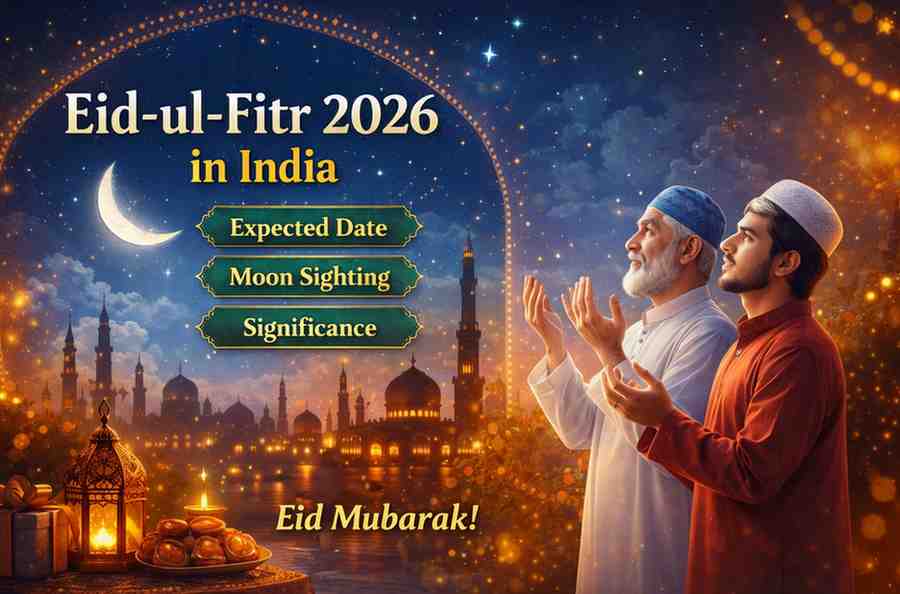
Eid-ul-Fitr 2026 in India is expected to be celebrated in the evening of March 20, 2026, or March 21, 2026, depending on the sighting of the crescent moon. Since the Islamic calendar follows the lunar cycle, the exact date always depends on moon observation. Therefore, Muslims across India eagerly wait for official announcements from religious authorities and moon sighting committees.
Eid-ul-Fitr marks the end of the holy month of Ramadan, a sacred period dedicated to fasting, prayer, self-discipline, and charity. Throughout Ramadan, Muslims fast from dawn to sunset. They avoid food, drink, and negative behavior while focusing on spiritual growth. Consequently, Eid becomes not just a festival of celebration but also a moment of gratitude and reflection.
In India, Eid-ul-Fitr holds deep cultural and spiritual importance. Cities like Delhi, Mumbai, Lucknow, Hyderabad, and Kolkata witness grand celebrations. Markets remain crowded before Eid as families prepare for the festival by purchasing new clothes, gifts, and special ingredients for festive dishes.
Moreover, Eid-ul-Fitr strengthens social harmony. Families visit relatives, friends exchange greetings, and communities come together for collective prayers. The spirit of brotherhood, generosity, and unity shines brightly on this day.
Since the Islamic calendar is about 10–11 days shorter than the Gregorian calendar, Eid-ul-Fitr shifts earlier every year. As a result, in 2026, it will likely fall in March, whereas in previous years it was observed in April or May.
For those searching online, key queries include:
- Eid-ul-Fitr 2026 date in India
- When is Eid 2026 in India?
- Moon sighting for Eid 2026
- Eid holiday 2026 India
This blog will answer all these questions in detail. In the next section, we will explore how the expected date for Eid-ul-Fitr 2026 in India is calculated and why moon sighting plays such a crucial role.
Expected Date of Eid-ul-Fitr 2026 in India
Also Read :- Best Astrologers in Johannesburg (2026): South Africa’s NRI Favourite
The expected date of Eid-ul-Fitr 2026 in India depends entirely on the sighting of the Shawwal crescent moon. Ramadan lasts either 29 or 30 days, depending on the lunar cycle. Therefore, Eid-ul-Fitr begins on the first day of Shawwal, the tenth month of the Islamic calendar.
Astronomical calculations suggest that Ramadan 2026 may begin around February 19 or 20, 2026 in India. If Ramadan completes 29 days, Eid-ul-Fitr will likely fall on March 20, 2026. However, if the month completes 30 days, then Eid may be celebrated on March 21, 2026.
Nevertheless, Islamic tradition prioritizes physical moon sighting over astronomical prediction. Religious bodies such as local moon sighting committees, mosque authorities, and Islamic scholars officially confirm the date after observing the crescent moon.
In India, the moon sighting often differs slightly from Saudi Arabia. Although many people follow announcements from Mecca, Indian Islamic organizations make independent decisions based on local visibility. Consequently, Eid may fall on a different day in India compared to Middle Eastern countries.
Furthermore, the Indian government declares a public holiday for Eid-ul-Fitr based on the confirmed date. Schools, offices, banks, and government institutions remain closed to allow people to celebrate with their families.
Because the date depends on lunar visibility, Muslims eagerly wait after the 29th fast of Ramadan. As soon as credible witnesses confirm the crescent moon, announcements spread quickly through mosques, news channels, and social media platforms.
In summary, while March 20 or 21, 2026, appears most probable, the final confirmation will occur only after the crescent moon becomes visible in India. Next, let us understand the detailed process of moon sighting and why it carries such deep religious significance.
Outbound link- https://www.shloka.life
Moon Sighting Process in India for Eid 2026
Also Read :- Best Astrologers in Dubai (2026): Indian & Arabic Horoscope Masters
Moon sighting, also known as “Chand Raat,” plays a vital role in determining Eid-ul-Fitr. The term “Chand Raat” literally means “Night of the Moon.” On this evening, Muslims look for the crescent moon after sunset on the 29th day of Ramadan.
Traditionally, people gather in open areas, rooftops, or mosque courtyards to observe the sky. If they spot the thin crescent moon, they report it to local religious authorities. Committees verify these testimonies carefully before making an official announcement.
Although technology has advanced significantly, many Islamic scholars still emphasize physical observation. However, astronomical data now assists in predicting visibility conditions. Despite this support, religious validation remains essential.
In India, different regions may experience varying weather conditions. For example, cloudy skies can prevent moon visibility in some cities. In such cases, if reliable sightings are confirmed in other parts of the country, authorities may accept those reports.
Moreover, some Islamic organizations rely solely on local sightings, while others consider global moon sighting reports. Therefore, minor differences in celebration dates occasionally occur within different communities.
Chand Raat itself becomes a festive evening. Markets remain open late into the night. Women apply mehndi (henna), families complete last-minute shopping, and children eagerly prepare for Eid morning. The excitement reaches its peak as soon as the official confirmation spreads.
Significantly, moon sighting symbolizes renewal and gratitude. The new crescent represents a fresh beginning after a month of discipline and devotion. Thus, the sighting carries both astronomical and spiritual meaning.
As we move forward, the next section will explore the religious and spiritual significance of Eid-ul-Fitr and why it stands among the most important Islamic festivals worldwide.
Religious and Spiritual Significance of Eid-ul-Fitr
Now that we understand the expected date and moon sighting process, it is equally important to explore the deeper religious meaning of Eid-ul-Fitr 2026 in India. While many people associate Eid with celebration and delicious food, its spiritual foundation carries far greater importance.
Eid-ul-Fitr marks the successful completion of Ramadan, a month dedicated to fasting (Roza), prayer (Salah), charity (Zakat), and self-control. During Ramadan, Muslims fast from dawn to sunset every day. However, fasting is not limited to food and drink. Instead, believers also control anger, avoid negative speech, and strengthen their moral discipline.
Therefore, Eid becomes a reward for spiritual effort. Muslims express gratitude to Allah for granting them strength, patience, and guidance throughout Ramadan. Moreover, the day reminds believers that self-discipline and compassion should continue even after the fasting month ends.
Importantly, Eid-ul-Fitr emphasizes equality. On this day, people from all financial backgrounds gather in the same prayer rows. No one receives special treatment. Everyone stands shoulder to shoulder, reinforcing unity and brotherhood.
Additionally, Islam encourages forgiveness on Eid. Families resolve conflicts, friends reconnect, and communities rebuild harmony. Consequently, the festival strengthens social bonds alongside spiritual growth.
Another significant aspect involves gratitude. Muslims thank Allah not only for completing Ramadan but also for blessings such as health, family, and livelihood. Instead of focusing only on celebration, believers reflect on personal improvement achieved during the holy month.
From an SEO perspective, many users search for:
- Why is Eid-ul-Fitr important?
- Spiritual significance of Eid 2026
- Importance of Eid after Ramadan
This section clearly answers those queries while maintaining religious accuracy.
In the next section, we will discuss Eid-ul-Fitr 2026 prayer timings in India and the rituals performed on the morning of Eid.
Eid-ul-Fitr 2026 Prayer (Namaz) and Morning Rituals in India
Following the moon sighting and confirmation of Eid, the next crucial step involves preparation for the special Eid prayer. Eid-ul-Fitr prayer, also known as Salat al-Eid, holds central importance in the celebration.
First and foremost, Muslims wake up early on Eid morning. They take a ritual bath (Ghusl), wear new or clean clothes, and apply perfume. Additionally, men often wear traditional attire such as kurta-pajama or sherwani, while women choose festive outfits. Children eagerly dress up in colorful clothing, which adds excitement to the morning atmosphere.
Before leaving for prayer, Muslims eat something sweet. Traditionally, dates are consumed in odd numbers. This act symbolizes the conclusion of fasting and marks a joyful transition from Ramadan to Eid.
The Eid prayer usually takes place shortly after sunrise. Large congregational prayers are organized in mosques, Eidgah grounds, and open fields across India. Cities like Delhi, Lucknow, Hyderabad, and Mumbai witness massive gatherings.
Unlike daily prayers, Eid prayer consists of two units (rakats) with additional Takbeers (proclamations of “Allahu Akbar”). After the prayer, the Imam delivers a sermon (Khutbah), where he speaks about gratitude, charity, unity, and moral responsibility.
Importantly, giving Zakat al-Fitr (charity before Eid prayer) remains compulsory for financially capable Muslims. This donation ensures that underprivileged individuals can also celebrate Eid with dignity. Therefore, no one feels excluded from the festivities.
Prayer timings for Eid-ul-Fitr 2026 in India will vary slightly by city. Generally, the prayer occurs between 6:00 AM and 9:00 AM, depending on sunrise timing.
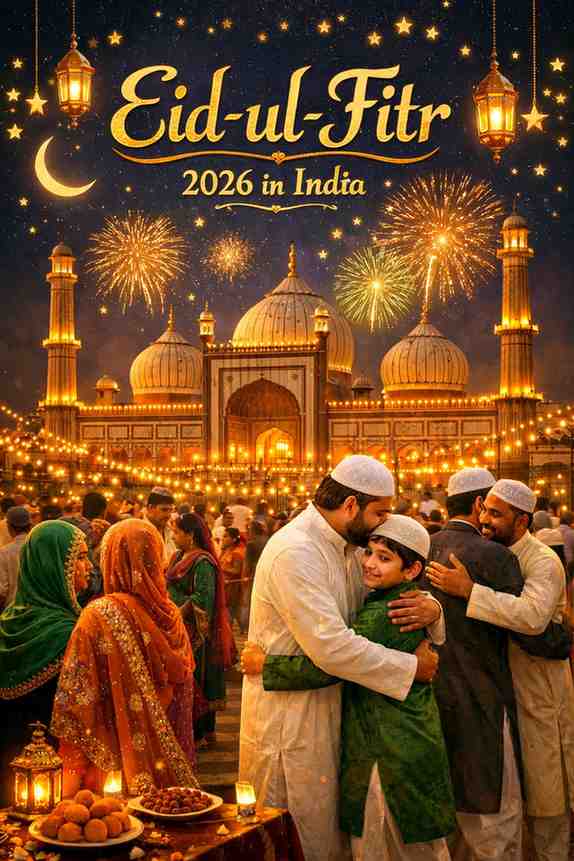
Immediately after the prayer, people greet each other by saying “Eid Mubarak.” They embrace warmly and exchange blessings. This simple greeting carries deep emotional value.
Up next, let us explore how Indian families celebrate Eid-ul-Fitr 2026 through food, traditions, and cultural practices.
Eid-ul-Fitr 2026 Celebrations and Traditions in India
After the morning prayer concludes, the atmosphere shifts fully into celebration mode. Eid-ul-Fitr 2026 in India will bring vibrant colors, delicious food, and joyful gatherings across the country.
One of the most cherished traditions involves preparing special dishes. In many Indian Muslim households, “Sheer Khurma” becomes the highlight of the day. This sweet vermicelli dessert prepared with milk, dates, dry fruits, and sugar symbolizes celebration. Additionally, families prepare biryani, kebabs, seviyan, and various regional delicacies.
Food plays a central role because Eid celebrates gratitude and abundance after a month of fasting. Therefore, families invite relatives, neighbors, and friends to share meals together.
Moreover, children receive “Eidi,” which refers to money or gifts given by elders. This tradition excites younger family members and strengthens emotional bonds between generations.
Markets and shopping areas remain crowded before Eid. People purchase clothes, footwear, accessories, and home decorations. Chand Raat shopping continues late into the night, creating a festive environment filled with lights and laughter.
Importantly, Eid in India reflects cultural diversity. In Lucknow, traditional Awadhi dishes dominate. In Hyderabad, Haleem and Biryani take center stage. In Kerala, Malabar specialties add unique flavors. Thus, regional culture enriches the overall celebration.
Beyond food and gifts, Eid encourages community engagement. Many organizations arrange charity drives, distribute food packets, and support the needy. Consequently, the spirit of compassion continues beyond personal celebration.
Additionally, non-Muslim neighbors often participate in the festivities. India’s diverse society promotes mutual respect and shared happiness during major festivals.
So far, we have explored the expected date, moon sighting process, religious significance, prayer rituals, and cultural traditions. Next, we will examine the public holiday status of Eid-ul-Fitr 2026 in India and its economic and social impact.
Eid-ul-Fitr 2026 Public Holiday in India
After understanding the spiritual and cultural dimensions of Eid-ul-Fitr 2026 in India, it is equally important to examine its official holiday status. Since Eid-ul-Fitr ranks among the most significant Islamic festivals, the Government of India declares it a gazetted public holiday.
Once the crescent moon is confirmed, authorities officially announce the Eid holiday date. Consequently, central and state government offices, banks, schools, and many private institutions remain closed. However, since the exact date depends on moon sighting, calendars often mention “subject to moon sighting.”
In 2026, Eid-ul-Fitr is expected on March 20 or March 21, depending on the visibility of the Shawwal moon. Therefore, the public holiday will fall on one of these dates.
Moreover, states with significant Muslim populations such as Uttar Pradesh, Delhi, Telangana, West Bengal, Kerala, and Maharashtra observe the festival with large public gatherings. Police and municipal authorities arrange special traffic management and security to ensure smooth celebrations.
Additionally, many private companies allow optional leave for employees if the holiday does not align with their state calendar. Corporate offices in metropolitan cities often adjust schedules to accommodate diverse workforces.
Importantly, the holiday allows families to gather, travel, and celebrate without professional obligations. As a result, transportation services experience high demand before Eid. Railway stations, airports, and bus terminals witness increased passenger movement.
From an economic perspective, the Eid holiday also boosts retail sales. Clothing brands, sweet shops, restaurants, and gift stores report significant revenue growth during the festive season.
For SEO relevance, common queries include:
- Is Eid-ul-Fitr 2026 a public holiday in India?
- Eid 2026 holiday date India
- Bank holiday on Eid 2026
This section directly addresses these search intents while maintaining clarity and authority.
Now, let us explore the broader economic and social impact of Eid-ul-Fitr 2026 in India.
Economic and Social Impact of Eid-ul-Fitr in Indi
Beyond religious observance, Eid-ul-Fitr significantly influences India’s economy and social structure. In fact, the festival creates a powerful ripple effect across multiple sectors.
First, the retail industry experiences a sharp surge in demand. Consumers purchase clothing, footwear, cosmetics, home décor items, and electronics. Consequently, both local markets and online platforms witness increased sales. Shopping districts such as Chandni Chowk (Delhi), Charminar (Hyderabad), and Mohammed Ali Road (Mumbai) become highly active during the final days of Ramadan.
Furthermore, the food industry benefits immensely. Restaurants, sweet shops, and catering services prepare special Eid menus. Many families host gatherings, which increases demand for meat, dry fruits, dairy products, and spices.
Additionally, the travel sector sees noticeable growth. Since Eid encourages family reunions, people travel to their hometowns. Airlines, trains, and buses often operate at near full capacity before the festival.
Socially, Eid strengthens inter-community relationships. Friends from different faiths visit each other’s homes, exchange sweets, and share festive meals. Therefore, the festival promotes national unity and cultural harmony.
Moreover, charitable contributions increase significantly during Ramadan and Eid. Zakat and voluntary donations support education, healthcare, and food distribution programs. As a result, thousands of underprivileged families receive essential assistance.
Importantly, Eid also provides income opportunities for small vendors, tailors, artisans, and street sellers. Their businesses flourish during the festive period. Thus, the celebration supports grassroots economic activity.
In summary, Eid-ul-Fitr 2026 in India will not only mark spiritual achievement but also stimulate economic growth and social bonding.
Next, we will examine how Eid-ul-Fitr in India compares with celebrations in other countries.
Eid-ul-Fitr 2026 in India vs Other Countries
Although Muslims worldwide celebrate Eid-ul-Fitr, cultural expressions vary significantly from country to country. Nevertheless, the core religious practices remain consistent.
In Saudi Arabia and many Middle Eastern countries, Eid celebrations often align closely with official astronomical calculations. However, in India, moon sighting committees confirm the date locally. Therefore, India sometimes celebrates Eid a day later than Saudi Arabia.
Moreover, food traditions differ widely. In India, Sheer Khurma and Biryani dominate Eid menus. In Turkey, people prepare Baklava and Turkish delights. In Indonesia, Ketupat and Rendang become popular festive dishes.
Clothing styles also reflect regional identity. Indian Muslims often wear kurta-pajama, sherwani, or sarees. Meanwhile, Gulf countries favor traditional thobes and abayas.
Despite these differences, the spiritual essence remains identical. Muslims everywhere perform Eid prayer, give charity, express gratitude, and greet each other with “Eid Mubarak.”
Additionally, multicultural countries like India highlight diversity within celebration itself. Each state contributes its own culinary and cultural flavor. Therefore, Eid in India represents a blend of faith and regional heritage.
Understanding global comparisons enhances appreciation for India’s unique approach to Eid-ul-Fitr 2026.
Finally, let us conclude with a comprehensive summary and frequently asked questions for SEO enhancement.
Frequently Asked Questions (FAQs) – Eid-ul-Fitr 2026 in India
1. When will Eid-ul-Fitr be celebrated in India in 2026?
Eid-ul-Fitr in India in 2026 is expected to be celebrated on March 20 or March 21, depending on the sighting of the Shawwal moon.
2. Why does the date of Eid-ul-Fitr change every year?
Eid-ul-Fitr follows the Islamic lunar calendar, which is about 10–11 days shorter than the Gregorian calendar. Therefore, the festival occurs earlier each year.
3. What is the significance of Eid-ul-Fitr in Islam?
Eid-ul-Fitr marks the end of Ramadan, the holy month of fasting. It is a day of gratitude, charity, prayer, and celebration for Muslims around the world.
4. What is the importance of moon sighting for Eid?
The sighting of the Shawwal crescent moon determines the end of Ramadan and the beginning of Eid-ul-Fitr celebrations.
5. What is Eid namaz?
Eid namaz is a special congregational prayer performed by Muslims on the morning of Eid-ul-Fitr at mosques or open prayer grounds called Eidgah.
6. What is Zakat al-Fitr?
Zakat al-Fitr is a charitable donation given before the Eid prayer. It ensures that those in need can also celebrate the festival.
7. How do Muslims celebrate Eid-ul-Fitr in India?
Muslims celebrate Eid by offering special prayers, wearing new clothes, sharing festive meals, visiting family members, and giving charity.
8. What foods are commonly prepared on Eid-ul-Fitr?
Traditional Eid dishes include seviyan (vermicelli dessert), biryani, kebabs, sheer khurma, and various sweets.
9. Is Eid-ul-Fitr a public holiday in India?
Yes, Eid-ul-Fitr is a gazetted public holiday in India and is observed by Muslims across the country with prayers and celebrations.
10. What greeting is used during Eid-ul-Fitr?
The common greeting during Eid-ul-Fitr is “Eid Mubarak,” which means “Blessed Eid.”
Conclusion and FAQs – Eid-ul-Fitr 2026 in India
Eid-ul-Fitr 2026 in India is expected to be celebrated on March 20 or March 21, 2026, depending on the Shawwal moon sighting. While astronomical predictions provide guidance, religious authorities confirm the date after verifying crescent visibility.
Throughout this blog, we explored:
- Expected date of Eid-ul-Fitr 2026
- Moon sighting process in India
- Religious and spiritual significance
- Eid prayer rituals and traditions
- Public holiday status
- Economic and social impact
- Comparison with global celebrations
Ultimately, Eid-ul-Fitr symbolizes gratitude, unity, generosity, and renewal. After a month of fasting and spiritual discipline, Muslims celebrate with joy while maintaining humility and compassion.