
Introduction
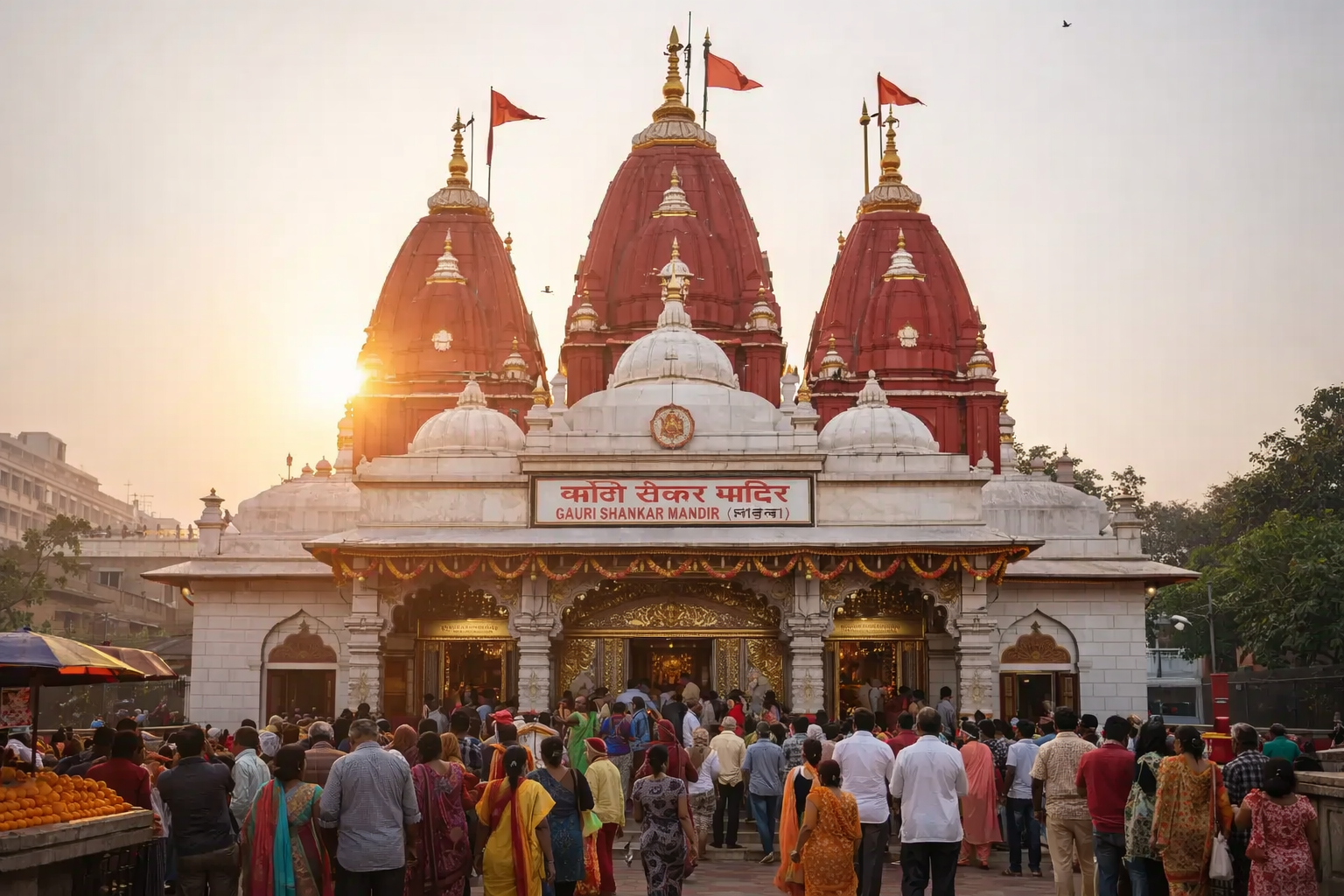
Gauri Shankar Mandir, located in the heart of Chandni Chowk, Delhi, stands as an eminent spiritual landmark revered by devotees from across the country. This temple draws visitors not only for its vibrant religious significance but also for its rich cultural tapestry that merges centuries-old traditions with modern-day worship. Known for venerating the divine union of Lord Shiva and Goddess Parvati, the temple offers devotees a unique place for seeking blessings and inner peace. Its proximity to bustling markets and historic alleys enhances its allure, making it a must-visit destination in Delhi’s sacred landscape.
The temple’s fame largely arises from its association with the combined deity, Gauri Shankar, symbolizing harmony and devotion. It holds a distinct place compared to other temples due to its inclusive environment and unique rituals that celebrate this dual divine form. The spiritual atmosphere coupled with architectural charm creates a serene space amidst the lively city.
Historically, the temple has been a beacon of faith and resilience amidst Delhi’s evolving social and cultural dynamics. The deity’s story, coupled with local legends, enriches the temple’s importance, making it a vital part of the region’s religious heritage. This blend of myth, culture, and history makes Gauri Shankar Mandir a place where faith meets tradition.
What sets this temple apart is not just the deities it houses but also its role as a community hub where festivals and rituals draw people together, fostering a strong spiritual and social bond. With daily aartis and special ceremonies, the temple remains a dynamic center for worship and cultural preservation.
Also Read :- Kasar Devi Mandir Almora, Uttarakhand – History, Significance, Timings & Complete Information
Temple History
Gauri Shankar Mandir’s origins trace back to ancient mythological narratives that celebrate the divine marriage of Lord Shiva and Goddess Parvati. According to legend, the temple marks the sacred site where the couple’s cosmic union was first celebrated, symbolizing the balance of masculine and feminine energies. Ancient texts and Puranas refer to this divine union as a powerful spiritual force, making the temple a pivotal place for devotees seeking harmony in their lives.
Historical records mention the temple’s establishment during the era of Delhi’s medieval rulers, who patronized its upkeep and expansions. Various renovations and restorations over centuries reflect the evolving architectural styles and the temple’s enduring significance. It served not only as a religious center but also as a landmark shaping Delhi’s cultural identity.
Local legends enrich the temple’s history with stories of saintly visits and miraculous events witnessed by devotees. These tales emphasize the temple’s role in fostering spiritual awakening and social cohesion. Its presence amidst Chandni Chowk’s vibrant streets symbolizes the intertwining of sacred and everyday life in Delhi.
The temple has consistently played an influential role during festivals and city-wide celebrations, strengthening Delhi’s cultural fabric. It also acted as a refuge for community gatherings, especially during times of social and political change, embedding itself into the city’s collective consciousness.
Also Read :- Krishna Temples in India (Dwarka, Udupi, Vrindavan)
Architecture & Idol Description
Gauri Shankar Mandir exemplifies North Indian Nagara style architecture, characterized by its curvilinear shikhara (spire) and intricately carved facades. The temple’s structure reflects a blend of traditional craftsmanship and regional influences, showcasing detailed stone carvings and decorative motifs.
The main idol of Lord Shiva and Goddess Parvati stands as a symbol of divine unity—the idol is crafted from black stone, adorned with traditional ornaments and floral garlands. The design emphasizes both the strength and grace of the deities, inviting devotees to experience their divine presence intimately.
The temple layout includes a sanctum sanctorum (garbhagriha), where the idol resides, a spacious mandap (hall) for congregational worship, and a towering shikhara that draws eyes upward in reverence. Detailed sculptures and reliefs depicting mythological scenes adorn the temple walls, narrating stories from Hindu scriptures.
Murals inside the mandap illustrate episodes from Shiva-Parvati lore, adding a visual dimension to the spiritual experience. Compared to other temples in Delhi, Gauri Shankar Mandir’s architectural style balances modesty and grandeur, making it accessible yet profoundly inspiring for devotees and visitors alike.
Also Read ;- Mumba Devi Mandir Mumbai, Maharashtra
Religious Importance & Beliefs
The spiritual significance of Gauri Shankar lies in its depiction of Lord Shiva and Goddess Parvati as inseparable cosmic forces representing transformation, strength, and compassion. Devotees believe that worshipping here blesses them with marital harmony, family well-being, and spiritual upliftment.
Miraculous stories abound, including tales of devotees receiving divine intervention in times of crisis, further elevating the temple’s sacred status. Rituals like Rudrabhishek, Maha Aarti, and special prayers during auspicious days deepen the connection between devotees and the divine couple.
The temple fosters a strong sense of community among followers, including local groups like the Koli samaj that celebrate their roots through temple-based gatherings. The belief that sincere worship at the temple brings health, prosperity, and wishes fulfilled draws visitors far and wide.
Also Read :- Meenakshi Temple Madurai 2026: Architecture & Festivals
Festivals & Celebrations
Major festivals at Gauri Shankar Mandir include Navratri, Maha Shivratri, Diwali, and Gudi Padwa, where the temple becomes a vibrant hub of devotional fervor and cultural festivities. Each festival features special rituals, music, and communal feasts that highlight the temple’s role as a cultural center.
Navratri: Nine Nights of Devotion
During Navratri, Gauri Shankar Mandir becomes a vibrant center for worship and festivities. Devotees flock to the temple to honor Goddess Parvati in her various forms over nine auspicious nights. The temple schedules special daily aartis, devotional bhajans, and evening cultural programs that nurture spiritual connection and strengthen community bonds.
Maha Shivratri: Night of Shiva’s Glory
Maha Shivratri stands as one of the most significant festivals celebrated with great fervor. Devotees undertake overnight vigils, chant sacred mantras, and perform elaborate prayers to Lord Shiva. The temple adorns its premises with flowers and lights, creating a sacred ambiance that enhances the spiritual atmosphere. Fasting and offerings during this festival symbolize a deep desire for prosperity and inner strength.
Diwali: Festival of Lights
The temple celebrates Diwali with dazzling lights, combining religious rituals with joyous cultural events. Lighting diyas and chanting mantras invite blessings of prosperity and positivity. Gauri Shankar Mandir also organizes charity drives and community feasts during this time, reflecting the spirit of generosity and togetherness in the festive season.
Gudi Padwa: Marathi New Year Celebration
Gudi Padwa holds a special place at the temple, where the divine couple receives unique worship. Special pujas, traditional music, and vibrant floral decorations create a festive atmosphere. This celebration highlights the temple’s cultural inclusivity and connects devotees from diverse backgrounds in joyous unity.
Daily Aarti Rituals: Spiritual Rhythms
The temple’s daily aarti ceremonies at dawn and dusk provide a rhythmic and peaceful worship experience. These aartis serve as spiritual anchors for devotees, fostering faith and devotion consistently throughout the year.
Annual Mela: Community and Devotion
The annual mela linked to Maha Shivratri draws large crowds for prayer sessions, religious discourses, and colorful processions. This fair showcases the temple’s pivotal role in preserving traditions and nurturing community spirit.
Temple Timings & Aarti Schedule
| Day | Morning Timings | Evening Timings | Special Aarti |
|---|---|---|---|
| Monday | 6:00 AM – 12:00 PM | 4:00 PM – 9:00 PM | Shiv Aarti |
| Tuesday | 6:00 AM – 12:00 PM | 4:00 PM – 9:00 PM | Devi Aarti |
| Saturday | 6:00 AM – 12:00 PM | 4:00 PM – 9:00 PM | Navgraha Pooja |
How to Reach
Gauri Shankar Mandir is easily accessible by various modes of transport:
- By Train: The nearest railway station is Delhi Junction (Old Delhi Railway Station), about a 10-minute walk from the temple. Frequent local trains and metro connectivity make it convenient.
- By Air: Indira Gandhi International Airport is the nearest airport, approximately 16 km from the temple. From the airport, taxis and airport shuttle services provide direct access to Chandni Chowk.
- By Road: Several bus routes from different parts of Delhi connect to Chandni Chowk. Auto-rickshaws and taxis are readily available at all major transit points.
- For first-time visitors, navigating the bustling streets of Chandni Chowk is easier with local guides or using navigation apps like Google Maps for real-time directions.
Nearby Attractions
Near Gauri Shankar Mandir, visitors can explore:
- Other Temples: The historic Jain Mandir and the Lal Mandir, Delhi’s oldest temple.
- Historical Monuments: Red Fort, a UNESCO World Heritage Site.
- Cultural Hotspots: The vibrant Chandni Chowk market famous for street food, jewelry, and textiles; nearby ghats on the Yamuna River.
- Suggested itinerary includes a morning temple visit, followed by shopping and dining in Chandni Chowk, and an afternoon tour of Red Fort for a comprehensive cultural experience.
Visitor Guidelines
Visitors are encouraged to observe these guidelines:
- Dress modestly, preferably in traditional attire, respecting the temple’s sanctity.
- Photography is generally restricted inside the sanctum; however, some outer areas permit photos.
- Important dos and don’ts include removing footwear before entry, maintaining silence during prayers, and avoiding plastic or non-vegetarian items in the temple premises.
- The best time to visit is during early mornings or during major festivals to fully experience temple rituals.
FAQ Section
- Where is Gauri Shankar Mandir located?
Located in Chandni Chowk, Old Delhi, near Delhi Junction railway station. - What is the history of Gauri Shankar Mandir?
The temple historically honors the divine union of Lord Shiva and Goddess Parvati with roots in ancient mythology and Delhi’s medieval era. - What are the darshan timings?
The temple is open from 6:00 AM to 12:00 PM in the morning and 4:00 PM to 9:00 PM in the evening. - Which festivals are celebrated here?
Navratri, Maha Shivratri, Diwali, and Gudi Padwa are major festivals celebrated. - How to reach from the nearest railway station?
It is a short 10-minute walk from Delhi Junction railway station. - Is photography allowed?
Photography is restricted inside the sanctum but allowed in designated outer areas. - What is the best time to visit?
Early mornings and during major religious festivals are ideal times to visit.
Conclusion
Gauri Shankar Mandir in Chandni Chowk offers devotees a profound spiritual experience rooted in the divine harmony of Lord Shiva and Goddess Parvati. Visiting the temple fosters inner peace, blessings for prosperity, and a deeper connection with ancient traditions. Its rich history, vibrant festivals, and welcoming atmosphere make it an essential pilgrimage spot for anyone seeking solace or spiritual fulfillment in Delhi. May every visitor who steps here depart with blessings of health, happiness, and harmony.

1 Comment