
Introduction
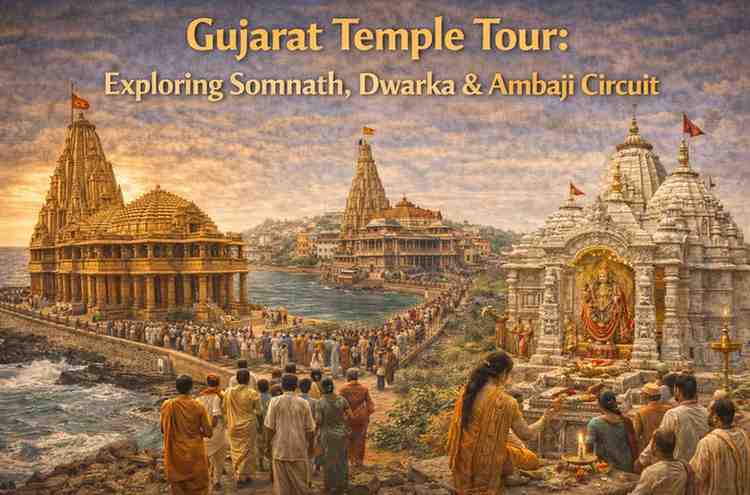
Gujarat, a land of rich cultural heritage and profound spirituality, is home to some of India’s most revered temples. The Gujarat temple tour encompassing Somnath, Dwarka, and Ambaji promises an illuminating journey through ancient legends, sacred rituals, and architectural marvels. This tour not only enlightens devotees but also enthralls travelers interested in history, culture, and devotion.
Somnath Temple
Historical and Spiritual Significance
Somnath Temple, located on the Arabian Sea coast, is one of the twelve Jyotirlingas of Lord Shiva, symbolizing divine light and spiritual power. With a history marked by repeated destruction and restoration, it epitomizes resilience and faith. The temple is believed to be the first Jyotirlinga, drawing pilgrims who seek blessings for prosperity and liberation.
Also Read :- Madhya Pradesh Temple Trail: A Journey through Khajuraho, Omkareshwar & Mahakaleshwar
Architectural Grandeur
The current temple, built in Chalukya style, showcases intricate carvings, towering spires, and massive gates that narrate tales of mythology and valor. The temple’s seaside location adds to its serene and powerful ambiance, especially during the evening light and sound show that recounts its heroic history.
Rituals and Daily Worship
Somnath is renowned for its daily aartis and special ceremonies marking festivals like Maha Shivaratri. Devotees participate in early morning and evening prayers that illuminate the temple with lamps and chants, creating a deeply spiritual atmosphere.
Also Read :- Eco Temples of India: Sustainable Shrines Protecting Nature
Visiting Somnath
Best visited between October and March, visitors can combine temple darshan with excursions to Triveni Sangam, Bhalka Tirth—associated with Lord Krishna’s legends—and nearby Gir National Park, home to Asiatic lions.
Dwarka Temple
Mythological Roots and Significance
Dwarka is celebrated as the sacred abode of Lord Krishna, one of Hinduism’s most beloved deities. The Dwarkadhish Temple, dedicated to Krishna, stands as a testament to his divine rule and is a key pilgrimage site among the Char Dham circuit.
Also Read :- Healing Temples of India: Sacred Places Known for Miracles & Health
Architectural Features
The temple features impressive spires, intricately decorated interiors, and a majestic hall that echoes devotional songs and mantras. The silver-plated doors and complex design symbolize Krishna’s opulence and spiritual significance.
Pilgrimage Attractions Nearby
The tour often includes Bet Dwarka, historically regarded as Krishna’s original kingdom island, the Nageshwar Jyotirlinga temple, and the Rukmini temple honoring Krishna’s consort, enriching the spiritual narrative of the circuit.
Visitor Experience
Participating in the evening Aarti at Dwarkadhish Temple is a highlight, with devotional music, lamp offerings, and a vibrant atmosphere. The town also offers ghats and local markets where pilgrims can immerse in cultural festivities.
Ambaji Temple
Spiritual Importance
Ambaji Temple, situated atop the Gabbar Hill, is one of the 51 Shakti Peeths, where the heart of Goddess Sati is believed to have fallen, making it a potent center for Shakti worship. It attracts devotees seeking divine feminine power, protection, and blessings.
Also Read :- Himachal Devi Temples: A Divine Journey to Naina Devi, Chintpurni & Jwala Ji
Temple Architecture and Surroundings
The temple features traditional Gujarati architecture enriched with sculptures and vibrant festivals. Its hilltop location provides panoramic views and a tranquil ambiance for spiritual contemplation and rituals.
Festivals and Rituals
Navratri is celebrated with unparalleled enthusiasm here, with vibrant dances, devotional songs, and elaborate worship rituals. Daily pujas and special offerings highlight the temple’s spiritual magnetism.
Planning Your Visit
Ambaji is accessible year-round, but festivals especially Navratri enhance the spiritual and cultural experience. Facilities accommodate pilgrims with rituals, guidance, and local cuisine reflecting Gujarati flavors.
Gujarat Temple Tour: Suggested Itinerary
Day 1: Arrival in Ahmedabad and Transfer to Dwarka
Pickup from Ahmedabad Airport/Railway station. En route visit Jamnagar’s Bala Hanuman Temple. Proceed to Dwarka and check-in. Evening visit and Aarti at Dwarkadhish Temple.
Day 2: Dwarka Local Sightseeing
Early morning visit to Bet Dwarka. Sightseeing includes Nageshwar Jyotirlinga, Gopi Talav, Rukmini Temple. Attend evening Aarti at Dwarkadhish Temple. Overnight stay in Dwarka.
Day 3: Dwarka to Somnath via Porbandar
Visit Kirti Mandir and Sudama Temple in Porbandar. Proceed to Somnath and check in. Evening visit and darshan at Somnath Temple.
Day 4: Somnath Exploration and Return
Morning Aarti at Somnath Temple. Visit Triveni Sangam and Bhalka Tirth. Optional visit to Gir National Park. Depart for Ahmedabad or onward journey.
Day 5: Ahmedabad to Ambaji and Back
Day trip to Ambaji Temple. Participate in ritualistic worship and explore local markets. Return to Ahmedabad for evening rest.
Travel Tips for Gujarat Temple Tour
Best Time to Visit
October to March, when weather is pleasant for temple visits and outdoor sightseeing.
Accommodation and Food
A range of accommodations from heritage hotels to budget lodges is available. Local Gujarati cuisine offers delicious vegetarian delicacies and snacks.
Cultural Etiquette
Respect temple dress codes by wearing modest attire. Photography may be restricted inside sanctums. Participate respectfully in rituals and aartis for a fulfilling experience.
Transportation
Tourists can travel by road between temples; Ahmedabad serves as a major transit hub with good connectivity by air and rail. Hiring local guides enriches the pilgrimage experience.
Historical Legacy of Gujarat’s Temple Circuit
Ancient Origins and Evolution
Gujarat’s temples have roots tracing back to Vedic times and evolving through various dynasties like the Maitrakas, Solankis, and Marathas. The temples not only served religious purposes but also stood as centers of art, learning, and community life, reflecting the region’s dynamic cultural history.
Impact of Maritime Trade
The coastal location of Somnath and Dwarka made them important ports, linking Gujarat to the Arabian Sea trade routes. This brought wealth, diverse cultural influences, and patronage that fueled temple construction and embellishments, enriching their architectural and ritualistic splendor.
Detailed Pilgrim Experiences
Spiritual Practices in Somnath
Pilgrims often begin their day with the serene early morning Darshan, followed by participating in the Rudra Abhishek, a special abhishekam ritual involving holy water offerings to Lord Shiva. The evening light and sound show rekindles the temple’s storied resilience, deepening devotees’ connection.
Dwarka’s Community and Ritual Life
Dwarka attracts devotees year-round, but festivals bring together traditional dancers, musicians, and priests creating a vibrant spiritual and cultural atmosphere. Pilgrims partake in Prasadam distributions, perform circumambulations, and visit sacred ghats for ritual baths in the Gomti river.
Ambaji’s Immersive Devotions
The hilltop Ambaji Temple offers trekking and devotional singing experiences. Visitors engage in the pujas performed by local priests and participate in traditional Garba dances during Navratri, enveloping themselves in Goddess Ambaji’s protective and nurturing energies.
Architectural Highlights in Detail
Sculptural Themes at Somnath
Somnath temple’s exterior walls depict celestial beings, river goddesses, and scenes from epics such as Ramayana and Mahabharata, illustrating divine virtues and cosmic battles. Intricately carved pillars narrate folklore and royal deeds, embodying a link between devotion and storytelling.
Artistic Elements of Dwarka
The temple’s shikhara with its peacock-shaped pinnacle symbolizes spirituality and divine protection. Inside, marble columns bear inscriptions in ancient scripts, while painted murals depict Krishna’s life episodes, addressing themes of righteousness, love, and heroism.
Ambaji’s Architectural Distinctiveness
Built in traditional Solanki style, Ambaji temple’s ornate entrance gates and sanctum reflect the robust craft of Gujarati temple architecture. Floral motifs and sculpted deities adorn pillars and ceilings, revealing influences of both Jain and Hindu aesthetics that blend harmoniously.
Festivals and Celebrations
Maha Shivaratri at Somnath
Maha Shivaratri witnesses huge congregations at Somnath as devotees fast, chant Shiva mantras, and attend night-long vigil prayers. The temple premises light up with diyas, and cultural programs narrate Shiva’s legends through dance and music.
Janmashtami in Dwarka
Marking the birth of Lord Krishna, Janmashtami is celebrated with enthusiasm in Dwarka. Festivities include singing bhajans, performing Ras Leela plays, and decorating the temple with flowers. Devotees observe fasts and break them at midnight, Krishna’s divine hour.
Navratri at Ambaji
The nine nights of Navratri are an explosion of joy and devotion at Ambaji. The temple hosts daily Garba dances, devotional music concerts, and special prayers. Pilgrims from across India gather to offer their respect to Goddess Durga in her most powerful form.
Local Cuisine and Hospitality
Traditional Flavors Experienced on the Tour
The temple circuit allows visitors to savor authentic Gujarati cuisine, with staples like dhokla, thepla, undhiyu, and fafda. Sweet dishes like shrikhand and basundi complement savory snacks enjoyed at local eateries.
Hospitality and Pilgrim Facilities
Temples and surrounding towns offer dharmshalas (pilgrim rest houses) and hotels ranging from simple to luxury. Community kitchens (langars) at some temples provide free meals, exemplifying the spirit of seva (service).
Practical Guide for Travelers
Packing Essentials for the Temple Tour
Comfortable clothing suitable for temple visits, walking shoes, personal prayer items, and hydration packs are recommended. Modest attire respecting temple customs ensures smooth entry to all sites.
Connectivity and Communication
The region offers good mobile and internet coverage. Learning basic Gujarati greetings enriches interactions with locals and temple staff.
Health and Safety Recommendations
Stay hydrated, follow hygiene protocols, and be cautious of crowded festival periods. Carry essential medications and travel insurance for peace of mind.
Frequently Asked Questions (FAQs) – Gujarat Temple Tour
1. Which temples are included in the Gujarat Temple Tour circuit?
The Gujarat Temple Tour circuit usually includes Somnath Jyotirlinga Temple, Dwarkadhish Temple in Dwarka, and Ambaji Temple in Banaskantha district. These temples are among the most sacred pilgrimage destinations in Gujarat.
2. Why is Somnath Temple important?
Somnath Temple is one of the twelve Jyotirlingas of Lord Shiva and is believed to be the first among them. It is located on the western coast of Gujarat along the Arabian Sea.
3. What is the significance of Dwarkadhish Temple?
Dwarkadhish Temple is dedicated to Lord Krishna and is considered one of the Char Dham pilgrimage sites in Hinduism.
4. What makes Ambaji Temple special?
Ambaji Temple is one of the 51 Shakti Peethas and is dedicated to Goddess Amba. It is one of the most visited Shakti temples in Gujarat.
5. When is the best time to visit these temples?
The best time to visit Somnath, Dwarka, and Ambaji temples is between October and March when the weather is pleasant for pilgrimage and sightseeing.
6. How far are Somnath, Dwarka, and Ambaji from each other?
Somnath and Dwarka are located in the Saurashtra region, while Ambaji is in northern Gujarat. Pilgrims usually plan a multi-day journey to cover all three temples.
7. What rituals are performed at Somnath Temple?
Devotees perform Rudrabhishek, Aarti, and special Shiva pujas at Somnath Temple, especially during festivals like Maha Shivaratri.
8. Why is Dwarka considered a holy city?
Dwarka is believed to be the ancient kingdom of Lord Krishna and is one of the four sacred Char Dham pilgrimage sites in India.
9. Are there festivals celebrated at Ambaji Temple?
Yes, Ambaji Temple hosts grand celebrations during Navratri, attracting thousands of devotees who come to worship Goddess Amba.
10. Can all three temples be visited in one trip?
Yes, many pilgrims plan a Gujarat Temple Tour itinerary covering Somnath, Dwarka, and Ambaji within several days depending on travel routes.
Conclusion
The Gujarat temple tour embracing Somnath, Dwarka, and Ambaji is an extraordinary pilgrimage blending history, spirituality, and cultural vibrancy. Each temple narrates divine tales and offers unique rituals and architecture, making this circuit a must-visit for seekers and travelers alike. Journeying through this sacred triad promises blessings, enlightenment, and unforgettable memories.
11 Comments