
Introduction
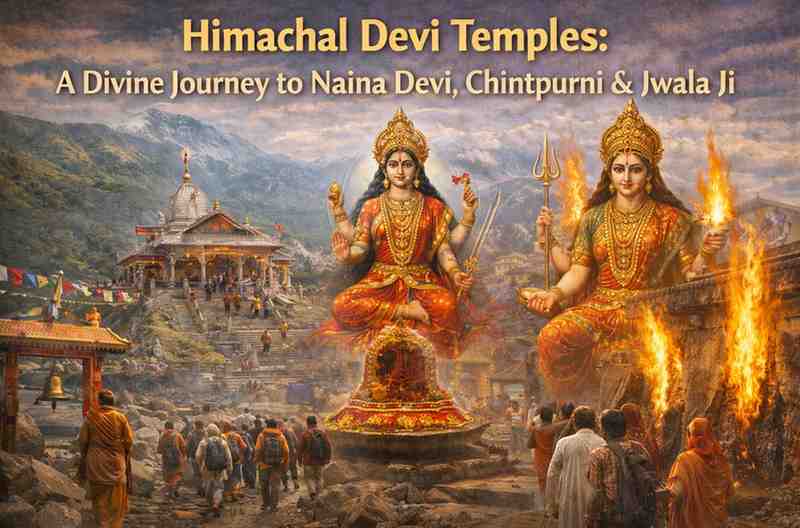
Himachal Pradesh, often called “Devbhoomi” or the Land of Gods, holds a revered place in India’s spiritual landscape with numerous temples dedicated to the divine feminine energy—Devi or Shakti. Among the many sacred shrines, the Himachal Devi temples of Naina Devi, Chintpurni, and Jwala Ji stand out for their ancient heritage, powerful legends, and large gatherings of devotees. This blog takes you through these three iconic shrines, exploring their spiritual significance, architectural grandeur, rituals, and pilgrim experiences.
Also Read:- Kailash Mansarovar Yatra 2026: Complete Pilgrimage Guide
Naina Devi Temple
Mythological Significance
Naina Devi Temple, perched atop a hill in Bilaspur district, is one of the 51 Shakti Peethas—sites where parts of Sati’s body fell during Lord Shiva’s cosmic dance of destruction. It is believed that the goddess’s eyes (Naina) fell here, making it a powerful place of divine vision and enlightenment.
Historical Background
Constructed by Raja Bir Chand in the 8th century, the temple’s strategic hilltop location offers panoramic views of the surrounding valleys, Gobind Sagar Lake, and Bhakra Dam. The site has been a pilgrimage center for centuries, attracting devotees seeking blessings for health, vision, and protection.
Architecture and Access
There is a cable car service for easy access, in addition to trekking paths for pilgrims who wish to climb the hill. The temple’s architecture reflects typical Himalayan temple design with a sanctum housing the fierce form of the goddess, surrounded by beautifully carved halls and devotees’ galleries.
Rituals and Festivals
Navratri fairs held in March-April, July-August, and October draw vast crowds. Devotees perform ritualistic offerings, participate in devotional singing, and witness special aartis. The temple glows with lamps and decorations during festivals, enhancing its spiritual ambiance.
Chintpurni Temple
Also Read:- Temples of Kerala: Sabarimala, Guruvayur & Ettumanoor
Spiritual Importance
Chintpurni, located in Una district, is another significant Shakti Peetha where the divine goddess is worshipped as Chhinnamasta—an incarnation of self-sacrifice and cosmic energy. The name “Chintpurni” means the remover of worries and anxieties, attracting devotees seeking relief from life’s troubles.
Location and Accessibility
Nestled amidst dense forests and hills, the temple is reachable by road and offers breathtaking views and a serene atmosphere, ideal for spiritual reflection. Devotees often undertake long pilgrimages during Navratri and other auspicious days.
Temple Architecture
The temple houses a natural rock formation believed to be the goddess’s effigy, which is worshipped with great devotion. Surrounding structures include prayer halls and spaces for rituals, reflecting a blend of traditional Himachali and North Indian temple styles.
Major Rituals and Festivities
The temple celebrates festivals such as Navratri with fervor, featuring folk dances, communal feasts, and continuous devotional chanting. Pilgrims engage in the ritual bathing and offerings to seek blessings for prosperity and peace.
Jwala Ji Temple
Also Read:- Maharashtra Temples: Shirdi, Trimbakeshwar & Pandharpur Yatra
Legendary Origins
Jwala Ji Temple, in Kangra district, is famed for its eternal flames emerging from fissures in the rock—believed to be manifestations of the goddess’s fiery mouth. It is one of the most ancient Shakti Peethas and attracts devotees who marvel at this natural wonder.
Religious Significance
The temple symbolizes the goddess in her elemental form—Agni (fire)—and represents the power of destruction and purification. It is said to be where Sati’s tongue fell, imbuing the place with divine energy and mystique.
Architectural Features
The temple complex encompasses multiple shrines and includes stone carvings representing tales from Hindu scripture. The flames continuously burn, maintained by temple priests who perform daily rituals and protective ceremonies.
Pilgrimage Experience and Festivals
The temple sees peak activity during Navratri and other major festivals, when thousands gather for special prayers and processions. Devotees offer ghee and prayer lamps to the flame, seeking divine intervention and blessings.
Common Threads of Devotion
Shakti Peetha Network in Himachal Pradesh
Naina Devi, Chintpurni, and Jwala Ji form part of a larger network of sacred Shakti sites in Himachal, collectively representing the cosmic feminine energy that sustains the universe. Pilgrims often traverse these shrines in a spiritual circuit, deepening their faith.
Pilgrim Experiences and Spiritual Practices
Visitors engage in chanting, meditation, ritual bathing, and participation in temple aartis. Many undertake arduous journeys on foot or via cable cars, symbolizing devotion and seeking spiritual transformation.
Festivals and Cultural Expressions
Navratri is a unifying thread, celebrated with dance, music, fasting, and feasting. Local customs and folklore enrich the religious practices, blending spiritual fervor with regional culture.
Practical Information for Pilgrims
Best Time to Visit
The cooler months from March to June and September to November offer comfortable weather for pilgrimage and sightseeing while avoiding heavy monsoon rains.
How to Reach
- Naina Devi: Accessible by road from Bilaspur with cable car facilities to the temple.
- Chintpurni: Well connected by road, with frequent bus services and taxis.
- Jwala Ji: Located near Kangra, accessible by road and close to Kangra Airport.
Accommodation and Facilities
Various dharamshalas, guest houses, and hotels accommodate pilgrims in proximity to each temple. Facilities include meal services, resting areas, and guides for ritual assistance.
Important Tips
Respect local customs and dress modestly when visiting temples. Photography might be restricted inside sanctums. Early arrival during festivals is advisable due to crowds.
Expanded Historical Context
Royal Patronage and Temple Development
Throughout history, the Himachal Devi temples have been nurtured by local rulers, saints, and communities. The Kangra dynasty, for instance, played a crucial role in restoring Jwala Ji Temple after invasions. Similarly, the Naina Devi Temple saw enhancements under various Rajput and Sikh rulers, reflecting historical layers of devotion and art.
Influence of Tantra and Shaktism
These temples represent vital centers of Shaktism and Tantric worship, emphasizing the goddess’s cosmic energy and power. Rituals here often incorporate mantras, yantras, and fire ceremonies aimed at spiritual awakening and protection.
Spiritual Practices and Healing Traditions
Energy Vortex and Meditation Spaces
Many devotees describe feeling an intense spiritual energy around these temples, particularly at Jwala Ji where the eternal flames symbolize purification. Quiet meditation zones near Naina Devi and Chintpurni offer pilgrims moments of reflective peace amid nature.
Healing and Wellness Beliefs
The waters flowing near Naina Devi and Chintpurni are believed to possess healing properties. Pilgrims commonly partake in sacred baths and prayer rituals seeking relief from physical and mental ailments, highlighting the temples’ role as centers of holistic wellness.
Cultural Narratives and Folklore
Legends of Divine Intervention
Stories recount miraculous events, such as the lighting of Jwala Ji flames by divine will, or the goddess appearing in dreams to guide devotees toward healing or spiritual insight. These narratives continue to inspire devotion and cultural richness in surrounding communities.
Oral Traditions and Folk Art
Local storytellers and artists preserve these tales through folk songs, dances (like the Gaddi dance near Chintpurni), and paintings, enabling the transmission of cultural memory and religious inspiration across generations.
Pilgrimage Innovations and Eco-Conscious Tourism
Modern Infrastructure Enhancements
Introduction of cable cars at Naina Devi and improved trekking trails at Chintpurni have made pilgrimages more accessible while promoting ecotourism. Sustainable practices in waste management and renewable energy are being increasingly adopted to preserve the temples’ natural environments.
Community-Led Conservation Efforts
Local communities engage in protecting the forests and heritage sites surrounding these temples, combining traditional wisdom with modern conservation techniques. These efforts also support livelihood through eco-tourism and cultural programs.
Festivals: A Deeper Look
Navratri’s Symbolism and Rituals
Navratri celebrations at these temples are deeply symbolic, reflecting the victory of good over evil. Unique regional rituals include fire walking, vegetarian feasts, and night-long devotional chants, each embodying aspects of the goddess’s power and compassion.
Seasonal Changes and Devotee Experiences
Festivals synchronize with seasonal cycles, marking sowing, harvest, and renewal, linking agrarian life with spiritual rhythms. Devotees find the changing seasons a metaphor for inner transformation as they journey through the temples.
Culinary and Artistic Expressions
Temple Cuisine and Prasad
Distinctive Himachali vegetarian dishes serve as prasad, including siddu, mithdee, and rajma chawal, offering tactile nourishment alongside spiritual blessings.
Artistic Inspirations
Temples inspire local handicrafts such as wood carving, embroidery, and metalwork used in ritual objects and devotional art. Workshops and festivals showcase these crafts, linking faith with cultural heritage.
Practical Pilgrim Guidance
Tips for Spiritual Preparation
Pilgrims are encouraged to undertake preparatory fasting, mantra chanting, and study of temple lore prior to visits, enhancing their spiritual receptivity.
Navigating Pilgrimage Seasons
Understanding peak seasons, crowd management, and weather patterns helps pilgrims plan enriching and safe journeys.
Reflections on the Transformative Power of Himachal Devi Temples
The journey to Naina Devi, Chintpurni, and Jwala Ji offers more than a religious pilgrimage; it is a transformative immersion in faith, culture, nature, and self-discovery. These temples stand as living symbols of divine feminine energy, sustained by tradition and renewed through modern devotion and stewardship.
Frequently Asked Questions (FAQs) – Himachal Devi Temples
1. Which temples are included in the Himachal Devi temple pilgrimage?
The Himachal Devi temple pilgrimage commonly includes Naina Devi Temple, Chintpurni Temple, and Jwala Ji Temple. These temples are among the most sacred Shakti Peethas located in Himachal Pradesh.
2. What is the significance of Naina Devi Temple?
Naina Devi Temple is believed to be the place where the eyes of Goddess Sati fell, making it one of the important Shakti Peethas. Devotees visit the temple to seek blessings for protection and spiritual strength.
3. Why is Chintpurni Temple famous?
Chintpurni Temple is dedicated to Goddess Chintpurni, also known as Chhinnamasta. Devotees believe that praying here removes worries and fulfills wishes.
4. What is unique about Jwala Ji Temple?
Jwala Ji Temple is famous for its eternal flames that emerge naturally from the rock without any visible fuel source. These flames are worshipped as the manifestation of Goddess Durga.
5. When is the best time to visit these temples?
The best time to visit Naina Devi, Chintpurni, and Jwala Ji temples is between March and October when the weather in Himachal Pradesh is pleasant for travel and pilgrimage.
6. Are these temples part of the Shakti Peeth pilgrimage?
Yes, Naina Devi and Jwala Ji are considered important Shakti Peethas, while Chintpurni is also a major Siddha Peeth dedicated to the Divine Mother.
7. How can pilgrims reach Naina Devi Temple?
Naina Devi Temple can be reached by road from cities like Chandigarh and Bilaspur. Pilgrims can also use a ropeway facility available near the temple.
8. What festivals are celebrated at these temples?
Navratri is the most important festival celebrated at Naina Devi, Chintpurni, and Jwala Ji temples, attracting thousands of devotees from across India.
9. Can all three temples be visited in one pilgrimage trip?
Yes, many devotees plan a Himachal Devi temple circuit covering Naina Devi, Chintpurni, and Jwala Ji within two to three days.
10. Is there a dress code for visiting Himachal temples?
Visitors are advised to wear modest and traditional clothing while visiting temples as a sign of respect for religious customs.
Conclusion
The Himachal Devi temples of Naina Devi, Chintpurni, and Jwala Ji offer a sacred pilgrimage into India’s spiritual heartland. Each temple, with its unique legend, architectural style, and ritualistic practices, invites devotees and travelers alike to experience the profound energy of the divine feminine. Exploring these shrines is not only a journey of faith but also a cultural immersion in Himachal’s rich traditions and natural beauty.
9 Comments