
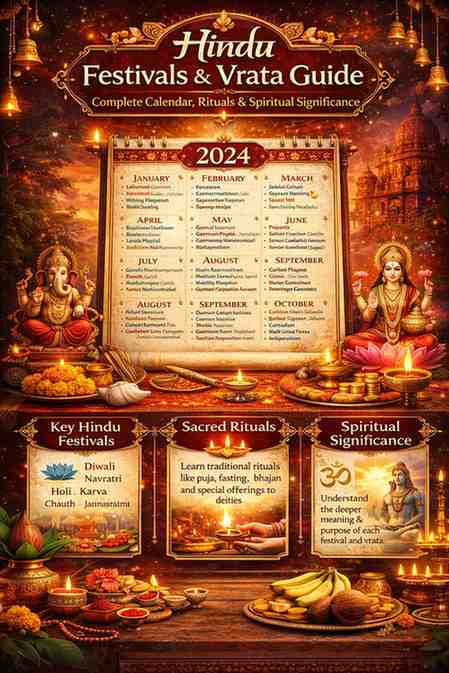
Hindu festivals and vrata (fasting observances) are not isolated religious events. They are a structured spiritual systemdesigned to align human life with cosmic rhythms, seasonal cycles, planetary movements, and inner discipline. From grand celebrations like Diwali and Navratri to subtle observances like Ekadashi, Amavasya, and monthly vrats, each festival carries a specific purpose rooted in Sanatan Dharma.
This Hindu Festivals & Vrata Guide is created as a central reference page to help devotees understand:
- What each festival means
- When and why it is observed
- How different regions celebrate the same festival differently
- How vrata and fasting impact physical, mental, and spiritual well-being
This page also serves as a gateway to detailed festival guides, monthly calendars, temple rituals, and spiritual practices followed across India.
Also Read :- Dosha Nivaran Puja – Complete Guide to Kaal Sarp, Pitru & Mangal Remedies (2026)
Understanding Hindu Festivals: More Than Celebrations
Hindu festivals are deeply connected to:
- Lunar calendar (Panchang)
- Solar transitions (Sankranti)
- Planetary alignments
- Agricultural cycles
- Mythological events
- Psychological and spiritual purification
Unlike fixed-date calendars, Hindu festivals move each year because they follow lunar tithis and nakshatras. This ensures festivals remain aligned with natural and cosmic energies, not just dates.
Also Read :- Navagraha Shanti Puja – Benefits, Cost, Vidhi & Online Booking (2026 Complete Guide)
What is a Vrata (Vrat)?
A vrata is a disciplined spiritual vow that may include:
- Fasting (complete or partial)
- Dietary restrictions
- Specific prayers or mantras
- Charity and self-restraint
- Mental focus and intention (sankalpa)
Vrata is not about punishment or denial. It is about conscious living, temporary withdrawal from indulgence, and alignment with higher awareness.
Common purposes of vrata include:
- Spiritual cleansing
- Fulfillment of wishes
- Gratitude and devotion
- Overcoming negative karmic patterns
- Health and mental clarity
Types of Hindu Festivals & Vrata
1. Major Hindu Festivals
These festivals are celebrated across India, though rituals and traditions may vary by region.
Examples:
- Diwali (Festival of Lights)
- Holi (Festival of Colors)
- Navratri & Durga Puja
- Dussehra / Vijayadashami
- Maha Shivratri
- Janmashtami
- Ram Navami
These festivals often involve:
- Temple visits
- Community celebrations
- Fasting or partial vrata
- Special pujas and aartis
- Cultural performances
2. Monthly Lunar Observances
These occur every month based on lunar phases.
Amavasya (New Moon)
- Associated with ancestors (Pitru Tarpan)
- Charity and introspection
- Spiritual cleansing
Purnima (Full Moon)
- Satyanarayan Puja
- Guru worship
- Completion and gratitude
Ekadashi (11th lunar day)
- Dedicated to Lord Vishnu
- Mental clarity and self-control
- One of the most widely observed vrats
Each Ekadashi has its own story, deity form, and spiritual significance.
3. Seasonal & Solar Festivals (Sankranti)
Sankranti marks the Sun’s transition into a new zodiac sign and represents energetic shifts in nature.
Key Sankrantis:
- Makar Sankranti
- Mesha Sankranti
- Dhanu Sankranti
These festivals often involve:
- Holy baths
- Donations
- Sun worship
- Regional harvest celebrations
4. Jayanti & Tithi-Based Festivals
Jayantis commemorate the appearance of divine beings or saints.
Examples:
- Ram Navami
- Krishna Janmashtami
- Dattatreya Jayanti
- Hanuman Jayanti
- Annapurna Jayanti
These days emphasize:
- Storytelling (Katha)
- Bhajans and kirtans
- Charity
- Special temple rituals
Hindu Festivals by Month (Overview)
Chaitra – Vaishakha
- Chaitra Navratri
- Ram Navami
- Hanuman Jayanti
Jyeshtha – Ashadha
- Ganga Dussehra
- Nirjala Ekadashi
- Rath Yatra
Shravan – Bhadrapada
- Shravan Mondays
- Nag Panchami
- Raksha Bandhan
- Krishna Janmashtami
- Ganesh Chaturthi
Ashwin – Kartik
- Sharad Navratri
- Durga Puja
- Dussehra
- Karwa Chauth
- Diwali
- Govardhan Puja
- Bhai Dooj (Yama Dwitiya)
Margashirsha – Paush
- Gita Jayanti
- Dattatreya Jayanti
- Vaikuntha Ekadashi
Each month carries unique spiritual themes and observances that support inner balance and seasonal harmony.
Regional Diversity in Hindu Festivals
One of the most powerful aspects of Hinduism is unity in diversity.
The same festival may look completely different across regions:
- Diwali:
- North India: Rama’s return to Ayodhya
- Bengal: Kali Puja
- South India: Narakasura Moksha
- Business communities: Lakshmi Puja & Ledger Worship
- Navratri:
- Gujarat: Garba & Dandiya
- Bengal: Durga Puja
- South India: Golu display
This guide links to region-specific festival explanations, ensuring local relevance without losing spiritual depth.
Spiritual & Scientific Benefits of Vrata
Modern research increasingly aligns with ancient practices.
Benefits of fasting and vrata:
- Improves digestion and metabolic balance
- Enhances mental clarity and discipline
- Reduces stress and emotional overload
- Encourages mindful eating
- Strengthens willpower and patience
When practiced with intention, vrata becomes a tool for holistic well-being, not blind ritual.
Temple Worship & Festivals
Many Hindu festivals are deeply connected to specific temples and pilgrimage sites.
Examples:
- Dev Diwali → Varanasi temples
- Navratri → Shakti Peeths
- Maha Shivratri → Jyotirlingas
- Vaikuntha Ekadashi → Vishnu temples
Festival observance often reaches its highest spiritual intensity when combined with temple darshan, aarti, and seva.
👉 Explore detailed temple guides in our Temple & Pilgrimage Guide of India.
How to Use This Guide
This page acts as a master hub.
From here, you can:
- Navigate to monthly festival calendars
- Read detailed vrat rules and katha
- Understand regional traditions
- Plan temple visits around festivals
- Align spiritual practices with astrology and muhurat
Each linked guide expands on one festival, one vrata, or one month in detail.
Hindu Festivals, Karma & Daily Life
Hindu Festivals & Vrata Guide teaches us that these sacred celebrations are not meant to be observed once a year and forgotten, but serve as powerful checkpoints for self-reflection, spiritual growth, and inner transformation.
- Are we living with dharma?
- Are we grateful?
- Are we disciplined?
- Are we aligned with nature and society?
Vrata teaches restraint. Festivals teach joy. Together, they form a balanced spiritual life.
Final Thoughts
The Hindu Festivals & Vrata Guide is designed to preserve authenticity while making ancient wisdom accessible to modern life. Whether you are deeply spiritual or simply curious, understanding festivals beyond surface celebration brings clarity, purpose, and connection.
This guide will continue to grow with:
- Year-wise updates (2025, 2026, 2027)
- Region-specific festival pages
- Linked temple rituals
- Astrology and muhurat insights
Frequently Asked Questions (FAQs) – Hindu Festivals & Vrata Guide
1. What are Hindu festivals based on?
Hindu festivals are primarily based on the lunar calendar (Panchang), planetary movements, seasonal transitions, and religious scriptures.
2. What is a Vrata in Hinduism?
A Vrata is a sacred vow or fasting ritual performed with devotion to seek blessings, spiritual purification, and fulfillment of wishes.
3. Why do festival dates change every year?
Festival dates change because the Hindu calendar follows lunar cycles, which differ from the Gregorian solar calendar.
4. Which are the most important Hindu festivals?
Major festivals include Diwali, Holi, Navratri, Maha Shivratri, Janmashtami, Ram Navami, and Makar Sankranti.
5. What is the spiritual purpose of observing vratas?
Vratas promote self-discipline, devotion, inner purification, karmic balance, and spiritual growth.
6. Can vratas be observed without strict fasting?
Yes, some vratas allow partial fasting, fruit diets, or simple vegetarian meals depending on health and tradition.
7. How do regional traditions affect Hindu festivals?
While the spiritual significance remains the same, rituals, food, and customs vary across North, South, East, and West India.
8. What is the importance of Ekadashi fasting?
Ekadashi is dedicated to Lord Vishnu and is believed to cleanse sins, improve discipline, and enhance spiritual awareness.
9. How can I follow a complete Hindu festival calendar?
You can follow a yearly Panchang or trusted spiritual platforms that publish updated festival dates and vrata timings.
10. Are Hindu festivals only religious, or do they have seasonal importance?
Many Hindu festivals align with harvest seasons, solstices, equinoxes, and agricultural cycles, blending spirituality with nature.
Conclusion: Embracing the Spiritual Rhythm of Hindu Festivals & Vratas
Hindu festivals and vratas are more than cultural celebrations—they represent a sacred rhythm of life aligned with cosmic cycles, seasons, and spiritual evolution. Each festival carries deep symbolic meaning, guiding devotees toward gratitude, discipline, purification, and divine connection.By following a complete Hindu festival calendar and observing vratas with sincerity, individuals cultivate inner strength, mindfulness, and karmic balance. Whether through fasting, prayer, charity, or community celebration, these sacred observances nurture both spiritual awareness and cultural continuity.Understanding the rituals and spiritual significance behind each festival helps transform routine celebrations into meaningful spiritual experiences. Ultimately, Hindu festivals and vratas serve as divine reminders to live in harmony with dharma, devotion, and universal energy.
References
- Gurucool.life – Hindu Festival Calendar & Spiritual Guidance
- Shloka.life – Mantras, Vrata Vidhi & Ritual Practices
- Vedic Panchang (Hindu Lunar Calendar)
- Bhagavad Gita
- Skanda Purana
- Padma Purana
1 Comment