
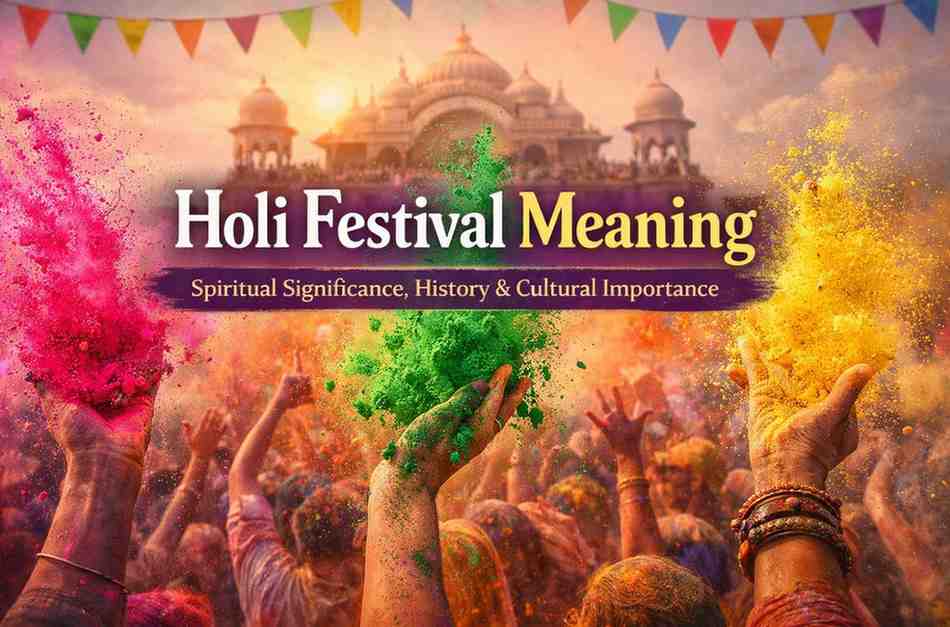
Introduction: Understanding the Deeper Holi Festival Meaning
Holi is among the most joyful and vibrant festivals celebrated in India and around the world, yet its true essence extends far beyond colorful powders and lively gatherings. To appreciate its deeper significance, one must look past the surface festivities and explore the spiritual, cultural, and philosophical foundations that shape this celebration.
Observed with the arrival of spring, the festival represents renewal, transformation, and emotional release. It encourages people to let go of old resentments, practice forgiveness, and embrace life with a renewed sense of joy. While the playful exchange of colors draws attention, the deeper message lies in inner purification, social unity, and the victory of positivity over negativity.
This detailed guide examines the origins, legends, rituals, symbolism, and modern relevance of Holi, revealing why it continues to hold a special and lasting place in human culture.
Also Read :- What Is Holi Festival and Why Is It Celebrated? Complete Guide
What Is the Holi Festival Meaning?
At its heart, the celebration symbolizes the triumph of light over darkness, good over evil, and hope over despair, honoring life in all its joyful, colorful, and spiritual forms.
Holi signifies:
- Renewal of relationships
- Forgiveness and reconciliation
- Emotional freedom
- Unity beyond social boundaries
The celebration reminds us that life, like colors, is meant to be lived fully, encouraging openness, compassion, and a sense of shared humanity.
Also Read :- Why Is Diwali Celebrated? History, Meaning & Spiritual Significance of Diwali
The Seasonal Significance of Holi
Holi is closely tied to nature and the changing seasons. It is celebrated at the end of winter and the beginning of spring, a time when nature awakens with new life.
Symbolism of Spring
- End of cold and hardship
- Return of warmth and fertility
- New agricultural cycle
Also Read :- Diwali Meaning and History: A Complete Exploration
Mythological Roots Behind the Holi Festival Meaning
The Legend of Holika and Prahlad
One of the most important stories explaining the Holi Festival Meaning comes from ancient Hindu mythology.
King Hiranyakashipu believed he was invincible and demanded worship as a god. His son Prahlad, however, remained devoted to righteousness and divine truth. In an attempt to punish him, the king ordered his sister Holika—who had a boon protecting her from fire—to sit in flames with Prahlad.
Instead:
- Holika was burned
- Prahlad was saved
This story represents:
- Faith over arrogance
- Truth over tyranny
- Devotion over ego
The burning of Holika symbolizes the destruction of evil, which forms a central part of the Holi Festival Meaning.
Also Read :- Shadow Work Explained: Guide to Inner Healing and Integration
Holika Dahan and Its Spiritual Meaning
The night before Holi is marked by Holika Dahan, a ritual bonfire that holds deep spiritual symbolism.
What Holika Dahan Represents
- Burning negative thoughts
- Letting go of ego and pride
- Inner purification
People gather around the fire, pray, and reflect on personal flaws they wish to release. This ritual reinforces the Holi Festival Meaning as a journey of inner cleansing before outward celebration.
Also Read :- What Is Shadow Work? Meaning, Benefits & Practice It Safely
The Role of Colors in Holi Festival Meaning
Colors are the most visible aspect of Holi, yet they carry profound symbolism.
Symbolism of Holi Colors
- Red: Love, passion, strength
- Yellow: Knowledge, learning, positivity
- Green: Growth, harmony, renewal
- Blue: Calmness, stability, depth
The Holi Festival Meaning reminds us that life is a blend of many emotions, just like colors, and all are necessary for balance and wholeness.
Also Read :- Spiritual Awakening Symptoms: Signs, Stages & What to Expect
Social Equality and the Holi Festival Meaning
One of the most powerful aspects of Holi is how it dissolves social divisions.
During Holi:
- Rich and poor celebrate together
- Age and status lose importance
- Strangers become friends
This social harmony reflects the deeper Holi Festival Meaning—that all humans are equal beneath the colors of life.
Also Read :- Stages of Spiritual Awakening: A Step-by-Step Inner Transformation
Forgiveness and Emotional Healing
Holi is traditionally a time to forgive past misunderstandings and heal emotional wounds.
People:
- Apologize for past conflicts
- Mend broken relationships
- Start fresh with goodwill
This emotional release is a vital part of the Holi Festival Meaning, emphasizing inner peace and harmony over resentment.
Cultural Importance of Holi in Indian Society
Holi plays a vital role in Indian cultural identity.
It:
- Strengthens family bonds
- Encourages community participation
- Preserves ancient traditions
The Holi Festival Meaning is woven into music, dance, folklore, and rituals that have been passed down for generations.
Regional Expressions of Holi Festival Meaning
Holi is celebrated differently across India, yet its core message remains the same.
Examples:
- Barsana: Playful gender role reversal
- Vrindavan: Devotional celebrations
- West Bengal: Cultural and artistic expressions
Each variation adds depth to the celebration, illustrating how a single philosophy can take many beautiful forms.
Holi Festival Meaning in Modern Times
In today’s fast-paced world, the message behind this celebration feels more relevant than ever.
Modern life brings:
- Stress and pressure
- Emotional disconnection
- Social divisions
Holi serves as a reminder to pause, reconnect, and celebrate joy without judgment.
Environmental Awareness and Holi Festival Meaning
Traditionally, Holi used natural colors made from flowers and herbs.
The true Holi Festival Meaning encourages:
- Harmony with nature
- Responsible celebration
- Respect for the environment
Eco-friendly Holi practices align more closely with the festival’s original spiritual intent.
Psychological and Emotional Benefits
Holi promotes:
- Stress relief
- Emotional expression
- Social bonding
Through laughter, music, and togetherness, the celebration nurtures belonging and supports emotional and mental well-being.
Holi as a Symbol of Inner Transformation
Beyond rituals, the Holi Festival Meaning teaches inner transformation.
It invites people to:
- Release anger
- Embrace humility
- Accept change
Just as colors transform appearances, Holi symbolizes the transformation of the soul.
Global Recognition of Holi Festival Meaning
Today, Holi is celebrated worldwide:
- Universities
- Cultural festivals
- Community gatherings
The festival’s growing international reach reflects its universal message of happiness, togetherness, and optimism.
Holi and Human Values
Holi reinforces timeless human values:
- Compassion
- Forgiveness
- Equality
- Joy
These values form the core of the celebration, giving it relevance across cultures and generations.
Why the Holi Festival Meaning Still Matters
In a world often divided by fear and conflict, Holi reminds humanity to:
- Celebrate differences
- Choose love over hatred
- Live joyfully
This lasting relevance explains why the festival continues to inspire millions of people.
Frequently Asked Questions About Holi Festival Meaning
What is the true meaning of the Holi festival?
The true meaning of Holi lies in renewal, forgiveness, and the victory of positivity over negativity. It symbolizes joy, unity, and the celebration of life.
Why is Holi associated with colors?
Colors represent joy, equality, and emotional expression. They symbolize the many shades of life and the breaking of social barriers.
What does Holika Dahan symbolize?
Holika Dahan symbolizes the burning away of evil, ego, and negative thoughts, representing spiritual cleansing and inner renewal.
What is the spiritual significance of Holi?
Spiritually, Holi signifies inner purification, forgiveness, and the triumph of good over evil, encouraging emotional and mental renewal.
How does Holi promote unity and equality?
During Holi, social differences fade as people celebrate together with colors, promoting equality, harmony, and togetherness.
Why is Holi celebrated at the arrival of spring?
The festival marks the transition from winter to spring, symbolizing renewal, growth, and fresh beginnings in both nature and human life.
Is Holi relevant in modern times?
Yes, Holi remains relevant today as it promotes joy, stress relief, emotional healing, and human connection in a fast-paced world.
Is the meaning of Holi the same across India?
While regional traditions vary, the core meaning of Holi—celebrating positivity, renewal, and unity—remains the same throughout India.
Final Reflection: The True Holi Festival Meaning
So, what is the true Holi Festival Meaning?
It is not just about colors—it is about:
Cleansing the heart
Releasing negativity
Celebrating life’s diversity
Reconnecting with humanity
Holi teaches that when we let go of ego and fear, life becomes brighter, lighter, and more meaningful.
When the colors fade and the celebrations end, the lesson remains:
Live with joy, forgive freely, and embrace the beauty of being human.
4 Comments