
Introduction
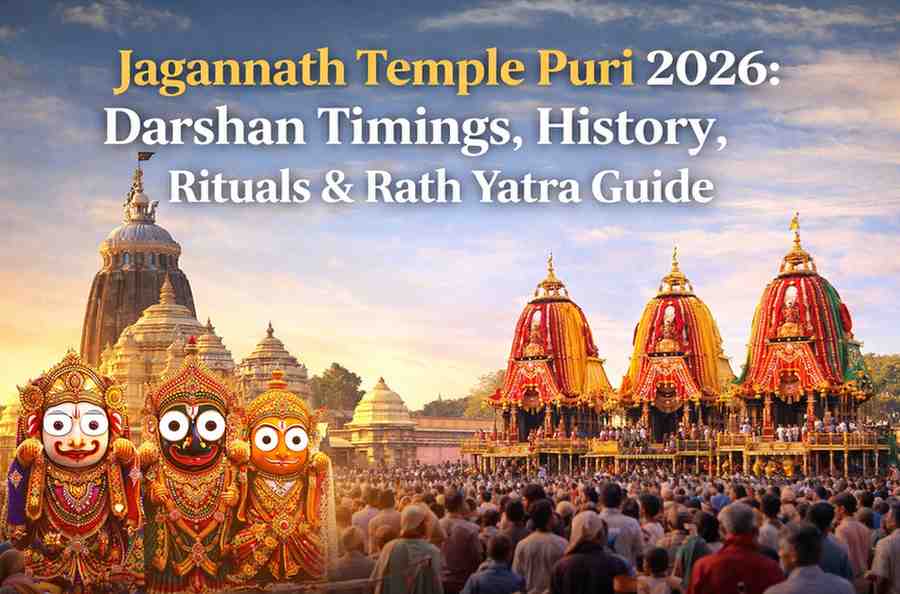
The Jagannath Temple in Puri, Odisha, stands as one of the most sacred and iconic Hindu pilgrimage sites in India. In 2026, the temple continues to attract millions of devotees through its divine darshan, ancient rituals, and the world-famous Rath Yatra festival. The temple is revered as the abode of Lord Jagannath (a form of Lord Vishnu), along with his siblings Lord Balabhadra and Goddess Subhadra.
As one of the Char Dham pilgrimage sites, Jagannath Temple holds immense spiritual importance and represents the living tradition of devotion, ritual discipline, and cultural continuity in Odisha.
Also read – CHAR DHAM YATRA 2026: BADRINATH, DWARKA, PURI & RAMESWARAM
Historical Background and Spiritual Significance
Constructed in the 12th century, the Jagannath Temple reflects the grandeur of Kalinga architecture. Its unique wooden deities, carved from sacred neem wood, symbolize the cosmic cycle of creation, preservation, and dissolution.
Unlike stone idols found in most temples, the wooden forms of Jagannath, Balabhadra, and Subhadra emphasize impermanence and renewal—central ideas in Hindu cosmology. The temple’s rituals are deeply symbolic, integrating concepts of karma, dharma, time, and cosmic order.
Darshan Timings at Jagannath Temple 2026
- Daily Darshan: Approximately 5:30 AM to 9:00 PM
- Temple opening rituals: Begin before dawn
- Special darshan schedules: Operate during major festivals and peak pilgrimage days
Types of Darshan
- Mangala Aarti
- Sakala Dhupa Darshan
- Bhoga Mandapa Darshan
- Sandhya Aarti
- Badasinghara Vesha Darshan
Darshan timings may vary slightly depending on rituals and festival schedules.
Also read – India Spiritual Pilgrimage Guide 2026 – Sacred Temples, Cities & Travel Tips for Seekers
Major Rituals at Jagannath Temple
Snana Yatra (Bathing Festival)
The Snana Yatra marks the ceremonial bathing of the deities with 108 pots of sacred water. Following this ritual, the deities enter a period of rest known as Anavasara.
Anavasara Period
During this time, the deities remain away from public darshan. Devotees traditionally visit the Alarnath Temple for worship.
Chhera Pahara Ritual
The King of Puri performs the symbolic act of sweeping the chariot platforms with a golden broom, emphasizing humility before the divine.
Pahandi & Rath Yatra
During Rath Yatra, the deities are ceremonially carried in a grand procession to massive wooden chariots and pulled along Bada Danda (Grand Road) to the Gundicha Temple.
Bahuda Yatra
After their stay at Gundicha Temple, the deities return to the main temple in the Bahuda Yatra procession.
Suna Besha & Niladri Bijaya
The deities are adorned with gold ornaments in Suna Besha, followed by Niladri Bijaya, marking their return to the sanctum.
Note: Official Rath Yatra 2026 dates will be announced closer to the festival based on the lunar calendar.
The Glorious Rath Yatra 2026 (Overview)
The Rath Yatra is one of the world’s largest religious processions, drawing devotees from across India and abroad. The festival symbolizes Lord Jagannath’s journey from the divine realm to the earthly world, reinforcing the idea of accessibility and universal grace.
Celebrations include:
- Devotional singing
- Traditional Odissi music
- Cultural performances
- Community participation
Architecture of Jagannath Temple
Layout and Design
The temple complex is enclosed by fortified walls and aligned along an east–west axis. It consists of four primary structures:
- Vimana (Sanctum Sanctorum)Houses the deities; built in Rekha Deula style with a towering curvilinear spire.
- Jagamohana (Assembly Hall)Built in Pidha Deula style; serves as a congregation space.
- Natamandapa (Dancing Hall)Used for devotional dance and cultural rituals.
- Bhogamandapa (Offering Hall)Dedicated to food offerings and Mahaprasad rituals.
Neelachakra
The Neelachakra, an eight-spoked wheel made of Ashtadhatu, crowns the temple and symbolizes Lord Vishnu’s cosmic authority.
Sculptural Artistry
The walls feature intricate carvings of celestial beings, animals, warriors, and divine feminine figures such as Madanikasand Sura Sundaris, representing artistic excellence of Odisha.
Also read – BADRINATH TEMPLE 2026: DARSHAN, AARTI TIMINGS & SIGNIFICANCE
Daily Ritual Schedule at Jagannath Temple 2026
Morning Rituals
- Temple opening around 4:30 AM
- Mangala Aarti at dawn
- Mailam and Abakash rituals
- Public darshan begins around 7:00 AM
Food Offerings
- Gopala Ballava Puja (morning)
- Sakala Dhupa
- Madhyahna Dhupa (midday)
Evening Rituals
- Temple reopens in the evening
- Sandhya Aarti
- Badasinghara Vesha
- Final offering before night closure
Night Closure
- Pahuda (resting ritual)
- Temple closes close to midnight
Visitor Guide for Jagannath Temple 2026
Location & Access
- Location: Puri, Odisha (Bada Danda)
- Nearest Railway Station: Puri (≈2 km)
- Nearest Airport: Bhubaneswar (≈60 km)
Entry Rules
- Entry to the sanctum is restricted to Hindus only
- Traditional attire required
- No mobile phones, cameras, leather items, or footwear allowed
Best Time to Visit
- Early morning for peaceful darshan
- November to February for pleasant weather
Accommodation
Puri offers a wide range of hotels and dharamshalas. Festival periods require advance booking.
Mahaprasad: Sacred Culinary Tradition
The temple kitchen prepares Mahaprasad, considered one of the most sacred food traditions in Hinduism. Cooked using age-old methods, it is offered to Lord Jagannath and later distributed to devotees.
Conclusion
The Jagannath Temple in Puri (2026) continues to stand as a living symbol of devotion, inclusivity, and spiritual heritage. Through its darshan, rituals, architecture, and the grand Rath Yatra, the temple offers devotees a profound connection with Lord Jagannath, blending faith, tradition, and cultural continuity into a timeless pilgrimage experience.
2 Comments