
Introduction
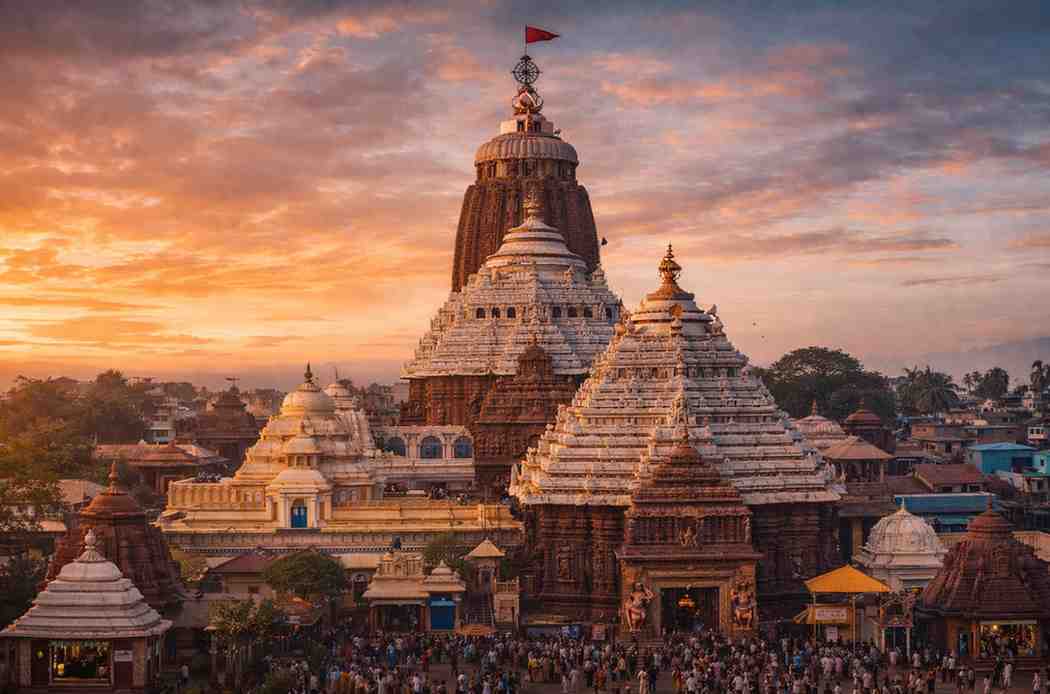
The Jagannath Temple in Puri is one of the most revered spiritual landmarks in India, drawing millions of pilgrims and seekers every year. Rising above the coastal landscape of Odisha, the temple is far more than an architectural marvel—it is a living tradition shaped by devotion, inclusivity, and mystery. To understand its lasting influence on Indian spirituality, culture, and philosophy, one must explore Jagannath Temple History, which reveals how myth, tribal worship, royal patronage, and spiritual wisdom merged into a single sacred tradition.
For centuries, this shrine has stood as a powerful symbol of unity, reminding devotees that divine grace transcends caste, class, and background.
The Meaning of Lord Jagannath
The name Jagannath is derived from Sanskrit and means “Lord of the Universe.” This universal aspect sets the deity apart from conventional representations of divinity. Here, God is not distant or abstract but deeply personal, approachable, and compassionate.
The form of the deity is intentionally symbolic rather than anatomically complete. Large circular eyes, a simplified body, and the absence of limbs convey a spiritual message—that divine presence is beyond physical perfection. This philosophy lies at the heart of Jagannath Temple History, emphasizing acceptance, equality, and devotion over formality.
Ancient and Pre-Vedic Roots
Long before the present temple was constructed, the region around Puri was already a sacred center. Archaeological findings, ancient texts, and oral traditions suggest that worship of a universal divine force existed here thousands of years ago.
Historians believe these early practices were rooted in indigenous belief systems rather than classical Vedic rituals. Over time, these traditions merged with mainstream Hindu worship, creating a rare example of spiritual synthesis. This gradual evolution is a defining feature of Jagannath Temple History, setting it apart from many other major temples in India.
Also Read :- What Is Diwali: A Complete Guide to the Festival of Lights
Tribal Heritage and the Sabara Connection
One of the most unique aspects of the temple’s story is its deep connection with tribal communities, especially the Sabaras. According to legend, the original deity—known as Nilamadhava—was worshipped by the tribal chief Visvavasu in a forested region.
Even today, descendants of tribal families participate in key rituals, including the secretive ceremonies associated with the renewal of the deities. This continued involvement demonstrates how Jagannath Temple History honors indigenous spirituality rather than erasing it, making the tradition truly inclusive.
Also Read:- Diwali Meaning and History: A Complete Exploration
King Indradyumna and the Divine Command
A pivotal chapter unfolds with King Indradyumna of Malwa, who is believed to have received a divine vision instructing him to establish the shrine. Guided by faith, the king embarked on a long and difficult journey in search of the sacred form of the deity.
According to tradition, the divine essence manifested as Daru Brahma—a sacred log of neem wood—from which the deities were carved. The king’s surrender to divine will and his unwavering devotion remain central moral themes within Jagannath Temple History.
Also Read :- Holi Festival Meaning: Spiritual Significance, History & Cultural Importance
The Mystery of the Wooden Deities
Unlike most Hindu temples that enshrine stone or metal idols, the deities here are made of neem wood. They are ritually replaced every 12 to 19 years through a sacred ceremony known as Nabakalebara.
During this ritual, the life force of the old idols is transferred to the new ones in a secret process witnessed by only a few chosen priests. This practice symbolizes the cycle of birth, death, and rebirth, reinforcing a core philosophical teaching embedded in Jagannath Temple History—that the soul is eternal, even as forms change.
Construction of the Present Temple
The grand structure that stands today was built in the 12th century by King Anantavarman Chodaganga Deva of the Eastern Ganga dynasty. Designed in the Kalinga architectural style, the temple rises majestically with its towering spire dominating the skyline of Puri.
Thick stone walls, intricate carvings, and fortified gateways reflect both spiritual devotion and the need for protection during turbulent times. This architectural achievement serves as physical testimony to the enduring legacy preserved through Jagannath Temple History.
Mysteries of the Sudarshana Chakra and Temple Flag
The Sudarshana Chakra placed atop the temple is one of its most fascinating features. No matter where a person stands in the city, the chakra appears to face them directly.
Equally puzzling is the temple flag, which flutters in the opposite direction of the wind. These unexplained phenomena have intrigued scientists and devotees alike, adding layers of mystery to Jagannath Temple History and reinforcing the belief that divine presence defies natural laws.
Daily Rituals and Sacred Routine
The temple follows one of the most elaborate ritual schedules in the world. From early morning awakenings to nightly rest ceremonies, every moment of the day is governed by ancient tradition.
Each offering, chant, and procession follows scriptures preserved over centuries. This continuity of practice forms a vital part of Jagannath Temple History, ensuring that devotion remains unchanged despite the passage of time.
Mahaprasad: A Symbol of Equality
Mahaprasad—the sacred food offered to the deities—holds profound social significance. Unlike many religious settings, caste distinctions disappear entirely when devotees share this food together.
Prepared in earthen pots using traditional methods, Mahaprasad embodies spiritual equality and communal harmony. This tradition alone makes Jagannath Temple History revolutionary in the context of social inclusivity.
Rath Yatra: The Festival of the People
The annual Rath Yatra is the most visible and celebrated event associated with the temple. During this grand festival, the deities are brought out of the sanctum and placed on massive chariots, allowing everyone—regardless of status—to have darshan.
This act of divine outreach symbolizes compassion and accessibility, reinforcing the central message carried throughout Jagannath Temple History.
Philosophical Depth of Jagannath Worship
Jagannath is simultaneously understood as Krishna, Vishnu, and the cosmic consciousness. This layered symbolism bridges emotional devotion with philosophical inquiry.
Here, God is both the beloved friend and the universal truth—an idea that gives Jagannath Temple History its deep spiritual resonance.
Influence on the Bhakti Movement
Saints such as Chaitanya Mahaprabhu transformed the temple into a major center of the Bhakti movement. His ecstatic devotion emphasized love, surrender, and humility over ritual complexity.
Through his influence, the temple’s spiritual message spread across India, further enriching Jagannath Temple History and shaping devotional practices nationwide.
Survival Through Invasions and Political Change
The temple has survived centuries of invasions, natural disasters, and political upheaval. During times of danger, the deities were secretly relocated to protect them from destruction.
These periods of hardship highlight the resilience of both the institution and its devotees, strengthening the legacy recorded in Jagannath Temple History.
Colonial Period and Modern Administration
During British rule, the temple entered a new phase marked by documentation and legal oversight. While colonial interference posed challenges, it also led to clearer administrative structures that ensured ritual continuity.
This transition forms an important modern chapter in Jagannath Temple History, bridging tradition and governance.
Cultural Influence Beyond Religion
The temple has profoundly influenced Odissi dance, classical music, poetry, and visual arts. Many traditional performances are inspired by temple rituals and mythology.
Through these art forms, the spiritual essence of the shrine extends far beyond its walls, reinforcing the cultural dimension of Jagannath Temple History.
Global Presence in the Modern World
With the Indian diaspora spread across the globe, Rath Yatra celebrations now take place in cities such as London, New York, and Sydney. These events carry the temple’s message of unity and devotion to international audiences.
This global reach ensures that Jagannath Temple History continues to inspire far beyond India’s borders.
Why the Temple Endures
The enduring power of the Jagannath tradition lies in its adaptability without losing spiritual essence. By embracing change while preserving core values, the temple remains relevant across generations.
This rare balance is what makes Jagannath Temple History a living spiritual force rather than a relic of the past.
Frequently Asked Questions
Where is the Jagannath Temple located?
The Jagannath Temple is located in Puri, Odisha, on the eastern coast of India. It is one of the most important pilgrimage sites in Hinduism.
Who built the present Jagannath Temple?
The present temple structure was built in the 12th century by King Anantavarman Chodaganga Deva of the Eastern Ganga dynasty.
Why are the deities made of wood?
The deities are carved from sacred neem wood to symbolize the cycle of life, death, and renewal. They are periodically replaced through a ritual known as Nabakalebara.
What is the significance of the Rath Yatra?
Rath Yatra is an annual festival during which the deities are taken out of the temple in grand chariots, allowing devotees from all backgrounds to receive their blessings.
What is Mahaprasad and why is it important?
Mahaprasad is the sacred food offered to the deities and later shared among devotees. It is unique because people of all castes eat it together, symbolizing equality.
Why is the Jagannath Temple considered spiritually unique?
The temple is known for its inclusive philosophy, ancient rituals, unexplained phenomena, and deep spiritual symbolism that emphasizes devotion beyond social boundaries.
Conclusion
In conclusion, the story of the Jagannath Temple is not merely a record of the past but a living spiritual force. Rooted in tribal devotion, enriched by royal patronage, protected through adversity, and celebrated by millions, Jagannath Temple History stands as a timeless symbol of universal divinity.
As long as faith seeks unity and devotion seeks compassion, the spiritual message preserved through Jagannath Temple History will continue to illuminate the path for generations to come.


4 Comments