Introduction to Jamat-ul-Vida 2026
Jamat-ul-Vida 2026 will be observed on the last Friday of Ramadan 2026, which is expected to fall on March 13 or March 20, 2026, depending on the moon sighting in India. Since the Islamic calendar follows the lunar cycle, the exact date will be confirmed only after Ramadan begins and progresses accordingly.
Jamat-ul-Vida holds immense spiritual significance for Muslims worldwide. The term “Jamat-ul-Vida” translates to “Friday of Farewell.” It represents the final Friday before the holy month of Ramadan concludes. Therefore, this day carries emotional, spiritual, and communal importance.
During Ramadan, Muslims observe fasting (Roza), perform additional prayers, increase charity, and strengthen their connection with Allah. However, as the month approaches its end, believers begin reflecting deeply on their spiritual journey. Consequently, Jamat-ul-Vida becomes a powerful reminder that Ramadan will soon depart.
Moreover, Friday (Jumu’ah) already holds a special status in Islam. Muslims gather in large congregations for the weekly Friday prayer. When the last Friday of Ramadan arrives, its importance multiplies significantly. Therefore, mosques across India witness massive gatherings on Jamat-ul-Vida.
In cities like Delhi, Lucknow, Hyderabad, Mumbai, and Kolkata, thousands of worshippers assemble for special prayers. Authorities often arrange additional security and traffic management due to the large crowds.
Jamat-ul-Vida 2026 Quick Facts
| Event | Jamat-ul-Vida 2026 |
|---|---|
| Expected Date | March 13 or 20, 2026 |
| Observed By | Muslims worldwide |
| Significance | Last Friday of Ramadan |
| Purpose | Prayer, reflection, repentance |
Get a free consuation with Top Astrologer of India
Meaning and Historical Background of Jamat-ul-Vida
To understand Jamat-ul-Vida 2026 fully, one must first examine its meaning and historical roots. The word “Jamat” refers to congregation or gathering, while “Vida” signifies farewell. Therefore, Jamat-ul-Vida means “The Congregational Friday of Farewell.”
Importantly, this day does not mark a separate festival. Instead, it highlights the final Friday prayer during Ramadan. Nevertheless, Muslims attach deep emotional value to this occasion because it signals that the blessed month will soon conclude.
Historically, Friday (Jumu’ah) has always held high status in Islam. Prophet Muhammad (peace be upon him) emphasized the importance of Friday prayers and encouraged believers to gather collectively. Therefore, when the last Friday of Ramadan arrives, Muslims increase their devotion and gratitude.
Although Islamic texts do not prescribe a unique ritual specifically for Jamat-ul-Vida, scholars encourage believers to maximize worship on this day. Consequently, people recite the Quran more frequently, offer additional prayers, and seek forgiveness.
In India, Jamat-ul-Vida gained cultural prominence over centuries. Mughal rulers often attended congregational prayers at grand mosques like Jama Masjid in Delhi. Even today, large gatherings at historical mosques reflect that tradition.
Furthermore, Islamic scholars remind believers that Ramadan may not return in the same way next year. Therefore, Jamat-ul-Vida encourages self-reflection. People ask themselves whether they utilized the holy month effectively.
Additionally, the emotional atmosphere intensifies as Ramadan nears completion. While Eid-ul-Fitr brings joy, the departure of Ramadan brings a sense of longing. Thus, Jamat-ul-Vida balances gratitude and sadness simultaneously.
As we move forward, let us examine why Friday itself holds exceptional importance in Islam and how that importance connects directly with Jamat-ul-Vida 2026.
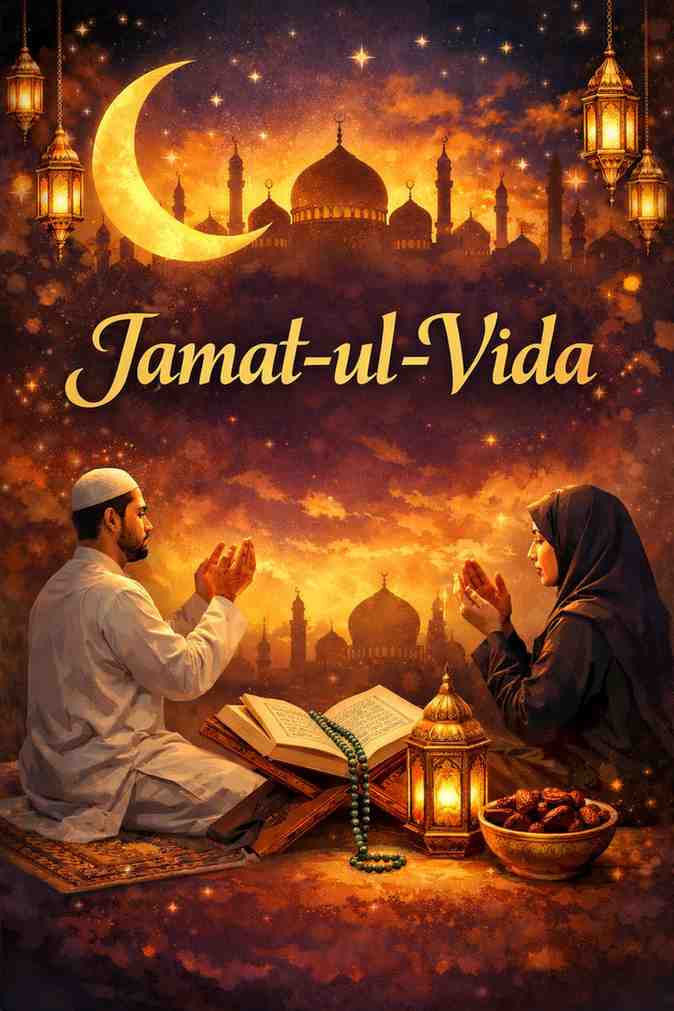
Importance of Friday (Jumu’ah) in Islam
Before discussing Jamat-ul-Vida 2026 further, it is essential to understand why Friday holds extraordinary importance in Islam. Friday, known as Jumu’ah, serves as the weekly day of congregation for Muslims.
Unlike other days, Friday includes a mandatory congregational prayer for adult Muslim men. Instead of the regular Zuhr prayer, believers gather for Jumu’ah prayer in mosques. The Imam delivers a sermon (Khutbah) before leading the prayer. Therefore, Friday strengthens unity and spiritual awareness.
Prophet Muhammad (peace be upon him) described Friday as the best day of the week. According to Islamic tradition, several significant events occurred on Friday. Therefore, Muslims treat it as a blessed day filled with spiritual opportunities.
Moreover, Islam encourages specific acts on Friday:
- Performing Ghusl (ritual bath)
- Wearing clean clothes
- Applying perfume
- Reciting Surah Al-Kahf
- Sending blessings upon the Prophet
When the last Friday of Ramadan arrives, these actions carry even greater reward. Consequently, Jamat-ul-Vida becomes spiritually powerful.
Additionally, Friday fosters community bonding. Large congregations allow believers to reconnect, listen to guidance, and strengthen social ties. During Ramadan, this unity becomes even more visible.
In India, major mosques witness overwhelming attendance on Jamat-ul-Vida. Authorities sometimes arrange additional prayer spaces in open grounds to accommodate worshippers.
Therefore, when Friday coincides with the final phase of Ramadan, its impact multiplies. Believers intensify worship, seek forgiveness sincerely, and pray for acceptance of their fasting.
Now that we understand Friday’s importance, the next section will focus on the spiritual significance of Jamat-ul-Vida during the final days of Ramadan.
Also read – IMPORTANT INTERNATIONAL DAYS IN MARCH 2026: COMPLETE AWARENESS CALENDAR
Islamic Calendar Context and Moon Sighting Importance
The Islamic calendar, also known as the Hijri calendar, is based entirely on lunar cycles. Unlike the Gregorian calendar, which follows the solar year, the Islamic year consists of 12 lunar months totaling approximately 354 days. As a result, Islamic dates shift about 10 to 11 days earlier each year in the Gregorian calendar.
Ramadan, the ninth month of the Islamic calendar, begins only after the sighting of the crescent moon. Therefore, the exact date of Jamat-ul-Vida 2026 cannot be confirmed until Ramadan officially starts and progresses.
Since Jamat-ul-Vida is observed on the last Friday of Ramadan, its exact Gregorian date depends on moon sighting. In India, Islamic scholars and moon sighting committees confirm the beginning and end of Ramadan based on physical observation of the moon.
This lunar system reflects the traditional method established during the time of Prophet Muhammad (peace be upon him). It ensures that Islamic religious observances remain connected to natural celestial cycles.
Because of regional differences in moon sighting, Jamat-ul-Vida may occur on slightly different dates in different countries. However, its spiritual importance remains the same worldwide.
Also read – MARCH 2026 NATIONAL & GLOBAL OBSERVANCE DAYS: MEANING AND SIGNIFICANCE
Spiritual Significance of Jamat-ul-Vida During the Final Days of Ramadan
As Ramadan enters its final phase, emotions naturally intensify. Therefore, Jamat-ul-Vida 2026 carries profound spiritual weight because it arrives when believers reflect deeply on their month-long journey of faith.
Throughout Ramadan, Muslims fast daily, perform Taraweeh prayers at night, increase Quran recitation, and give charity generously. However, as the last Friday approaches, an important realization emerges — the blessed month is about to depart. Consequently, Jamat-ul-Vida becomes a moment of spiritual urgency.
Unlike the beginning of Ramadan, which fills hearts with excitement and fresh determination, the final Friday encourages evaluation. Muslims ask themselves critical questions:
- Did I improve my character?
- Did I strengthen my relationship with Allah?
- Did I help those in need?
- Did I seek forgiveness sincerely?
Therefore, Jamat-ul-Vida serves as a checkpoint before Ramadan concludes.
Moreover, Islamic scholars emphasize that acceptance of deeds matters more than the quantity of deeds. Because of this understanding, believers increase supplication (dua) on the last Friday. They pray for forgiveness, guidance, protection, and acceptance of their fasting.
Additionally, the last ten days of Ramadan include Laylat al-Qadr (The Night of Decree), which holds immense spiritual value. Since Jamat-ul-Vida falls within these powerful final days, its importance increases further.
Emotionally, this day blends gratitude and longing. On one hand, Muslims thank Allah for granting them the opportunity to complete Ramadan. On the other hand, they feel sadness as the sacred month prepares to leave.
Therefore, Jamat-ul-Vida 2026 should not be viewed as a routine Friday. Instead, believers should treat it as a spiritual climax of Ramadan.
Next, let us examine the specific prayers and practices Muslims perform on Jamat-ul-Vida.
Also read – HINDU FESTIVALS IN MARCH 2026: HOLI, NAVRATRI, RAMA NAVAMI AND IMPORTANT VRAT DATES
Special Prayers and Practices on Jamat-ul-Vida
Although Islam does not prescribe a separate ritual exclusively for Jamat-ul-Vida, believers maximize worship on this day. Therefore, preparation begins early in the morning.
First and foremost, Muslims perform Ghusl (ritual purification) before attending Friday prayer. They wear clean or new clothes and apply fragrance. These actions reflect respect for the congregational gathering.
Moreover, believers arrive at the mosque early. Since Jamat-ul-Vida attracts large crowds, early arrival ensures proper participation in prayer and Khutbah.
The Friday sermon on Jamat-ul-Vida typically focuses on:
- The virtues of Ramadan
- The importance of sincerity
- Charity and Zakat
- Preparation for Eid-ul-Fitr
- Continuation of good deeds after Ramadan
Additionally, Muslims recite the Quran more frequently on this day. Many people complete Quran recitation during the last week of Ramadan, which adds further significance.
Furthermore, supplication plays a central role. After the Friday prayer, believers raise their hands and ask Allah for forgiveness and mercy. They pray for their families, community, and nation.
Importantly, many Muslims also increase charity before Eid approaches. Zakat-al-Fitr distribution often begins around this time. Therefore, Jamat-ul-Vida encourages generosity and compassion.
In some regions, mosques organize additional religious lectures and gatherings. These events motivate worshippers to continue good habits beyond Ramadan.
Consequently, Jamat-ul-Vida 2026 becomes not just a farewell Friday but a day of renewed commitment.
Now, let us explore how Jamat-ul-Vida is observed across India.
Also read – MARCH 2026 VRAT & FASTING CALENDAR: EKADASHI, SHIVRATRI & SANKASHTI
Quran and Hadith References Related to Friday and Congregational Prayer
The importance of Friday (Jumu’ah) and congregational prayer is clearly mentioned in Islamic scripture.
Quran Reference
Allah says in the Quran:
“O you who believe! When the call is proclaimed for the prayer on Friday, come to the remembrance of Allah and leave off business. That is better for you if you only knew.”
(Surah Al-Jumu’ah 62:9)
This verse emphasizes the obligation and spiritual value of Friday prayer. It encourages Muslims to pause worldly activities and prioritize worship.
Another verse highlighting Ramadan’s importance:
“The month of Ramadan is that in which was revealed the Quran, a guidance for mankind and clear proofs of guidance and criterion.”
(Surah Al-Baqarah 2:185)
This verse explains why the final days of Ramadan, including Jamat-ul-Vida, hold deep spiritual significance.
Hadith References
Prophet Muhammad (peace be upon him) said:
“The best day on which the sun has risen is Friday.”
(Sahih Muslim, Hadith 854)
This hadith confirms Friday as the most blessed day of the week.
Another important hadith states:
“Whoever performs Ghusl on Friday, goes early to the mosque, listens attentively to the sermon, and does not engage in idle talk, will have his sins forgiven between that Friday and the next.”
(Sahih Bukhari, Hadith 883)
This highlights the spiritual rewards associated with Friday prayer.
Since Jamat-ul-Vida is the last Friday of Ramadan, its rewards and spiritual benefits become even more meaningful.
Observance of Jamat-ul-Vida in India
India observes Jamat-ul-Vida with deep devotion and remarkable unity. Since the country hosts one of the largest Muslim populations in the world, congregational prayers draw massive crowds.
In Delhi, thousands gather at Jama Masjid. Similarly, Lucknow’s Asafi Mosque and Hyderabad’s Mecca Masjid witness large congregations. Authorities often implement special security arrangements due to high attendance.
Moreover, traffic management becomes essential because roads around major mosques experience heavy congestion. Therefore, local administrations coordinate with religious bodies to ensure smooth organization.
Unlike Eid-ul-Fitr, Jamat-ul-Vida does not involve festive meals or gift exchanges. Instead, the focus remains primarily spiritual. Worshippers attend prayer, listen to sermons, and return home quietly.
However, markets still show increased activity because Eid approaches soon. People complete shopping preparations after attending prayer. Thus, spiritual reflection and practical preparation coexist during this period.
Additionally, community leaders often use this platform to address social issues. They encourage peace, unity, education, and responsible citizenship. Consequently, Jamat-ul-Vida strengthens both religious and civic values.
Importantly, non-Muslim communities in India also respect the significance of this Friday. The spirit of coexistence remains visible across cities.
Overall, Jamat-ul-Vida 2026 in India will reflect devotion, discipline, and collective prayer rather than celebration.
Up next, we will discuss the difference between Jamat-ul-Vida and Eid-ul-Fitr, along with its role in preparing believers for Eid.
Also read – ALL FESTIVALS IN MARCH 2026: HINDU, JAIN, SIKH, MUSLIM & INTERNATIONAL EVENTS CALENDAR
Difference Between Jamat-ul-Vida and Eid-ul-Fitr
Although many people confuse Jamat-ul-Vida with Eid-ul-Fitr, these two occasions differ significantly in meaning and purpose. Therefore, understanding the distinction becomes essential for clarity.
First and foremost, Jamat-ul-Vida refers to the last Friday of Ramadan, whereas Eid-ul-Fitr marks the end of Ramadan and the beginning of Shawwal. In other words, Jamat-ul-Vida occurs during Ramadan, while Eid takes place after Ramadan concludes.
Moreover, Jamat-ul-Vida emphasizes reflection and spiritual intensity. On this day, Muslims focus on repentance, gratitude, and self-evaluation. However, Eid-ul-Fitr centers around celebration, joy, and communal festivity.
Another key difference lies in rituals. Jamat-ul-Vida involves the regular Friday congregational prayer with heightened devotion. By contrast, Eid-ul-Fitr includes a special Eid prayer performed once a year, followed by greetings, feasts, and social visits.
Additionally, emotional tones vary greatly. Jamat-ul-Vida carries a sense of farewell because Ramadan prepares to depart. Conversely, Eid-ul-Fitr brings excitement and happiness because it celebrates the successful completion of fasting.
Importantly, Jamat-ul-Vida does not involve exchanging gifts or preparing festive meals. Instead, worshippers prioritize dua (supplication) and Quran recitation. Meanwhile, Eid-ul-Fitr features traditional dishes, new clothes, and Eidi for children.
Therefore, while both occasions hold importance, their purposes differ clearly. Jamat-ul-Vida prepares the heart spiritually, whereas Eid-ul-Fitr expresses gratitude through celebration.
Now that we understand the difference, let us explore how Jamat-ul-Vida prepares believers for Eid.
How Jamat-ul-Vida Prepares Muslims for Eid-ul-Fitr
As Ramadan approaches its conclusion, Jamat-ul-Vida acts as a spiritual bridge leading toward Eid-ul-Fitr. Instead of rushing into celebration, believers pause and reflect.
First, Jamat-ul-Vida reminds Muslims to complete unfinished acts of worship. For example, many individuals increase Quran recitation to finish remaining portions. Others intensify supplication and seek forgiveness sincerely.
Furthermore, this Friday encourages believers to distribute Zakat-al-Fitr before Eid prayer. Since charity ensures that underprivileged families can celebrate Eid with dignity, preparation begins during the final days of Ramadan.
Additionally, sermons on Jamat-ul-Vida often emphasize continuity. Imams remind worshippers that good habits should not end with Ramadan. Therefore, Muslims commit to maintaining regular prayer, charity, and moral discipline even after Eid.
Emotionally, Jamat-ul-Vida helps believers shift from reflection to gratitude. While they feel sadness about Ramadan’s departure, they also anticipate Eid with thankfulness.
Moreover, this Friday promotes unity before celebration begins. Large congregations strengthen community bonds. As a result, when Eid arrives, people celebrate with a deeper sense of connection.
Therefore, Jamat-ul-Vida 2026 will serve as a spiritual checkpoint before the joyous festival of Eid-ul-Fitr unfolds.
Next, let us examine the broader social and community impact of Jamat-ul-Vida in India.
Social and Community Impact of Jamat-ul-Vida in India
Beyond personal spirituality, Jamat-ul-Vida significantly influences society and community life in India. Since large congregations gather for prayer, this day strengthens collective identity.
Firstly, community unity becomes highly visible. Thousands stand shoulder to shoulder during prayer, which reinforces equality and brotherhood. Social barriers diminish as people pray together regardless of status.
Secondly, religious leaders often address social responsibilities during their sermons. They speak about education, ethical conduct, peace, and national harmony. Consequently, Jamat-ul-Vida promotes responsible citizenship alongside faith.
Moreover, charitable initiatives intensify during this period. NGOs and local groups organize food distribution drives and Zakat collection campaigns. Therefore, vulnerable families receive support before Eid arrives.
Additionally, markets experience moderate activity as families finalize Eid preparations. However, unlike Eid shopping rush, the tone remains spiritually focused.
Importantly, Jamat-ul-Vida also highlights India’s multicultural fabric. Non-Muslim communities respect the significance of the day, and authorities ensure smooth arrangements. This mutual understanding strengthens social harmony.
Furthermore, younger generations learn the importance of Ramadan’s final days through participation in congregational prayer. Parents bring children to mosques, which fosters religious awareness.
Thus, Jamat-ul-Vida 2026 will not only deepen spiritual devotion but also enhance communal unity across India.
Get a Free Call with Authentic Astrologer of India
Do’s and Don’ts on Jamat-ul-Vida
Jamat-ul-Vida is a spiritually important day. Muslims are encouraged to follow specific practices to maximize blessings.
Do’s
1. Attend Friday Congregational Prayer
Participating in Jumu’ah prayer is the most important act on this day.
2. Perform Ghusl (Ritual Purification)
Cleanliness is strongly encouraged before attending Friday prayer.
3. Wear Clean and Modest Clothes
Wearing neat clothes reflects respect for worship.
4. Recite the Quran
Reading and reflecting on the Quran increases spiritual rewards.
5. Make Dua (Supplication)
Seek forgiveness, guidance, and blessings from Allah.
6. Give Charity (Zakat and Sadaqah)
Helping the needy brings immense blessings, especially during Ramadan.
7. Arrive Early at the Mosque
Early arrival allows better focus and participation.
Don’ts
1. Do Not Skip Friday Prayer Without Valid Reason
Friday prayer is mandatory for adult Muslim men.
2. Avoid Idle Talk During Khutbah (Sermon)
Listening attentively is essential.
3. Do Not Engage in Arguments or Negative Behavior
Maintain peace and patience.
4. Avoid Wasting Time on Distractions
Focus on worship and spiritual reflection.
5. Do Not Return to Bad Habits After Ramadan
Carry forward the discipline learned during Ramadan.
Conclusion and FAQs – Jamat-ul-Vida 2026
Jamat-ul-Vida 2026 represents the final Friday of Ramadan, a day filled with reflection, gratitude, and spiritual urgency. Although it does not mark a separate festival, Muslims treat it with immense respect because it signals the approaching end of the holy month.
Throughout this blog, we explored:
- Meaning and historical background of Jamat-ul-Vida
- Importance of Friday (Jumu’ah) in Islam
- Spiritual significance during Ramadan’s final phase
- Special prayers and practices
- Observance in India
- Difference between Jamat-ul-Vida and Eid-ul-Fitr
- Social and community impact
Ultimately, Jamat-ul-Vida reminds believers that Ramadan’s departure should inspire lifelong discipline. Instead of returning to old habits, Muslims should carry forward the lessons of patience, charity, and devotion.
As Ramadan concludes, Jamat-ul-Vida encourages sincere repentance and renewed commitment. Therefore, it stands as a powerful spiritual milestone within the Islamic calendar.
Frequently Asked Questions (FAQs)
Frequently Asked Questions (FAQs) – Jamat-ul-Vida 2026
1. When is Jamat-ul-Vida 2026 in India?
Jamat-ul-Vida 2026 is expected to be observed on March 13 or March 20, 2026, depending on the moon sighting and the official start of Ramadan in India.
2. What does Jamat-ul-Vida mean?
Jamat-ul-Vida means “Friday of Farewell.” It refers to the last Friday of Ramadan, marking the final congregational Friday prayer before the holy month concludes.
3. Why is Jamat-ul-Vida important in Islam?
Jamat-ul-Vida holds spiritual importance because it falls during the final days of Ramadan. Muslims increase worship, seek forgiveness, and reflect on their spiritual growth.
4. Is there a special prayer for Jamat-ul-Vida?
There is no separate mandatory prayer specifically for Jamat-ul-Vida. Muslims perform the regular Friday (Jumu’ah) prayer with greater devotion and sincerity.
5. Is Jamat-ul-Vida a public holiday in India?
Jamat-ul-Vida is not a nationwide public holiday, but it is widely observed across India with large congregational prayers in mosques.
6. What should Muslims do on Jamat-ul-Vida?
Muslims should attend Friday prayer, recite the Quran, give charity, make dua, and seek forgiveness sincerely.
7. What is the difference between Jamat-ul-Vida and Eid-ul-Fitr?
Jamat-ul-Vida is the last Friday of Ramadan focused on worship and reflection, while Eid-ul-Fitr is the festival marking the end of Ramadan and is celebrated with prayers and festivities.
8. Why does the date of Jamat-ul-Vida change every year?
The date changes every year because the Islamic calendar follows the lunar cycle, which is approximately 10–11 days shorter than the Gregorian calendar.
References Section
The information in this article is based on authentic Islamic sources and scholarly references:
- The Holy Quran – Surah Al-Jumu’ah (62:9)
- The Holy Quran – Surah Al-Baqarah (2:185)
- Sahih Muslim – Hadith on the importance of Friday
- Sahih Bukhari – Hadith on Friday prayer rewards
- Islamic lunar calendar guidelines
- IslamicFinder.org – Islamic events calendar
- Government of India holiday and religious observance data
- Encyclopaedia Britannica – Islam and Ramadan overview