
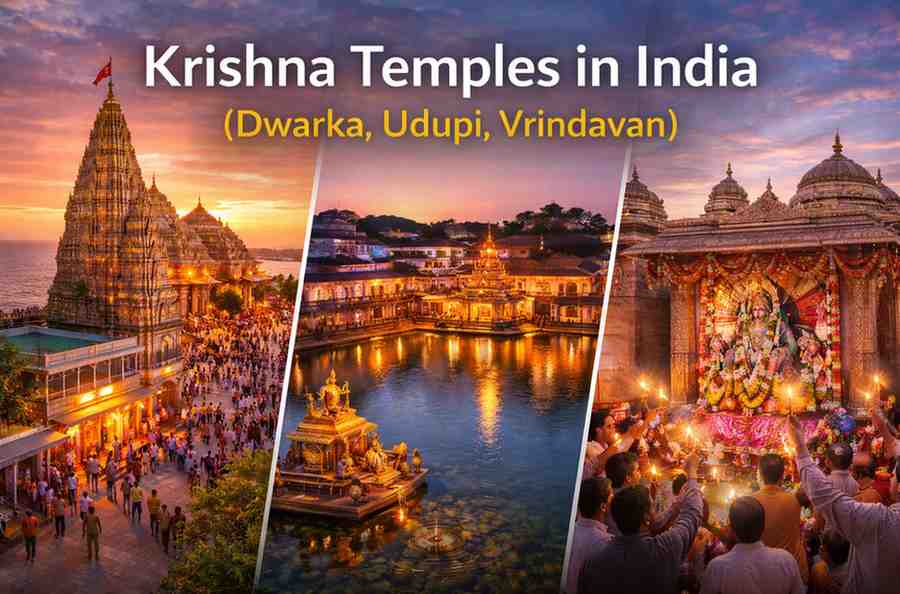
Introduction to Krishna Temples in India
Lord Krishna, the eighth avatar of Vishnu, is worshiped predominantly as a playful child, a divine lover, a wise strategist, and a supreme god. His temples span diverse regions and traditions—from Dwarka, reflecting Krishna’s royal abode, to Udupi, representing scholastic and devotional rigor, and Vrindavan, embodying the tales of his childhood and youthful exploits.
Dwarkadhish Temple, Dwarka, Gujarat
Historical and Mythological Significance
Dwarka is famed as the ancient kingdom of Lord Krishna, mentioned in the Mahabharata and other scriptures. The temple of Dwarkadhish—meaning “King of Dwarka”—stands on the Gomti River’s banks, symbolizing the divine city Krishna established after leaving Mathura. Legends assert that Krishna’s great-grandson, Vajranabha, reconstructed the temple over the original royal palace site centuries ago.
Architectural Features
- The temple glorifies Krishna in a majestic four-story structure with exquisitely carved pillars and arches.
- The central shrine harbors the idol of Krishna, adorned with precious jewelry and a high crown.
- The temple complex includes smaller shrines dedicated to Balarama, Subhadra, and Rukmini, reflecting Krishna’s family lore.
Rituals and Festivals
- Daily rituals start with Suprabhatam (morning prayers) and continue through multiple elaborate pujas.
- The Janmashtami festival marking Krishna’s birth draws throngs of devotees with midnight celebrations, dances, and bhajans.
- The temple participates in the Chardham pilgrimage circuit, affirming its importance in pan-Indian devotion.
Udupi Sri Krishna Matha, Karnataka
Also Read :- Braj Bhoomi Temple Guide: Mathura, Vrindavan & Barsana
Origin and Founding
Founded by the revered philosopher-saint Madhvacharya in the 13th century, Udupi Krishna Temple is a core center for the Dvaita Vedanta school. The temple is famous for its unique idol visible through a Navagraha Kitiki, a nine-holed window, symbolizing cosmic order.
Temple Complex and Design
- The main temple houses the dark granite idol of Krishna depicted as a child holding a churning rod—highlighting the playful aspect of Krishna’s lore.
- The temple complex hosts multiple smaller shrines and ponds, including the sacred Madhwa Sarovara where ritual baths occur.
Ritual Practices
- The temple follows a strict sequence of fourteen daily pujas, including Nirmalya Visarjana, Udvartana, and Kalasha Pooja.
- The Paryaya Festival celebrates the biennial transfer of temple management to a different matha, involving elaborate rituals, processions, and community celebrations.
Vrindavan Temples, Uttar Pradesh
Also Read :- Gurdwaras in Alberta
Spiritual Importance
Vrindavan is the land of Krishna’s youthful pastimes—Raas Leela, childhood mischiefs, and divine love with Radha. The town has around 5,500 temples dedicated mainly to Krishna and Radha, making it one of the most sacred Vaishnava pilgrimage centers.
Notable Temples
- Krishna Balaram Mandir: An ISKCON affiliate, this temple highlights Krishna’s life with his brother Balarama, emphasizing devotion through music and community.
- Prem Mandir: Known for its white marble carvings depicting scenes from Krishna Leela and Ramayana.
- Banke Bihari Temple: Revered for its unique worship style and vibrant festivals.
- Radha Raman, Madan Mohan, and Sri Radha Vallabh Temples: Emphasize different aspects of spiritual union and historical devotional practices.
Festivals and Celebrations
- Janmashtami: Celebrated with outstanding fervor involving midnight prayers, dance, fireworks, and massive gatherings.
- Holi: Vrindavan’s Holi, especially in Barsana and Nandgaon, is a world-famous playful festival of colors celebrating divine love.
- Raas Leela: Periodic reenactments of Krishna’s divine dance with Gopis immerse pilgrims in devotional ecstasy.
- Radhashtami: Marks the birth anniversary of Radha Rani, celebrated with a blend of ritual and cultural festivities.
Pilgrimage Practices and Spiritual Experiences
- Pilgrims visiting these temples seek darshan, engage in chanting, participate in aartis, and often take holy dips (especially in Vrindavan’s Yamuna River).
- Rituals focus on Krishna’s different forms—child, lover, king—and their theological implications on devotion (bhakti).
- Each temple has unique observances, community offerings, and guided tours enhancing spiritual immersion.
Travel and Visit Tips for 2026
- Dwarka is accessible via Rajkot Airport and regular train and bus services, with accommodations near the temple complex.
- Udupi offers serene environs with temple stays available, accessible through Mangalore Airport and railways.
- Vrindavan is well connected with Mathura Railway Station and by road from Delhi and Agra, with numerous lodging options ranging from ashrams to hotels.
Overview of Indian Temple Architectural Styles
Indian temple architecture primarily comprises three renowned styles:
- Nagara Style: Prevalent in North India, characterized by curvilinear shikharas (towers), square sanctums (garbhagriha), and mandapas (pillared halls). Temples usually have pyramidal or beehive towers with complex carvings.
- Dravida Style: Dominant in South India, defined by pyramid-shaped vimanas (tower above sanctum), massive gopurams (gateway towers), and enclosed courtyards with pillared halls.
- Vesara Style: A blend of Nagara and Dravida traditions, often seen in South and Central India, combining elements of both with regional adaptations.
Architectural Features in Krishna Temples
Also Read :- Ancient Temples of India: Exploring 5,000 Years of Faith
Dwarkadhish Temple (Dwarka)
- Dwarka’s Krishna temple exemplifies Nagara style architecture with a tall spire topped by a flag with 56 sun and moon symbols.
- The temple has a grand garbhagriha housing Krishna’s idol and includes multiple mandapas with intricate carvings.
- Its five-story structure incorporates stone pillars and arches richly sculpted with divine motifs that reflect the temple’s royal patronage.
- The temple complex spans a large area with additional shrines for other deities, landscaped courtyards, and surrounding water bodies symbolizing mystical associations.
Udupi Sri Krishna Temple
- Reflecting a Dravidian architectural style, Udupi temple features tiled roofs, wooden beams, and balconies alongside the stone sanctum.
- The temple is centered around the garbhagriha containing the Krishna idol, visible through a nine-hole window called the Navagraha Kitiki.
- Udupi comprises pillared halls and smaller shrines in the complex, with emphasis on communal dining halls (prasadam rooms) as part of ritual practice.
- The temple’s architecture balances traditional South Indian temple elements with local building materials and tropical climate adaptations.
Vrindavan Temples
- Vrindavan’s temples vary widely, with some, like Banke Bihari temple, reflecting North Indian temple styles while others show Rajasthani or Mughal influences.
- Many temples here are compact with elaborate decorative work, focusing on vibrant colors, murals, and idol artistry that illustrate Krishna’s life stories.
- The complex layout often includes landscaped gardens, water tanks, and open courtyards for congregational worship and festival dances.
- ISKCON temples in Vrindavan adopt modern architecture inspired by classical Vaishnavite motifs but adapted for contemporary devotional needs.
Comparison Table: Krishna Temples Architectural Styles
| Aspect | Dwarka Temple | Udupi Temple | Vrindavan Temples |
|---|---|---|---|
| Style | Nagara (North Indian) | Dravidian (South Indian) | Mixed (Nagara, Rajasthani, Modern) |
| Key Features | Tall spire, carved stone halls | Wooden structures with tiled roofs | Colorful murals, compact shrines |
| Temple Complex | Large with multiple shrines and courtyards | Includes dining halls, smaller shrines | Varied layouts with gardens, tanks |
| Idol Visibility | Central sanctum | Navagraha Kitiki (nine-hole window) | Iconic Krishna idols with elaborate decorations |
| Climate Adaptation | Stone construction suited to coastal conditions | Tropical adaptations with wood and stone | Diverse, depends on specific temple site |
| Notable Artistic Elements | Sun and moon flags, intricate carvings | Traditional wood carving and stone detailing | Mural paintings, ornate idol crafting |
Symbolism in Krishna Temples Architecture
- Krishna temples not only serve as places of worship but also embody spiritual symbolism through architecture.
- Garbhagriha represents the cosmic womb, housing Krishna’s divine form.
- Mandapas serve as spaces of community gathering, storytelling, and ritualistic dance and music (e.g., Raslila enactments).
- Temple towers (shikharas) symbolize Mount Meru, the mythical cosmic mountain in Hindu cosmology.
- Water bodies in temple complexes symbolize life flow, purity, and Rinascence, complementing the devotional experience.
Daily Rituals in Krishna Temples
Also Read :-Akshardham Temple Delhi 2026: Architecture, Light Show & Darshan Guide
Pujas and Aartis
- Morning rituals begin with the Mangala Aarti, waking the deity with chants, songs, and the waving of lamps.
- Devotees offer Abhishekam (ceremonial bathing) with milk, honey, ghee, water, and sandalwood paste to the Krishna idol, invoking purity and auspiciousness.
- Bhog offerings include fruits, sweets, and special preparations like panjeeri and butter (Makhan), symbolizing Krishna’s childhood fondness and divine nourishment.
- Evening Sandhya Aarti marks the day’s closure, where lamps are lit, mantras are chanted, and community sings bhajans.
- Throughout the day, multiple small pujas and homams (fire rituals) may be conducted, especially in larger temples like Dwarka.
Chanting and Bhajans
- Repetitive chanting of Krishna’s names and mantras, such as the Hare Krishna Mahamantra, is central for invoking divine presence and creating a devotional atmosphere.
- Group kirtans, involving call-and-response singing, often fill temple courtyards with devotional energy, drawing participants into spiritual ecstasy.
Temple Service and Volunteerism
- Devotees often volunteer in temple upkeep, seva, and organizing festivals, creating a community of shared spiritual service (Seva).
- Participating in rituals, decorating the temple, or preparing prasadam fosters selfless devotion and deepens individual practice.
Unique Spiritual Practices
- Roop Dhyan (Meditation on the Form): Devotees meditate on Krishna’s divine forms and pastimes, fostering inner spiritual connection beyond ritual formalities.
- Sustained Ekanta Sadhana (solitary devotion) can be practiced by sincere devotees seeking deep experiential realization.
- At home temples, devotees replicate pujas with pictures or small idols, maintaining daily connection even away from major temples.
Festival-Related Rituals
- Krishna Janmashtami: The pinnacle festival sees special midnight rituals including Abhishekam with Panchamrit, singing of 108 divine names, and ceremonial cradle swinging (Jhulan).
- Holi: Devotional reenactments of Krishna’s playful pastimes with colors accompany the festival, especially vibrant in Vrindavan.
- Raslila Dances: Emotional theatrical enactments of Krishna’s divine love with the Gopis, integrating rhythmic dance and storytelling into devotional practice.
Spiritual Significance of Daily Devotion
- Daily rituals maintain an ongoing dialogue between devotees and Krishna, reflecting the theology of loving personal relationship central to Krishna bhakti.
- Consistent worship, chanting, and acts of seva are considered pathways to spiritual purification, bliss, and ultimately, liberation (moksha).
- The temple becomes a vibrant spiritual hub not only for religious rites but for community bonding, cultural perpetuation, and educational exchange.
Mythology and History of Krishna Temples
Dwarka Temple – The City of Lord Krishna
Legend holds that the city of Dwarka was built by Lord Krishna himself after he moved from Mathura to escape his enemies. The Dwarkadhish Temple, also known as Jagat Mandir, is said to have been established more than 2,500 years ago by Krishna’s great-grandson Vajranabha. The temple is thought to be located on the site of Krishna’s ancient royal palace. Historical reconstructions have taken place, particularly the 16th century renovations, but it continues to preserve its spiritual legacy. The temple is a key stop on the Char Dham pilgrimage, emphasizing its pan-Indian significance.
Udupi Krishna Temple – The Birthplace of Dvaita Vedanta
The Udupi Sri Krishna Temple’s history intertwines with Madhvacharya, a 13th-century saint who founded the Dvaita philosophy. According to legend, Madhvacharya discovered a childlike idol of Krishna concealed inside a large tamarind log. The temple famously offers darshan to devotees through the nine-hole window, called Navagraha Kitiki, symbolizing universal cosmic energies. The temple is renowned for its systematic daily rituals and grand festivals. Many stories also narrate the struggles of devotees like Kanakadasa, who was barred entry but through sincere devotion experienced divine vision.
These stories form the spiritual core of worship and cultural identity in the town.
Unique Worship Tradition at Banke Bihari Temple
Unlike typical temple practices:
- The idol is treated as a small child and is covered and uncovered periodically during darshan.
- This tradition maintains the mystery and playfulness of Krishna’s divine presence.
- The curtains are drawn every few minutes to protect the deity’s divine gaze so devotees can experience darshan in intervals, preserving the sanctity and intensity of worship.
- The temple refrains from early morning aarti and ringing bells to allow the deity rest akin to a small child.
- Rituals include three main services: Shri Vandanam (adoration), Rajbhog (midday meal offering), and Shayan (putting to rest in evening).
Spiritual Significance of the Rituals
This distinctive way of worship reflects the intimate and loving relationship devotees share with Krishna in his childlike form. The intermittent darshan teaches devotees reverence towards divine exuberance and the nuances of bhakti (devotion).
Festival Celebrations at Banke Bihari Temple
The temple bustles with special festivals such as:
- Janmashtami: The birth celebration of Krishna with midnight ceremonies.
- Holi: Colorful celebrations tying back to Krishna’s playful nature.
These festivals attract throngs of devotees, deepening communal bonds and religious fervor. The Prem Mandir illustrates beautiful marble carvings depicting the Leelas and episodes from Krishna’s life. The legends narrate that the idols of Krishna were lost and retrieved multiple times, symbolizing the resilience of faith.
Also Read :- Kasar Devi Mandir Almora, Uttarakhand – History, Significance, Timings & Complete Information
Legends and Spiritual Stories
- The legend of Vajranabha founding Dwarka Temple roots the site in Krishna’s own family history and divine monarchy, inspiring ardent followers.
- The tale of Madhvacharya’s discovery of Krishna’s idol in Udupi underscores divine intervention and the importance of unwavering faith.
- Stories like Kanakadasa’s devotion, despite social barriers, highlight Krishna’s accessibility and mercy to all devotees.
- Vrindavan’s rich folklore includes accounts of Krishna’s divine interventions, such as lifting Govardhan Hill to protect devotees or his joyous Ras Leela dances, which symbolize the spiritual union between divine and devotee.
- The continuous rediscovery and protection of Krishna idols across time reaffirm the enduring nature of Krishna bhakti (devotion) throughout history.
Theological Significance
- Krishna temples emphasize the multiple facets of Krishna’s divinity: as charming child (Bal Krishna), cosmic king (Dwarkadhish), and supreme lover (Radha Krishna).
- The temples’ rituals replicate divine pastimes, fostering personal connection through bhakti yoga and interactive worship.
- Pilgrims come not just for darshan but for transformative spiritual experiences that embody forgiveness, love, and transcendence.
Frequently Asked Questions – Krishna Temples in India (Dwarka, Udupi, Vrindavan)
1. Which are the most famous Krishna temples in India?
The most famous Krishna temples in India are Dwarkadhish Temple in Dwarka, Krishna Matha in Udupi, and the temples of Vrindavan such as Banke Bihari and ISKCON.
2. Why is Dwarka important in Lord Krishna’s life?
Dwarka is believed to be the kingdom established by Lord Krishna. The Dwarkadhish Temple marks the place where Krishna ruled as king and protected his people.
3. What makes Udupi Krishna Temple unique?
The Udupi Krishna Temple is known for its idol worshipped through a silver-plated window (Kanakana Kindi) and its strong connection with the Dvaita philosophy of Madhvacharya.
4. Why is Vrindavan called the land of Krishna’s leelas?
Vrindavan is where Lord Krishna spent his childhood and performed divine leelas. It is associated with Radha, the gopis, and countless temples dedicated to Krishna.
5. What is the best time to visit Krishna temples in India?
Janmashtami, Holi, and Kartik month are the most auspicious times. October to March is ideal for comfortable travel and darshan.
6. Can devotees visit all three places in one pilgrimage?
Yes, many devotees plan a Krishna pilgrimage covering Dwarka, Udupi, and Vrindavan, though they are in different regions and require separate travel planning.
7. Are there special rituals in these Krishna temples?
Each temple follows unique traditions, including Mangala Aarti, Bhog offerings, Ras Leela celebrations, and daily bhajans dedicated to Lord Krishna.
8. Is there a dress code for visiting Krishna temples?
Modest and traditional attire is recommended. In places like Udupi and Dwarka, devotees are encouraged to wear simple, respectful clothing.
9. What spiritual benefits are associated with visiting these temples?
Devotees believe that visiting Krishna temples brings inner peace, devotion, emotional healing, and a deeper connection with divine love.
10. Why should one explore Krishna temples in India?
Krishna temples in India reflect different phases of Lord Krishna’s life—Dwarka shows his kingship, Vrindavan his divine love, and Udupi his spiritual wisdom.
Conclusion
Krishna temples in India—from the royal Dwarka to the theological Udupi and the divine Vrindavan—offer devotees a panorama of faith, culture, and profound spirituality. Each temple narrates unique stories of Krishna’s life and sustains centuries-old traditions, deeply enriching the bhakti movement across India. A 2026 pilgrimage encompassing these temples promises a transformative journey through the heart of Krishna devotion.
3 Comments