
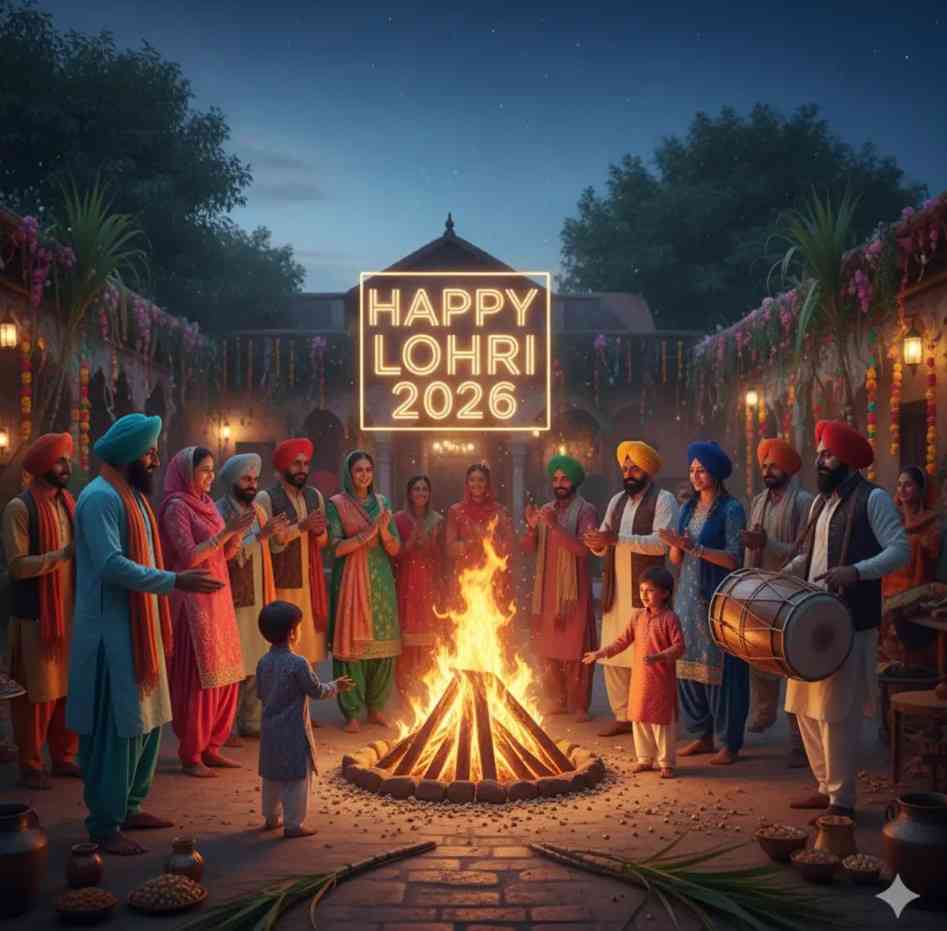
Introduction to Lohri Festival
Lohri is one of the most vibrant and culturally rich festivals celebrated in North India, especially in Punjab, Haryana, Himachal Pradesh, and parts of Delhi and Jammu. It marks the end of peak winter and the beginning of longer days as the Sun starts its northward journey.
People will celebrate Lohri 2026 with great enthusiasm through bonfires, folk songs, and traditional foods that symbolize warmth, prosperity, and gratitude toward nature. The festival reflects a deep connection with agriculture, harvest cycles, and the Sun’s movement.
For farmers, Lohri signifies hope for a prosperous Rabi harvest. For families, it is a time of joy, togetherness, and celebration.
Lohri is celebrated across North India to mark the end of winter and the beginning of longer days. Moreover, it is a time to honor nature and the Sun’s energy, which are essential for a good harvest. For example, farmers offer thanks for the Rabi crops, particularly wheat, while families gather around bonfires to perform rituals. In addition, the festival strengthens social bonds, as communities come together to sing, dance, and share traditional foods. Therefore, Lohri is both a cultural and spiritual celebration that combines gratitude, joy, and tradition.
Also read – Hindu Festivals in January 2026: Complete List, Dates, Muhurat & Auspicious Timings
Lohri 2026 Date and Day
- Date: 13 January 2026
- Day: Tuesday
Traditional Lohri offerings include til (sesame seeds), jaggery, peanuts, rewri, gajak, popcorn, and sugarcane. People offer these items into the sacred bonfire to show gratitude to nature and Agni Dev.
Together, they symbolise warmth, abundance, prosperity, and good fortune during the harvest season.
Also Read:-Regional Hanuman Jayanti Traditions: From Punjab to Bengal
Why is Lohri Celebrated?
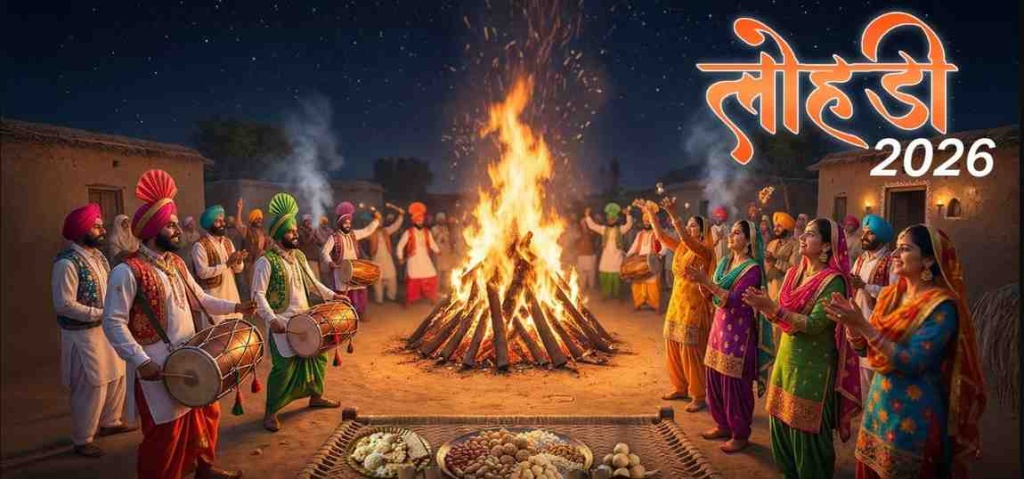
People celebrate Lohri to mark the end of winter and to thank nature for a bountiful harvest. The festival also honors Agni Dev (the fire god) and symbolizes prosperity, warmth, and new beginnings. Farmers, in particular, celebrate Lohri as a part of the Rabi crop cycle, especially for wheat, while communities across North India enjoy bonfires, folk songs, and traditional foods to express joy and gratitude.
1. Seasonal Transition
Lohri marks the end of extreme winter in North India. The bonfire symbolizes warmth, light, and positivity, driving away cold and darkness.
2. Agricultural Importance
Farmers associate Lohri with the Rabi crop cycle, especially the wheat harvest.The festival is a thanksgiving celebration for the harvest to come.
3. Solar Significance
Lohri occurs just before the Sun enters Capricorn (Makara), an astronomical transition considered highly auspicious.
During Lohri, people light bonfires, which symbolize purification and the power of Agni Dev. Furthermore, devotees offer items like sesame seeds, jaggery, peanuts, and popcorn into the flames. As a result, these offerings represent prosperity, warmth, and abundance. While bonfires remain the central ritual, folk songs, Bhangra dances, and traditional meals also play a key role. In addition, children and elders alike participate, ensuring that the festival’s traditions are passed on to future generations.
Historical Significance of Lohri
Lohri traces its roots to ancient agrarian traditions. The festival has evolved over centuries, blending folklore, mythology, and seasonal observances.
The Legend of Dulla Bhatti
One of the most popular folk legends associated with Lohri is that of Dulla Bhatti, a Punjabi hero who helped poor girls by arranging their marriages and providing dowries. Traditional Lohri songs often praise his bravery and generosity.
Ancient Harvest Traditions
Lohri connects to ancient fire worship rituals in which people regarded fire as sacred and purifying.The bonfire symbolized the Sun’s energy and agricultural fertility.
Lohri has strong ties to agriculture, as it marks an important stage in the Rabi crop cycle. For instance, wheat, sugarcane, and other crops are harvested around this time. Moreover, the festival is closely linked to Makar Sankranti, which occurs the following day, signaling the Sun’s transition into Capricorn (Makara). Consequently, farmers view this period as highly auspicious for both harvest and sowing preparations. In addition, the celebration reminds communities to respect nature and express gratitude for its abundance.
In Punjab, Lohri is celebrated with grandeur, reflecting both regional pride and agricultural heritage. Furthermore, the festival has cultural significance, as it features traditional music, dance, and storytelling. Moreover, special attention is given to first Lohri celebrations for newborns or newlyweds, which are considered particularly auspicious. Therefore, Lohri serves as a bridge between ancient agrarian traditions and modern cultural festivities, making it one of the most beloved winter festivals in North India.
Lohri 2026 Rituals and Puja Vidhi
The rituals of Lohri 2026 are simple yet deeply symbolic, focusing on gratitude, purification, and community bonding.
1. Bonfire Ritual (Lohri Agni)
In the evening, people gather around a bonfire in open spaces or courtyards. The fire represents Agni Dev and the Sun’s warmth.
2. Offerings to the Fire
People offer the following items to the Lohri bonfire:
- Til (sesame seeds)
- Gur (jaggery)
- Peanuts
- Popcorn
- Rewari and gajak
These offerings symbolize prosperity and abundance.
3. Parikrama (Circumambulation)
People walk around the bonfire while offering prayers for health, wealth, and happiness.
4. Singing and Dancing
Traditional Punjabi folk songs and Bhangra-Gidda dances are an essential part of Lohri celebrations.
Spiritual Significance of Lohri Festival
The spiritual essence of Lohri lies in gratitude and transformation.
- Fire symbolizes purification and new beginnings
- Offerings represent surrender to divine forces
- Community celebrations strengthen collective harmony
Lohri and Makar Sankranti Connection
Lohri closely links to Makar Sankranti, which people celebrate the following day.
| Festival | Date | Significance |
|---|---|---|
| Lohri | 13 January 2026 | End of winter, harvest gratitude |
| Makar Sankranti | 14 January 2026 | Sun enters Capricorn |
Together, these festivals signify the Sun’s northward movement (Uttarayan), considered highly auspicious in Hindu tradition.
Lohri Celebration in Punjab
Punjab celebrates Lohri with unmatched enthusiasm.
- Large community bonfires
- Loud Punjabi folk music
- Traditional attire
- Group dances and feasting
In Punjab, people will celebrate Lohri 2026 as a grand cultural festival that reflects regional pride and agricultural traditions.
Lohri Celebration in Haryana and Delhi
In Haryana, Lohri is celebrated with traditional Haryanvi folk songs and rituals. In Delhi, Lohri has become a multicultural celebration with large community events and housing society gatherings.
Special Importance of Lohri for Newlyweds and Newborns
Lohri holds special significance for:
- Newly married couples
- Families with newborn babies
Their first Lohri is celebrated with extra joy, gifts, and blessings, symbolizing prosperity and fertility.
Traditional Food Prepared on Lohri
Food plays a vital role in Lohri celebrations.
Common Lohri Dishes:
- Makki di roti
- Sarson da saag
- Rewari
- Gajak
- Til ladoo
The use of sesame seeds and jaggery provides warmth during winter and holds Ayurvedic importance.
Lohri 2026 and Modern Celebrations
In modern times, Lohri 2026 will be celebrated not only traditionally but also through:
- Community events
- Cultural programs
- Corporate celebrations
- Social media sharing
Despite modernization, the core essence of Lohri remains intact.
Environmental Awareness and Eco-Friendly Lohri
People are increasingly adopting eco-friendly ways to celebrate Lohri:
- Smaller bonfires
- Avoiding plastic and waste
- Using organic offerings
Celebrating responsibly ensures the festival remains meaningful and sustainable.
Auspicious Things to Do on Lohri
- Donate food or clothes
- Feed cows and birds
- Offer prayers to Agni Dev
- Spend time with family
Such acts enhance the spiritual benefits of Lohri 2026.
Things to Avoid on Lohri
- Avoid wasteful burning
- Do not use harmful materials in bonfires
- Avoid negativity and conflicts
Lohri is about harmony, warmth, and positivity.
Frequently Asked Questions About Lohri 2026
Lohri will be celebrated on Tuesday, 13 January 2026, mainly in the evening with bonfire rituals across North India.
Lohri is celebrated on 13 January 2026, while Makar Sankranti falls on 14 January 2026. Lohri is always observed a day before Makar Sankranti.
The best time for Lohri rituals is after sunset, usually between 6:00 PM to 9:00 PM, when families gather around the bonfire and perform offerings.
Lohri is celebrated to mark the end of peak winter, the beginning of longer days, and to express gratitude for harvest, fertility, and prosperity.
Common Lohri offerings include til (sesame seeds), jaggery, peanuts, rewri, gajak, popcorn, and sugarcane, symbolizing warmth, abundance, and good fortune.
More FAW related to Lohri 2026
Yes, Lohri is considered auspicious for prayers, charity, family rituals, and starting positive habits, though major ceremonies usually begin on Makar Sankranti.
The Lohri bonfire represents Agni Dev, purification, removal of negativity, and the transformation of old energies into positivity and growth.
Lohri is mainly celebrated in Punjab, Haryana, Himachal Pradesh, Jammu & Kashmir, Delhi, and parts of Uttar Pradesh.
Yes, Lohri can be celebrated at home by lighting a small diya, offering til-jaggery items, chanting prayers, and remembering Agni Dev, especially in apartments or cities.
Yes, first Lohri for a newborn or newly married couple is considered very auspicious and is celebrated with special prayers, gifts, and family gatherings.
Cultural Importance of Lohri Songs
Traditional Lohri songs preserve Punjabi folklore, history, and values. Singing around the bonfire strengthens community bonding and cultural identity.
Conclusion: The Essence of Lohri 2026
Lohri 2026 is more than just a festival—it is a celebration of life, warmth, gratitude, and togetherness. Rooted in agriculture, solar movement, and ancient traditions, Lohri connects people with nature and each other. As families gather around the bonfire, offering prayers and sharing joy, Lohri continues to shine as a symbol of hope, prosperity, and cultural pride in North India.
When people celebrate Lohri with understanding and respect for its traditions, they help pass its true spirit on to future generations.
3 Comments