
Introduction
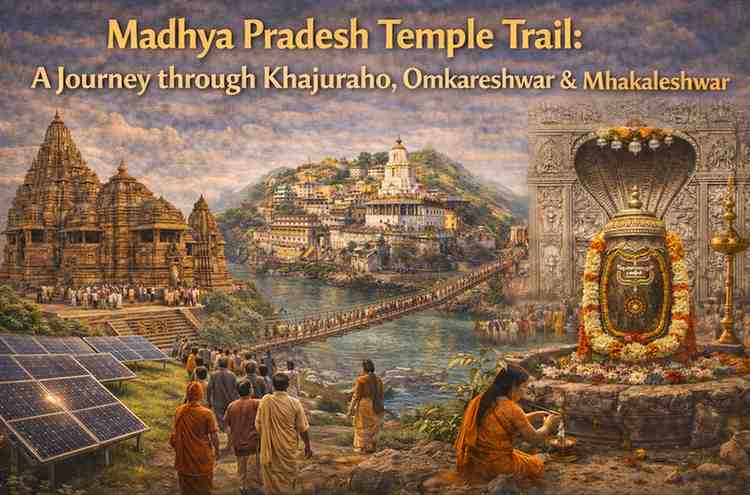
Explore the spiritual heart of Madhya Pradesh through its iconic temples — Khajuraho, Omkareshwar, and Mahakaleshwar — each embodying unique architectural brilliance and ancient religious fervor. This trail offers a blend of history, artistry, and devotional experiences.
Khajuraho Temples
Historical Background
Built between the 9th and 12th centuries by the Chandela dynasty, Khajuraho temples are a UNESCO World Heritage site. They reveal the zenith of Hindu temple architecture and offer insights into the Chandela rulers’ devotion and artistic vision.
Also Read :- Eco Temples of India: Sustainable Shrines Protecting Nature
Architectural Excellence
The temples showcase the Nagara style with intricate carvings, featuring Hindu gods, celestial beings, everyday life, and themes like kama (love) and dharma (righteousness). Notable temples include Kandariya Mahadeo, Lakshmana, and Vishwanath.
Religious and Cultural Significance
Khajuraho’s sculptures symbolize spiritual teachings and human goals. The temples reflect the four aims of life — Dharma, Artha, Kama, and Moksha — inviting visitors to experience the essence of Hindu philosophy.
Also Read :- Healing Temples of India: Sacred Places Known for Miracles & Health
Visiting Khajuraho
Best visited from October to March, the temples host dance festivals and cultural shows in the evenings. Facilities include guided tours, audio guides, and nearby accommodations, enhancing the visitor experience.
Omkareshwar
Spiritual Importance and Mythology
Set on an island shaped like “Om” in the Narmada river, Omkareshwar is home to one of the 12 Jyotirlingas, making it a pivotal Hindu pilgrimage site. Legend associates the temple with Lord Shiva’s manifestation.
Also Read :- Himachal Devi Temples: A Divine Journey to Naina Devi, Chintpurni & Jwala Ji
Temple Architecture and Features
The temple’s architecture combines Maratha and Malwa styles, with ornate carvings and a tranquil riverside setting. It includes the main Omkareshwar temple and the Mamleshwar temple across the river.
Rituals and Worship
Daily pujas culminate in the spectacular evening Aarti on the riverbank, drawing devotees and tourists alike into a collective spiritual celebration.
Planning Your Visit
Accessible by road and river, Omkareshwar offers pilgrim-friendly inns and local eateries serving traditional cuisine. The best time to visit is post-monsoon through early spring.
Mahakaleshwar Temple, Ujjain
Historical and Religious Significance
Mahakaleshwar is one of the most sacred Jyotirlingas, located in ancient Ujjain, a city renowned in Hindu astrology and mythology. The temple embodies the concept of “Lord of Time” and cosmic cycles.
Also Read :- Maharashtra Temples: Shirdi, Trimbakeshwar & Pandharpur Yatra
Architectural Highlights
The temple features a distinct blend of ancient and medieval architectural elements, with a sanctum housing the self-manifested lingam. The Bhasma Aarti ritual, involving sacred ash, is unique to this temple.
Also Read :- Kailash Mansarovar Yatra 2026: Complete Pilgrimage Guide
Major Festivals and Rituals
The temple celebrates Mahashivaratri and other festivals with grandeur, attracting thousands of devotees. The daily rituals emphasize devotion, time’s impermanence, and spiritual awakening.
Visiting Mahakaleshwar
Ujjain is well-connected by rail and road, with plentiful lodging options. Pilgrims are advised to participate in or observe the Bhasma Aarti early in the morning or evening for an immersive experience.
The Madhya Pradesh Temple Trail Experience
Interweaving History and Devotion
Traveling this trail is a pilgrimage through time — from the sculptural narrative of Khajuraho to the sacred waters of Omkareshwar and the cosmic spirituality of Mahakaleshwar.
Suggested Itineraries
- 7-Day Trail: Starting at Khajuraho, moving to Omkareshwar, and ending in Ujjain.
- Cultural Immersion: Attend festivals and local fairs for deeper engagement.
Practical Travel Tips
- Plan visits in cooler months (October to March).
- Respect local customs and dress codes at temple sites.
- Hire trusted guides to enrich historical and spiritual understanding.
Exploring the Living Traditions Around the Temples
Local Festivals and Cultural Events
The temple towns on this trail burst into vibrant life during major festivals. In Khajuraho, the annual Dance Festival showcases classical dances like Kathak and Odissi under the starlit sky of temple courtyards, connecting ancient art with modern expression. Omkareshwar celebrates Mahashivratri and Narmada Jayanti with grand processions, traditional music, and devotional gatherings that unite locals and pilgrims. Ujjain’s Mahakaleshwar temple becomes the center of elaborate rituals during Kumbh Mela and Maha Shivratri, attracting millions, highlighting the temple’s role in Hindu religiosity.
Pilgrim Experiences and Spiritual Practices
Pilgrims engage in deep spiritual practices such as meditation by the Narmada river in Omkareshwar and participating in the sacred Bhasma Aarti at Mahakaleshwar. In Khajuraho, temple visits often include offerings and prayers acknowledging the divine feminine and masculine principles depicted in temple carvings.
Culinary Delights and Local Crafts
Each town offers distinct culinary traditions. Khajuraho’s Bundeli cuisine includes dals, kachoris, jalebis, and balushahi. Omkareshwar features river fish and traditional thalis. Ujjain’s Malwa cuisine highlights poha, jalebi, and regional festival foods. Local markets sell stone carvings, textiles, and religious items.
Sustainable and Responsible Tourism
Efforts have increased to maintain the sites’ environmental and cultural integrity. Visitors are encouraged to minimize plastic use, respect temple rules, and support local artisans. The government promotes eco-friendly travel and heritage preservation to keep the trail pristine.
Nearby Attractions and Day Trips
From Khajuraho, Panna National Park offers wildlife safaris. Near Omkareshwar, Mandleshwar’s ghats and old temples provide additional exploration. Ujjain offers sites like Kal Bhairav, Harsiddhi temples, and the ancient astronomical observatory of Maharaja Jai Singh for added cultural depth.
Travel Logistics and Planning Tips
Getting There and Around
Khajuraho is accessible by air, with flights from major cities. Omkareshwar and Ujjain connect by rail and road from Indore and Bhopal. Local guides and river cruises enhance travel between sites.
Accommodation Options
Accommodations range from heritage hotels and guesthouses in Khajuraho to ashrams in Omkareshwar and luxury hotels in Ujjain. Booking early during festivals is advisable.
Best Time to Visit
The most pleasant weather for travel is October to March, avoiding monsoon disruptions and heat.
Safety and Health Precautions
Visitors should stay hydrated, wear comfortable shoes, and practice food safety. In crowded events and temples, securing belongings and following local guidelines enhances safety.
Architectural Innovations and Symbolism
Unique Sculptural Techniques in Khajuraho
The Khajuraho temples are famed for their advanced stone carving techniques that have endured centuries. Artisans employed precise chiseling methods to depict life-like expressions and dynamic postures, animating myths, dances, and everyday activities. This mastery reflects a deep understanding of anatomy and aesthetics unique for their era, making Khajuraho a marvel of medieval Indian art.
Symbolism in Temple Architecture
Every temple in the trail is a repository of layered symbolism. The towering shikharas represent Mount Meru, the cosmic axis in Hindu cosmology. Mandapas (pillared halls) and garbha grihas (sanctums) symbolize the spiritual journey inward. The carvings of deities often illustrate dualities such as creation and destruction, underscoring Hindu philosophy’s cyclical nature.
Integration with Natural Environment
Omkareshwar’s location on an Om-shaped island in the Narmada River exemplifies harmonious integration of spirituality and nature. The temple complex utilizes the river’s flow and terrain to enhance spiritual ambiance, illustrating ancient Indian principles of vastu shastra (sacred architecture) that seek balance between built spaces and natural forces.
Legends and Mythological Tales Associated
Khajuraho and the Chandela Kings
Local lore suggests the Chandela rulers built the temples both to express their devotion and declare their political power. Famous tales tell of visionary kings inspired by divine dreams to erect these ornate shrines, making the temples eternal shrines to both gods and their own legacy.
The Story of Omkareshwar’s Jyotirlinga
Legend narrates that Lord Shiva manifested as Omkareshwar to pacify demons threatening cosmic order. The island’s shape is said to be a divine imprint of the “Om” mantra, reinforcing the temple’s identity as a powerful spiritual epicenter.
Mahakaleshwar’s Connection to Time and Fate
Mahakaleshwar is believed to be the destroyer of time, where Lord Shiva stopped death for his devotees. Stories recount how King Chandrasena earned Shiva’s grace through unwavering faith, establishing the temple’s ritualistic significance around time’s cosmic control.
Devotional Practices and Rituals
Daily Temple Routines
All three temples uphold rigorous daily pujas, combining traditional Vedic chanting, offerings of flowers and incense, and fire ceremonies (homas). These rituals maintain the sanctity of divine presence and keep community faith alive across generations.
Special Rituals Unique to Each Site
Khajuraho’s festivals often blend art and worship, with dance forms reenacting divine stories. Omkareshwar features unique Narmada river ablutions before temple entry, symbolizing purification. Mahakaleshwar’s Bhasma Aarti, where sacred ash is applied to the lingam, reflects themes of mortality and renewal.
Participation and Festivals
Pilgrims actively engage in rituals during key festivals like Maha Shivaratri, Navratri, and Narmada Jayanti, witnessing processions, collective prayers, and devotional singing. These occasions strengthen community bonds and spiritual dedication.
Conservation Efforts and Challenges
Preservation of Khajuraho Temples
Due to its outdoor exposure, Khajuraho faces weathering challenges. Archaeological Survey of India (ASI) employs restorative techniques such as cleaning, structural reinforcement, and visitor management to balance accessibility with conservation.
Ecological Preservation at Omkareshwar
Environmental protections around the Narmada river island focus on maintaining river purity and forest cover, limiting industrial impact. Sustainable tourism is encouraged to preserve Omkareshwar’s tranquil setting and biodiversity.
Upkeep of Mahakaleshwar
Regular maintenance ensures temple facilities accommodate millions of devotees safely during peak times. Authorities coordinate with local communities for cleanliness drives and infrastructure upgrades, safeguarding this sacred site’s integrity.
The Trail’s Impact on Local Communities
Economic Benefits Through Tourism
The temple trail boosts local economies by generating income for hospitality, transportation, and artisanal crafts. Seasonal festivals see spikes in employment and sales of religious paraphernalia, attracting national and international tourists.
Cultural Revival and Community Identity
Revitalizing ancient temples encourages pride in regional heritage. Cultural programs hosted around these sites preserve traditional music, dance, and crafts, fostering a renewed sense of identity among younger generations.
Challenges and Opportunities
Balancing modern development with heritage conservation poses challenges such as traffic congestion, commercialization, and environmental strain. Collaborative initiatives between government, locals, and tourists aim to sustain the trail’s cultural and ecological wealth.
Frequently Asked Questions (FAQs) – Madhya Pradesh Temple Trail
1. Which temples are included in the Madhya Pradesh Temple Trail?
The Madhya Pradesh Temple Trail commonly includes the Khajuraho Temples, Omkareshwar Jyotirlinga Temple, and Mahakaleshwar Jyotirlinga Temple in Ujjain, which are among the most famous spiritual destinations in the state.
2. Why are the Khajuraho Temples famous?
The Khajuraho Temples are renowned for their stunning Nagara-style architecture and intricate sculptures. They are also recognized as a UNESCO World Heritage Site.
3. What is the significance of Omkareshwar Temple?
Omkareshwar Temple is one of the twelve sacred Jyotirlingas of Lord Shiva and is located on the Mandhata Island in the Narmada River.
4. Why is Mahakaleshwar Temple important?
Mahakaleshwar Temple in Ujjain is one of the twelve Jyotirlingas and is famous for the unique Bhasma Aarti ritual performed daily.
5. When is the best time to visit these temples?
The best time to visit Khajuraho, Omkareshwar, and Mahakaleshwar is between October and March when the weather is pleasant for travel and pilgrimage.
6. How far are these temples from each other?
Khajuraho, Omkareshwar, and Ujjain are located in different parts of Madhya Pradesh, so pilgrims often plan a multi-day itinerary to visit all three temples.
7. What rituals are performed at Mahakaleshwar Temple?
The most famous ritual at Mahakaleshwar Temple is the Bhasma Aarti, where sacred ash is offered to Lord Shiva during the early morning prayer.
8. Is Omkareshwar part of the Jyotirlinga pilgrimage?
Yes, Omkareshwar is one of the twelve Jyotirlingas and is an important destination for devotees following the Jyotirlinga pilgrimage circuit.
9. Are the Khajuraho Temples only religious sites?
While they are Hindu and Jain temples, Khajuraho is also a historical and architectural heritage site attracting tourists and historians from around the world.
10. Can pilgrims visit all three temples in one trip?
Yes, many travelers combine Khajuraho, Omkareshwar, and Mahakaleshwar in a single pilgrimage itinerary across Madhya Pradesh.
Conclusion
The Madhya Pradesh Temple Trail is more than a tour; it is an exploration of India’s magnificent spiritual and cultural tapestry. Each temple offers a unique lens into ancient beliefs, artistry, and communal faith that continue to inspire millions.

5 Comments