
Introduction
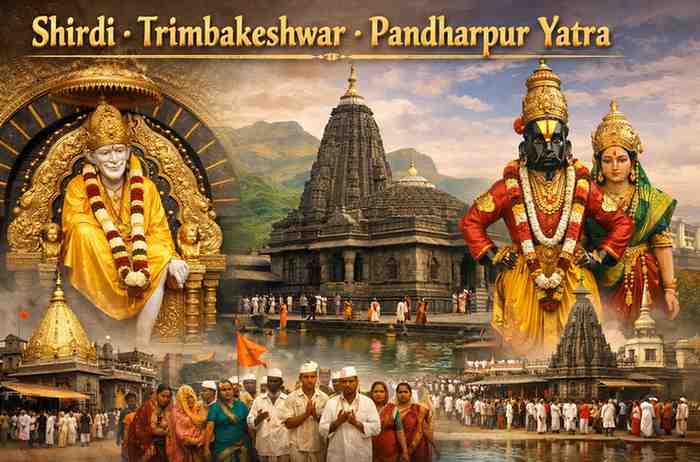
Maharashtra, a state rich in cultural and spiritual heritage, is home to some of the most revered temples in India. Among the many sacred sites, the temples of Shirdi, Trimbakeshwar, and Pandharpur stand out, drawing millions of pilgrims annually. This blog explores these iconic Maharashtra temples, their religious significance, unique traditions, and the unforgettable pilgrimage experiences they offer. Understanding this yatra guides devotees and travelers through a profound journey of faith and devotion.
Shirdi: The Abode of Shri Sai Baba
Also Read :- Temples Where Wishes Come True: India’s Miraculous Shrines
Historical Background
Shirdi, nestled in the Ahmednagar district, gained global recognition as the home of Shri Sai Baba, a saint revered for his teachings on love, tolerance, and spiritual unity. Sai Baba’s life, filled with miracles and wisdom, continues to inspire seekers from diverse backgrounds.
Also Read :- Most Powerful Shiva Temples in India (Jyotirlinga Yatra Guide)
The Sai Baba Samadhi Mandir
The temple complex includes the Samadhi Mandir, where Sai Baba was laid to rest. Pilgrims throng this sacred spot to pay homage and seek blessings through rituals such as chanting, arati, and offering flowers.
Also Read :- Bagalamukhi Puja for Court Case Victory: Benefits & Cost Guide
Key Rituals and Festivals
The temple celebrates major festivals like Guru Purnima, Ram Navami, and Sai Baba’s death anniversary, which see devotees converge in vast numbers. Daily rituals such as the early morning Kakad Aarti and evening Shej Aarti provide spiritual solace.
Also Read :- BAGALAMUKHI PUJA VIDHI & SAMAGRI LIST (STEP-BY-STEP GUIDE)
Surrounding Pilgrimage Sites
Close to Shirdi, places like Shani Shingnapur, Muktidham Temple, and the Kalaram Temple enrich the pilgrimage experience with their cultural and religious significance.
Trimbakeshwar: One of the Twelve Jyotirlingas
Location and Significance
Situated near Nashik, Trimbakeshwar Temple is one of the twelve Jyotirlinga shrines dedicated to Lord Shiva. It is uniquely revered as the source of the sacred Godavari River, which holds immense religious importance.
Architectural and Spiritual Highlights
The temple’s distinctive architecture houses a Shiva lingam with three faces representing Brahma, Vishnu, and Shiva. This trinity signifies the comprehensive cosmic functions of creation, preservation, and destruction.
Rituals and Pilgrimage Experience
Pilgrims visit for holy dips in the Godavari and seek spiritual purification and blessings. Annual fairs during Maha Shivaratri attract throngs of devotees keen to partake in lively religious festivities.
Pandharpur: The Spiritual Capital for Vithoba Devotees
Overview and Location
Pandharpur, located on the banks of the Chandrabhaga River, is renowned for the Sri Vitthal-Rukmini Temple. Lord Vitthal, an incarnation of Lord Krishna, is the focal deity of devotion here.
Legendary Roots and Temple History
The temple’s origins link back to the Bhakti movement, strongly influenced by saints like Sant Dnyaneshwar and Tukaram whose teachings emphasize love, equality, and devotion.
The Pandharpur Wari Festival
The annual pilgrimage known as “Wari” is a massive event where millions of devotees march barefoot across Maharashtra to Pandharpur, singing devotional abhangas. This centuries-old tradition fosters unity and spiritual fervor during Ashadhi Ekadashi and Kartiki Ekadashi.
Temple Complex and Features
The temple complex features intricate carvings, multiple shrines, and memorials of revered saints. The iconic standing statue of Vitthal with hands on hips symbolizes the steadfast faith of devotees.
Combined Yatra: Spiritual Journey Through Maharashtra
Many pilgrims undertake a combined yatra covering Shirdi, Trimbakeshwar, and Pandharpur, complemented by visits to other Jyotirlingas like Grishneshwar and Bhimashankar. This holistic pilgrimage offers an immersive encounter with Maharashtra’s spiritual landscape, blending devotion to Sai Baba, Shiva, and Vitthal.
Planning Your Maharashtra Temple Pilgrimage
- Best Time to Visit: Preferably during major festivals like Ashadhi Ekadashi, Kartiki Ekadashi, and Maha Shivaratri.
- Travel Tips: Accessible by road and rail from Mumbai, Pune, and Nashik with organized tour packages available.
- Accommodation: Varies from dharamshalas to luxury hotels in pilgrimage towns.
- What to Expect: Rich cultural experiences, devotional music, traditional cuisine, and a sense of community devotion.
Cultural Influence of Maharashtra Temples
These temples are pivotal in propagating Marathi culture, devotional music (abhangas), and folk arts. The Bhakti movement here transcended religious boundaries and inspired literary, musical, and social reform movements across India.
Shirdi: In-Depth Spiritual Insights and Experiences
Life and Teachings of Sai Baba
Sai Baba of Shirdi remains one of the most widely revered saints in India and beyond. His philosophy transcended religious divisions, teaching the unity of all faiths. His famous sayings such as “Sabka Malik Ek” (One God governs all) emphasize harmony and universal brotherhood. Sai Baba’s miracles, healing powers, and compassion are well documented, bringing solace to millions.
Exploring the Shirdi Temple Complex
The Sai Baba temple complex consists of several key spots pilgrims should visit:
- Dwarkamai: The mosque where Sai Baba lived, meditated, and dispensed wisdom.
- Chavadi: Where Sai Baba rested on alternate nights.
- Gurusthan: The sacred tree where Sai Baba first appeared.
- Samadhi Mandir: The principal shrine, the spiritual heart of Shirdi.
Important Rituals and Offerings
Seekers participate in daily aartis (morning, noon, and evening), which are rhythmic devotional ceremonies accompanied by chanting bhajans and ringing bells. The temple also facilitates ‘Anna Daan’ (offering food) and distribution of ‘Udi’—holy ash said to bless and protect.
Trimbakeshwar: Spiritual Architecture and Ritual Observances
Origin of the Godavari River
Unlike most rivers that begin minor, the Godavari originates as a divine spring in Trimbak hills, near the temple itself. Pilgrims perform ritual baths at Brahma Kund, believed to cleanse sins and grant spiritual elevation.
The Panchayatana Style of Worship
Trimbakeshwar is unique in that it features the worship of five deities (Shiva, Vishnu, Devi, Surya, and Ganapati) together, known as Panchayatana. This reflects the temple’s inclusive approach within Hindu worship.
Celebrations and Activities During Maha Shivaratri
Maha Shivaratri is marked by nightlong prayer vigils, chanting of Shiva mantras, and phallic worship of the trident-shaped jyotirlinga. The atmosphere is charged with spiritual upliftment, attracting devotees from across the nation.
Pandharpur Yatra: Community and Cultural Dimensions
Socio-Cultural Significance of “Wari”
Apart from being a religious pilgrimage, the Wari is a massive social event marked by equality, cooperation, and community spirit. Devotees from different backgrounds walk together, breaking caste boundaries, upholding the Bhakti principle of unconditional divine love.
The Tradition of Bhakti Poetry and Music
The pilgrimage resonates with abhangas (marathi devotional songs) sung in praise of Lord Vitthal. Legendary saints like Tukaram and Namdev composed and sang these hymns, which formed a major part of the Bhakti movement.
The Role of the Varkari Sect
The Varkari sect, central to Pandharpur’s religious life, emphasizes simple living, devotion through kirtans and abhangas, and communal harmony. Their spiritual practices influence millions and preserve Maharashtra’s rich devotional culture.
Additional Pilgrimage Tips for Devotees
- Health and Comfort: Pilgrimage involves walking long distances; comfortable footwear, hydration, and rest breaks are crucial especially during the Wari.
- Cultural Etiquette: Respect temple norms, dress modestly, participate in communal prayers.
- Spiritual Preparation: Engaging with devotional literature and music beforehand enhances the experience.
Other Marathi Temples Worth Visiting
Besides these famed temples, Maharashtra has several other significant temples enriching the spiritual landscape:
- Bhima Shankar Temple: Another Jyotirlinga located near Pune.
- Kolhapur Mahalakshmi Temple: A major Shakti Peetha with rich cultural festivals.
- Grishneshwar Temple near Ellora Caves: One of the 12 Jyotirlingas adding a historical-cultural dimension.
Impact on Tourism and Local Economy
The flow of pilgrims and spiritual tourists to these Maharashtra temples fosters regional economic growth, supports artisans, hospitality, and promotes eco-cultural tourism. The Maharashtra government and temple trusts have been enhancing infrastructure to provide accessible and safe pilgrimages.
Pandharpur Wari: A Sacred Pilgrimage of Devotion and Unity
The Essence of Pandharpur Wari
The Pandharpur Wari is a centuries-old pilgrimage deeply embedded in Maharashtra’s spiritual and cultural fabric. It is a 21-day journey to the holy town of Pandharpur, dedicated to Lord Vitthal, an incarnation of Lord Krishna revered by millions. The Wari involves carrying the padukas (sacred footwear) of prominent saints like Sant Dnyaneshwar from Alandi and Sant Tukaram from Dehu in palkhis (palanquins), symbolizing the saints’ spiritual presence accompanying the devotees.
Historical Roots and Evolution
Traditionally dating back over 700 years, the Wari was popularized by the saint-poet Sant Dnyaneshwar, whose abhangas (devotional poetry) inspired a social and religious movement emphasizing devotion, equality, and social harmony. Over time, the pilgrimage has evolved while preserving its core devotional practices and community participation.
Cultural Significance and Social Unity
The Wari transcends mere religious observance to become a profound symbol of social unity, cultural heritage, and spiritual awakening. Devotees from various castes, classes, and regions walk the long journey collectively, singing abhangas and sharing community hospitality. This breaks social barriers and fosters brotherhood among participants, reflecting Maharashtra’s inclusive spiritual ethos.
The Vibrant Atmosphere and Devotional Fervor
The route to Pandharpur resonates with the sounds of devotional music featuring instruments like the veena, mridangam, and cymbals. Pilgrims wear saffron and yellow garments signifying purity and devotion. Daily rituals involve singing, dancing, and communal prayers, creating an immersive spiritual environment that rejuvenates faith and fosters a sense of belonging.
Hospitality and Community Support Along the Route
Local communities welcome the pilgrims warmly, offering food (annadana), water, shelter, and medical assistance. This spirit of seva (selfless service) and hospitality embodies the highest values of Indian culture and religious tradition during the pilgrimage.
Culmination at Vitthal-Rukmini Temple, Pandharpur
The pilgrimage culminates at the Vitthal-Rukmini Temple, where the devotees witness the holy darshan of Lord Vitthal, often after taking ritual baths in the sacred Chandrabhaga River. The festive atmosphere peaks during Ashadhi Ekadashi when millions congregate, turning Pandharpur into a beacon of spiritual energy, joy, and communal harmony.
Spiritual Rituals and Practices at Maharashtra Temples
Shirdi Sai Baba’s Teachings and Practices
Daily devotional routines at Shirdi revolve around Sai Baba’s teachings of humility, charity, and faith. Pilgrims participate in chanting the “Sai Satcharitra,” a holy book narrating his miracles and life lessons. The “Sai Arati” ceremonies, held five times a day, are a spiritual highlight, filled with bhajans (devotional songs), ringing bells, and the aroma of incense that creates a sacred ambience. Offering “prasadam” (sanctified food) serves as an act of receiving divine blessings.
Trimbakeshwar’s Rituals: Abhishekam and Yagna
The temple is renowned for the elaborate ritual of “Abhishekam,” bathing the Shiva lingam with water from the Godavari and other sacred substances like milk, honey, and sandalwood. Priests conduct fire rituals (“Yagna”) and chant Vedic hymns, believed to purify the environment and the devotees’ souls.
Pandharpur’s Unique Devotional Traditions
The temple’s daily ritual begins predawn with “Suprabhatam,” awakening Lord Vitthal with hymns. The midday “Mahapooja” includes symbolic offerings of turmeric, kumkum, and flowers. Evening “Sandhya Aarti” captivates the crowd with devotional singing in Marathi and synchronized devotional dances called “Leelas.” The local tradition of “Haripath” (chanting of Vishnu’s names) is significant, with devotees gathering to participate
Local Customs and Cultural Practices
Community Seva: A Core Part of Pilgrimage
Volunteer service or “seva” is a vital local custom in Maharashtra temples. In Shirdi, volunteers serve food and assist with managing crowds. During Pandharpur Wari, countless volunteers organize lodging, medical aid, and food distribution, embodying the spirit of selfless service.
Marathi Cuisine and Festive Foods
Pilgrimage towns offer distinct Maharashtrian dishes like “Puran Poli,” “Vada Pav,” and “Modak,” especially during festivals. At Pandharpur, prasadam typically includes “Bhakri” and “Amti,” fostering community tasting and bonding.
Historical Anecdotes and Popular Legends
Sai Baba’s Tomb Miracles
Numerous devotees claim miraculous healings at Sai Baba’s tomb in Shirdi. Stories tell of Baba’s presence through inexplicable occurrences like lights flickering and mystical energies comforting the grief-stricken.
Trimbakeshwar and the Legend of Sage Gautama
According to legend, Sage Gautama performed penance at Trimbakeshwar to appease Shiva. Pleased with his dedication, Shiva appeared and blessed the saint, sanctifying the temple site as a place where devotees can achieve salvation.
Pandharpur and Saint Tukaram’s Divine Intervention
Saint Tukaram, a revered Marathi poet and saint, is believed to have been blessed by Lord Vitthal at Pandharpur during his devotional compositions. His legacy continues to inspire pilgrims who regard his abhangas as spiritual guides.
Tips for Pilgrims Visiting Maharashtra Temples
- Best Months: October to March offers comfortable weather for pilgrimage.
- Clothing Tips: Traditional attire is appreciated; comfortable walking shoes are recommended for Wari participants.
- Health and Safety: Hydrate regularly, carry essential medicines, and travel in groups for safety during long pilgrimages.
- Local Language: Marathi greetings and simple phrases can enrich interactions with locals.
- Respect Local Customs: Participate respectfully in temple rituals and community events.
Modern Developments and Facilities
Government and temple trusts in Maharashtra have implemented visitor-friendly measures such as computerized queue systems in Shirdi, improved lodging facilities in Pandharpur, and eco-friendly practices in Trimbakeshwar to conserve natural heritage.
Architectural Heritage of Maharashtra Temples
Diverse Architectural Styles
Maharashtra’s temple architecture reflects a blend of various Indian styles shaped over centuries. The state witnessed early development of the Nagara style, prominently visible in ancient temples such as Bhimashankar and Elephanta Caves. Over time, the Hemadpanti style, named after Hemadri — a polymath minister in the Yadava court — became widely influential, characterized by the use of locally sourced black basalt stone and lime mortar without the use of mortar joints, emphasizing durability and intricate stonework.
Maratha Architecture: Grandeur and Innovation
During the Maratha Empire (1674–1818), temple architecture underwent significant expansion and transformation. Maratha temples often feature grand facades, elaborately carved pillars, domed roofs, and fortified mandapas (halls). The architectural style incorporated elements from both South Indian Dravidian and North Indian Nagara traditions, creating a unique regional identity.
Distinctive features include:
- Temples built on elevated platforms with square or rectangular plans
- Stone, wood, and brick used extensively, adorned with intricate carvings of deities and mythological scenes
- Tall gopurams (gateway towers) richly decorated and colorful murals inside sanctums
- Water tanks or kunds for ritual ablutions as integral parts of temple complexes.
Notable Examples of Maharashtra Temple Architecture
- Trimbakeshwar Shiva Temple: Exemplifies a Nagara style with three-faced jyotirlinga representing Brahma, Vishnu, and Shiva, surrounded by subsidiary shrines in the Panchayatana layout.
- Bhimashankar Temple: Reflects the traditional Nagara style with stone sculpting emphasizing the deity and natural surroundings.
- Elephanta Caves: Ancient rock-cut temples with narrative sculptures showcasing Hindu mythological tales, classified among the greatest examples of Indian cave art.
Influence of Northern and Southern Traditions
Maharashtra temples uniquely integrate northern Nagara and southern Dravidian styles, often resulting in Vesara style architecture. This hybrid style is visible in temples where the sanctum’s shikhara includes the curvilinear forms of Nagara and the tiered pyramidal roofs of Dravidian temples. Examples include temples influenced by the Chalukyan and Rashtrakuta dynasties, which left a legacy of Vesara architectural masterpieces in the region.
Temple Layouts and Sanctum Designs
Most Maharashtra temples follow the Panchayatana plan, with a main deity at the center surrounded by four subsidiary shrines, often representing the Hindu Trimurti and other associated deities. Temples feature ornate mandapas (pillared halls) and arthamandapas (assembly halls) that facilitate public worship and cultural activities.
Historical Evolution Connecting to Pilgrimage Sites
The historical patronage by rulers such as the Yadavas, Marathas, and Peshwas contributed to temple construction and renovation across Maharashtra. Temples like Trimbakeshwar and Bhimashankar were refurbished multiple times under royal support, ensuring continuity of worship and preservation of spiritual heritage.
Maratha rulers, especially Chhatrapati Shivaji Maharaj, emphasized temple construction as part of cultural and religious identity, fostering revival of Hindu temple traditions that shaped Maharashtra’s religious landscape.
Frequently Asked Questions (FAQs) – Maharashtra Temple Yatra
1. Which temples are included in the Maharashtra temple yatra?
The Maharashtra temple yatra commonly includes Shirdi Sai Baba Temple, Trimbakeshwar Jyotirlinga Temple near Nashik, and Pandharpur Vitthal Rukmini Temple. These temples are among the most sacred pilgrimage destinations in Maharashtra.
2. What is the significance of Shirdi Sai Baba Temple?
Shirdi Sai Baba Temple is dedicated to Sai Baba, a revered spiritual saint known for promoting faith, devotion, and harmony among religions. Millions of devotees visit Shirdi every year seeking blessings and spiritual guidance.
3. Why is Trimbakeshwar Temple important?
Trimbakeshwar Temple is one of the twelve Jyotirlingas of Lord Shiva. It is located near the Brahmagiri hills in Nashik and is also the origin place of the sacred Godavari River.
4. What is special about Pandharpur Temple?
Pandharpur is famous for the Vitthal Rukmini Temple dedicated to Lord Vitthal, a form of Lord Krishna. It is one of the most important pilgrimage sites for devotees of the Varkari tradition.
5. When is the best time to visit these temples?
The best time to visit Shirdi, Trimbakeshwar, and Pandharpur is between October and March when the weather is pleasant. Major festivals like Ashadhi Ekadashi in Pandharpur also attract large numbers of devotees.
6. How far are Shirdi, Trimbakeshwar, and Pandharpur from each other?
Shirdi to Trimbakeshwar is approximately 120 km, while Shirdi to Pandharpur is around 200 km. Many pilgrims plan a multi-day trip to visit all three temples.
7. What rituals are performed at Trimbakeshwar Temple?
Trimbakeshwar Temple is famous for rituals such as Narayan Nagbali, Kaal Sarp Dosha Puja, and Pitru Shraddha rituals which are performed to remove karmic and ancestral doshas.
8. What is the Pandharpur Wari pilgrimage?
Pandharpur Wari is a famous annual pilgrimage where thousands of devotees walk to Pandharpur carrying palkhis of saints like Sant Tukaram and Sant Dnyaneshwar to worship Lord Vitthal.
9. How can pilgrims travel to these temples?
Shirdi, Trimbakeshwar, and Pandharpur are well connected by road and rail. Nashik and Pune are the nearest major cities, and many pilgrims travel by bus, taxi, or organized pilgrimage tours.
10. Can all three temples be visited in one trip?
Yes, many devotees plan a Maharashtra temple yatra covering Shirdi, Trimbakeshwar, and Pandharpur within 3–4 days depending on travel arrangements and temple schedules.
Conclusion
The Maharashtra temples of Shirdi, Trimbakeshwar, and Pandharpur offer more than religious sanctity—they are living centers of spirituality, culture, and community. Pilgrimage here invites devotees into a profound journey of faith, uniting diverse traditions and embodying Maharashtra’s eternal spiritual spirit. Exploring these temples is an enduring way to experience India’s devotional heritage and seek the blessings of divine grace.
6 Comments
Реферальная программа binance
Thanks for sharing. I read many of your blog posts, cool, your blog is very good.