
Introduction
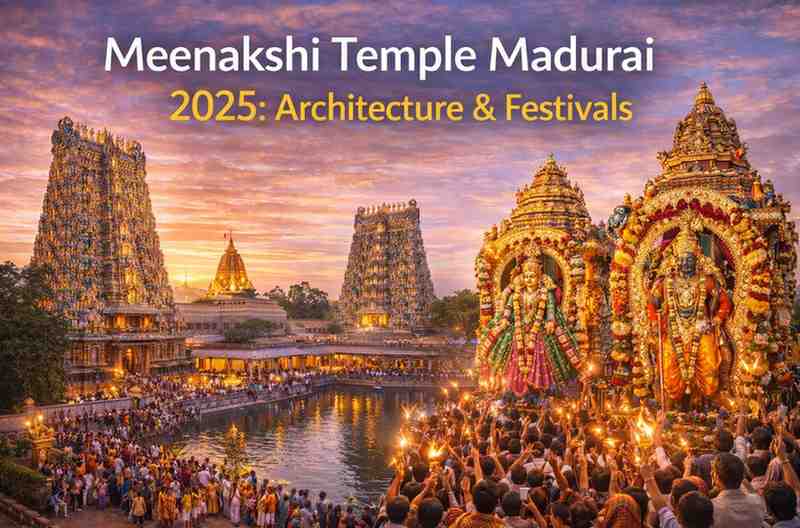
Meenakshi Temple in Madurai stands as an enduring symbol of Tamil culture and Dravidian architecture. Its spiritual importance and remarkable architectural beauty make it one of India’s most visited and revered temples.
Historical Background
The temple dates back to the Pandya dynasty nearly 2,500 years ago, with major expansions under the Nayak rulers, especially Tirumalai Nayak in the 16th century. Despite invasions and destructions, the temple has retained its significance and grandeur through restoration guided by ancient Shilpa Shastras.
Also Read :- Kasar Devi Mandir Almora, Uttarakhand – History, Significance, Timings & Complete Information
Architectural Grandeur
Majestic Gopurams
The temple complex features 14 towering gopurams (gateway towers), the tallest being the Southern Tower at about 170 feet. These towers are elaborately decorated with over 1500 sculpted stucco figures depicting various Hindu legends.
Hall of Thousand Pillars (Aiyaram Kal Mandapam)
Famous for its 1100 intricately carved pillars, this mandapam is both a structural marvel and an artistic treasure, including musical pillars and scenes from epics.
The Sanctums and Sacred Tank
The temple comprises two main sanctums dedicated to Goddess Meenakshi and Lord Sundareswarar. Nearby lies the sacred Potramarai Kulam or Golden Lotus Tank, central to many rituals symbolizing purification.
Also Read :- Krishna Temples in India (Dwarka, Udupi, Vrindavan)
Festivals and Celebrations
Chithirai Festival
Celebrating the divine marriage of Meenakshi and Sundareswarar, this grand festival in April-May draws millions with vibrant processions and performances.
Margazhi Festival, Navaratri, Thai Poosam
These festivals showcase devotional music, dance, and religious rites, reinforcing the temple’s cultural vitality.
Spiritual and Cultural Significance
The temple uniquely emphasizes the divine feminine through Goddess Meenakshi, highlighting themes of cosmic balance and Bhakti devotion. It also conserves a rich heritage of Tamil art, philosophy, and religious tradition.
Visitor’s Guide
The temple welcomes millions yearly, with specific timings for darshan, offerings, and rituals. Visitors are advised on protocols and nearby accommodations for a fulfilling experience.
Also Read :- Top Vishnu Temples in South India: Divine Abodes of Lord Narayana
Modern Developments and Conservation
Continuous restoration preserves the temple’s artistic integrity, while enhanced facilities sustain its role as a vibrant cultural and spiritual hub in Tamil Nadu.
Historical Background
The temple dates back to the Pandya dynasty nearly 2,500 years ago, with major expansions under the Nayak rulers, especially Tirumalai Nayak in the 16th century. Despite invasions and destructions, the temple has retained its significance and grandeur through restoration guided by ancient Shilpa Shastras.
Architectural Grandeur
Majestic Gopurams
The temple complex features 14 towering gopurams (gateway towers), the tallest being the Southern Tower at about 170 feet. These towers are elaborately decorated with over 1500 sculpted stucco figures depicting various Hindu legends.
Also Read :- Tirupati Balaji Temple: Darshan Booking, Timings & Dress Code 2025
Hall of Thousand Pillars (Aiyaram Kal Mandapam)
Famous for its 1100 intricately carved pillars, this mandapam is both a structural marvel and an artistic treasure, including musical pillars and scenes from epics.
The Sanctums and Sacred Tank
The temple comprises two main sanctums dedicated to Goddess Meenakshi and Lord Sundareswarar. Nearby lies the sacred Potramarai Kulam or Golden Lotus Tank, central to many rituals symbolizing purification.
Festivals and Celebrations
Chithirai Festival
Celebrating the divine marriage of Meenakshi and Sundareswarar, this grand festival in April-May draws millions with vibrant processions and performances.
Margazhi Festival, Navaratri, Thai Poosam
These festivals showcase devotional music, dance, and religious rites, reinforcing the temple’s cultural vitality.
Spiritual and Cultural Significance
The temple uniquely emphasizes the divine feminine through Goddess Meenakshi, highlighting themes of cosmic balance and Bhakti devotion. It also conserves a rich heritage of Tamil art, philosophy, and religious tradition.
Visitor’s Guide
The temple welcomes millions yearly, with specific timings for darshan, offerings, and rituals. Visitors are advised on protocols and nearby accommodations for a fulfilling experience.
Modern Developments and Conservation
Continuous restoration preserves the temple’s artistic integrity, while enhanced facilities sustain its role as a vibrant cultural and spiritual hub in Tamil Nadu.
Upcoming Kumbabhishekam Ceremony January 2026
The ମୀନାକ୍ଷୀ ମନ୍ଦିର is preparing for a grand Kumbabhishekam (consecration ceremony) scheduled for January 2026, an event that happens once every 12 years to spiritually rejuvenate the temple and its deities. Preparations involve elaborate rituals, renovation of gopurams, mandapams, and sanctums to preserve the temple’s ancient sanctity in accord with the ଅଗମ (Agama Shastra) principles.
Devotees across Tamil Nadu and beyond are eagerly awaiting this sacred event, which will feature extended yagnas (fire sacrifices), religious processions, and ceremonial bathing of the vimanas (temple towers) with holy waters. The event is expected to draw hundreds of thousands seeking blessings in person and millions participating worldwide via digital live streams organized by temple authorities.
Restoration and Enhancement Efforts in 2026
Government and temple administration have invested over ₹23 crore in 186 project phases focused on restoration, infrastructure improvement, and crowd management systems to accommodate the upcoming festival. This includes repairs to monolithic pillars, enhancing temple roads, public amenities, and ensuring medical and safety facilities for the massive influx of pilgrims.
Continuing Symbol of Tamil Heritage and Spirituality
Standing resiliently at the heart of Madurai city, the Meenakshi Temple remains a profound emblem of Tamil tradition, spirituality, and culture. Its towering gopurams, intricate sculptures, vibrant festivals, and continuous devotion embody a living heritage inspiring millions worldwide.
Upcoming Kumbabhishekam Ceremony in January 2026: A Spiritual Rejuvenation
After a gap of 17 years, the ମୀନାକ୍ଷୀ ମନ୍ଦିର will undergo its grand Kumbabhishekam or consecration ceremony in January 2026. This sacred ritual involves elaborate yagnas (fire sacrifices), special prayers, and the holy ritual of pouring sanctified water on the temple’s vimanas (tower tops) and deities to restore spiritual energy and sanctity. Preparations for this event have prompted extensive renovation and restoration work on the temple’s gopurams, mandapams, and inner sanctums, carried out with meticulous adherence to the ଅଗମ shastras by traditional architects and artisans.
Extensive Renovations and Crowd Management Preparations
The government and temple authorities have invested over ₹23 crore into 186 different restoration projects across the temple complex. Improvements focus on structural conservation, crowd facilitation, roads, medical facilities, and amenities to support the expected influx of pilgrims during the ceremony. The local administration is also actively planning special darshan arrangements, security, and public welfare facilities to ensure a smooth and spiritual experience for devotees.
Temple as a Living Symbol of Tamil Heritage
The Meenakshi Temple not only reflects Dravidian architectural splendor but also encapsulates centuries of Tamil religious, cultural, and artistic heritage. It continues to serve as a pulsating epicenter of devotion, drawing millions who come to seek blessings, witness the temple’s ethereal beauty, or participate in its vibrant festivals.
Kumbabhishekam Scheduled for January 2026
After a long interval of 17 years, the ମୀନାକ୍ଷୀ ମନ୍ଦିର Kumbabhishekam or consecration ritual is planned for January 2026. This sacred event rejuvenates the temple’s divine energy and is accompanied by elaborate yagnas, abhishekams (ritual bathing of deities), and ceremonial worship. Restoration and renovation efforts on the temple’s gopurams, mandapams, and sanctums are being carried out meticulously according to traditional ଅଗମ shastra guidelines to prepare for this auspicious occasion.
Intensive Restoration and Infrastructure Works
The temple administration and Tamil Nadu government have invested heavily, allocating over ₹23 crore across 186 restoration projects including the repair of monolithic pillars, renovation of the Veeravasantharayar Mandapam, and infrastructure upgrades for crowd management, sanitation, and medical facilities. These enhancements aim to facilitate a safe and smooth darshan experience during the festival, as lakhs of devotees from India and abroad are expected to attend.
Cultural and Spiritual Significance
The temple continues to serve as a living testament to Tamil Nadu’s rich spiritual and cultural heritage. The upcoming Kumbabhishekam not only symbolizes a ritualistic renewal but also reaffirms Meenakshi Temple’s standing as a pulsating center of devotion, art, music, and dance.
Preparing for the Grand Kumbabhishekam Ceremony January 2026
The temple is gearing up for its once-in-17-years Kumbabhishekam (consecration) event, scheduled in January 2026. This sacred ceremony rejuvenates the divine energy of the sanctum and temple towers. Extensive restoration is underway, with artisans following the meticulous ଅଗମ (Agama) Shastra norms. Devotees across Tamil Nadu anticipate this spiritually significant event, featuring multi-day rituals, yagnas, and sanctified water immersion of the temple.
Also Read :- Ancient Temples of India: Exploring 5,000 Years of Faith
Restoration and Infrastructure Upgrades
The Tamil Nadu government and temple trust have invested ₹23 crore in 186 restoration and infrastructure projects. These include cosmetic and structural repairs to the gopurams, mandapams, improved darshan pathways, medical and sanitation facilities, and crowd management systems to accommodate the surge of pilgrims expected during the Kumbabhishekam.
Cultural Engagement and Festivals
The temple continues vibrant celebrations regardless of the grand ritual event. Daily poojas, bhajans, and religious discourses attract devotees year-round. Prominent festivals like ଚିତ୍ରା (Chithirai), Navaratri, and Thai Poosam see thousands of devotees engaging in traditional rituals, processions, and cultural performances that preserve Tamil spiritual heritage and community bonds.
Madurai’s Symbol of Tamil Heritage
As a spiritual and cultural epicenter, Meenakshi Temple defines the identity of Madurai city. Its towering gopurams, accomplished sculptures, and spiritual ambience narrate tales from centuries of Tamil religious tradition. The temple lodges not just divinity but history, art, community, and living faith.
Extensive Restoration for the 2026 Kumbabhishekam
The sacred Meenakshi Temple is undergoing significant restoration in preparation for the Kumbabhishekam ceremony planned for January 2026. Extensive restoration of ମୀନାକ୍ଷୀ ମନ୍ଦିର is underway, covering historic gopurams, mandapams, and sanctums, following traditional ଅଗମ scriptures to ensure spiritual and architectural integrity. Over ₹23 crore funds support 186 projects, preparing the temple for a large influx of devotees.
Innovations in Pilgrim Care and Facility Upgrades
Alongside ancient restorations, modern amenities and infrastructure improvements enhance the pilgrim experience. New crowd management systems, upgraded sanitation facilities, medical aid points, and enhanced accessibility make the temple a safer and more welcoming space for millions visiting annually.
Cultural Programs and Devotional Activities
The temple remains a lively center of devotion and culture throughout its renovation phase. Daily religious discourses, bhajan sessions, and spirited festivals continue without interruption.
Meenakshi Temple: Enduring Heritage and Living Devotion
Meenakshi Temple, the spiritual heart of Tamil Nadu for centuries, unites faith, art, and social life.
Ongoing Renovation for Kumbabhishekam
The Meenakshi Temple is preparing for the grand Kumbabhishekam ritual in January 2026, with extensive restoration work already underway. This sacred ceremony, conducted roughly every 12 years, rejuvenates the temple’s spiritual sanctity. Renovation involves delicate repair of the ancient gopurams (gateway towers), mandapams (pillared halls), and inner sanctums, adhering strictly to ଅଗମ (Agama) shastra principles, managed by expert sthapathis (temple architects) and skilled artisans.
Investments and Renovation Scale
More than ₹23 crore has been allocated for 186 individual restoration projects, including structural conservation and aesthetic enhancements. Repair work on the ପୁଢୁ ମଣ୍ଡପମ is progressing but, due to delicate sculptural detailing and heritage sensitivity, completion has been extended to February 2026 to ensure quality and authenticity.
Infrastructure Improvements for Devotees
These improvements ensure safety and comfort during peak festive seasons and the upcoming Kumbabhishekam celebrations.
Cultural Vibrancy and Ongoing Devotion
Daily rituals, religious discourses, bhajan sessions, and cultural festivals continue actively throughout 2026, keeping the temple vibrant with devotion and Tamil spiritual traditions. The famous ଚିତ୍ରା ତିରୁ ପର୍ତ୍ୟ and other annual festivals continue to draw thousands, showcasing the temple’s role as a living center of faith and culture.
Also Read :- Akshardham Temple Delhi 2026: Architecture, Light Show & Darshan Guide
Uniqueness
The uniqueness of ମୀନାକ୍ଷୀ ମନ୍ଦିର lies in its magnificent Dravidian architecture, sprawling over 15 acres with 14 towering gopurams, including the tallest southern tower at 170 feet. The temple houses over 33,000 intricately sculpted statues and features the renowned Hall of Thousand Pillars, supported by 985 individually carved stone pillars. Its layout forms a sacred mandala, exemplifying spiritual symmetry. The temple blends artistry, spirituality, and cultural heritage, making it a distinctive landmark and a living embodiment of Tamil tradition.
Frequently Asked Questions – Meenakshi Temple Madurai 2026: Architecture & Festivals
1. What is Meenakshi Temple Madurai famous for?
Meenakshi Temple Madurai is famous for its towering gopurams, intricate Dravidian architecture, and devotion to Goddess Meenakshi and Lord Sundareswarar.
2. How old is Meenakshi Temple?
The temple’s origins date back over 2,000 years, though much of its present structure was developed during the Nayak dynasty between the 16th and 17th centuries.
3. What are the key architectural highlights of Meenakshi Temple?
Major highlights include the 14 colorful gopurams, the Thousand Pillar Hall, the sacred Golden Lotus Tank, and thousands of sculpted deities.
4. Which are the major festivals at Meenakshi Temple in 2026?
The most important festivals include Chithirai Festival, Meenakshi Thirukalyanam, Aavani Moola Utsavam, and Navaratri celebrations.
5. What is the Chithirai Festival?
Chithirai Festival celebrates the divine wedding of Goddess Meenakshi and Lord Sundareswarar and attracts millions of devotees from across India.
6. What are the darshan timings of Meenakshi Temple?
The temple generally opens around 5:00 AM and closes by 10:00 PM, with specific timings for abhishekam, aarti, and special poojas.
7. Is there a dress code for visiting Meenakshi Temple?
Yes, devotees are advised to wear modest and traditional attire. Sleeveless tops, shorts, and revealing clothing are not permitted inside.
8. Can non-Hindus visit Meenakshi Temple?
Non-Hindus are allowed in most areas of the temple complex but may have restricted access to certain inner sanctums.
9. What is the best time to visit Meenakshi Temple in 2026?
October to March offers pleasant weather. Visiting during festivals like Chithirai or Navaratri provides a vibrant cultural experience.
10. Why is Meenakshi Temple important in Hindu tradition?
Meenakshi Temple symbolizes divine feminine power, sacred marriage, and spiritual harmony, making it one of the most revered temples in South India.
Conclusion
Meenakshi Temple in Madurai stands as an enduring symbol of Tamil culture and Dravidian architecture. Its spiritual importance and remarkable architectural beauty make it one of India’s most visited and revered temples.

1 Comment