
Introduction
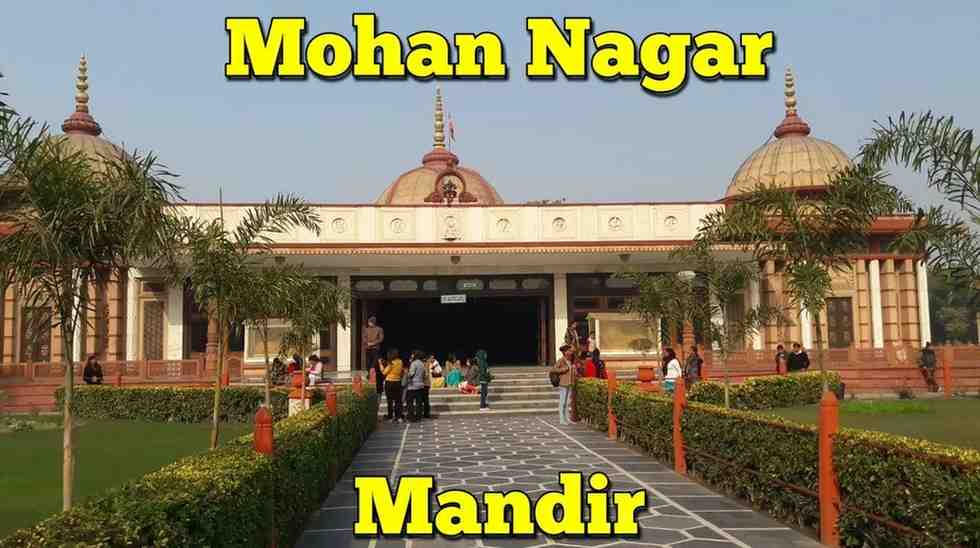
In the heart of Ghaziabad, Uttar Pradesh, stands the sacred Mohan Nagar Maa Durga Mandir, a spiritual landmark that has become a center of devotion and faith for countless devotees across Delhi-NCR. Situated along the busy GT Road near the Mohan Nagar metro station, this temple is not only a place of worship but also a symbol of the city’s rich cultural and religious heritage.
Temple Overview
Within the temple complex, devotees also find idols and shrines of other deities such as Lord Shiva, Hanuman Ji, Goddess Saraswati, and Kaal Bhairav. The temple’s design combines traditional Hindu architecture with modern facilities, offering a serene courtyard, landscaped gardens, and spacious halls capable of accommodating hundreds of visitors at a time. CCTV cameras and proper arrangements ensure that the temple is both secure and well-maintained.
Why the Temple is Famous
This temple is famous not only because of its dedication to Maa Durga but also due to its vast popularity during festivals. Devotees from Ghaziabad, Delhi, Noida, and even far-off towns visit the temple to seek blessings. The temple is also a major attraction during the month of Shravan, when devotees throng the Shiva shrine for Jalabhishek on Mondays, often numbering in the thousands.
The Mohan Nagar Mandir’s location at a busy junction makes it a recognizable landmark, and its spiritual significance ensures that it remains one of the most visited temples in the region.
Historical & Cultural Background
Since then, it has grown into a key religious destination in Ghaziabad. The cultural impact of this temple is visible in the way it brings together communities during important festivals.
This temple also reflects the blend of tradition and modernity—on one hand, it follows age-old Hindu rituals, and on the other, it uses modern infrastructure and facilities to cater to the growing number of visitors.
Short Note on the Deity
At the core of the temple lies the divine presence of Maa Durga, the supreme goddess who symbolizes Shakti—the cosmic power that sustains the universe.
What Makes it Unique vs. Other Temples
Unlike many temples that focus on one deity or one ritual, the Mohan Nagar Maa Durga Mandir offers a holistic spiritual experience.
- It houses multiple shrines within a single complex.
- The temple can accommodate large gatherings, making it ideal for community worship.
- Its prime location near metro and road networks makes it easily accessible.
Another unique aspect is the temple’s role as a cultural hub. It doesn’t just serve as a place of worship but also as a point where families gather, children learn about traditions, and communities come together to celebrate faith.
Temple History
The Mohan Nagar Maa Durga Mandir is not merely a physical structure of devotion, but a sacred site woven with threads of mythology, history, and cultural identity. Nestled in Ghaziabad along the Grand Trunk Road, this temple has been a beacon of spirituality for centuries. In this section, we explore the mythological origins, textual references, historical records, local legends, and cultural role of the temple in shaping the religious identity of Ghaziabad.
Mythological Origin Stories
In Hindu belief, Maa Durga embodies Shakti, the cosmic energy that actively destroys evil and restores dharma. Devotees worship her as the supreme protector who empowers them with strength, courage, prosperity, and spiritual guidance. The mythology of Maa Durga, described in the Devi Mahatmya section of the Markandeya Purana, narrates how the Goddess emerged from the combined energies of the gods to defeat the buffalo demon Mahishasura. This timeless story of good triumphing over evil forms the spiritual foundation for Durga temples across India, including the revered Mohan Nagar Maa Durga Mandir in Ghaziabad, which continues to inspire devotion and faith among worshippers.
Devotees recount that during Navratri, when cosmic energies are at their peak, Maa Durga herself manifested in this region, inspiring the construction of a permanent shrine. This divine presence has made the temple a significant center of devotion, drawing daily worshippers as well as large festival crowds.
Each form represents a distinct cosmic force, and devotees believe that worshiping at this temple provides blessings comparable to visiting the nine Shakti Peethas spread across India. This unique focus on the Navdurga forms establishes the temple as a central hub for Shakti worshippers in the National Capital Region.
Over the years, numerous devotees have shared accounts of miraculous experiences at the temple, including relief from illness, success in personal and professional endeavors, and fulfillment of long-standing wishes. Daily rituals, including Mangala Aarti, Sandhya Aarti, Kumkum Archana, and Kanya Pujan, reinforce the spiritual energy of the temple and create a profound sense of connection between the Goddess and her devotees. Through these practices, the temple actively nurtures faith, community, and cultural preservation, making it an essential spiritual destination in Ghaziabad and the surrounding regions.
References in Ancient Texts & Puranas
Although ancient scriptures do not explicitly mention the Mohan Nagar Maa Durga Mandir, the practice of Durga worship in Uttar Pradesh has deep roots in the Skanda Purana, Devi Bhagavata Purana, and Markandeya Purana. These sacred texts establish the spiritual significance of Maa Durga and inspire devotees to seek her blessings at temples across the region, including Ghaziabad’s Mohan Nagar Mandir. These texts emphasize the importance of Shakti worship along the Ganga-Yamuna plains, where many Shakti Peethas and Durga temples emerged over centuries.
The Skanda Purana describes Ghaziabad’s broader region as a land of rishis, tapasya, and sacred groves. Folklore suggests that during the Dvapara Yuga, sages performed yajnas in areas surrounding what is now Mohan Nagar, invoking the Goddess for protection against negative forces. Devotees see the Mohan Nagar Mandir as a continuation of that sacred tradition, a modern embodiment of an ancient spiritual current.
Historical Records – Rulers & Renovations
The modern history of the temple begins in the late 20th century. The current temple was constructed in 1978, reflecting a collective effort of local devotees, philanthropists, and community leaders. At that time, Ghaziabad was expanding as an industrial hub, and the temple became a center of solace for workers, traders, and families migrating to the city.
Although the temple does not have documented links to royal patronage like older temples in Varanasi or Mathura, it represents the post-independence temple-building movement, where communities actively took charge of preserving their cultural identity. Over the years, the temple has undergone multiple renovations and expansions.
- Spacious courtyards were developed to accommodate growing crowds.
- A large hall was added to host religious functions and discourses.
- CCTV and modern facilities were installed for safety.
- Landscaping and gardens transformed the temple into a spiritual retreat amidst the chaos of city life.
Thus, while rooted in timeless devotion, the Mohan Nagar Mandir also reflects a modern urban identity—an intersection of faith and contemporary civic needs.
Local Legends & Saint Stories
One tale speaks of a wandering sadhu who foretold that the area would one day become a great seat of Shakti worship. Another local belief is that during the temple’s early days, several devotees experienced divine visions of Maa Durga in dreams, guiding them to contribute to the temple’s development.
During Navratri, devotees often share stories of miraculous healings, fulfilled wishes, and spiritual awakenings linked to the temple. Such accounts reinforce the belief that the Mohan Nagar Mandir is not just a place of ritual but a living seat of divine grace.
Saints from neighboring regions have also visited the temple, offering pravachans and conducting yajnas. Their presence further elevated the temple’s status, turning it into a hub of bhakti (devotion) and jnana (wisdom).
Temple’s Role in Shaping City & State Identity
The Mohan Nagar Maa Durga Mandir is not just a religious site—it is a cultural anchor for Ghaziabad and the NCR region. Its impact can be seen in several ways:
- Religious Identity: The temple provides a shared space for daily worship and grand festivals, strengthening the spiritual fabric of Ghaziabad.
- Cultural Unity: Festivals like Navratri, Shravan Somvar, and Janmashtami transform the temple into a cultural hub, where traditions are passed down to younger generations.
- Urban Landmark: Located on the busy GT Road and near the metro station, the temple has become a landmark of Ghaziabad, often used as a reference point by locals.
- Economic Activity: Surrounding markets, vendors, and shops thrive during festival seasons, making the temple a driver of local economy.
- Tourism & Recognition: Today, the temple is counted among the famous temples of NCR, drawing visitors not just for worship but also for architectural admiration and cultural exploration.
In a way, the temple symbolizes Ghaziabad’s transition—from a small industrial town to a major urban center, where spirituality continues to coexist with modernity.
Architecture & Idol Description
The Mohan Nagar Maa Durga Mandir in Ghaziabad is a striking example of how traditional Hindu architectural styles blend seamlessly with modern design sensibilities. At the heart of the temple lies the idol of Maa Durga, a powerful representation of Shakti, surrounded by subsidiary shrines, gardens, and an expansive courtyard.
Style of the Temple
The temple primarily follows the Nagara style of North Indian temple architecture, characterized by its curvilinear shikhara (spire) that rises vertically above the sanctum. Unlike the elaborate gopurams of the Dravidian style found in South India, the Mohan Nagar temple’s design emphasizes simplicity and elegance.
The shikhara of the main shrine towers above the garbhagriha (sanctum sanctorum), symbolizing a spiritual link between earth and heaven. Painted in hues of saffron and white, the temple exudes a sense of purity and divinity. The overall structure is less ornate compared to medieval temples but makes use of modern construction materials like marble, sandstone, and granite while retaining symbolic Hindu motifs.
Idol of Maa Durga – Details & Symbolism
At the spiritual center of the temple rests the idol of Maa Durga, which is the focal point of all rituals and devotion.
- Material & Design: The Mohan Nagar Maa Durga idol is carved from black stone (shila) and polished to a radiant finish. Metallic embellishments highlight key features, while gold-plated crowns, silver ornaments, and embroidered sarees adorn the idol during festivals.
- Pose & Attributes: Maa Durga sits majestically on a lion (simhavahini), symbolizing courage and strength. She is depicted with eight or ten arms, each holding divine weapons such as the trishul (trident), chakra (discus), khadga (sword), dhanush (bow), and shankha (conch), representing her supreme power.
- Ornaments & Decorations: The idol receives fresh flower garlands daily, while Navratri sees the deity adorned with special jewels, silk garments, and ornate crowns. A vermilion mark (sindoor) on her forehead signifies auspicious energy and divine blessings.
Temple Layout
The Mohan Nagar Mandir’s layout follows the traditional Hindu temple structure, adapted to accommodate modern crowds:
- Garbhagriha (Sanctum Sanctorum):
- The innermost chamber where the idol of Maa Durga is enshrined.
- Built in a square plan, it is dimly lit to emphasize the divine aura of the Goddess.
- Devotees approach in a circular manner, symbolizing reverence and continuity of faith.
- Mandap (Hall):
- A spacious hall in front of the sanctum, where devotees gather for daily darshan, bhajans, and aartis.
- The mandap is large enough to host hundreds of people, especially during Navratri or Shravan.
- Shikhara:
- The temple shikhara is relatively tall and narrow, symbolizing ascension.
- Prakara & Courtyard:
- Surrounding the main shrine is an expansive courtyard where smaller shrines of Shiva, Hanuman, Saraswati, and Kaal Bhairav are located.
- Gardens and walkways add a meditative atmosphere.
Special Sculptures, Carvings & Murals
Though the Mohan Nagar Mandir does not boast the intricate carvings of medieval temples, it features modern devotional artwork:
- Murals: Walls and pillars inside the mandap are decorated with painted depictions of episodes from the Devi Mahatmya and the Durga Saptashati. These narrate stories of Maa Durga slaying demons like Mahishasura and Shumbha-Nishumbha.
- Carvings: Door frames and pillars have carvings of lotus motifs, bells, and traditional Hindu patterns, symbolizing purity and cosmic order.
- Subsidiary Sculptures: Statues of Lord Ganesha, Hanuman, and Saraswati add to the sanctity, reinforcing the temple as a holistic spiritual center.
Comparison with Other Temples in the Region
When compared with other temples in the Ghaziabad–Delhi NCR belt, the Mohan Nagar Maa Durga Mandir stands out in several ways:
- Versus Old Temples (e.g., Shiv Mandirs of Ghaziabad): Unlike centuries-old temples built in medieval styles, Mohan Nagar Mandir reflects a modern revivalist approach, combining functional spaces with devotional symbolism.
- Versus Vaishno Devi Mandir (Delhi): The Karol Bagh Vaishno Devi Mandir replicates a cave-style architecture, whereas Mohan Nagar emphasizes open courtyards and a towering shikhara.
- Versus Akshardham Temple (Delhi): While Akshardham Temple Delhi draws visitors with its intricate carvings and massive scale, Mohan Nagar Maa Durga Mandir Ghaziabad balances simplicity with spiritual intimacy. It actively serves daily worshippers while accommodating festival crowds.
- Regional Uniqueness: Mohan Nagar Mandir Ghaziabad is one of the few Navdurga temples in NCR, making it a central hub for Shakti devotees. The temple’s exclusive focus on Maa Durga in her nine divine forms attracts devotees seeking personalized spiritual experiences.
- Daily & Festival Worship: The temple caters equally to regular devotees and large festival gatherings, ensuring uninterrupted rituals and spiritual engagement.
- Navdurga Rituals: Special emphasis on Navdurga puja and aarti distinguishes the temple from other local shrines in Ghaziabad and the National Capital Region.
Religious Importance & Beliefs
The Mohan Nagar Maa Durga Mandir is not only a sacred place of worship but also a powerful spiritual center in Ghaziabad. Devotees believe that Maa Durga, the presiding deity, embodies Shakti, the divine feminine energy, capable of removing obstacles, granting strength, and providing guidance in all aspects of life.
Spiritual Significance of the Deity
Maa Durga represents courage, protection, and wisdom. The temple emphasizes her role as the guardian of righteousness. Devotees consider her blessings essential for overcoming challenges, maintaining family harmony, and achieving personal and professional success. Many people come to the temple seeking mental peace, protection from negative energies, and prosperity.
Miracles and Famous Stories
Over the years, numerous devotees have reported miracles at the temple. Stories of healing from chronic illness, sudden financial relief, and academic or career success are widely shared among visitors. One famous story narrates how a devotee praying at the temple during Navratri achieved a life-long dream against all odds, attributing her success to Maa Durga’s blessings. These tales continue to inspire faith in local communities and devotees from neighboring cities.
Rituals and Puja Beliefs
Daily rituals at Mohan Nagar Mandir include Mangala Aarti in the morning, Shringar of the deity, and Sandhya Aarti in the evening. Devotees actively participate in chanting, offering flowers, fruits, sweets, and lighting lamps. Special rituals like Kumkum Archana, Kanya Pujan, and Chandi Path are performed during festivals or auspicious days, particularly Navratri and Shravan Mondays.
Role for Devotees
Devotees visit the temple to seek blessings for:
- Prosperity: Business growth and financial stability.
- Health: Recovery from illness or protection from ailments.
- Wishes and Personal Goals: Success in exams, career, or relationships.
Connection with Local Communities
The temple serves as a community hub, connecting locals through bhajans, social activities, and annual celebrations. Similar to the Koli Samaj’s devotion to Mumba Devi in Mumbai, Mohan Nagar Mandir unites residents across Ghaziabad for cultural, spiritual, and charitable activities, fostering a sense of shared identity and devotion.
Festivals & Celebrations
Mohan Nagar Maa Durga Mandir celebrates a variety of festivals with grandeur, drawing thousands of devotees every year.
Annual Major Festivals
- Navratri: The temple’s most prominent celebration, with elaborate rituals, nine-day aartis, devotional singing, and community feasts.
- Diwali: Special prayers for wealth and prosperity, decorated with lamps and flowers.
- Gudi Padwa & Other Regional Festivals: Celebrated to honor local traditions and strengthen cultural ties.
Daily Aarti Rituals
- Morning Aarti: 6:00 AM – 12:00 PM, involving prayers, chanting of mantras, and offering of flowers.
- Evening Aarti: 4:00 PM – 9:00 PM, featuring devotional music, bell ringing, and prasadam distribution.
Special Annual Mela / Jatra
The temple organizes annual fairs during Navratri, including devotional performances, food stalls, and cultural programs. These melas attract devotees from neighboring cities, making it a vibrant social and spiritual gathering.
Unique Temple-Specific Celebrations
Mohan Nagar Mandir conducts Shravan Monday Jalabhishek and Kanya Pujan, which are unique rituals reflecting devotion and community participation. These events highlight the temple’s significance in local spiritual life and cultural preservation.
Temple Timings & Aarti Schedule
Devotees can plan their visits around the following schedule:
| Day | Morning Timings | Evening Timings | Special Aarti |
|---|---|---|---|
| Monday | 6:00 AM – 12:00 PM | 4:00 PM – 9:00 PM | Shiv Aarti |
| Tuesday | 6:00 AM – 12:00 PM | 4:00 PM – 9:00 PM | Devi Aarti |
| Saturday | 6:00 AM – 12:00 PM | 4:00 PM – 9:00 PM | Navgraha Pooja |
Note: The temple remains open daily with extended timings during festivals like Navratri and Diwali to accommodate the influx of devotees.
How to Reach
By Train
The nearest railway station is Ghaziabad Junction, located approximately 5 km from Mohan Nagar Mandir. Auto-rickshaws and taxis are available from the station to the temple.
By Air
The closest airport is Indira Gandhi International Airport (Delhi), about 45 km away. Hindon Airport is another nearby option for regional flights. From the airport, taxis and cab services can reach the temple in under an hour.
By Road
Ghaziabad is accessible via NH-9 and several local highways. Public buses, taxis, auto-rickshaws, and private vehicles provide easy transport. The Delhi Metro’s Mohan Nagar station also provides convenient access for first-time visitors.
Local Guidance for First-Time Visitors
- Arrive early during festivals to avoid crowds.
- Parking is available near the temple
Nearby Attractions
Visitors can combine temple darshan with nearby attractions:
- Other Temples: ISKCON Ghaziabad, Shiv Mandir, and Sheetla Mata Mandir.
- Historical Monuments: Dasna Temple, local forts, and colonial-era buildings.
- Cultural Hotspots: Ghaziabad markets, local ghats, and museums showcase local art and culture.
Suggested 1-Day Itinerary:
- Morning darshan at Mohan Nagar Mandir.
- Visit ISKCON Temple for spiritual learning.
- Explore Ghaziabad markets for local handicrafts and street food.
- Evening return to the Mandir for aarti and prasadam.
Visitor Guidelines
- Dress Code: Traditional or modest attire is recommended. Sarees, salwar-kameez, or kurta-pajama are preferred.
- Photography Rules: Photography is allowed outside the sanctum. No flash photography inside the main shrine.
- Temple Facilities: Parking, prasad distribution, and clean restrooms are available for devotees.
- Dos and Don’ts: Maintain silence inside the sanctum, respect elders, and avoid littering.
- Best Time to Visit: Navratri (spring and autumn), Shravan Mondays, and festive weekends ensure the most vibrant experience.
Frequently Asked Questions (FAQ)
Q1: Where is Mohan Nagar Maa Durga Mandir located?
A: The temple is in Mohan Nagar, Ghaziabad, Uttar Pradesh, easily accessible by train, road, or air.
Q2: What is the history of the temple?
A: Constructed in 1978, it is based on local legends and devotion to Maa Durga. Over the years, renovations and community support have enhanced its significance.
Q3: What are the darshan timings?
A: Morning 6:00 AM – 12:00 PM, Evening 4:00 PM – 9:00 PM. Extended during festivals.
Q4: Which festivals are celebrated here?
A: Navratri, Diwali, Shravan Mondays, Gudi Padwa, and special local celebrations.
Q5: How to reach from the nearest railway station?
A: Ghaziabad Junction is 5 km away. Taxis, autos, and local buses are available.
Q6: Is photography allowed?
A: Yes, outside the sanctum. No photography inside the main shrine.
Q7: What is the best time to visit?
A: Navratri and Shravan months provide the most auspicious and vibrant experience.
Q8: Are there special rituals for first-time visitors?
A: First-time visitors can perform Kumkum Archana or participate in morning aarti for bless
Conclusion
The Mohan Nagar Maa Durga Mandir is a spiritual haven for devotees seeking divine guidance, protection, and blessings. The temple offers a unique combination of faith, culture, and community, making it a must-visit site in Ghaziabad.
Devotees experience the spiritual energy of Maa Durga through daily aartis, festivals, and special rituals. By visiting the temple, devotees strengthen their faith, participate in cultural preservation, and contribute to the community’s spiritual life.
The temple stands as a symbol of devotion and unity, welcoming people of all backgrounds. A visit promises peace of mind, fulfillment of wishes, and a memorable connection with the divine. May Maa Durga bless every visitor with strength, courage, and spiritual prosperity.
1 Comment