
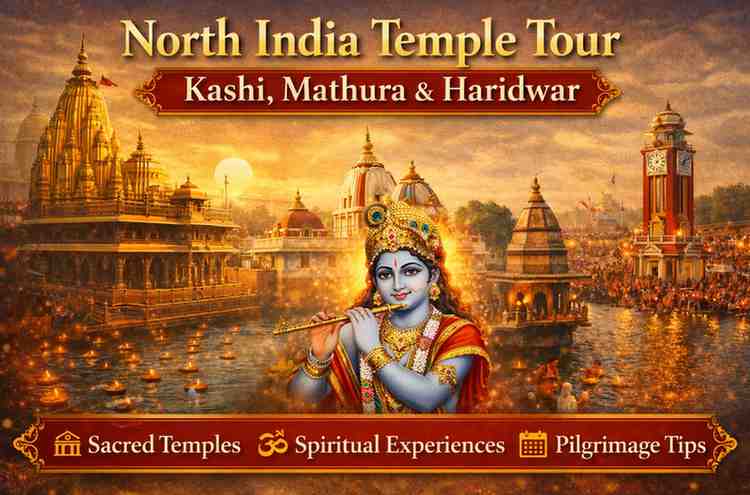
Introduction: Exploring the Spiritual Heart of North India
North India is not just the land of vibrant culture and heritage, but also a hub of spiritual journeys. Among the cities that draw millions of devotees every year, Kashi (Varanasi), Mathura, and Haridwar stand out as iconic centers of Hindu faith. Each of these cities offers unique experiences — from sacred river rituals to ancient temples steeped in mythology. A temple tour covering these destinations promises not only spiritual rejuvenation but also a glimpse into India’s timeless traditions.
Also Read :- New Delhi Kalibari, Mandir Marg – History, Significance, Timings & Complete Information
Kashi (Varanasi) – The Eternal City
Kashi, also known as Varanasi, is one of the oldest continuously inhabited cities in the world. Renowned for its ghats along the holy Ganga river, it is considered the spiritual capital of India. Visitors can explore the Kashi Vishwanath Temple, dedicated to Lord Shiva, which attracts pilgrims from across the globe. The temple is a major highlight of any temple tour in North India, offering profound spiritual experiences and mesmerizing architecture.
Beyond the Vishwanath Temple, the city is dotted with hundreds of temples, narrow alleys, and ancient markets. Tourists can witness the Ganga Aarti at Dashashwamedh Ghat, a daily ritual that symbolizes devotion, light, and spiritual harmony.
Also Read :- Top Vishnu Temples in South India: Divine Abodes of Lord Narayana
Must-Visit Temples in Kashi
Varanasi is home to over a thousand temples. Apart from Kashi Vishwanath, notable temples include:
- Sankat Mochan Hanuman Temple: Famous for solving devotees’ troubles.
- Tulsi Manas Temple: Built at the place where poet Tulsidas wrote Ramcharitmanas.
- Durga Temple: Known for its striking red color and spiritual ambiance.
Each temple in Kashi has its unique story, architecture, and rituals. Exploring them offers both a spiritual and historical perspective of the city.
Also Read :- Shri Kalkaji Mandir Delhi – History, Significance, Timings & Complete Information
Section 3: Mathura – The Birthplace of Lord Krishna
Mathura, located in Uttar Pradesh, is revered as the birthplace of Lord Krishna, making it a vital pilgrimage site for devotees. The city is alive with festivals, especially Janmashtami, which celebrates Krishna’s birth with grandeur. The Shri Krishna Janmabhoomi Temple is the main attraction, offering visitors a chance to witness traditional rituals and the historic site of Krishna’s birth.
Mathura is also surrounded by other temples like Vishram Ghat, Dwarkadhish Temple, and Govardhan Hill, making it a complete spiritual experience. A temple tour in Mathura not only connects devotees with divinity but also showcases the region’s rich mythological heritage.
Also Read :- Navagraha Shanti Puja – Benefits, Cost, Vidhi & Online Booking (2026 Complete Guide)
Temples to Explore in Mathura
Some must-visit temples in Mathura include:
- Dwarkadhish Temple: Dedicated to Lord Krishna, with exquisite architecture.
- Vishram Ghat Temple: Where Krishna is believed to have rested after killing Kansa.
- Radha Vallabh Temple: Famous for Radha Krishna worship.
These temples reflect Mathura’s spiritual essence and cultural vibrancy, making the city a key destination in any North India temple tour.
Also Read :-
Section 5: Haridwar – Gateway to the Himalayas and Holy Rivers
Haridwar, in Uttarakhand, is renowned for its holy Ganga river and spiritual significance. The city serves as the gateway to the Himalayas and is a center for yoga, meditation, and religious tourism. The Har Ki Pauri ghat is the most famous site, attracting thousands for the Ganga Aarti, a mesmerizing spectacle of lamps, chants, and devotion.
Haridwar is also part of the Kumbh Mela, the largest religious gathering in the world, held every 12 years. Pilgrims from across India and abroad come to take a dip in the sacred river, believing it cleanses their sins.
Important Temples in Haridwar
Haridwar houses several significant temples such as:
- Mansa Devi Temple: Perched on a hill, reachable by cable car.
- Chandi Devi Temple: Another hilltop shrine dedicated to Goddess Chandi.
- Bharat Mata Mandir: Unique for its 9-story depiction of Indian history and mythology.
Visiting these temples provides a holistic spiritual experience combining devotion, scenic beauty, and historical significance.
Best Time to Visit Kashi, Mathura & Haridwar
The ideal time for a North India temple tour is between October and March, when the weather is pleasant. Festivals like Diwali, Janmashtami, and Ganga Dussehra enhance the spiritual experience. Avoid monsoon months as heavy rains can disrupt travel plans. Planning visits during festivals ensures participation in traditional rituals, processions, and special aartis.
Travel Tips for Pilgrims
- Transportation: Trains, flights, and roadways are well-connected to all three cities.
- Accommodation: Choose hotels or ashrams near ghats or temples for easy access.
- Dress Code: Modest attire is recommended in temples.
- Local Etiquette: Respect rituals, photography rules, and avoid disturbing devotees.
These tips ensure a comfortable, safe, and spiritually enriching pilgrimage experience.
Cultural & Spiritual Experiences
Apart from temples, the journey offers:
- Boat rides in Kashi: Witness sunrise on the Ganga and ancient architecture.
- Local Cuisine: Try traditional sweets like pedas in Mathura.
- Yoga & Meditation in Haridwar: Attend sessions along the Ganga.
- Festivals & Melas: Experience North India’s colorful celebrations firsthand.
Pilgrimage Routes and Travel Itinerary
For a seamless North India temple tour, planning the route is crucial. Most pilgrims follow this recommended itinerary:
- Kashi (Varanasi) – 2 to 3 Days
- Visit Kashi Vishwanath Temple, Sankat Mochan Temple, Tulsi Manas Temple, and Durga Temple.
- Attend Ganga Aarti at Dashashwamedh Ghat in the evening.
- Explore local markets and traditional silk weaving centers.
- Mathura & Vrindavan – 1 to 2 Days
- Start at Shri Krishna Janmabhoomi Temple, followed by Dwarkadhish Temple.
- Explore Vishram Ghat and Govardhan Hill.
- Include Vrindavan temples like Banke Bihari Temple and Radha Raman Temple for a full Krishna-centric experience.
- Haridwar – 1 to 2 Days
- Attend the Ganga Aarti at Har Ki Pauri.
- Visit Mansa Devi, Chandi Devi, and Bharat Mata Mandir.
- Optional day trips to Rishikesh for yoga, meditation, and adventure activities.
This itinerary ensures that pilgrims can cover major temples and spiritual experiences without feeling rushed.
Spiritual Benefits and Cultural Insights
A temple tour in North India offers more than sightseeing; it provides an immersive spiritual and cultural experience:
- Spiritual Benefits: Visiting holy cities like Kashi, Mathura, and Haridwar is believed to purify the mind and soul. Pilgrims gain inner peace, perform rituals for ancestors, and strengthen their devotion. Bathing in the Ganga at Haridwar or offering prayers at Krishna’s birthplace is considered highly auspicious.
- Cultural Insights: These cities showcase North India’s rich traditions — classical music, temple architecture, local festivals, rituals, and cuisine. For instance, Kashi’s ghats and Varanasi silk weaving, Mathura’s sweets and Krishna folklore, and Haridwar’s yoga and ashram culture give travelers deep cultural exposure.
- Community and Festivities: Festivals like Diwali, Janmashtami, and Kumbh Mela create opportunities for social interaction and participation in traditional celebrations, allowing travelers to witness devotion on a grand scale.
By combining spirituality, culture, and travel, this temple tour becomes transformative, leaving lifelong memories.
Festivals and Special Events in Kashi, Mathura & Haridwar
Timing your visit to coincide with festivals can transform a temple tour into a once-in-a-lifetime experience.
- Kashi (Varanasi):
- Dev Deepawali: Celebrated fifteen days after Diwali, when the ghats are lit with thousands of diyas, creating a magical spiritual atmosphere.
- Maha Shivratri: Devotees throng Kashi Vishwanath Temple, offering prayers and participating in night-long rituals.
- Mathura & Vrindavan:
- Janmashtami: Marks Lord Krishna’s birth. Celebrations include midnight prayers, dance dramas (Raas Leela), and colorful processions.
- Holi Festival: Vrindavan is famous for its vibrant Lathmar Holi, attracting visitors from around the globe.
- Haridwar:
- Kumbh Mela (every 12 years): Largest religious gathering in the world. Millions of pilgrims take a dip in the Ganga.
- Ganga Dussehra: Commemorates the descent of the Ganga, celebrated with river processions and devotional singing.
Attending these events allows travelers to witness North India’s spiritual fervor at its peak.
Local Cuisine and Pilgrim Delicacies
No temple tour is complete without tasting local delicacies that reflect the culture of each city:
- Kashi: Famous for Banarasi paan, kachori, and chaat. Don’t miss the malaiyo, a seasonal sweet unique to Varanasi.
- Mathura: Known for pedas, a sweet treat often offered to Lord Krishna. Street food like kachori, gujia, and lassi are popular.
- Haridwar: Sample poori with aloo sabzi, kachori, and sweets like jalebi. Ashrams often provide simple, sattvic meals to pilgrims.
Trying local cuisine adds a cultural layer to the spiritual journey and creates unforgettable memories.
Tips for a Safe and Comfortable Temple Tour
Pilgrimage journeys can be physically and spiritually demanding, so proper planning enhances the experience:
- Health and Safety: Carry water, wear comfortable shoes, and take light snacks during temple visits.
- Respect Local Customs: Remove shoes before entering temples, avoid loud conversations, and follow temple-specific rules.
- Accommodation: Book hotels or ashrams in advance, especially during festivals.
- Photography & Documentation: Seek permission before photographing rituals or priests.
- Local Guides: Hiring a knowledgeable local guide can provide insights into mythology, architecture, and hidden temples.
These practical tips ensure that travelers can focus on spiritual growth without stress or inconvenience.
Historical Significance and Legends
The spiritual appeal of Kashi, Mathura, and Haridwar is deeply intertwined with legends and historical narratives:
- Kashi (Varanasi):
- Believed to be created by Lord Shiva himself, Kashi is often referred to as the “City of Light.” Legends say that dying here ensures liberation (moksha).
- The Kashi Vishwanath Temple has been rebuilt multiple times over centuries, yet it retains its spiritual essence.
- Mathura:
- This city is the legendary birthplace of Lord Krishna, as per the Puranas. Many temples and ghats are linked to Krishna’s childhood pastimes (Leelas), offering devotees a chance to relive ancient stories.
- The city has also witnessed historical battles and Mughal-era architecture, making it a mix of devotion and history.
- Haridwar:
- One of the seven holiest places (Sapta Puri) in Hinduism. Its significance comes from mythology stating that Haridwar is where the Ganga descends from the heavens.
- Ancient temples like Mansa Devi and Chandi Devi are believed to grant wishes and blessings, attracting devotees for centuries.
Architectural Marvels of Temples
These temples are not only spiritual centers but also architectural masterpieces:
- Kashi Vishwanath Temple: Stunning gold-plated spire and intricate carvings. The temple reflects both medieval and modern architecture.
- Tulsi Manas Temple, Varanasi: White marble walls engraved with verses from the Ramcharitmanas.
- Dwarkadhish Temple, Mathura: Classic Nagara style architecture with beautifully sculpted pillars.
- Chandi Devi Temple, Haridwar: Hilltop location with a panoramic view of the Ganga; reached via cable car.
Architectural beauty enhances the spiritual experience and draws art and history enthusiasts alongside pilgrims.
Yoga, Meditation, and Wellness in Pilgrimage Cities
- Haridwar & Rishikesh: Famous for yoga ashrams, meditation retreats, and spiritual workshops. Visitors can join morning yoga by the Ganga, attend Vedic chanting sessions, or undergo short detox programs.
- Kashi: Offers guided spiritual walks, meditation classes along the ghats, and exposure to Vedic rituals.
- Mathura & Vrindavan: Participating in bhajan sessions, kirtans, and spiritual storytelling enhances mental peace and devotion.
These activities complement temple visits by offering deeper engagement with spirituality, mindfulness, and well-being.
Shopping and Souvenirs for Pilgrims
- Kashi: Banarasi silk sarees, brass idols, and incense sticks.
- Mathura: Handcrafted Krishna idols, local sweets like pedas, and miniature paintings.
- Haridwar: Rudraksha beads, holy water bottles from the Ganga, and spiritual books.
Responsible and Sustainable Pilgrimage Practices
Modern pilgrims are encouraged to travel responsibly to protect these sacred cities:
- Avoid littering at ghats and temple premises.
- Use eco-friendly items for rituals instead of plastic.
- Respect temple timings and local communities.
- Support local artisans and small businesses to sustain cultural heritage.
By combining devotion with responsibility, travelers ensure that these holy cities remain pristine and spiritually vibrant for generations.
Frequently Asked Questions About North India Temple Tour
1. What is included in a North India temple tour?
A North India temple tour usually includes visits to major spiritual destinations such as Kashi (Varanasi), Mathura, and Haridwar. These cities are famous for their ancient temples, sacred rivers, and religious significance.
2. Why are Kashi, Mathura, and Haridwar important pilgrimage sites?
Kashi is considered the spiritual capital of India dedicated to Lord Shiva, Mathura is the birthplace of Lord Krishna, and Haridwar is one of the seven sacred cities where the River Ganga enters the plains.
3. What is the best time to plan a North India temple tour?
The best time to visit these holy cities is between October and March when the weather is pleasant and ideal for temple visits and spiritual exploration.
4. Which temples should be visited in Kashi during the tour?
The most important temples in Kashi include Kashi Vishwanath Temple, Annapurna Temple, Sankat Mochan Hanuman Temple, and Kaal Bhairav Temple.
5. What are the major temples to visit in Mathura?
Important temples in Mathura include Shri Krishna Janmabhoomi Temple, Dwarkadhish Temple, and nearby temples in Vrindavan such as Banke Bihari Temple and ISKCON Temple.
6. Which temples are famous in Haridwar?
Famous temples in Haridwar include Mansa Devi Temple, Chandi Devi Temple, and Maya Devi Temple. Har Ki Pauri is also a sacred ghat where the famous Ganga Aarti takes place.
7. How many days are needed for a Kashi Mathura Haridwar tour?
A well-planned North India temple tour covering Kashi, Mathura, and Haridwar usually takes around 5 to 7 days depending on travel schedules and temple visits.
8. Is the North India temple tour suitable for families?
Yes, the North India temple tour is suitable for families, pilgrims, and spiritual travelers. These destinations offer peaceful spiritual experiences and cultural exploration.
9. How can travelers reach Kashi, Mathura, and Haridwar?
Kashi can be reached via Varanasi Airport or railway station, Mathura via Mathura Junction railway station, and Haridwar through Haridwar railway station or nearby Dehradun airport.
10. What spiritual experiences can visitors expect during the temple tour?
Visitors can experience sacred rituals, temple darshan, Ganga Aarti, devotional chanting, and a deep spiritual atmosphere in these ancient pilgrimage cities.
Conclusion – A Transformative Pilgrimage
A temple tour covering Kashi, Mathura, and Haridwar is more than sightseeing; it is a spiritual journey that connects visitors with India’s rich heritage, devotion, and culture. Whether it is witnessing the Ganga Aarti, celebrating Krishna Janmashtami, or meditating in Haridwar, each moment offers reflection, peace, and inspiration. For devotees and travelers alike, this North India temple tour promises an unforgettable experience that rejuvenates the body, mind, and soul.
Every temple tells a story, every festival evokes devotion, and every ghat holds centuries of spiritual practices. This combination of faith, culture, and tradition makes the North India Temple Tour an unparalleled experience, blending introspection, joy, and reverence in one cohesive journey.
1 Comment