
Introduction
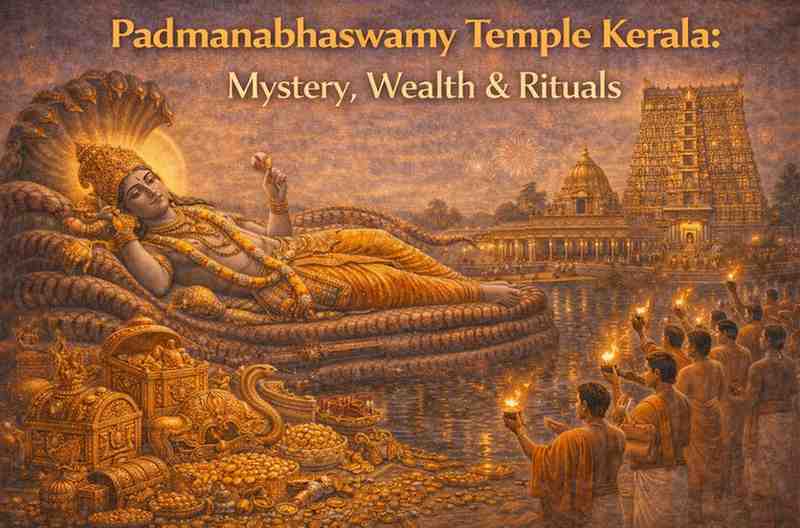
Padmanabhaswamy Temple, located in Thiruvananthapuram, Kerala, is renowned for its mystical history, unparalleled wealth, and rich ritualistic traditions. Considered one of the 108 Divya Desams, it is regarded as a sacred abode of Lord Vishnu. The temple’s fame escalated globally after the 2011 discovery of an immense treasure trove, making it one of the richest temples in the world.
Historical Background
The origins of Padmanabhaswamy Temple trace back to ancient times, with references in the കേരള മഹാത്മ്യം and ബ്രഹ്മാണ്ഡ പുരാണം. The temple is closely associated with the royal Travancore family, who were devotees and custodians of the deity. Historical records show extensive renovations and expansions, especially under King Marthanda Varma in the 18th century, who declared his kingdom as “divided for God.”
Also Read :- Meenakshi Temple Madurai 2026: Architecture, Festivals & Legends
Mystery of the Vaults and Hidden Treasure
The temple houses six secret underground vaults named A to F. Five vaults were opened under court order starting in 2011, revealing vast treasures—gold, jewels, ancient coins, and artifacts dating back centuries. The estimated value is around $22 billion, including solid-gold idols, crowns, goblets, and precious stones.
Vault B remains unopened due to security and religious concerns, with legends hinting at hidden chambers with immense wealth beyond imagination. Security measures are stringent, involving over 200 guards, surveillance, and restrictions on access.
Also Read :- Ujjain Mahakaleshwar: Bhasma Aarti Booking & Temple Rituals
Elaborate Rituals and Spiritual Traditions
The temple follows rigorous daily rituals based on ആഗമ ശാസ്ത്രം, starting with the early morning ‘TRIKKAPPU TURAPPU’ at 3 AM, complete with conch sounds and traditional music (പഞ്ചവാദ്യം). Abhishekam (ceremonial bath) is performed for the main idols of Lord Padmanabhaswamy and his consorts.
Special festivals such as Alpashi Utsavam in October and Makara Vilakku in January attract thousands of pilgrims. These include vibrant processions, elaborate poojas, and cultural programs celebrating Kerala’s spiritual heritage.
Also Read :- 12 Jyotirlinga Temples in India: Complete Darshan & Travel Guide
Administration and Contemporary Significance
Managed by a trust led historically by the Travancore royal family, the temple’s administration underwent legal scrutiny to ensure transparency following the treasure discovery. Despite controversies, it continues as a vital pilgrimage site symbolizing divine protection, prosperity, and Kerala’s rich religious culture.
Also Read :- Gujarat Temple Tour: Exploring Somnath, Dwarka & Ambaji Circuit
Architectural Grandeur and Spiritual Design
Padmanabhaswamy Temple stands as an exemplary fusion of ദ്രാവിഡ ശൈലി (Dravidian style) architecture with Kerala’s indigenous architectural nuances. The temple’s main sanctum, housing Lord Padmanabhaswamy in a reclining posture on the serpent Anantha, epitomizes divine repose. The intricate carvings on wooden doors, granite pillars adorned with mythological motifs, and detailed frescoes narrate sacred stories while fostering a profound spiritual ambiance. The temple perimeter is fortified with towering granite walls and elaborately sculpted gopurams that delineate sacred space.
Also Read :- Himachal Devi Temples: A Divine Journey to Naina Devi, Chintpurni & Jwala Ji
The Vaults: Guardians of Untold Riches and Legends
Guarded with utmost secrecy, the temple’s underground vaults labeled A through F have stirred widespread fascination. The court-sanctioned opening of vaults A, C, D, E, and F starting 2011 revealed unimaginable treasures including gold coins, jeweled crowns, ornamental idols, and ancient manuscripts. Yet, vault B, sealed for unknown reasons, remains enveloped in lore, spurring theories of divine protection, curses, and unfathomable wealth concealed within. The temple management maintains rigorous security protocols, ensuring sanctity while balancing public intrigue.
Ritual Practices: The Divine Rhythm of Worship
The daily rituals at Padmanabhaswamy Temple follow ആഗമ ശാസ്ത്രം, beginning with the pre-dawn തൃക്കപ്പു തുരപ്പ്, featuring conch shell sounds and traditional Kerala instruments like chenda and edakka. Special festivals like ആലപ്പാഴി ഉത്സവം and മകരവിളക്ക് draw devotees nationwide with processions, hymns, and sacred fire offerings symbolizing cosmic transitions.
The Role of the Travancore Royal Family
Historically custodians of the temple, the Travancore royal family uphold custodial duties emphasizing preservation of rituals and patrimony. Post-treasure discovery, governance transitioned to a trust incorporating legal oversight to foster transparency and safeguard heritage. The royal family’s continuing involvement shapes temple ethos, intertwining governance, religious observance, and cultural stewardship uniquely.
Pilgrimage and Cultural Impact in 2025
In 2025, Padmanabhaswamy Temple continues to thrive as a major pilgrimage destination, drawing spiritual seekers and tourists alike. The temple’s mystique catalyzes cultural festivals, music performances, and art exhibitions celebrating Kerala’s devotional heritage. Pilgrims engage in spiritual practices blending age-old traditions with contemporary wellness pursuits, such as meditation and Vedic chanting workshops, amplifying the temple’s role as a living spiritual sanctuary.
Conservation and Future Outlook
Efforts to conserve the temple’s structural and cultural heritage form a priority amid increasing visitation. Restoration projects addressing ancient sculptures, fresco preservation, and eco-friendly visitor management underscore commitments to sustainability. Looking ahead, the temple envisages leveraging technology for enhanced virtual pilgrimages, educational outreach, and global spiritual dialogue while maintaining its sacred sanctity.
Architectural Majesty
The temple blends ദ്രാവിഡ ശൈലി (Dravidian style) with Kerala’s unique architecture. It features an intricate sanctum with Lord Padmanabhaswamy reclining on the serpent Anantha, surrounded by ornate carvings, frescoes, and imposing granite walls. Majestic gopurams guard the perimeter creating a sacred boundary.
Mysteries of the Vaults and Treasure
The temple contains six vaults, labeled A to F, with massive treasure caches discovered in five vaults since 2011. Valued at over $22 billion, the treasures include gold coins, jeweled idols, and ancient relics. Vault B remains sealed due to religious and security reasons, shrouded in legends of curses and divine protection. The temple is under strict surveillance with over 200 guards ensuring safety.
2025 Rituals and Festivals
Daily rituals follow strict ആഗമ ശാസ്ത്രം guidelines, starting with the early morning തൃക്കപ്പു തുരപ്പ്. Pillars resonate with the sounds of പഞ്ചവാദ്യം as devotees worship. Major festivals like Alpashi Utsavam in October and Makara Vilakku in January draw thousands for grand processions, fire ceremonies, and traditional dances.
Recent Developments and Legal Oversight
In 2025, courts ordered lie-detector tests on temple staff amid an investigation into the recent disappearance of about 104 grams of gold from the temple’s treasure. The temple administration remains under court-supervised administration, balancing transparency with preservation of ancient customs.
Plans for the rare Maha Kumbhabhishekam (grand consecration ceremony) after 270 years are underway, with rituals scheduled for June 8, 2025. These include the installation of golden finials on the sanctum tower and re-consecration ceremonies guided by temple thantris.
The Travancore Royal Family’s Role
Historically custodians, the Travancore royal family continues spiritual oversight while cooperating with government and legal authorities on temple governance. Their stewardship preserves ritual sanctity and cultural heritage.
Pilgrim Experience in 2025
Visitors must respect protocols and timed darshan schedules, especially around festival times. Innovative steps include virtual tours and enhanced visitor management to maintain the temple’s sacred atmosphere.
Cultural and Spiritual Significance
Padmanabhaswamy Temple symbolizes Kerala’s religious devotion, architectural splendor, and hidden mysteries. Its conspicuous wealth contrasts with its silent spiritual power, inspiring awe and devotion in all who visit.
Gold Theft Investigation and Security Challenges
In 2025, the Padmanabhaswamy Temple has been under intense scrutiny following reports of a gold theft involving approximately 104 grams (13 sovereigns) of gold missing from the temple’s treasure. The Thiruvananthapuram Judicial Magistrate Court ordered lie-detector (polygraph) tests on six temple employees as part of the ongoing investigation.
Vault B Controversy and Ritual Considerations
Among the six underground vaults, Vault B remains unopened amid spiritual, legal, and security concerns. Religious authorities and the temple’s thantri emphasize consulting rituals and customs before any decision on opening it, citing myths warning about curses and divine repercussions. The administrative and advisory committees, including representatives of the Travancore royal family and government officials, continue discussions about the vault’s status and future.
Maha Kumbhabhishekam 2025: A Grand Consecration Ritual
The 2025 Maha Kumbhabhishekam at Padmanabhaswamy Temple included installing golden finials (thazhikakudams) on sanctum towers, reinstalling the 300-year-old idol of Vishwaksena (guardian deity), and performing the Ashtabandha Kalasam ritual to sanctify the shrine.
Enhanced Pilgrim Management and Festival Observances
During major festivals and consecration periods in 2025, Padmanabhaswamy Temple adjusted darshan timings to accommodate large crowds while maintaining ritual sanctity. Typical darshan slots included early morning from 3:15 AM to 4:15 AM (Nirmalya Darshanam), and multiple morning sessions from 6:30 AM to 12:00 PM. Evening darshan was held from 5:00 PM to 7:20 PM.
Ongoing Renovations and Preservation Efforts
The temple has undergone phased renovation projects since 2017, paused briefly by the COVID-19 pandemic, and resumed steadily to restore ancient architecture and preserve centuries-old sculptures, frescoes, and temple tanks. These efforts aim to protect the temple’s heritage while enhancing environmental sustainability and visitor facilities.
Governance and Cultural Stewardship
The temple’s administration balances hereditary custodianship by the Travancore royal family with legal oversight from government and judiciary bodies. This structure protects temple assets while ensuring religious freedoms, preserving its spiritual essence and cultural importance in Kerala.
Architectural Grandeur
The temple showcases a blend of Dravidian and traditional Kerala architectural styles, featuring towering gopurams, intricate carvings, frescoes, and the iconic reclining deity of Lord Padmanabhaswamy on the serpent Anantha.
The Vaults and Hidden Treasure
Unravel the mystery surrounding the six secret underground vaults, their immense treasures discovered since 2011, and the enduring enigma of the unopened Vault B. Understand the security measures and religious beliefs governing access.
Rituals and Festivals
Get insights into daily ആഗമ ശാസ്ത്രം rituals including the early morning തൃക്കപ്പു തുരപ്പ് and the spectacular festivals such as Alpashi Utsavam and Makara Vilakku that draw devotees from across the country.
Recent Developments in 2025
Read about the gold theft investigation, court-ordered polygraph tests, preparations for the rare Maha Kumbhabhishekam, ongoing restoration projects, and administrative governance balancing tradition and transparency.
Pilgrim Experience and Cultural Impact
Learn practical tips for devotees and tourists visiting in 2025 and how the temple continues to preserve and promote Kerala’s cultural and spiritual heritage through rituals, music, and community engagement.
Conclusion
Padmanabhaswamy Temple epitomizes India’s spiritual depth, blending ancient mystery and divine wealth with vibrant living traditions. Its continued allure in 2025 offers profound inspiration to seekers worldwide.
Ancient Origins and Divine Legends
The temple’s history possibly dates back over 5,000 years to the start of the കലി യുഗം. Ancient texts like the അനന്തസയന മഹത്തര്യം recount that a Tulu Brahmin hermit, Divakara Muni, consecrated the temple and reinstalled the idol in the 950th year of Kali Yuga.Fascinating legends intertwine the temple’s foundation with divine interventions and spiritual ardor.
Early Royal Patronage: Aay and Venad Dynasties
The decline of the Aay dynasty, their merger with Venad royalty transferred control of the temple to the latter.
Expansion Under the Pandyas and Later Renovations
Through the centuries, the temple underwent expansions and renovations by ruling dynasties. The 14th-century Mathilakam records reference early temple scripts and ownership details. The temple underwent documented rebuilding in the 16th century, with major renovations by the Pandya kings.
King Marthanda Varma (1729–1758) led a major restoration of Padmanabhaswamy Temple, rebuilding it in the Dravidian architectural style while preserving its original layout. King Marthanda Varma replaced fragile wooden structures with sturdy granite, reconstructed the main idol, and added new mandapams and corridors, shaping the temple’s current magnificent form.
Modern History: Legal Oversight and Global Attention
From the mid-20th century, the Travancore royal family maintained custodianship with increasing legal and state oversight. The 2011 discovery of the temple’s immense treasure vaults propelled Padmanabhaswamy Temple onto the global stage. Ongoing court supervision governs the treasure’s security. Restoration and pilgrimage management efforts continue to balance ancient tradition with modern demands.
Frequently Asked Questions (FAQs) – Padmanabhaswamy Temple
1. Where is Padmanabhaswamy Temple located?
Padmanabhaswamy Temple is located in Thiruvananthapuram, the capital city of Kerala, India. It is one of the most famous temples dedicated to Lord Vishnu.
2. Why is Padmanabhaswamy Temple famous?
The temple is famous for its ancient history, unique Kerala-Dravidian architecture, and the discovery of massive hidden treasures in its underground vaults.
3. Which deity is worshipped in Padmanabhaswamy Temple?
The temple is dedicated to Lord Vishnu in the form of Anantha Padmanabha, where the deity is depicted reclining on the serpent Adishesha.
4. Why is the Padmanabhaswamy Temple considered the richest temple in the world?
The temple is considered the richest temple because of the enormous treasure found in its secret vaults, including gold ornaments, jewels, and ancient artifacts.
5. What are the mysterious temple vaults?
The temple has several underground vaults that were sealed for centuries. Some vaults were opened in 2011 revealing treasures, while others remain closed due to religious beliefs and legal decisions.
6. What is the dress code for visiting Padmanabhaswamy Temple?
Visitors must follow a strict traditional dress code. Men must wear dhoti or mundu, while women are required to wear saree, salwar, or traditional attire.
7. What rituals are performed at Padmanabhaswamy Temple?
Daily rituals include Abhishekam, Deeparadhana, and special pujas dedicated to Lord Vishnu.
8. When is the best time to visit Padmanabhaswamy Temple?
The best time to visit is between October and March when the weather in Kerala is pleasant for travel and temple visits.
9. What festivals are celebrated at the temple?
Major festivals include Alpasi Utsavam, Painkuni Festival, and Laksha Deepam, which attract thousands of devotees.
10. Can tourists enter the Padmanabhaswamy Temple?
Entry to the temple is restricted to Hindus only, and visitors must follow the temple’s traditional dress and customs.
Conclusion
In 2025, Padmanabhaswamy Temple remains a symbol of awe-inspiring mystery, unmatched wealth, and enduring spiritual tradition. Its intricate rituals and deep historical roots continue to inspire millions, reflecting timeless devotion woven into Kerala’s cultural fabric.
7 Comments