
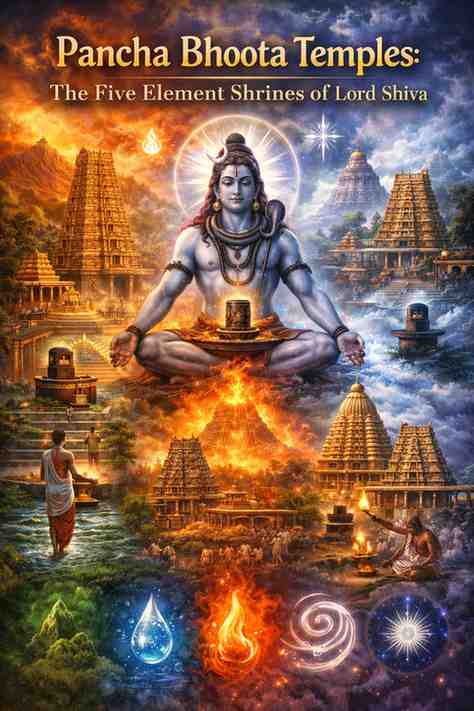
The Pancha Bhoota Temples, also known as the Five Element Shrines of Lord Shiva, are sacred sites in South India. Each temple represents one of the five fundamental elements of nature — Earth, Water, Fire, Air, and Ether (Space) — and these temples exemplify the spiritual embodiment of the natural world through Lord Shiva’s cosmic presence.
Introduction: Pancha Bhoota Shiva Temples – The Cosmic Connection
The Pancha Bhoota concept in Hindu philosophy represents the five primal elements essential to creation and life: Earth (Prithvi), Water (Apah), Fire (Agni), Air (Vayu), and Ether (Akasha). Moreover, these elements are not only physical substances but also forces embodying Lord Shiva’s cosmic energy. Consequently, the Pancha Bhoota Shiva temples in India symbolize these elements and serve as sacred sites where divinity and nature unite, thereby attracting spiritual seekers from all over.
The five temples are located in Tamil Nadu and Andhra Pradesh, each with rich histories, magnificent architecture, and deep mythological significance. These temples offer devotees a unique experience to connect with the cosmic elements and attain spiritual purification.
Also Read :- Temples Where Wishes Come True: India’s Miraculous Shrines
The Five Pancha Bhoota Temples
Ekambareswarar Temple, Kanchipuram — Element of Earth
Ekambareswarar Temple honors Lord Shiva as “Ekambaranathar” and manifests the Earth element through its Prithvi Lingam. The temple’s origins trace back to the Pallava dynasty around 600 CE, with later enhancements from Cholas and Vijayanagar rulers.
Pilgrims visit to seek stability, fertility, and prosperity blessings, and the temple is a magnificent example of Dravidian architectural grandeur.
Also Read :- Most Powerful Shiva Temples in India (Jyotirlinga Yatra Guide)
Jambukeswarar Temple, Thiruvanaikaval — Element of Water
Dedicated to the goddess Akhilandeshwari and Lord Shiva as Jambukeswarar, this temple represents the water element. Notably, the sanctum is surrounded by water fed by an underground spring that continuously drips into the lingam.
The temple conveys the fluidity and nurturing aspect of water, vital for life and purification rituals. Historical records link this temple to several Tamil saints and the ancient Tevaram hymns.
Devotees perform ablutions and prayers here, experiencing the sacred interplay between divine presence and natural water element.
Also Read :- Famous Vishnu Temples in India: From Tirupati to Badrinath
Arunachaleswarar Temple, Thiruvannamalai — Element of Fire
At the foot of the sacred Annamalai hill, the Arunachaleswarar Temple epitomizes the fire element of Agni. Legend says Shiva manifested as an column of fire here, symbolizing divine light and wisdom. The temple dominates the spiritual landscape with its massive gopurams, festivals like Karthigai Deepam, and rigorous austerities observed by devotees. The hill itself is considered a gigantic Shiva lingam and is covered by thousands during pilgrimages.
Fire rituals, pilgrim circumambulations, and spiritual practices here attempt to kindle the inner flame of knowledge and purification.
Also Read :- Bhairabi Mandir Assam – History, Significance, Timings & Complete Information
Sri Kalahasti Temple, Andhra Pradesh — Element of Air
Sri Kalahasti Temple, dedicated to Lord Shiva as Kalahasteeswara, represents the element of air (Vayu) among the Pancha Bhoota Shiva temples. A unique feature of this temple is the sacred lamp inside the sanctum that flickers continuously despite no visible airflow, symbolizing the omnipresence of the air element. The temple is also associated with the Rahu and Ketu astrological nodes, reflecting its cosmic and mystical significance. Visitors often perform rituals focused on planetary relief, purification, and aligning to cosmic energies.
Chidambaram Nataraja Temple, Tamil Nadu — Element of Ether
This temple is devoted to Lord Nataraja, Shiva’s form as the cosmic dancer, symbolizing Akasha or ether—the subtle space element. The cosmic dance (Tandava) here represents the rhythm of the universe and the interplay of creation and destruction. Chidambaram is a spiritual and artistic marvel with its elaborate Dravidian architecture, sacred halls, and philosophical heritage. The temple ritualistically expresses the unity of space, consciousness, and divine rhythm.
Devotees visit to experience the transcendental aspect of Shiva and the eternal cosmic dance signifying universal balance.
Spiritual Significance of the Pancha Bhoota Shiva Temples
The Pancha Bhoota temples are more than architectural marvels; they serve as metaphysical hubs that bridge human consciousness to the cosmos through natural elements. Each temple is a meditation on a fundamental force of nature, symbolizing the body, mind, and spirit’s integration with creation.
These temples encourage devotees to realize that divinity manifests not just in idols but through the natural world’s composition. Pilgrimage to these temples signifies purification by the elements and harmony with cosmic principles.
Pilgrimage Experience and Ritual Practices
Visiting all five Pancha Bhoota Shiva temples is a transformative journey for spiritual aspirants, uniting elemental worship with self-realization. Traditional rituals include:
- Offering prayers and abhishekams (holy anointing)
- Observing natural phenomenon linked with the element (lamp flickering, flowing water, sacred trees)
- Participating in festivals celebrating each element’s aspect (like Karthigai Deepam in Thiruvannamalai)
- Practicing meditation to connect with the subtle element associated with the temple.
Pilgrims often describe a profound sense of inner balance after completing the Pancha Bhoota circuit.
Architectural and Cultural Highlights
These temples are treasures of South Indian Dravidian architecture, featuring towering gopurams, intricate sculptures, vast halls, and mandapams (pillared pavilions). Historical dynasties such as the Pallavas, Cholas, and Vijayanagar kings patronized these temples, enriching their artistic heritage.
The temples also preserve the Tamil Shaiva poet traditions, with many hymns composed by Nayanars immortalizing Shiva’s elemental manifestations.
Conclusion: The Pancha Bhoota Shiva Temples – Nature and Divinity United
The Pancha Bhoota Shiva temples uniquely capture Hinduism’s essence, where natural elements and divine forces coexist. For devotees and cultural explorers alike, these temples offer a timeless lesson: that spiritual awakening lies in harmonizing the outer universe of nature with the inner world of consciousness. The Pancha Bhoota Shiva temples continue to inspire awe, devotion, and the quest for cosmic understanding, inviting all to step into the sacred dance of life itself.
Historical and Mythological Background
The Pancha Bhoota concept is deeply rooted in ancient Hindu scriptures like the Vedas, Upanishads, and Puranas. The legend of the Pancha Bhoota Sthalams highlights Lord Shiva as the supreme cosmic dancer and creator who manifests in these five forms representing the five elements. The temples Shiva’s power over nature and symbolize the seamless union of the physical and spiritual realms.
Shiva appeared as five lingams, each representing Earth, Water, Fire, Air, and Ether, at different locations in southern India. These became the Pancha Bhoota temples, eternally sanctified by his presence.
Detailed Temple Histories and Legends
Ekambareswarar Temple, Kanchipuram (Earth)
Legends tell of Goddess Parvati performing intense penance beneath an ancient mango tree here, which is said to blossom with four types of mangoes representing the four Vedas. This temple is also one of the 51 Shakti Peethas, emphasizing the feminine divine as well as the grounding power of Earth.
Jambukeswarar Temple, Thiruvanaikaval (Water)
Built during the Chola era by Raja Raja Chola, this temple honors Shiva as Jambukeswarar, associated with water. The sanctum features a unique lingam called the Apas Lingam, which is in continuous contact with an underground water stream, symbolizing the importance of water for purity and life. The mythological story celebrates Shiva’s role in teaching the essential nature of water and penance.
Arunachaleswarar Temple, Thiruvannamalai (Fire)
This iconic temple is famous for the Annamalai hill, which is believed to be a Shiva lingam blazing with divine fire, symbolizing spiritual illumination and knowledge. The grand Karthigai Deepam festival involves lighting a huge fire atop the hill, representing Shiva’s cosmic energy and the victory of wisdom over ignorance.
Sri Kalahasti Temple, Andhra Pradesh (Air)
Dedicated to Lord Shiva in the form of “Kalahasteeswara,” this temple embodies the vital life force—the air or Vayu. The temple’s most striking feature is the mystic, continuously flickering lamp inside the sanctum, which remains alight despite no visible airflow, symbolizing the omnipresence of prana or life energy.
Chidambaram Nataraja Temple (Ether)
This temple celebrates Shiva as Nataraja, the cosmic dancer, representing space or ether (akasha). It symbolizes the infinite consciousness that underpins the universe and is renowned for its arts, philosophies, and the annual Natyanjali festival, which celebrates the divine dance of creation and destruction.
Significance of the Pancha Bhoota Temples
These temples form a profound philosophical and spiritual system illustrating that Shiva manifests himself in all aspects of the universe through these five elements. They serve as gateways for devotees to experience divine energy directly connected with natural forces—promoting harmony, balance, and self-realization.
The temples’ symbolism
- Earth (Prithvi): Stability and nourishment are embodied in Ekambareswarar.
- Water (Apas): Purification and flow are epitomized by Jambukeswarar.
- Fire (Agni): Transformation and divine knowledge are symbolized by Arunachaleswarar.
- Air (Vayu): Life force and breath are represented by Sri Kalahasti.
- Ether (Akasha): Infinite consciousness and space are embodied in Chidambaram’s Nataraja temple.
Architectural Marvels of Pancha Bhoota Temples
The temples reflect distinctive styles of South Indian temple architecture, predominantly Dravidian, featuring:
- Monumental gopurams (gateway towers) adorned with detailed carvings of deities and mythical creatures.
- Spacious and intricately carved mandapams used for congregational rituals and cultural events.
- Sacred precincts with elemental symbolism expressed through the layout, sculptures, and consecrated iconography.
- Each temple’s lingam represents the specific element in unique ways, like the water trickling lingam at Jambukeswarar or the fiery glow perceived at Arunachaleswarar.
These temples also serve as repositories of classical Tamil and Telugu art, literature, and ritual lore, combining spiritual significance with cultural heritage.
Festivals and Rituals at Pancha Bhoota Shiva Temples
The temples host vibrant festivals that celebrate their elemental significance:
- Karthigai Deepam (Thiruvannamalai): The grandest festival, marking fire’s cosmic symbol, involves lighting a massive beacon atop the Annamalai hill. Thousands throng to witness and participate in rituals illuminating the night sky.
- Akshaya Tritiya and Pradosham (at various temples): Devotees perform abhishekam (ritual bathing) and special pujas invoking blessings for prosperity, purification, and karmic balance.
- Natyanjali Festival (Chidambaram): Celebrates the art of dance as a spiritual offering to Lord Nataraja.
- Aathi Keshava Perumal Brahmotsavam (Ekambareswarar): A procession celebrating Shiva’s marriage to Parvati, highlighting earth’s fertility and stability.
Daily rituals align with cosmic cycles—morning, noon, evening aartis—each element’s essence expressed through sound, light, water, incense, and fire, creating a multisensory divine experience for devotees.
Pilgrimage Tips and Spiritual Significance
- Best Times to Visit: Festivals, auspicious days like Maha Shivaratri, and transitional seasons maximize spiritual benefits.
- Spiritual Practices: Pilgrims engage in fasting, meditation, chanting of Shiva mantras (e.g., Om Namah Shivaya).
- Elemental Meditation: Visitors are encouraged to meditate focusing on the specific temple’s element to align personal energy fields with cosmic rhythms.
- Cultural Immersion: Exploring temple art, local cuisine, and participating in community worship enriches the journey beyond spiritual goals.
Modern-Day Relevance
In today’s world, the Pancha Bhoota Shiva temples remind humanity of nature’s sacredness and our interconnectedness with elemental forces. These temples inspire eco-spirituality, mindfulness, and holistic wellbeing grounded in ancient wisdom.
They also play a vital role in preserving South Indian cultural identity, religious traditions, and artisanal skills, making them centers of heritage tourism and spiritual renewal.
Frequently Asked Questions (FAQs) – Pancha Bhoota Temples
1. What are the Pancha Bhoota temples?
The Pancha Bhoota temples are five sacred Shiva temples in South India that represent the five elements of nature: earth, water, fire, air, and space.
2. Which elements are represented by the Pancha Bhoota temples?
The five elements represented are Earth (Prithvi), Water (Apas), Fire (Agni), Air (Vayu), and Space (Akasha).
3. Where are the Pancha Bhoota temples located?
The temples are located in South India: Ekambareswarar Temple in Kanchipuram, Jambukeswarar Temple in Tiruvanaikaval, Arunachaleswarar Temple in Tiruvannamalai, Sri Kalahasteeswara Temple in Srikalahasti, and Chidambaram Nataraja Temple in Chidambaram.
4. Which temple represents the earth element?
Ekambareswarar Temple in Kanchipuram represents the earth element (Prithvi) among the Pancha Bhoota temples.
5. Which temple represents the water element?
Jambukeswarar Temple in Tiruvanaikaval represents the water element and features a sacred underground water stream beneath the Shiva Lingam.
6. Which temple represents the fire element?
Arunachaleswarar Temple in Tiruvannamalai represents the fire element and is associated with the sacred Arunachala hill.
7. Which temple represents the air element?
Sri Kalahasteeswara Temple in Srikalahasti represents the air element and is famous for the Vayu Lingam.
8. Which temple represents the space element?
Chidambaram Nataraja Temple represents the space element (Akasha) and is known for the Chidambara Rahasyam.
9. Why are the Pancha Bhoota temples important?
These temples symbolize the five fundamental elements that make up the universe according to Hindu philosophy and Shaivism.
10. Can devotees visit all Pancha Bhoota temples in one pilgrimage?
Yes, many devotees undertake a spiritual journey visiting all five temples to experience the divine representation of nature’s elements.
Conclusion: Embracing the Five Elements through Shiva
The Pancha Bhoota Shiva temples invite devotees and seekers to experience the divine in the elemental essence of nature. They perfectly balance heritage with depth, showing that the path to spirituality lies in embracing both the outer and inner cosmos.
2 Comments
Vaayuaviation
Rishikesh is a perfect starting point for this sacred journey, and your article clearly explains how a well-organized package can make the pilgrimage smooth and comfortable.
Thankyou for sharing this blog….
https://vaayuaviation.com/char-dham-yatra-by-helicopter-from-rishikesh/