
Introduction
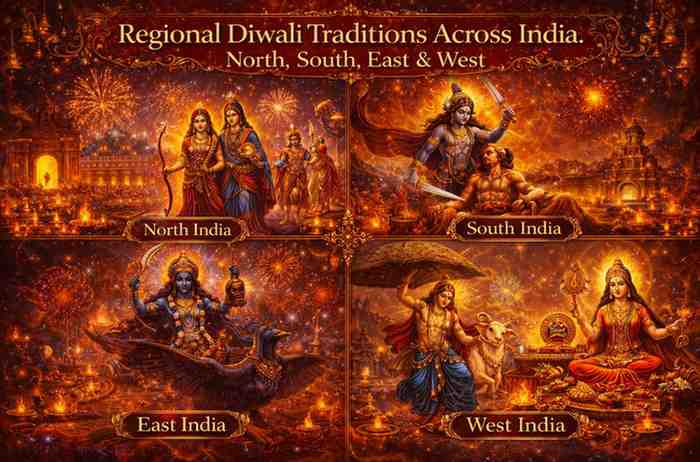
Diwali, the Festival of Lights, is one of India’s most vibrant and widely celebrated festivals. Although its core message—the victory of light over darkness and good over evil—is universal, the ways in which Diwali is celebrated across India vary richly by region. Each part of the country honors its unique myths, rituals, deities, and festivities during Diwali, reflecting India’s cultural diversity.
This blog explores Diwali traditions in India 2025, breaking down the unique customs and celebrations in the North, South, East, and West. Whether it is the grand lighting of lamps in Ayodhya, the fierce Kali Puja of Bengal, the Naraka Chaturdashi oil baths of Tamil Nadu, or the colorful rangolis and business new year in Gujarat, each region brings its distinct color to this glowing festival.
Also Read- Why Is Diwali Celebrated? History, Meaning & Spiritual Significance of Diwali
Diwali Traditions in North India
The Legendary Homecoming of Lord Rama
In North India, Diwali commemorates the return of Lord Rama, Sita, and Lakshmana to Ayodhya after 14 years of exile and Rama’s victory over the demon king Ravana. The entire city of Ayodhya is famously illuminated with millions of oil lamps to welcome the divine homecoming.
Key Traditions:
- Ramlila Performances: The enactment of the Ramayana epic climaxes in Diwali celebrations.
- Lakshmi Puja: Performed on the main Diwali night to seek the blessings of Goddess Lakshmi for wealth and prosperity.
- Govardhan Puja: The day after Diwali, devotees worship the Govardhan hill, honoring Lord Krishna’s blessings.
- Bhai Dooj: Sisters pray for their brothers’ long life and well-being on this auspicious day.
- Fireworks: The night sky lights up with vibrant fireworks and crackers.
- Decorated homes with colorful rangoli patterns welcome positive energy.
Diwali Traditions in South India
Also Read-Diwali Meaning and History: A Complete Exploration
The Victory of Lord Krishna Over Narakasura
South Indian states like Tamil Nadu, Karnataka, Andhra Pradesh, and Kerala observe Diwali in the context of Lord Krishna’s triumph over the demon Narakasura, celebrated as Naraka Chaturdashi or Deepavali.
Distinct Customs:
- Oil Bath Before Sunrise: Families take a ritual oil massage and bath early in the morning to symbolically cleanse sins.
- Lighting of Diyas: Families illuminate their homes with rows of oil lamps after sunset.
- Special Foods: Unique sweets and savories like murukku, adhirasam, unniyappam, and payasam mark the festive menu.
- Temple Visits: Devotional visits and rituals at local temples are pivotal to the celebrations.
- Smaller scale fireworks compared to North India, often restricted to dawn hours.
Diwali Traditions in Eastern India
Also Read- What Is Diwali: A Complete Guide to the Festival of Lights
Kali Puja and Ancestor Worship
In West Bengal, Odisha, Assam, and parts of the Northeast, Diwali is closely associated with Kali Puja, the worship of Goddess Kali who represents power and liberation.
Unique Observances:
- Lavishly decorated Kali Puja pandals become the focal point with elaborate idol displays and night-long worship.
- Devotees offer hibiscus flowers, sweets, and fruits to Goddess Kali.
- Cultural programs center on Bengali devotional songs, particularly Ramprasad Sen’s bhajans.
- Lighting of lamps and candles continues late into the night, purifying homes and honoring ancestors.
- In Odisha, traditional maritime rituals like Boita Bandana (floating miniature boats) reflect the state’s maritime heritage.
- Family feasts feature local delicacies like pitha and ladoo.
Diwali Traditions in Western India
Also Read- Dev Diwali: The Festival of Lights by the Divine in Varanasi
Business New Year and Community Festivities
Western India, including Maharashtra and Gujarat, blends religious rituals with commercial celebrations as Diwali marks the start of the Marathi and Gujarati New Year.
Highlights:
- Chopda Pujan: Worship of account books by traders and business communities for prosperity in the new year.
- Vasu Baras: Worship of cows symbolizing wealth.
- Bhau Beej: Sisters perform special rituals praying for their brothers’ long lives.
- Elaborate Rangolis: Drawn at homes and public spaces with bright colors and intricate designs.
- Traditional Cooking: Maharashtra’s Diwali sweets and savories include chakli, karanji, shankarpali, and Gujarat’s mohanthal, ghughra.
- The Gujarati New Year is celebrated with visiting friends and exchanging gifts and good wishes.
- Fireworks and social fairs add to the communal atmosphere.
Regional Variations in Festival Duration and Dates
- Gujarat: Diwali celebrations span several days, from Dhanteras to Bhai Beej, with each day having distinct rituals.
- Bengal: Kali Puja falls on the new moon night and is the main event of the season.
- South India: The festival usually centers around one main day with Naraka Chaturdashi rituals.
- North India: Diwali is part of a longer festival period including Dussehra and Bhai Dooj.
Common Elements Across Regions
Despite the diversity, certain elements unite all Indian Diwali celebrations:
- Lighting Diyas: Symbolizes the victory of light over darkness and good over evil.
- Lakshmi Puja: Worship of Goddess Lakshmi for wealth and happiness.
- Gift Exchanges: Strengthening bonds among family and friends.
- Sweets and Feasting: Sharing food enhances joy and prosperity.
- Cleaning and Decorating Homes: To welcome divine blessings.
Unique and Lesser-Known Diwali Customs Across India
Gambling Tradition in North India
A curious and time-honored custom, particularly in North India, involves indulging in gambling during Diwali. Symbolizing the game of fate and fortune, many families engage in card games and other forms of betting. It is believed that Goddess Lakshmi blesses those who try their luck during this time, ushering in prosperity for the coming year.
Footprints of Lakshmi
In many households, especially in Western India, devotees draw tiny footprints using rice flour and vermilion powder leading from the main entrance to the altar. These footprints symbolize the arrival of Goddess Lakshmi into the home, carrying wealth and auspiciousness.
Animal Worship and Agrarian Traditions
In rural Maharashtra and other agrarian regions, farmers honor their cattle, especially cows and oxen, on specific days during Diwali. Cows are decorated and worshipped as earthly manifestations of Lakshmi, recognizing their vital role in farming and household prosperity.
Charitable Acts and Community Sharing
Across the country, Diwali inspires charitable giving and community bonding. People donate clothes, food, and essentials to the needy, embodying the festival’s spirit of goodwill. Some regions host community feasts where all participate and share in the joy, strengthening social harmony.
Modern Adaptations: Eco-friendly and Digital Diwali
Sustainable Decorations and Fireworks
In response to growing environmental awareness, many urban families are adopting eco-friendly Diwali traditions in 2025. These include using LED lamps instead of traditional oil diyas, avoiding harmful fireworks, and opting for organic rangoli powders and decorations.
Digital Celebrations and Virtual Pujas
With digital connectivity evolving, many people now participate in virtual Diwali pujas and share festive greetings through video calls and social media. This trend allows diaspora communities to stay connected culturally, celebrating Diwali traditions regardless of distance.
Significance of Diwali in Family and Social Life
- New Clothes and Gifts: Wearing new attire is a universal custom symbolizing fresh beginnings.
- Deep Cleaning: Homes are cleaned and de-cluttered symbolizing the removal of negativity and welcoming prosperity.
- Feasting: Special sweets and delicacies are prepared and shared, strengthening familial bonds.
- Festive Markets: Vibrant markets sell sweets, decorations, clothes, and gifts, creating an atmosphere of anticipation and celebration.
- Cultural Performances: Many cities host drama, music, and dance performances centered on Diwali themes, enriching cultural heritage.
Frequently Asked Questions (FAQs)
1. How is Diwali celebrated differently across India?
Diwali traditions vary regionally, with North India focusing on Ram’s return to Ayodhya, South India celebrating Naraka Chaturdashi, East India worshipping Goddess Kali, and West India honoring Lakshmi and Govardhan Puja.
2. Why is Diwali important in North India?
In North India, Diwali marks Lord Rama’s return to Ayodhya after defeating Ravana, symbolizing victory of good over evil.
3. How is Diwali celebrated in South India?
South India celebrates Naraka Chaturdashi, commemorating Lord Krishna’s victory over demon Narakasura.
4. What is special about Diwali in East India?
In states like West Bengal and Odisha, Diwali coincides with Kali Puja, where devotees worship Goddess Kali.
5. How is Diwali celebrated in West India?
West India, especially Gujarat and Maharashtra, emphasizes Lakshmi Puja, business account book worship, and Govardhan Puja.
6. What are common Diwali rituals across India?
Lighting diyas, performing Lakshmi Puja, decorating homes with rangoli, exchanging sweets, and bursting fireworks are common rituals.
7. How many days is Diwali celebrated?
Diwali is generally celebrated over five days: Dhanteras, Naraka Chaturdashi, Lakshmi Puja, Govardhan Puja, and Bhai Dooj.
8. Why is Lakshmi Puja central to Diwali?
Goddess Lakshmi symbolizes wealth and prosperity, and her worship is believed to bring abundance and success.
9. Is Diwali celebrated outside India?
Yes, Diwali is celebrated globally by the Indian diaspora in countries like Nepal, Sri Lanka, UK, USA, and Singapore.
10. What does Diwali symbolize spiritually?
Diwali symbolizes the triumph of light over darkness, knowledge over ignorance, and good over evil.
Conclusion
Diwali traditions in India 2025 beautifully illustrate India’s rich cultural mosaic, with each region bringing its historical narratives, deities, rituals, and festivities to the common theme of light and renewal. These diverse customs demonstrate how ancient beliefs adapt to local contexts, creating vibrant celebrations that continue to unite millions in faith, joy, and hope.
Across North, South, East, and West, Diwali remains a profound festival that lights up not just homes but hearts, carrying forward timeless spiritual values into the present and future.
References
- Uttar Pradesh Tourism Board – Official temple and pilgrimage information.
- Hathras District Cultural Archives – Regional historical and religious documentation.
- Shakta Tradition Scriptures and Devi Mahatmya references.
- Local Devotee Interviews and Temple Priests’ Guidance (Sasni region).
- Gurucool.life – Expert astrologer feedback and validation of Shakti significance and ritual interpretation for this article.
1 Comment