
Karva Chauth is one of the most popular and emotional festivals for married women in India. On this special day, wives fast from sunrise until moonrise, praying for the long life and happiness of their husbands. It is a fast of love, patience, and faith. The unique part about Karva Chauth is that women do not eat or drink anything for the entire day until they see the moon and break their fast.
To help sustain the body and make the long day easier, women eat a special pre-dawn meal called Sargi. This meal is not just food—it is a plate filled with blessings, energy, and care. Traditionally, a woman’s mother-in-law prepares the Sargi thali for her daughter-in-law, filled with delicious food, fruits, sweets, and dry fruits. It is considered a blessing of love from one generation to another.
Also Read :- NAZAR DOSHA PUJA – COMPLETE EVIL EYE REMOVAL GUIDE
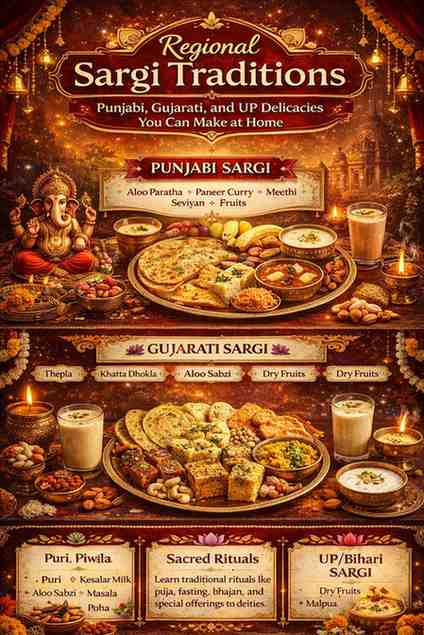
India, being such a diverse country, Sargi traditions also vary from region to region. While the emotions remain the same everywhere, the dishes change depending on culture, climate, and taste.
Punjabi Sargi Tradition
Punjab is often seen as the heartland of Karva Chauth, where the festival is celebrated with great enthusiasm. For Punjabi women, the Sargi thali is usually very rich and filling. It reflects their love for hearty meals.
Also Read :- Pitru Dosh Puja Cost, Symptoms & Tripindi Shraddh Procedure (2026 Complete Guide)
Typical Punjabi Sargi Plate
- Pheni with Milk – Thin vermicelli cooked in milk and sugar. Light yet filling.
- Parathas with Sabzi – A stuffed flatbread with vegetables like aloo, gobhi, or paneer.
- Dry Fruits – Almonds, cashews, raisins, walnuts for energy.
- Coconut – A symbol of blessings.
- Seasonal Fruits – Bananas, apples, or pomegranates.
- Sweets like Halwa or Laddoo – To add sweetness to the fasting day.
Easy Punjabi Recipe: Pheni with Milk
- Heat 2 cups of milk in a pan.
- Add sugar as per taste.
- Put in 1–2 pieces of pheni and let it boil for 2–3 minutes.
- Sprinkle cardamom and dry fruits on top.
- Serve hot before sunrise.
This dish is light on the stomach but provides long-lasting energy.
Gujarati Sargi Tradition
In Gujarat, Sargi is simpler compared to Punjab. The focus is on easily digestible food that is light yet keeps one full for long. Since Gujarat has a strong vegetarian food culture, most items are purely plant-based.
Also Read :- Kaal Sarp Dosh Puja – Benefits, Cost & Ujjain Vidhi (2026 Complete Guide)
Typical Gujarati Sargi Plate
- Thepla or Rotla – Light flatbreads made with wheat flour or millet flour.
- Churma Laddoo – A Sweet made of wheat flour, jaggery, and ghee.
- Dhokla – Steamed gram flour cake, soft and spongy.
- Dry Fruits and Nuts – Almonds,pistachios, and dates.
- Fruits – Papaya, guava, grapes.
- Buttermilk or Milk – To avoid dehydration.
Easy Gujarati Recipe: Churma Laddoo
- Roast 1 cup wheat flour in ½ cup ghee till golden.
- Add ½ cup powdered jaggery and mix well.
- Add cardamom powder.
- Roll into laddoos and garnish with nuts.
This dish is energy-rich, tasty, and can be made a day before fasting.
Uttar Pradesh (UP) Sargi Tradition
In Uttar Pradesh, Karva Chauth is also celebrated with great joy. The Sargi here is slightly heavier and more festive, with a mix of sweet and salty items.
Typical UP Sargi Plate
- Puri with Aloo Sabzi – Fried bread with spiced potato curry.
- Suji Halwa – A Sweet semolina dish made in ghee.
- Kachori – Deep-fried bread stuffed with lentils or masala.
- Mathri – Crispy salted snack that balances sweetness.
- Dry Fruits and Fruits – To complete the meal.
- Milk or Lassi – To keep the stomach cool and hydrated.
Easy UP Recipe: Suji Halwa
- Heat ½ cup of ghee in a pan.
- Roast 1 cup suji (semolina) until golden.
- Add 2 cups of hot water slowly while stirring.
- Add ½ cup sugar and mix until smooth.
- Garnish with cashews and raisins.
This halwa is very filling and gives instant energy.
Health Benefits of Sargi
Sargi is not just a tradition; it is also very scientific. Eating the right foods in the morning helps the body sustain energy for the long fast.
- Provides Energy – Parathas, laddoos, and halwa give slow-release energy.
- Prevents Weakness – Balanced food keeps muscles strong.
- Maintains Hydration – Milk, fruits, and buttermilk prevent dehydration.
- Improves Digestion – Fruits and dry fruits help avoid acidity.
- Boosts Immunity – Nuts and ghee keep the body strong.
- Balances Mood – A good meal helps prevent irritability during fasting.
Dos of Sargi
- Eat a balanced meal with carbs, protein, and healthy fats.
- Drink enough water or milk before sunrise.
- Include fruits and nuts for natural energy.
- Prefer homemade and fresh food.
- Eat slowly and peacefully.
Don’ts of Sargi
- Don’t eat too much oily food—it causes acidity.
- Don’t skip liquids; otherwise, you may feel dizzy.
- Don’t overeat, or you may feel bloated.
- Avoid too many sweets; they cause hunger later.
- Skip packaged food and sodas.
Bringing It All Together
Every region has its own unique way of preparing Sargi, but the love and blessings behind it remain the same. The Punjabi thali is hearty, the Gujarati one is light and digestible, and the UP Sargi is festive and filling.
The beauty of Sargi lies in its simplicity—it is not about fancy dishes but about the thought and care put into it. You don’t need to be a master chef to make your Sargi special; simple dishes like Pheni with milk, Churma Laddoo, or Suji Halwa are enough to fill the day with energy and devotion.
By following the right dos and don’ts, you can make your Karva Chauth fasting not only spiritual but also healthy.
Frequently Asked Questions (FAQs) – Regional Sargi Traditions
1. What is Sargi?
Sargi is a pre-dawn meal consumed by married women before beginning the Karva Chauth fast. It is traditionally prepared by the mother-in-law and symbolizes blessings and prosperity.
2. Why is Sargi important in Karva Chauth?
Sargi provides nourishment and energy for the day-long fast and represents love, care, and family bonding.
3. What foods are included in Punjabi Sargi?
Punjabi Sargi typically includes pheni (sweet vermicelli), dry fruits, mathri, coconut, fruits, sweets, and sometimes parathas.
4. What is special about Gujarati Sargi traditions?
Gujarati Sargi often includes lighter meals such as thepla, khakhra, dry fruit laddoos, and fresh fruits, focusing on balanced nutrition.
5. What delicacies are common in UP Sargi traditions?
In Uttar Pradesh, Sargi may include kheer, poori-sabzi, seasonal fruits, and homemade sweets prepared with devotion.
6. Can Sargi be customized based on health needs?
Yes, modern Sargi meals can include healthy options like oats, nuts, milk, and protein-rich foods to maintain energy during fasting.
7. Is Sargi only for married women?
Traditionally, Sargi is observed by married women, but many unmarried women also participate as part of devotion and cultural practice.
8. What is the spiritual meaning behind Sargi?
Sargi symbolizes blessings for a husband’s long life, marital harmony, and the strengthening of family bonds.
9. When should Sargi be eaten?
Sargi is eaten before sunrise during Brahma Muhurta on the day of Karva Chauth.
10. Can Sargi traditions vary across regions?
Yes, ingredients and dishes vary across Punjabi, Gujarati, and UP traditions, reflecting regional culture and family customs.
Conclusion: Celebrating the Beauty of Regional Sargi Traditions
Regional Sargi traditions beautifully reflect India’s cultural diversity while preserving the sacred essence of Karva Chauth. Whether it is the rich Punjabi pheni and mathri, the balanced Gujarati thepla and dry fruit sweets, or the traditional UP kheer and poori-sabzi, each region adds its own flavor to this meaningful ritual.Beyond food, Sargi represents love, blessings, and the emotional bond between families—especially between mother-in-law and daughter-in-law. Preparing and sharing Sargi at home keeps traditions alive while allowing room for healthy adaptations in modern times.By understanding and embracing regional Sargi delicacies, we not only honor cultural heritage but also strengthen the spiritual and familial significance of Karva Chauth.
References
- Gurucool.life – Karva Chauth & Vrata Ritual Guides
- Shloka.life – Hindu Festival Traditions & Recipes
- Traditional Karva Chauth Ritual Practices
- North Indian Festive Food Traditions
- Regional Hindu Fasting Customs in India

3 Comments