
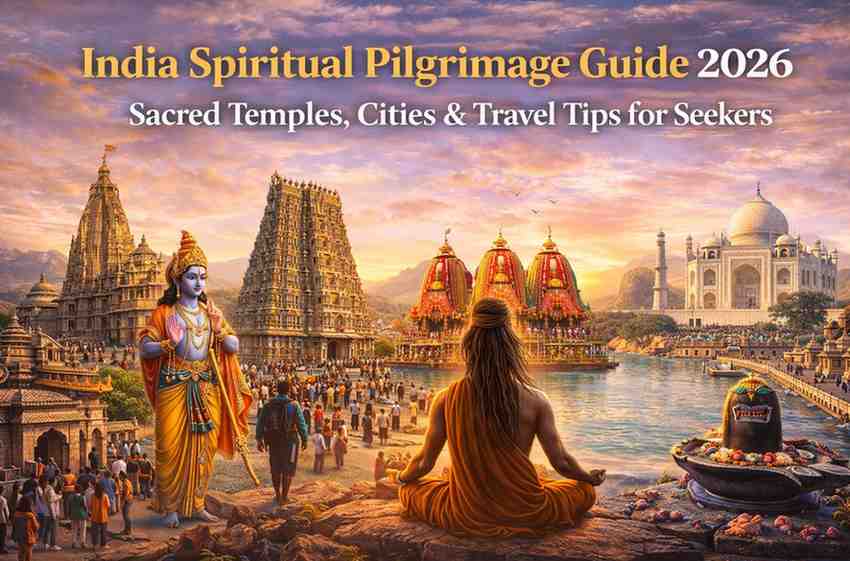
India has been a sacred destination for seekers for thousands of years, drawing monks, yogis, scholars, philosophers, poets and spiritual travelers from every corner of the world. This India spiritual pilgrimage guide 2026 explores the country’s most revered temples, holy cities and ancient spiritual landscapes, with a warm focus on both inner transformation and practical planning for travel in 2026.
Whether you are curious about meditation, pilgrimage, sacred history, ritual culture or devotional practices, India’s spiritual heritage offers a depth of experience rarely found elsewhere.
Why Pilgrimage Matters for Spiritual Seekers
Pilgrimage has always been more than travel. For spiritual seekers, it serves as a living practice — an opportunity to step out of routine, observe inner patterns, absorb sacred atmospheres, and participate in rituals that have been preserved across millennia.
Pilgrimages teach:
✓ humility
✓ patience
✓ faith
✓ surrender
✓ cultural respect
✓ impermanence
✓ devotion
✓ contemplation
In India, pilgrimage is woven into daily life. Temple bells, river ghats, monasteries, festivals, chants, incense, prasad, and morning aarti ceremonies remain active, not museum displays.
This makes India uniquely compelling for spiritual travel in 2026.
Char Dham – The Four Sacred Abodes of India
Any India spiritual pilgrimage guide 2026 must begin with the Char Dham, one of Hinduism’s most revered circuits. Each temple represents a direction, a spiritual quality, and a path toward purification.
Badrinath – Himalayan Abode of Vishnu
Spiritual Significance
Badrinath embodies purity and contemplation. Seekers visit to meditate, pray, and sit with the stillness of the Himalayas.
Mythic Layer
The Mahabharata mentions the Pandavas on this path. Adi Shankaracharya revived the shrine in the 9th century. Vishnu is worshipped here as Badrinarayan.
Best Time to Visit (2026)
Because Badrinath closes for winter snowfall:
- Opening: Late April 2026 (Akshaya Tritiya period)
- Closing: Late October 2026 (around Diwali)
Ideal months: May–June & September–October
Avoid: July–August (monsoon landslides)
How to Reach (2026)
- Airport: Dehradun (Jolly Grant)
- Rail: Haridwar / Rishikesh
- Road: Haridwar → Rishikesh → Joshimath → Badrinath
- Helicopter: Char Dham heli services available
Duration
2–3 days recommended
Spiritual Extras
- Mana Village (Last Indian Village)
- Tapt Kund (hot springs)
- Neelkanth Peak (sunrise)
Puri – Devotion & the Rath Yatra of Jagannath
Puri in Odisha is the home of Lord Jagannath, a form of Krishna associated with grace, inclusion and unconditional love.
Festivals
The Rath Yatra is the most famous, where the deities are placed on giant chariots and pulled through the streets by thousands of devotees.
Best Time to Visit (2026)
✔ November–February (weather pleasant)
✔ June–July (Rath Yatra, crowded but powerful)
How to Reach (2026)
- Airport: Bhubaneswar (60 km)
- Rail: Puri Junction (excellent connectivity)
- Road: From Bhubaneswar, Cuttack, Kolkata, Vizag
Ideal Duration
2–3 days
Spiritual Extras
- Puri Beach sunrise
- Konark Sun Temple
- Chilika Lake (peaceful retreat)
Dwarka – Krishna’s Western Kingdom
Dwarka sits on India’s western coast and is deeply connected to Krishna’s life as king, philosopher and guide.
Spiritual Significance
Dwarkadhish Temple blends devotion with wisdom — seekers often reflect on duty, destiny and dharma here.
Best Time to Visit (2026)
✔ November–March (ideal)
✔ Janmashtami (spiritually charged)
Avoid May–June (intense heat)
How to Reach (2026)
- Airport: Jamnagar
- Rail: Dwarka Junction
- Road: From Somnath, Porbandar, Rajkot, Ahmedabad
Spiritual Extras
- Bet Dwarka (island temple)
- Nageshwar Jyotirlinga
- Rukmini Temple
Rameswaram – The Bridge Between Man & God
On the southeastern coast, Rameswaram is a Shaivite pilgrimage linked to the Ramayana.
Mythic Narrative
Rama worshipped Shiva here before crossing the sea to Lanka. It represents reconciliation and unity between Shiva and Vishnu traditions.
Best Time to Visit (2026)
✔ October–March (pleasant)
✔ April–May (hot but spiritually active)
Avoid monsoon humidity
How to Reach (2026)
- Airport: Madurai (3 hrs)
- Rail: Rameswaram Junction
- Road: From Madurai, Trichy, Chennai
Spiritual Extras
- Agni Theertham (ritual bath)
- Dhanushkodi
- Ram Setu viewpoints
Sacred Cities Featured in Our India Spiritual Pilgrimage Guide 2026
Beyond temples, certain cities embody spiritual rhythm in daily life.
Varanasi — Where Life Meets Eternity
Varanasi (Kashi) is one of the oldest living cities on earth. Here, cremation ghats, temples, music, and ritual coexist with grace.
Best Time to Visit (2026)
✔ November–February (ideal)
Avoid May–June (heat)
How to Reach
- Airport: Varanasi (International)
- Rail: Varanasi Junction / Kashi
- Road: From Prayagraj, Bodh Gaya, Ayodhya
Experiences
- Ganga Aarti
- Kashi Vishwanath
- Sarnath (Buddhist site)
- Morning boat ride (highly recommended)
Haridwar — Gateway to the Ganges
Haridwar marks the Ganga’s descent from mountains to plains.
Highlights
- Har Ki Pauri Aarti
- Ashram culture
- Yoga retreats
Best Time (2026)
✔ October–March
Bodh Gaya — Seat of Enlightenment
Here, Siddhartha attained enlightenment under the Bodhi Tree.
Best Time (2026)
✔ November–February
How to Reach
- Airport: Gaya / Patna
- Rail: Gaya Junction
Experiences
- Mahabodhi Temple
- International monasteries
- Meditation halls
Ajmer — Sufi Compassion & Devotional Warmth
Ajmer hosts the dargah of Khwaja Moinuddin Chishti, a Sufi saint revered for love and service.
How to Reach
- Airport: Jaipur
- Rail: Ajmer Junction
Highlight
Qawwali evenings inside the dargah complex move even non-religious visitors.
Palitana — Jain Mountain of Temples
Palitana in Gujarat contains over 800 temples atop Shatrunjaya Hill.
Pilgrimage Code
Ascending barefoot symbolizes humility and non-violence.
Additional Sacred Places Worth Adding to Your Journey
Amarnath (Jammu & Kashmir)
Summer-only cave where ice Shivling forms.
Ujjain (Madhya Pradesh)
Mahakaleshwar Jyotirlinga + Kumbh Mela legacy.
Kanchipuram (Tamil Nadu)
“City of Thousand Temples” + silk + Shaivite heritage.
Best Time to Plan a Spiritual Pilgrimage in India (2026)
For 2026, the ideal windows:
✔ October–March: Best for most regions
✔ April–June: Himalayan shrines open
✔ July–August: Monsoon festivals (Janmashtami, Ratha Yatra, etc.)
How to Reach India’s Pilgrimage Destinations (2026 Guide)
Air Travel (Foreign Seekers)
Most spiritual hubs connect via:
✈ Delhi
✈ Mumbai
✈ Chennai
✈ Kolkata
✈ Bengaluru
Rail (Indian Seekers)
IRCTC connects nearly every pilgrimage destination.
Road
State tourism buses + private taxis widely available.
Helicopter (Premium)
Available for:
🚁 Char Dham
🚁 Vaishno Devi
🚁 Amarnath (seasonal)
Practical Travel Tips for Spiritual Seekers (2026)
For Foreign Travelers:
✔ e-Visa available
✔ Modest clothing for temples
✔ Vegetarian food widely available
✔ Respect photography restrictions
For Indian Travelers:
✔ Book Char Dham & Amarnath registrations early
✔ Trains fill in festival season
✔ Carry basic medicines in remote hills
Suggested Sacred Itineraries for Spiritual Travel in India (2026)
10-Day Enlightenment Route
Varanasi → Sarnath → Bodh Gaya → Ganga
14-Day Temple Circuit
Dwarka → Somnath → Palitana → Puri
7-Day Himalayan Pilgrimage
Haridwar → Rishikesh → Badrinath → Mana Village
This makes the India spiritual pilgrimage guide 2026 practical and actionable.
Frequently Asked Questions
Is pilgrimage only for religious people?
No — many come for meditation, reflection, culture, or spiritual curiosity.
Is India safe for solo seekers?
Yes, especially major spiritual cities. Exercise standard travel awareness.
Can foreigners participate in rituals?
Mostly yes, with respect and guidance.
Conclusion
Ultimately, this India spiritual pilgrimage guide 2026 invites travelers into an experience that blends devotion, history, meditation and cultural learning. Beyond tourism, pilgrimages help seekers slow down, breathe, reflect and reconnect with something timeless within themselves. India remains one of the few places where sacred traditions are still alive — waiting to be walked, witnessed and lived.

1 Comment