
Saptashrungi to Trimbakeshwar: Nashik’s Divine Circuit
Nashik, known for its rich spiritual heritage, offers a divine pilgrimage circuit connecting some of Maharashtra’s most sacred temples. The journey from Saptashrungi to Trimbakeshwar forms the heart of this spiritual trail, embracing centuries of mythology, devotion, and architectural grandeur. This trail in 2026 highlights temple significance, vibrant festivals, rituals, and practical pilgrimage insights for seekers of profound spiritual experiences.
Also Read :- Ujjain Mahakaleshwar: Bhasma Aarti Booking & Temple Rituals
Introduction to Nashik Temples 2026
Nashik is often referred to as the “Spiritual Capital of Maharashtra” due to its concentration of revered temples and holy sites tied to Hindu mythology and ancient traditions. In 2026, the city continues to attract millions of devotees drawn by its sacred geography, vibrant festivals, and the powerful goddesses and deities worshiped here.
Saptashrungi Temple: The Seat of the Divine Mother
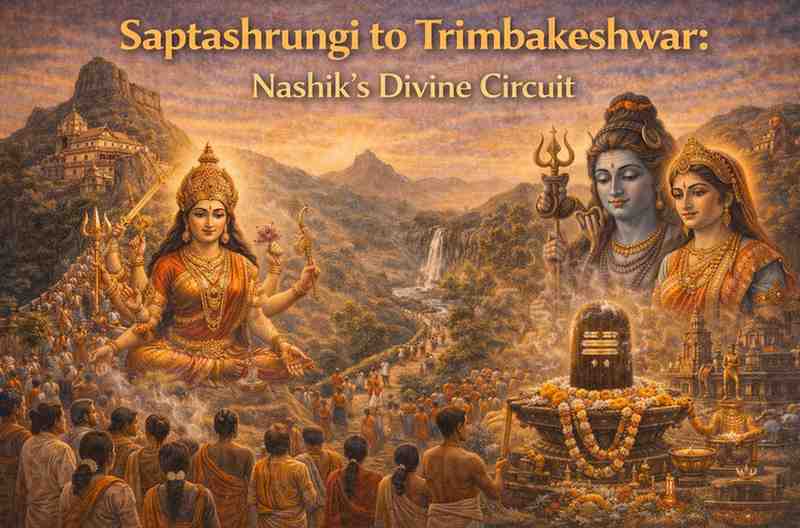
Located about 65 kilometers from Nashik city near Nanduri village, the Saptashrungi Devi Temple perches atop a cliff in the Sahyadri mountains at an elevation of about 1,230 meters. Devotees consider it one of the 51 Shakti Peethas, as according to mythology, the right arm of Goddess Sati fell here. The temple shrine features a self-manifested (swayambhu) idol of the goddess, depicted with 18 arms holding powerful weapons.
The temple gets its name from the seven (sapta) surrounding peaks (shrungi). The powerful goddess, known as Mahishasura Mardini for slaying the demon Mahishasura, is worshipped here with immense devotion. Important festivals to witness include the Chaitrotsav, starting on Rama Navami and climaxing on the full moon day of Chaitra, as well as Navratri and Dussehra. During Chaitrotsav, up to one million devotees congregate to seek blessings, often including childless women praying for offspring.
Trimbakeshwar Temple: A Jyotirlinga of Immense Reverence
About 28 kilometers from Nashik, in the town of Trimbak, lies the magnificent Trimbakeshwar Temple. This temple is famously one of the twelve Jyotirlingas and hosts the rare three-faced lingam representing Lord Brahma, Vishnu, and Shiva, symbolizing the Hindu trinity. Constructed in the ancient Hemadpanthi architectural style during the 18th century under Peshwa Balaji Bajirao, the temple’s black stone structure features exquisite carvings and a jewel-encrusted crown believed to be from the Pandava era.
Pilgrimage Circuit: Connecting the Divine Sites
Exploring the circuit from Saptashrungi to Trimbakeshwar offers a unique spiritual experience combining mountainous trekking, sacred rituals, and cultural immersion. Several other temples en route enrich this journey, including the venerable Gondeshwar Temple in Sinnar and the iconic Kalaram Temple and Panchvati area in Nashik city, associated with the epic Ramayana.
Festivals and Events in Nashik in 2026
Also Read :- 12 Jyotirlinga Temples in India: Complete Darshan & Travel Guide
Nashik’s spiritual calendar in 2026 includes numerous festivals celebrated with grandeur in these temples:
- Navratri: Celebrated with traditional music, dance forms like Garba and Dandiya Raas, and religious ceremonies across Shakti temples.
- Dussehra: Marking the victory of good over evil, large processions and special pujas highlight Saptashrungi and Trimbakeshwar.
- Maha Shivratri: A significant festival especially at Trimbakeshwar, where nights are illuminated with lamps, chants, and devotees stay awake through vigils.
- Kumbh Mela (Cycle 2026): Nashik also hosts the Kumbh, attracting millions seeking purification and spiritual renewal.
Practical Guide for Pilgrims Visiting Nashik Temples in 2026
- Travel: Nashik is well connected by road and rail with frequent buses and taxis available for temple routes.
- Accommodation: Pilgrims can find a range of hotels, dharamshalas, and guest houses, with special arrangements like the Shivprasad Bhakta Niwas near Trimbakeshwar providing comfortable stays.
- Best Time to Visit: The cooler months between October and March align with festivity seasons and pleasant trekking weather.
- Local Cuisine: Don’t miss local Maharashtrian delicacies available in temple towns and Nashik markets for a wholesome cultural experience.
Spiritual Significance
These temples not only offer architectural marvels and devotional fervor but also uphold deep spiritual teachings. Saptashrungi represents the divine feminine power, inspiring courage and protection, while Trimbakeshwar symbolizes the union of cosmic forces and the path to liberation through Shiva worship.
Also Read :- Temples of Love: Sacred Shrines Dedicated to Divine Couples
The Legend Behind Saptashrungi Temple
According to ancient Puranic tales, Saptashrungi holds supreme importance as the site where Goddess Durga appeared to slay the demon Mahishasura. The seven peaks surrounding the temple symbolize the seven hills that reinforce her invincible strength. Devotees believe that the goddess at Saptashrungi not only destroys evil but also bestows fertility, prosperity, and protection.
The temple’s location atop a steep hill demands a pilgrimage trek of approximately 3 km. Pilgrims often undertake this challenging ascent barefooted, offering prayers with chants echoing the timeless hymns dedicated to the Divine Mother. Many recount spiritual experiences of overcoming personal struggles by invoking the goddess’s power here.
Also Read :- Gujarat Temple Tour: Exploring Somnath, Dwarka & Ambaji Circuit
Mystical Aspects of Trimbakeshwar Temple
Trimbakeshwar Temple is unique for housing a three-faced Shiva Lingam that symbolizes the trinity of ब्रह्मा, विष्णु, and शिव. Strict purity rituals in the temple’s sanctum set it apart from other Shiva temples, shrouding it in mystery. The key “Kalsarpa Shanti” puja performed here is said to relieve astrologically afflicted devotees, drawing seekers nationwide during श्रावण मास and auspicious days like महाशिवरात्रि.
Other Facts
The origin of the Godavari River near Trimbakeshwar adds a profound layer of sanctity to the site. The Godavari River, revered as the lifeline of the Deccan Plateau and a purifier of sins, originates near Trimbakeshwar from the sacred Brahmagiri hills. According to Hindu mythology, Sage Gautama and his wife Ahalya performed intense penance during a severe drought. Pleased by their devotion, Lord Varuna granted them divine water, but through a series of events involving atonement to Lord Shiva, the sacred Ganges was directed to flow through the Brahmagiri hills. This sacred stream became the Godavari River, flowing from the कुशावर्ता कुंड, a holy tank where pilgrims bathe to cleanse impurities and prepare for blessings at Trimbakeshwar Temple. This ritual symbolizes the flow of divine grace and spiritual rejuvenation connected deeply with the temple’s sanctity.
Insights into Nashik’s Lesser-Known Temples on the Circuit
Beyond the famous shrines, Nashik’s divine circuit offers many hidden gems:
- Gondeshwar Temple: Built in Hemadpanthi style near Sinnar, it is dedicated to Lord Shiva and reflects medieval temple architecture combined with serene surroundings.
- Kalaram Temple: Located in Panchvati, Nashik, this black stone temple is associated with Lord Rama’s exile period and serves as a cultural and religious hub in the city.
- Kapaleshwar Temple: An ancient Shiva temple in Nashik, known for unique rituals and festivals celebrated through the year.
Such sites provide pilgrims with immersive experiences in heritage, history, and contemplative spirituality, allowing them to deepen their connection with divinity beyond major temple centers.
Pilgrimage Experience: Preparation, Practices, and Blessings
Pilgrimage on the Nashik divine circuit is a holistic spiritual journey requiring physical stamina, mental focus, and devotional sincerity. Many pilgrims prepare with fasting, meditation, and chanting sacred mantras dedicated to Durga and Shiva. Wearing simple, modest attire and carrying sacred offerings like coconuts, flowers, and incense are customary.
Pilgrims at Nashik temples engage in silent prayer, circumambulation (pradakshina), and arti (ritual light offering), creating a deeply spiritual atmosphere. Many share stories of emotional healing and life changes during these visits, reflecting the circuit’s power to inspire renewal and hope.
Festivals Unique to Nashik Temples in 2026
- Bhandara Festival at Saptashrungi: An elaborate feast and cultural program held annually, marking community unity and divine celebration.
- Somvati Amavasya at Trimbakeshwar: When new moon day falls on a Monday, special rituals attract thousands seeking ancestral blessings and liberation for departed souls.
- Ramnavami and Dussehra: Nashik’s temples resonate with stories and enactments of Lord Rama’s life, integrating mythology with joyous worship.
These events amplify the spiritual fabric of Nashik, drawing not only local devotees but also international spiritual seekers.
Modern Facilities and Spiritual Tourism Initiatives
To accommodate growing pilgrim numbers in 2026, Nashik has enhanced infrastructure:
- Improved road connectivity and shuttle services between temples.
- Development of clean accommodation options including dharamshalas and ashrams.
- Spiritual tourism guided tours that integrate temple visits with educational talks on history and mythology.
- Use of digital platforms to book darshan tickets and access live temple events, making the spiritual experience smooth and interactive for diverse devotees.
Local authorities and temple trusts actively promote sustainable pilgrimage practices encouraging waste management and cultural respect, preserving Nashik’s sanctity for future generations.
Frequently Asked Questions (FAQs) – Nashik Divine Circuit
1. What is the Nashik Divine Circuit?
The Nashik Divine Circuit refers to a sacred pilgrimage route in Maharashtra connecting important temples such as Saptashrungi Temple and Trimbakeshwar Jyotirlinga.
2. Where is Saptashrungi Temple located?
Saptashrungi Temple is located near Vani in Nashik district, Maharashtra. It is one of the 51 Shakti Peethas dedicated to Goddess Saptashrungi.
3. Why is Trimbakeshwar Temple famous?
Trimbakeshwar Temple is one of the twelve Jyotirlinga temples of Lord Shiva and is located near the origin of the Godavari River.
4. What is the spiritual significance of Saptashrungi Temple?
Saptashrungi Temple is dedicated to Goddess Durga and is believed to be the place where the goddess defeated demons to restore balance and righteousness.
5. When is the best time to visit Nashik’s temple circuit?
The best time to visit is between October and March when the weather is pleasant for pilgrimage and temple visits.
6. What festivals are celebrated at these temples?
Navratri is the biggest festival at Saptashrungi Temple, while Maha Shivaratri and the Shravan month are major celebrations at Trimbakeshwar Temple.
7. How far is Saptashrungi from Trimbakeshwar?
The distance between Saptashrungi Temple and Trimbakeshwar Temple is approximately 90 kilometers by road.
8. Is Trimbakeshwar part of the Jyotirlinga pilgrimage?
Yes, Trimbakeshwar is one of the twelve sacred Jyotirlinga temples dedicated to Lord Shiva.
9. Can both temples be visited in one trip?
Yes, many pilgrims visit Saptashrungi and Trimbakeshwar together as part of a spiritual journey in Nashik.
10. Why is Nashik considered a holy city?
Nashik is one of the four cities where the Kumbh Mela is held and is home to many sacred temples and pilgrimage sites.
Conclusion
The Nashik temple circuit from Saptashrungi to Trimbakeshwar is a profound journey through sacred landscapes and timeless devotion. In 2026, Nashik continues to attract pilgrims with its spiritual energy, vibrant rituals, and rich cultural heritage, making it a top destination for seekers of divine grace and spiritual awakening.
6 Comments