
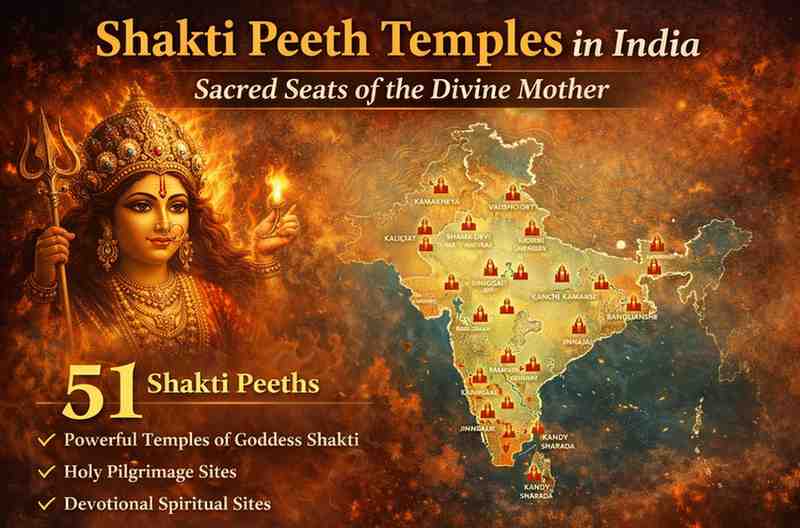
The Shakti Peeth temples in India serve as sacred seats of the Divine Mother, embodying thousands of years of spiritual history. Millions of devotees visit these powerful pilgrimage destinations each year, drawn by their rich mythology, profound religious significance, and spiritual energy. These temples mark the spots where the body parts of Goddess Sati fell, making them deeply revered centers of goddess worship and divine feminine power. The network of Shakti Peethas not only sustains ancient traditions but also continues to inspire faith, cultural unity, and spiritual renewal across India
This comprehensive blog explores their history, mythology, significance, architecture, legends, lists, and pilgrimage traditions, along with in-depth details and spiritual insights so that readers can immerse themselves fully in their enduring spiritual legacy.
Introduction
Shakti Peeth temples in India are among the most sacred sites of Hindu worship, embodying the essence of the Divine Mother, Shakti, and serving as cornerstones of Shakta tradition. Their origins are intertwined with ancient mythology, profound spiritual narratives, and complex rituals that celebrate the power of the goddess she symbolizes—energy, creation, and preservation. The pilgrimage to these temples offers a transformative experience, invoking deep faith and fostering cultural unity among devotees.
Also Read:- Pratyangira Devi Puja: Black Magic Removal Guide
The Origin and Mythology of Shakti Peeth Temples
The Story of Sati and Shiva
The legend of the Shakti Peeth temples revolves around Sati, the first wife of Lord Shiva, whose tragic death catalyzed the genesis of these sacred shrines. Sati self-immolated after her father, Daksha, publicly insulted Shiva during a grand Yagna. Ravaged by sorrow and fury, Shiva carried Sati’s lifeless body and performed his formidable Tandava, the cosmic dance of devastation.
To prevent universal destruction, Lord Vishnu used his Sudarshan Chakra to dismember Sati’s body. Her remains were scattered across the Indian subcontinent, and every site where a part fell became a Shakti Peeth—a powerful center of divine energy and worship.
Also Read:- Top Bagalamukhi Temples in India & Puja Cost Guide (2026)
Symbolism of Shakti Peeth Temples
Each temple corresponds to a specific body part, ornament, or organ of Sati, and the site gains spiritual energy and significance from this association. Symbolically, this scattering represents the diffusion of the goddess’s power and divine presence throughout the landscape of India and neighboring regions, creating networks of sanctity and resurgence of faith.
Also Read:- Kamakhya Devi Temple 2026: Ambubachi Mela & Tantric Rituals
Comprehensive List and Classification of Shakti Peeths
Number and Location
Tradition and scriptures mention 51 major Shakti Peeth temples. Some texts also describe 18 Maha Shakti Peeths, regarded as particularly potent spiritual centers. These sacred locations are spread across India as well as present-day Pakistan, Bangladesh, Nepal, Sri Lanka, and Tibet.
Also Read:- Himachal Devi Temples: A Divine Journey to Naina Devi, Chintpurni & Jwala Ji
Notable Shakti Peeth Temples
| Temple Name | Location | Body Part |
|---|---|---|
| Kamakhya | Guwahati, Assam | Genital Organ |
| Kalighat Kali | Kolkata, West Bengal | Right Toes |
| Vishalakshi | Varanasi, Uttar Pradesh | Earrings |
| Jwala Devi | Kangra, Himachal Pradesh | Tongue |
| Tara Tarini | Ganjam, Odisha | Breasts |
| Ambaji | Gujarat | Heart |
| Biraja | Jajpur, Odisha | Navel |
| Mahalakshmi | Kolhapur, Maharashtra | Eye |
| Danteshwari | Dantewada, Chhattisgarh | Tooth |
| Kireeteswar | Murshidabad, West Bengal | Crown |
This is only a selection; the full list is expansive and forms a lattice of sacred geography that binds together generations of devotees.
Also Read:- Meenakshi Temple Madurai 2026: Architecture, Festivals & Legends
The Four Adi Shakti Peeth Temples
Among these, four temples are considered the Adi or original Shakti Peeths: Kalighat (Kolkata), Kamakhya (Assam), Tara Tarini (Odisha), and Bimala (Puri, Odisha). They are the foundational pillars of Shakta worship and hold a unique place in both mythology and spiritual practice.
Also Read:- Padmanabhaswamy Temple Kerala: Mystery, Wealth & Rituals
Legends and Spiritual Significance
Living Traditions and Mythic Narratives
Most Shakti Peeth temples carry legends of miraculous interventions, spiritual fulfillment, and stories of devotees who experienced transformative blessings. For example, devotees believe that Kamakhya represents the embodiment of creative force, and childless women tie bells there while praying for offspring. Devotees perform ritual sacrifices, chant sacred hymns, and carry out elaborate Yagna ceremonies with intense devotion at these sacred sites. These powerful legends and rituals highlight the profound spiritual significance of the temples and the faith of their followers.
Also Read:- Ujjain Mahakaleshwar: Bhasma Aarti Booking & Temple Rituals
The Power of the Divine Feminine
Shakti Peeth temples symbolize the indomitable energy of the Divine Mother—a source of life, protection, and empowerment. Worship at these sites not only offers spiritual solace but also represents the affirmation of feminine power, resilience, and cosmic creativity in Hindu philosophy.
Also Read:- 12 Jyotirlinga Temples in India: Complete Darshan & Travel Guide
Rituals and Festivals
Navratri, Mahashivratri, and other religious festivals are celebrated with immense fervor at Shakti Peeth temples. Devotees converge in vast numbers, performing aarti, chanting hymns, and enacting mythological stories expressing their devotion to the goddess.
Temple Architecture and Iconography
Diversity in Architectural Styles
Shakti Peeth temples exhibit a striking variety of architectural forms depending on their location and period of construction. The styles range from the iconic Dravidian and Nagara designs to regional variations like Bengal’s terracotta temples and Odisha’s Kalinga structures. Intricate carvings, sculpted images of deities, and elaborate mandapas adorn many temples.
Some temples, such as Kamakhya, incorporate Tantric symbolism—Yoni mandalas, stone images of Yoginis, and Bhairavas—that communicate powerful spiritual messages. Others like Kalighat and Jwala Devi preserve centuries-old traditions and architectural uniqueness.
Sacred Art and Ornamentation
The iconography of the goddess and her consort Bhairava (Shiva) is central to Shakti Peeth temples. Artistic representations include the goddess in her fierce and benevolent forms, surrounded by scenes from Hindu mythology and symbols of fertility, power, and cosmic unity.
Pilgrimage Routes and Spiritual Journeys
Routes and Pilgrimage Experiences
Devotees observe Navratri—a nine-day festival celebrating goddess Durga and her manifestations—through grand rituals, music, dance, and prayer at Shakti Peeth temples. Lights, flowers, and sacred offerings adorn the temples, while devotees undertake rigorous fasting and spiritual practices.
Special routes, such as the Himachal Shakti Peeth circuit (Naina Devi, Jwalamukhi, Kangra, Chamunda), draw thousands of pilgrims throughout the year. Detailed itineraries are available for devotees keen to undertake journeys across northern, eastern, southern, and western India.
Pilgrimage Societies and Travel Planning
In modern times, organizations and apps now facilitate spiritual tours, offering guided packages for devotees, accommodation, and logistical support to maximize the pilgrimage experience. The interconnected network of Shakti Peeth temples forms a vibrant spiritual map for seekers, researchers, and cultural enthusiasts.
Regional Distribution and Local Traditions
Shakti Peeths Across States
The distribution of Shakti Peeth temples in India follows a complex spiritual geography. West Bengal, Odisha, Assam, Uttar Pradesh, Himachal Pradesh, Maharashtra, Gujarat, and Andhra Pradesh have prominent temples, each region adding its own local customs and rituals to the cult of the Divine Mother.
Influence on Local Culture and Practices
Local communities maintain unique traditions, folk performances, festivals, and sacred art forms centered around their Shakti Peeth temple, fostering cultural and spiritual integration.
Spiritual Discourses and Influence on Hindu Philosophy
Theology and Philosophy
Shakti Peeth temples are at the heart of Shakta theology, central to the worship of the goddess in her various forms—Durga, Kali, Parvati, Sati, and others. They represent the unity of energy (Shakti) and consciousness (Shiva), encapsulating core ideas of creation, destruction, and rebirth prevalent in Indian philosophy.
Major Saints and Teachers
Historically, many saints and spiritual luminaries have visited Shakti Peeth temples, meditated, and disseminated teachings on divine feminine energy, spiritual asceticism, and holistic worship. Stories of Shri Chaitanya Mahaprabhu and other reformers underscore their centrality in Indian religious movements.
Festivals and Their Celebration at Shakti Peeths
Navratri: The Festival of the Divine Mother
Devotees observe Navratri—a nine-day festival celebrating goddess Durga and her manifestations—through grand rituals, music, dance, and prayer at Shakti Peeth temples. Lights, flowers, and sacred offerings adorn the temples, while devotees undertake fasting and spiritual practices.
Other Major Festivals
Other significant festivals include Mahashivratri, Kali Puja, and local temple fairs. Distinctive customs, devotional performances, and mystical rites mark each event, strengthening the spiritual and communal bonds.
Influence Beyond Borders: Shakti Peeths in Neighboring Countries
Shakti Peeths Outside India
Several Shakti Peeth temples are located in neighbor countries, such as Hinglaj in Pakistan, Mahalakshmi in Sri Lanka, and Sugandha in Bangladesh, the historical spread of Shakta tradition across political frontiers.
Role in Cultural Exchange
These cross-border sacred sites are symbols of shared heritage and spiritual diplomacy, fostering unity among devotees and upholding harmonious relations rooted in faith and mutual respect.
Modern-Day Relevance and Challenges
Preservation and Restoration
Many Shakti Peeth temples face challenges from environmental degradation, urbanization, and historical invasions. Restoration efforts by government agencies, archaeological bodies, and local devotees ensure their protection and continued spiritual service.
Digital Spirituality and Future Directions
With the advent of technology, digital platforms and mobile applications enable devotees to explore, plan, and participate in rituals remotely, further democratizing access to pilgrimage and spiritual knowledge.
Rituals and Worship Practices at Shakti Peeth Temples
The rituals performed at Shakti Peeth temples form the core of devotional life and connect worshippers with centuries-old spiritual traditions. Key rituals include:
- Puja: Offering prayers, flowers, fruits, sweets, and incense to the goddess, invoking her blessings.
- Abhisheka: Sacred bathing of the goddess’s idol with water, milk, honey, or other sanctified liquids symbolizing purification and renewal.
- Aarti: Waving of lighted lamps or camphor to the deity, a ceremonial act often accompanied by chants and hymns.
- Bhajans and Kirtans: Devotional singing and chanting during festivals such as Navratri, celebrating the goddess’s various incarnations.
- Yagnas: Fire sacrifices performed to invoke divine energy, seek protection, and ensure cosmic harmony.
Each Shakti Peeth temple may have unique practices aligned with the specific form of the goddess worshipped there and the associated legends that enrich the worship experience.
Cultural Impact of Shakti Peeth Temples
Historically and culturally, Shakti Peeths have been critical in fostering devotion to the Divine Feminine across India. They have:
- Served as epicenters of the Bhakti movement, especially focusing on goddess worship.
- Inspired rich folklore, classical arts, and temple architecture that reflect local traditions and mythologies.
- Strengthened community bonds by hosting festivals that serve as social and cultural gatherings.
- Significantly contributed to tourism and local economies by attracting devotees and cultural enthusiasts.
The blend of religious fervor and cultural expression at Shakti Peeths showcases how divine devotion can nurture heritage and identity.
Famous Legends Surrounding Shakti Peeth Temples
Each Shakti Peeth carries distinctive legends that highlight the goddess’s dynamic power and sacredness. Some notable narratives:
- Kamakhya Temple: The yoni (genital organ) of Sati is said to have fallen here, making it a powerful tantric center where fertility and creation rituals thrive. The fierce goddess Kamakhya protects the sanctum, punishing deceit as per a legend involving a priest and king’s treachery.
- Kalighat Temple: Associated with the toes of Sati, this temple is deeply linked with the story of the goddess Kali’s manifestation and her divine protection of her devotees.
- Tara Tarini: Revered as an Adi Shakti Peeth, it is connected with the breasts and stomach of Goddess Sati, symbolizing nourishment and life-force, with legends describing miraculous protection and blessings to devotees.
These stories intertwine divine intervention, human devotion, and cosmic justice, and temple festivals reenact the profound spiritual lessons they offer.
Conservation and Restoration Efforts
Many Shakti Peeth temples are ancient structures facing the threats of time, natural decay, and urbanization. The preservation of these sites is crucial for maintaining their spiritual, cultural, and historical significance.
- Restoration projects, like those at the Shankari Devi Shaktipeeth temple in Kashi, are underway to repair roofs, reinforce structures, and preserve ancient artifacts so that these holy places can continue to serve pilgrims for generations.
- Government bodies and NGOs collaborate to enhance infrastructure, improve accessibility, and promote tourism while protecting sacred traditions.
- Digital documentation teams and virtual tour creators are increasingly broadening awareness and encouraging global engagement with these heritage sites.
Personal Experiences and Testimonials from Pilgrims
Visiting Shakti Peeths is often described as a life-changing spiritual journey that transcends physical travel. Personal accounts highlight themes of healing, inner strength, and transformation.
- Devotees commonly report feelings of peace, emotional release, and spiritual empowerment during darshan (sacred viewing) and participation in temple rituals.
- Pilgrimage is regarded not merely as a physical journey but a quest for deeper meaning, self-discovery, and connection with the Divine Mother.
- These experiences inspire continued devotion and a sense of community among pilgrims, who often share tales of answered prayers and renewed faith.
Such testimonials enrich the cultural narrative of Shakti Peeths, underscoring their living significance in contemporary religious life.
Frequently Asked Questions (FAQs) – Shakti Peeth Temples in India
1. What are Shakti Peeth temples?
Shakti Peeth temples are sacred shrines dedicated to Goddess Shakti where parts of Goddess Sati’s body are believed to have fallen. These temples are powerful centers of divine feminine worship in Hinduism.
2. How many Shakti Peeths are there in India?
Traditionally, there are 51 or 52 Shakti Peeth temples mentioned in Hindu scriptures, located across India and neighboring countries.
3. Why are Shakti Peeth temples important?
These temples are believed to hold immense spiritual energy because they mark the places where parts of Goddess Sati’s body fell after Lord Shiva’s cosmic dance of grief.
4. Which are the most famous Shakti Peeth temples?
Some of the most famous Shakti Peeth temples include Kamakhya Temple in Assam, Kalighat Temple in Kolkata, Vaishno Devi in Jammu, and Jwalamukhi Temple in Himachal Pradesh.
5. What is the mythology behind Shakti Peeths?
According to Hindu mythology, when Goddess Sati sacrificed herself, Lord Shiva carried her body across the universe. Lord Vishnu then used his Sudarshan Chakra to cut the body into pieces, which fell at different places forming Shakti Peeths.
6. Which Shakti Peeth is considered the most powerful?
Many devotees consider Kamakhya Temple in Assam one of the most powerful Shakti Peeths due to its deep connection with tantric traditions and the Ambubachi Mela festival.
7. Can devotees visit multiple Shakti Peeths in one pilgrimage?
Yes, many devotees undertake Shakti Peeth pilgrimages covering multiple temples across India as part of a spiritual journey honoring the Divine Mother.
8. What rituals are performed at Shakti Peeth temples?
Common rituals include Devi puja, chanting mantras, offering flowers, lighting lamps, and participating in special festivals dedicated to Goddess Shakti.
9. When is the best time to visit Shakti Peeth temples?
The best time to visit these temples is during Navratri when special prayers and celebrations honoring the Divine Mother take place.
10. Are Shakti Peeth temples associated with tantric worship?
Yes, several Shakti Peeth temples, especially Kamakhya Temple, are closely associated with tantric traditions and spiritual practices.
Conclusion
The Shakti Peeth temples in India encapsulate the living tradition of goddess worship, spiritual resilience, and communal unity. Their enduring grace draws millions to experience divine energy, ritual fulfillment, and transformative faith. These temples not only anchor Hindu religious geography but also transmit the timeless message of the Divine Mother’s power—creation, compassion, and spiritual liberation.


7 Comments