
Introduction
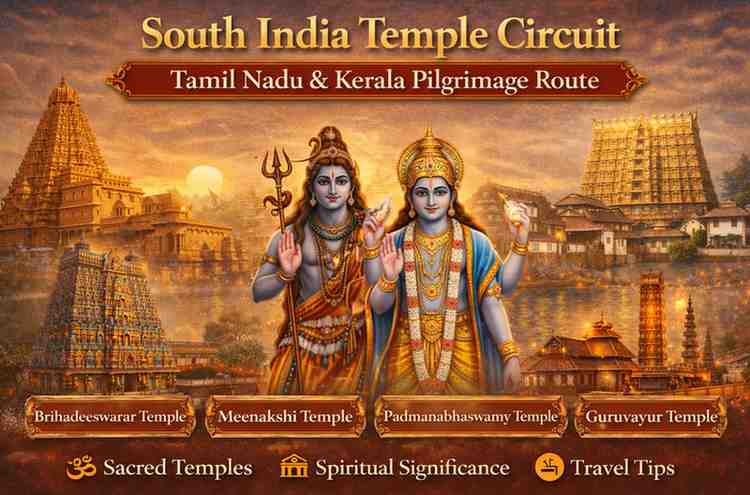
The South India Temple Circuit covering Tamil Nadu and Kerala is a spiritually enriching pilgrimage route. It is ideal for travelers in 2025 seeking profound religious and cultural experiences. This tour, often guided under the keyword “South India temple tour 2025,” beautifully combines devotion, history, architecture, and scenic landscapes.
Also Read :- North India Temple Tour: Kashi, Mathura & Haridwar
Key Temples and Highlights
- Tamil Nadu Temples: The journey typically begins in Chennai, Tamil Nadu’s capital. It is followed by visits to iconic sites such as the UNESCO World Heritage Shore Temple in Mahabalipuram. Kanchipuram’s temples, especially the Kamakshi Amman Temple, are included. Also, visit the grand Brihadeeswara Temple in Thanjavur and the mesmerizing Meenakshi Amman Temple in Madurai. Tirupati Venkateshwara Temple in Andhra Pradesh is often included for its spiritual significance.
- Kerala Shrines: The tour extends into Kerala, visiting serene temples like the Padmanabhaswamy Temple in Trivandrum, and the Sabarimala pilgrimage site dedicated to Lord Ayyappa. These temples offer a deep dive into Kerala’s spiritual traditions and provide a tranquil contrast to Tamil Nadu’s architectural grandeur.
Itinerary Overview
Also Read :- Sapta Puri: The Seven Sacred Cities Every Hindu Must Visit
A typical 11 to 15-day pilgrimage route includes:
- Arrival in Chennai, settling in and acclimatizing.
- Travel to Mahabalipuram to explore sea-facing temples carved from rock.
- Excursion through Kanchipuram, visiting temples renowned for their history and architecture.
- Visits to Tirupati and Tirumala to experience one of the world’s busiest pilgrimage centers.
- Exploring Thanjavur and its architectural marvels including the Brihadeeswara Temple.
- Visits to Chidambaram (Nataraja Temple), Trichy (Sri Ranganathaswamy Temple), and Madurai (Meenakshi Temple).
- Journey to the southern tip in Kanyakumari with visits to the Vivekananda Rock Memorial and Kumari Amman Temple.
- Entering Kerala with stops at Trivandrum for the Padmanabhaswamy Temple before departure.
Spiritual and Cultural Insights
- The tour is often aligned with temple festivals, auspicious days, or astrological periods, enhancing the spiritual experience.
- Rituals and ceremonies at sunrise and sunset, along with detailed temple histories, add depth to the pilgrimage.
- The route offers panoramic views, a chance to engage with devotees, and opportunities to witness traditional South Indian temple architecture and art forms.
Travel Tips for 2025 Pilgrims
- Booking through specialized temple tour packages ensures guided experiences with smooth logistics, accommodation, and deeper cultural immersion.
- Combining temple visits with local sightseeing (like French colonial Puducherry or backwaters in Kerala) enriches the journey.
- Travelers are advised to check festival dates and temple timings for an optimal experience.
Architectural Splendor of South Indian Temples
Also Read :- Bagalamukhi Puja for Court Case Victory (2026 Guide)
South Indian temples exhibit the Dravidian style of architecture, characterized by towering gopurams (ornate entrance towers) and vimanas (temple towers). They also feature pillared mandapams (halls) and intricately sculpted courtyards. These elements not only represent architectural excellence but also symbolize cosmic and religious principles.
Key Temples to Visit
- Tamil Nadu: Notable temples include the Meenakshi Amman Temple (Madurai), Brihadeeswara Temple (Thanjavur), Kamakshi Amman Temple (Kanchipuram), and Ramanathaswamy Temple (Rameswaram). Each temple is distinguished by unique architectural features and vibrant religious festivals.
- Kerala: Temples such as the Padmanabhaswamy Temple (Trivandrum) and Sabarimala Shrine offer serene spiritual environments, showcasing Kerala’s distinct temple tradition.
Pilgrimage Itinerary
Also Read :-
A typical 11 to 15-day itinerary covers major temples and spiritual sites. Starting from Chennai, the itinerary includes excursions to Mahabalipuram, Kanchipuram, Thanjavur, Madurai, Rameswaram, and finally Kerala’s Trivandrum and Sabarimala. Pilgrims can experience temple rituals, sunrise and sunset ceremonies, and participate in festivals like Navagraha celebrations.
Spiritual and Cultural Insights
The tour provides opportunities to witness elaborate rituals, including abhishekam (deity bathing), aarti (light offerings), and prasadam distribution. Temples are centers for community gatherings, traditional music, and dance performances during festivals, enriching the spiritual atmosphere.
Accommodation and Travel Tips
Comfortable accommodations range from luxury hotels in Chennai and Madurai to tranquil resorts and heritage stays in Kerala. Tour packages often include guided temple visits, local cuisine experiences, and seamless transportation. Pilgrims are advised to plan visits around temple festival dates and observe dress codes and customs.
Why Choose a South India Temple Tour in 2025?
This pilgrimage offers a perfect blend of divine exploration and cultural immersion. It allows travelers to connect deeply with South India’s ancient traditions and natural beauty. The 2025 tours are specially structured to accommodate modern travelers’ needs while preserving the essence of spiritual discovery.
Unique Experiences on the South India Temple Tour 2025
The South India Temple Circuit in Tamil Nadu and Kerala offers more than just visits to magnificent temples. It provides unique cultural and spiritual experiences that make the pilgrimage deeply enriching:
Customizable Itineraries: Many tour operators offer tailored packages to accommodate specific interests. Whether devotional focus, architectural study or a blend of spirituality and leisure, they have options.
Participation in Temple Festivals: Many South Indian temples host vibrant festivals throughout the year, including chariot processions and classical dance performances like Bharatanatyam. Devotional music concerts also take place. Experiencing these festivities offers a glimpse into the living traditions and community spirit surrounding the temples.
Sacred Rituals and Ceremonies: Pilgrims can witness or participate in time-honored rituals such as abhishekam (ritual bathing of deities) and pujas. Homams (fire rituals) are also performed. These rites, often conducted at auspicious times like sunrise or sunset, enhance the spiritual atmosphere of the journey.
Exploration of Heritage Sites: Alongside temple visits, the tour includes stops at UNESCO World Heritage sites like Mahabalipuram’s Shore Temple. Thanjavur’s Brihadeeswara Temple is also included, allowing for an appreciation of ancient Dravidian architecture and sculpture.
Immersive Cultural Insights: Beyond the temples, travelers can explore traditional South Indian villages and savor authentic regional cuisine. They can also learn about temple arts and crafts such as silk weaving in Kanchipuram.
Natural Beauty and Spiritual Retreats: Kerala’s tranquil backwaters, hill stations, and the presence of serene temples like the Padmanabhaswamy Temple add a peaceful retreat element. They are ideal for meditation and spiritual reflection amid nature.
Transportation Options for South India Temple Tour 2025
Efficient and comfortable transportation is a key component of a successful South India temple tour in 2025. The region is well-connected by air, rail, and road, making it accessible and convenient for pilgrims and travelers.
- By Air: Major airports in Chennai, Madurai, and Thiruvananthapuram serve as arrival and departure points for most temple tours. Flights connect these cities with major Indian metros and some international destinations, facilitating easy entry and exit for tourists.
- By Train: Indian Railways, including specialized packages like the IRCTC Bharat Gaurav tourist train, offers curated routes covering major temples across Tamil Nadu, Kerala, and adjoining states. These trains provide a hassle-free, scenic, and culturally immersive travel experience, including onboard meals, accommodation, and guided tours. The Bharat Gaurav train tours run multiple classes and depart from northern Indian states linking to southern sanctuaries. This ensures comfort and spiritual enrichment throughout the journey.
- By Road: Comfortable AC and non-AC buses, private taxis, and car rentals are widely available for local travel from one temple site to another. Many tour operators include road transfers in their packages, offering door-to-door service and itinerary flexibility. Bus ticketing platforms provide real-time tracking and easy booking for temple tour routes. This helps in planning and managing travel efficiently.
Practical Travel Tips
Use apps and online portals like IRCTC and redBus for booking, tracking, and managing your transport bookings.
Book flights and trains well in advance, especially during festival seasons or auspicious pilgrimage periods in 2025, to avoid last-minute hassles.
Many tours are customizable to include additional sightseeing or nearby cultural attractions.
Ensure you carry essential travel items, including chargers, medical supplies, and comfortable attire suitable for temple visits.
South India Temple Tour Package Costs and Options for 2025
When planning a South India temple tour in 2025, it is important to consider the various package costs available, which vary based on duration, accommodation quality, inclusions, and tour operators.
- Budget Packages: Basic tours spanning around 5 days to 7 days typically cost between ₹12,500 to ₹25,000 per person. These packages cover essential accommodations, local transportation, temple visits, and some meals. They are ideal for travelers on a budget who still want a comprehensive temple experience.
- Mid-Range Packages: For a more comfortable experience with better accommodation, guided tours, and included meals, packages generally range from ₹30,000 to ₹50,000 per person. These usually extend from 8 to 12 days, covering key temple sites across Tamil Nadu and Kerala, ensuring a balanced blend of spiritual exploration and comfort.
- Luxury Tours: High-end packages start around ₹60,000 and above, lasting 10 to 15 days. These tours offer luxury hotel stays, private transportation, specialized guides, exclusive temple access in some cases, and additional leisure activities like cultural shows or backwater cruises in Kerala.
- Sample Itinerary and Cost Example: For instance, a popular 9-night, 10-day South Indian temple tour package covering Chennai, Mahabalipuram, Kanchipuram, Madurai, Rameswaram, Thanjavur, and Trichy is priced around ₹20,500 per person plus GST, often requiring a minimum group size. Custom packages are also available upon request with flexible inclusions.
Key Considerations
- Costs may vary seasonally; visiting during peak festival periods or winter months (October-March) can affect pricing and availability.
- Some packages also include airfare or train travel, but many focus on ground transportation.
- Choosing a well-reviewed tour operator and checking what is included (meals, entry fees, tips) can optimize value.
- Pilgrims looking for authentic experiences should inquire about guided rituals or festival participation.
Comprehensive South India Temple Tour Package Inclusions for 2025
When booking a South India temple tour package for 2025, it’s important to understand what is typically included to ensure a smooth and enriched pilgrimage experience. Most reputable packages offer:
- Accommodation: Comfortable stays ranging from 3-star hotels to premium heritage properties, often including breakfast and sometimes all meals. Some packages also offer upgrades or options for luxury stays.
- Transportation: All ground transfers, including airport pick-up and drop, with air-conditioned coaches or private vehicles for local temple sightseeing. Some tours also bundle in domestic flights or train journeys.
- Guided Tours: Expert guides accompany the group to provide detailed historical, religious, and cultural insights at each temple and heritage site, enhancing the spiritual narrative.
- Temple Darshan Arrangements: Facilitated darshan (viewing of the deity) at major temples, sometimes with priority entry or special access during festivals or auspicious days.
- Sightseeing: Visits to UNESCO World Heritage sites like the Shore Temple in Mahabalipuram and Brihadeeswara Temple in Thanjavur, along with cultural landmarks like Pondicherry’s Aurobindo Ashram and Napier Museum.
- Meals: Depending on the package, some or all meals—especially breakfast—are included, featuring local South Indian cuisine to deepen cultural immersion.
- Other Inclusions: Some tours provide festival experience opportunities, temple rituals participation, and leisure activities such as boat rides or cultural shows.
- Customer Support: 24/7 assistance, support at arrival and departure points, and help with ticketing and bookings.
Sample Itinerary Highlights
A typical 9 to 12-day itinerary covering Tamil Nadu and Kerala might include:
- Arrival at Chennai, then guided visits to Kanchipuram, Mahabalipuram, and Pondicherry.
- Spiritual experiences at Tirupati, Vellore Golden Temple, and Chidambaram.
- Exploration of Thanjavur’s Brihadeeswara Temple, Trichy’s temples, and Madurai’s Meenakshi Amman Temple.
- Venturing south to Rameswaram and Kanyakumari, visiting Vivekananda Rock Memorial and Kumari Amman Temple.
- Extending into Kerala with visits to Trivandrum’s Padmanabhaswamy Temple and scenic backwaters.
Why Choose Packages?
Opting for a package tour in 2025 ensures logistical ease, rich cultural context, and access to exclusive experiences that might be difficult to arrange individually. Packages cater to diverse budgets, group sizes, and interests, making the spiritual journey both comfortable and memorable.
This comprehensive inclusion overview helps pilgrims prepare for a fulfilling 2025 South India temple tour across Tamil Nadu and Kerala, blending devotion, culture, comfort, and historical exploration.
Frequently Asked Questions About South India Temple Circuit
1. What is the South India temple circuit?
The South India temple circuit refers to a pilgrimage route that covers famous temples across Tamil Nadu and Kerala, known for their ancient architecture and spiritual significance.
2. Which temples are included in the South India temple circuit?
Popular temples include Meenakshi Temple in Madurai, Ramanathaswamy Temple in Rameswaram, Brihadeeswarar Temple in Thanjavur, Guruvayur Temple in Kerala, and Padmanabhaswamy Temple in Thiruvananthapuram.
3. Why is Tamil Nadu famous for temples?
Tamil Nadu is home to thousands of ancient temples built during the Chola, Pandya, and Pallava dynasties. These temples are known for their grand gopurams and Dravidian architecture.
4. What are the most sacred temples in Kerala?
Some of the most sacred temples in Kerala include Sree Padmanabhaswamy Temple, Guruvayur Temple, Sabarimala Temple, and Attukal Bhagavathy Temple.
5. What is the best time for a South India temple pilgrimage?
The best time to visit temples in Tamil Nadu and Kerala is between October and March when the weather is pleasant for travel and temple visits.
6. How many days are needed for the South India temple circuit?
A complete pilgrimage covering major temples in Tamil Nadu and Kerala usually takes around 7 to 10 days depending on travel plans.
7. Is Rameswaram part of the South India temple circuit?
Yes, Rameswaram is one of the most important pilgrimage destinations in South India and is part of the Char Dham pilgrimage.
8. What makes South Indian temples unique?
South Indian temples are known for their towering gopurams, intricate carvings, sacred rituals, and rich cultural traditions.
9. Can families travel on a South India temple tour?
Yes, the South India temple circuit is suitable for families, pilgrims, and spiritual travelers seeking religious experiences.
10. How can travelers reach Tamil Nadu and Kerala temples?
Major cities like Chennai, Madurai, Kochi, and Thiruvananthapuram are well connected by airports, railways, and highways.
Conclusion
The South India temple circuit through Tamil Nadu and Kerala is a transformative journey for anyone seeking religious solace, architectural marvels, and cultural richness. The 2025 South India temple tour promises a memorable pilgrimage marked by devotion, history, and breathtaking landscapes.
4 Comments