
Introduction
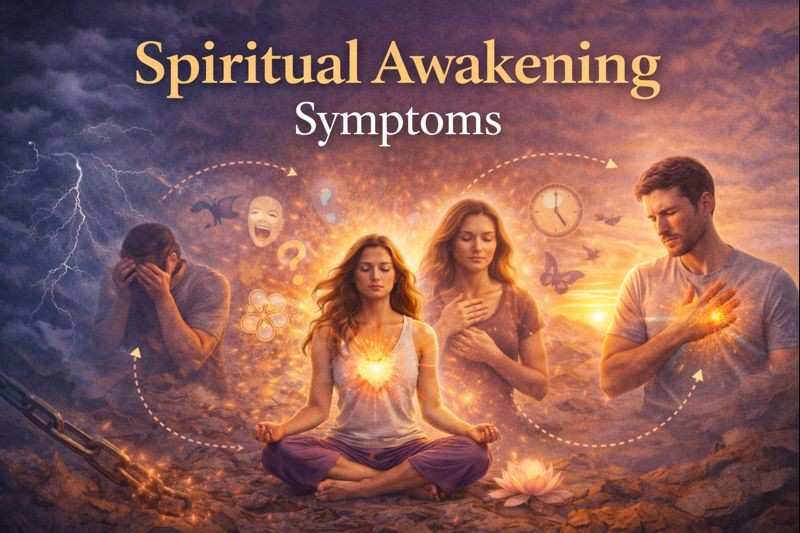
At certain moments in life, people begin to experience changes that feel deeper than normal emotional ups and downs. Old habits no longer satisfy, relationships shift, and questions about identity, purpose, and truth arise naturally. These experiences can feel confusing, intense, or even unsettling at first.
Understanding spiritual awakening symptoms helps bring clarity and reassurance during this phase. Spiritual awakening is not a medical condition, a belief system, or a loss of control. It is a gradual expansion of awareness that affects the mind, emotions, body, and perception of life itself.
This article offers a grounded, Yoast-SEO-friendly explanation of awakening symptoms—why they happen, how they show up, and how to navigate them safely without fear or over-spiritualization.
What Is Spiritual Awakening? (Brief Context)
Spiritual awakening is a shift in consciousness where a person becomes aware of life beyond ego-driven identity and unconscious conditioning. Instead of reacting automatically, awareness begins to guide choices, emotions, and perception.
Awakening does not remove responsibilities or emotions—it transforms how you relate to them. Symptoms arise because the nervous system, mind, and emotional patterns are adjusting to a higher level of awareness.
Also Read :- All Ekadashi of the Year 2026 — Dates, Muhurat, Significance, Fasting Rules & Global Parana Timings
Why Spiritual Awakening Comes With Symptoms
Awareness expanding is not just a mental process—it affects the entire human system.
Symptoms appear because:
- Old emotional patterns surface for healing
- The ego loses dominance
- Identity structures dissolve
- Perception becomes sharper
- The nervous system recalibrates
These changes are natural and temporary when understood properly.
Emotional Spiritual Awakening Symptoms
1. Heightened Emotional Sensitivity
Emotions may feel stronger, clearer, and more honest. Feelings once suppressed begin surfacing without warning.
This is not emotional weakness—it is emotional awareness returning.
2. Sudden Emotional Release
Crying, laughing, or feeling waves of emotion without a clear cause is common. Emotional energy is being released, not created.
3. Reduced Tolerance for Emotional Dishonesty
You may feel uncomfortable pretending, people-pleasing, or suppressing your truth.
Authenticity becomes non-negotiable.
4. Increased Compassion and Empathy
You begin understanding others’ pain more deeply, even when setting boundaries.
5. Emotional Detachment From Old Triggers
Situations that once caused strong reactions begin losing their emotional grip.
Mental & Psychological Symptoms
6. Questioning Beliefs and Identity
You start questioning beliefs inherited from society, family, or culture. Identity no longer feels fixed.
7. Awareness of Thought Patterns
Instead of being controlled by thoughts, you observe them. Inner dialogue slows or becomes less dominant.
8. Feeling Disconnected From Old Goals
Ambitions driven by status, approval, or fear lose meaning.
Purpose begins shifting inward.
9. Moments of Inner Stillness
Periods of mental quiet arise naturally, even without meditation.
10. Heightened Intuition
You trust inner guidance more than external validation.
Physical Spiritual Awakening Symptoms
Physical symptoms are often misunderstood. They are usually temporary and related to nervous system adjustment.
11. Changes in Sleep Patterns
You may:
- Sleep less
- Wake up early
- Experience vivid dreams
12. Energy Fluctuations
Some days feel deeply energized; others feel physically heavy or tired.
13. Heightened Sensory Awareness
Sounds, light, or crowds may feel more intense.
14. Tension Release in the Body
Tightness in the neck, chest, or stomach may surface as stored emotional energy releases.
15. Sensitivity to Diet or Environment
You may become more aware of how food, noise, or surroundings affect your body.
Behavioral & Lifestyle Symptoms
16. Desire for Solitude
Alone time becomes necessary for clarity rather than loneliness.
17. Changes in Social Circles
You may naturally distance yourself from relationships that feel draining or inauthentic.
18. Need for Simplicity
Drama, clutter, and excess begin to feel overwhelming.
19. Stronger Boundaries
You say no without guilt and yes with intention.
20. Shift in Daily Priorities
Inner peace becomes more important than productivity or approval.
Spiritual & Awareness-Based Symptoms
21. Sense of Inner Connection
A subtle feeling of connection with life replaces separation.
22. Presence in Ordinary Moments
Simple experiences—breathing, walking, listening—feel deeper and more vivid.
23. Reduced Fear of Uncertainty
You become more comfortable not having all the answers.
24. Letting Go of Control
Life feels less about forcing outcomes and more about alignment.
25. Natural Interest in Inner Growth
You may feel drawn to meditation, self-inquiry, or reflection without external influence.
The Dark Night Phase (Important to Understand)
Many spiritual awakening symptoms intensify during a challenging phase often called the dark night of the soul.
This phase may include:
- Emotional heaviness
- Temporary loss of meaning
- Identity confusion
- Loneliness
This is not regression—it is purification. Old structures dissolve to allow awareness to stabilize.
Spiritual Awakening vs Mental Health Issues
This distinction matters.
Spiritual awakening:
- Increases awareness
- Encourages responsibility
- Deepens compassion
Mental health crises:
- Reduce awareness
- Disrupt functioning
- Require professional support
Both can coexist. Seeking help is a sign of wisdom, not failure.
How to Navigate Spiritual Awakening Symptoms Safely
- Stay grounded in daily routines
- Avoid spiritual bypassing
- Practice mindfulness
- Seek emotional support when needed
- Allow gradual integration
Awakening is not a race.
What Happens After Symptoms Stabilize
As awareness integrates:
- Emotional balance improves
- Fear decreases
- Clarity increases
- Relationships align naturally
Life does not become perfect—but it becomes conscious.
Are Spiritual Awakening Symptoms Permanent?
No. Symptoms fluctuate and soften as awareness stabilizes.
What remains is:
- Presence
- Inner clarity
- Emotional responsibility
- Authentic living
The True Purpose Behind Awakening Symptoms
Symptoms are not problems—they are signals.
They exist to:
- Break unconscious patterns
- Heal emotional wounds
- Expand awareness
- Restore inner alignment
Understanding spiritual awakening symptoms allows you to move through them with trust instead of resistance.
Frequently Asked Questions
What are spiritual awakening symptoms?
Spiritual awakening symptoms are emotional, mental, physical, and behavioral changes that occur when awareness expands beyond ego-based thinking. These symptoms reflect inner transformation and heightened consciousness.
Are spiritual awakening symptoms normal?
Yes, these symptoms are a normal part of inner growth. They occur as old emotional patterns dissolve and awareness becomes more conscious and present.
Can spiritual awakening symptoms feel uncomfortable?
Yes, discomfort can occur as emotions, beliefs, and identity structures shift. This phase is temporary and often leads to greater clarity and emotional balance.
How long do spiritual awakening symptoms last?
There is no fixed timeline. Symptoms may last weeks, months, or longer depending on personal healing, awareness, and life circumstances.
Can spiritual awakening symptoms affect sleep?
Yes, changes in sleep patterns, vivid dreams, or early waking are common as the nervous system adjusts to increased awareness.
Are spiritual awakening symptoms the same as anxiety or depression?
No, spiritual awakening increases awareness and responsibility, while anxiety or depression often reduce functioning. However, both can coexist, and professional support is important if distress becomes overwhelming.
Should I see a doctor for spiritual awakening symptoms?
If symptoms cause significant distress or interfere with daily life, seeking medical or mental health support is wise. Spiritual growth and professional care can complement each other.
What helps ease spiritual awakening symptoms?
Grounding practices such as mindfulness, healthy routines, emotional support, rest, and self-compassion help ease symptoms and support integration.
Final Thoughts
Spiritual awakening is not about becoming extraordinary—it is about becoming real. Symptoms arise not to disturb you, but to guide you toward awareness, truth, and inner balance.
If life feels like it is changing from the inside out, you are not losing control—you are becoming conscious.
Awakening begins when you stop resisting what you feel and start listening to what awareness reveals.

6 Comments