
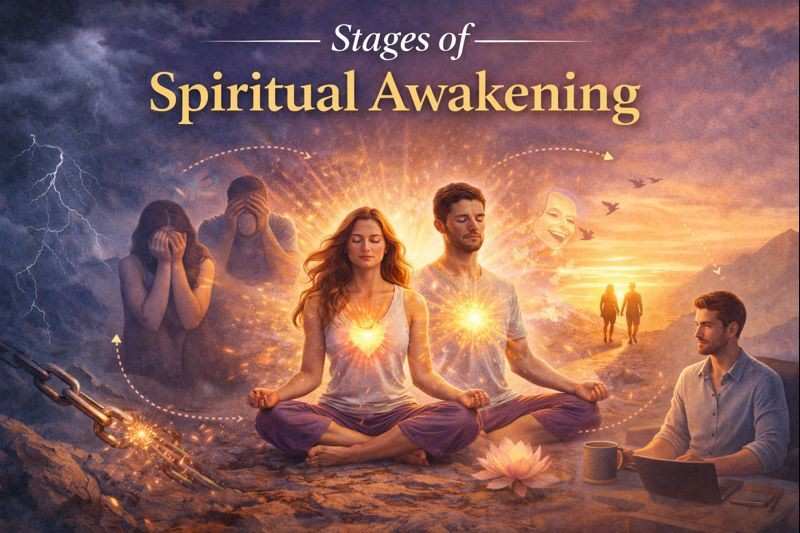
Introduction
Many people experience moments in life when everything they once believed begins to shift. Goals that once motivated them lose meaning, relationships change, and deep questions surface about identity, purpose, and reality itself. This inner transformation often unfolds gradually, in phases rather than all at once.
Understanding the stages of spiritual awakening helps make sense of this journey. Awakening is not a single event or a permanent state of bliss. It is a layered process in which awareness deepens over time, revealing truth, dissolving illusion, and reshaping how one experiences life.
This article offers a complete and grounded exploration of the awakening journey—from the first inner discomfort to integration into everyday life—without exaggeration or mysticism.
What Spiritual Awakening Really Means
Spiritual awakening is a shift in consciousness where awareness expands beyond ego-based identity, conditioning, and unconscious habits. Instead of living on autopilot, you begin to observe thoughts, emotions, and behaviors with clarity.
Awakening does not add new beliefs; it removes false ones. It does not make life perfect, but it reduces unnecessary suffering by bringing presence, responsibility, and authenticity into daily living.
Why Spiritual Awakening Happens in Stages
Awareness cannot fully integrate all at once. Just as the body adapts gradually to change, consciousness unfolds in phases. Each stage prepares the nervous system, mind, and emotions for deeper awareness.
Moving too quickly without integration can cause imbalance. That is why the awakening process naturally unfolds step by step.
Stage 1: The Wake-Up Call
The journey often begins with discomfort.
Life may feel:
- Empty despite external success
- Repetitive or meaningless
- Emotionally draining
- Misaligned with inner truth
This stage is often triggered by emotional pain, burnout, heartbreak, loss, or deep dissatisfaction. Something no longer feels right, even if life looks fine from the outside.
The wake-up call is not a breakdown—it is an invitation to look deeper.
Stage 2: Identity Confusion and Inner Questioning
After the initial awakening, the old sense of self begins to loosen.
You may experience:
- Confusion about who you are
- Loss of motivation for old goals
- Questioning beliefs, values, and norms
- Feeling disconnected from society
This stage can feel unsettling because the ego is no longer fully in control, but clarity has not yet stabilized.
Stage 3: The Dark Night of the Soul
One of the most misunderstood phases, this stage involves deep emotional and psychological purification.
Common experiences include:
- Emotional heaviness or sadness
- Loss of meaning or direction
- Loneliness and isolation
- Facing unresolved trauma
- Collapse of old identity
This phase is not punishment. It dissolves unconscious patterns, fears, and attachments that block awareness.
Understanding the stages of spiritual awakening is especially important here, as many mistake this phase for failure rather than transformation.
Stage 4: Seeking Truth and Understanding
As confusion clears, curiosity arises.
You may feel drawn to:
- Meditation or mindfulness
- Spiritual or philosophical teachings
- Psychology and self-inquiry
- Silence and solitude
This stage involves learning, but not blind belief. You seek direct understanding rather than borrowed ideas.
Stage 5: Awareness of the Ego
At this point, you begin observing ego patterns clearly.
You notice:
- Fear-based reactions
- Desire for control or approval
- Emotional triggers
- Attachment to identity
Instead of judging these patterns, you observe them. Awareness replaces unconscious behavior.
This stage marks a major shift toward inner freedom.
Stage 6: Emotional Healing and Release
Awareness brings buried emotions to the surface.
This stage may include:
- Emotional release
- Healing childhood wounds
- Letting go of resentment
- Practicing self-compassion
Healing is no longer reactive—it becomes conscious.
Stage 7: Expanded Awareness and Presence
Moments of stillness, peace, and clarity begin to arise naturally.
You may experience:
- Reduced mental noise
- Deep presence in simple moments
- Connection with life
- Acceptance without resistance
These experiences come and go at first but gradually stabilize.
Stage 8: Integration Into Daily Life
This is one of the most important stages—and often overlooked.
Awakening must integrate into:
- Work
- Relationships
- Responsibilities
- Decision-making
True growth is not measured by mystical experiences but by how awareness expresses itself in everyday life.
Stage 9: Conscious Living
At this stage, awareness becomes embodied.
You:
- Respond rather than react
- Act from clarity instead of fear
- Maintain healthy boundaries
- Live with authenticity
Life becomes simpler, though not perfect.
Stage 10: Service and Contribution
As ego-centered concerns diminish, a natural desire to contribute emerges.
Service does not mean sacrifice. It means:
- Living with compassion
- Supporting others through presence
- Creating value naturally
Contribution becomes effortless rather than forced.
Do the Stages Happen in Order?
Not always. The stages of spiritual awakening are not linear.
You may revisit earlier phases, especially during major life changes. Each cycle deepens awareness rather than repeating it.
Common Challenges During the Awakening Journey
Challenges include:
- Feeling misunderstood
- Emotional sensitivity
- Loneliness
- Identity shifts
- Fear of losing control
These challenges are signs of transformation, not regression.
Also Read :- All Ekadashi of the Year 2026 — Dates, Muhurat, Significance, Fasting Rules & Global Parana Timings
Spiritual Awakening vs Escapism
True awakening:
- Encourages responsibility
- Deepens presence
- Integrates into life
Escapism:
- Avoids emotions
- Rejects responsibility
- Seeks constant highs
Grounded awareness keeps the journey balanced.
How to Navigate the Stages Safely
- Stay connected to daily life
- Avoid spiritual superiority
- Seek support when needed
- Practice grounding techniques
- Allow gradual integration
Patience is essential.
Life After Awakening Stabilizes
As the process matures:
- Peace becomes natural
- Fear decreases
- Relationships align
- Purpose clarifies
Life remains human—but more conscious.
Is Spiritual Awakening the End Goal?
No. Awakening is not a destination. It is an ongoing unfolding of awareness through lived experience.
Growth continues as long as life continues.
The True Purpose of Spiritual Awakening
The purpose is not escape, perfection, or superiority.
It is:
- Clarity
- Presence
- Inner freedom
- Compassion
- Authentic living
Understanding the stages of spiritual awakening helps you trust the process instead of resisting it.
Frequently Asked Questions
What are the stages of spiritual awakening?
The stages of spiritual awakening include an initial wake-up call, identity questioning, the dark night of the soul, seeking truth, awareness of ego patterns, emotional healing, expanded awareness, and integration into daily life.
Do the stages of spiritual awakening happen in order?
No, the stages are not always linear. People may move back and forth between stages as awareness deepens and life circumstances change.
How long does each stage of spiritual awakening last?
There is no fixed timeline. Each stage can last weeks, months, or years depending on personal growth, emotional healing, and life experiences.
What is the most difficult stage of spiritual awakening?
The dark night of the soul is often the most challenging stage because it involves emotional pain, identity loss, and confronting unresolved inner wounds.
Can someone stop or reverse spiritual awakening?
Spiritual awakening cannot truly be reversed, but it can be resisted. Suppressing awareness may cause discomfort, while acceptance allows smoother integration.
Is spiritual awakening the same as enlightenment?
No, awakening is the beginning of awareness, while enlightenment refers to a deeper, more stable realization that unfolds gradually over time.
Does spiritual awakening affect daily life and responsibilities?
Yes, true awakening integrates into daily life, improving decision-making, relationships, emotional balance, and responsibility rather than avoiding them.
How can I navigate the stages of spiritual awakening safely?
Staying grounded, maintaining daily routines, practicing mindfulness, seeking emotional support, and allowing gradual integration help navigate the process safely.
Final Thoughts
Spiritual awakening unfolds gradually, through layers of awareness and integration. Each stage plays a necessary role in dissolving illusion and revealing truth.
If your life feels like it is changing from the inside out, you are not lost—you are becoming aware.
Awakening is not about becoming someone new.
It is about remembering who you truly are.

4 Comments