
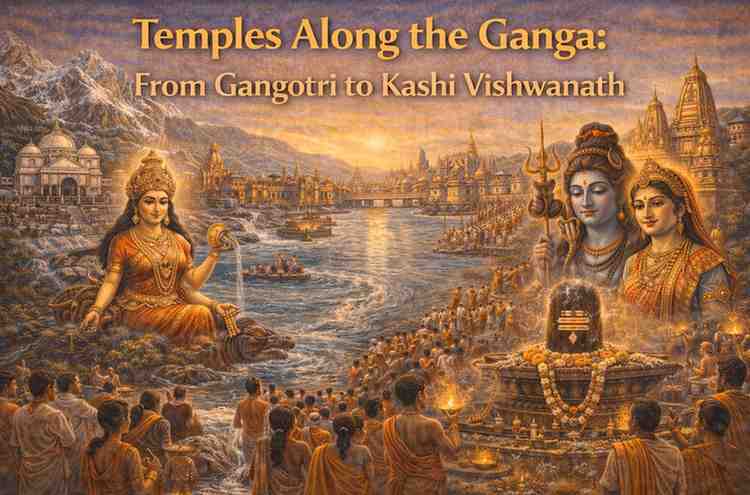
The river Ganga, sacred and life-giving, nurtures one of the most spiritually rich pilgrimage routes in India. It is marked by revered temples and ancient legends. From the icy origins at Gangotri in the Himalayas to the bustling ghats of Kashi Vishwanath in Varanasi, these temples along the river Ganga beckon millions of pilgrims. They seek divine blessings, spiritual purification, and cultural connection. This blog explores the major temples, their significance, festivals, and the timeless journey along the Ganga in 2026.
Also Read :- Saptashrungi to Trimbakeshwar: Nashik’s Divine Circuit
The Sacred Origin: Gangotri Temple
Gangotri, situated in Uttarakhand, is the sacred origin of the Ganges River. The Gangotri Temple honors Goddess Ganga and stands near the glacier from which the river springs, known as the Bhagirathi. According to legend, King Bhagiratha’s penance brought the Ganga down from the heavens to earth to cleanse his ancestors’ souls. The temple built in the 18th century is a focal point of spiritual activities, including pilgrimages and devotional rituals like the Ganga Aarti.
The region hosts the Ganga Dussehra festival celebrating the river’s descent with devotional songs, lamps, and fairs. This creates a vibrant spiritual atmosphere. Pilgrims take ritual dips believed to wash away sins and seek prosperity.
Also Read :- Ujjain Mahakaleshwar: Bhasma Aarti Booking & Temple Rituals
Haridwar: Gateway to Spiritual Enlightenment
Downstream lies Haridwar, one of Hinduism’s seven holiest cities. It is famous for Har Ki Pauri Ghat where devotees take holy dips in the Ganga. The city organizes the massive Kumbh Mela every 12 years, attracting millions. The daily Ganga Aarti enchants visitors with its devotional fervor. Temples like Mansa Devi and Chandi Devi overlook the city, enhancing its sacred aura.
Haridwar’s spiritual calendar is filled with festivals emphasizing purification and renewal, closely linked to the rhythm of the river itself.
Also Read :- 12 Jyotirlinga Temples in India: Complete Darshan & Travel Guide
Rishikesh: The Yoga Capital on Ganga’s Banks
Known worldwide as a hub for yoga and meditation, Rishikesh attracts seekers along the Ganga’s banks. The iconic Trayambakeshwar Temple, also called the Tera Manzil Temple, rises 13 stories high. It offers panoramic views of the river. It honors Lord Shiva and complements the city’s serene spiritual vibe.
Rishikesh hosts important festivals like Maha Shivratri, when homes and temples glow with lamps, and devotees engage in nocturnal worship. The city also provides gateways for river rafting and nature treks, merging adventure with spirituality.
Also Read :- Gujarat Temple Tour: Exploring Somnath, Dwarka & Ambaji Circuit
The Divine City: Varanasi and Kashi Vishwanath Temple
Varanasi, the oldest continuously inhabited city, is synonymous with spiritual liberation. Central to this is the Kashi Vishwanath Temple, dedicated to Lord Shiva. It houses one of the twelve Jyotirlingas. The temple is a beacon for those seeking moksha. Legends say dying here frees souls from the cycle of rebirth.
The temple stands near Dashashwamedh Ghat where daily Ganga Aarti offers a mesmerizing spiritual experience. It features chants, incense, and floating diyas. Varanasi’s rich festivals—Mahashivratri, Diwali, and Ganga Mahotsav—celebrate the eternal bond between the river and the divine.
Other Notable Ganga Temples and Pilgrimage Sites
- Devprayag: The confluence of Alaknanda and Bhagirathi rivers where the holy Ganga officially begins.
- Badrinath: Though not directly on Ganga, it forms part of the Char Dham, with spiritual ties to the river’s source.
- Sarnath: Near Varanasi, where Buddha delivered his first sermon, adding Buddhist spiritual significance to the Ganga region.
These and many other temples create a vast spiritual mosaic. They blend Hindu, Buddhist, and local traditions into the flow of the sacred river.
Festivals Along the Ganga
- Ganga Dussehra: Celebrated mainly at Gangotri and other upstream temples, marking the divine descent of Ganga.
- Kumbh Mela: Major festival in Haridwar and other holy cities, with mass holy dips attracting millions.
- Diwali: Illuminations and rituals in Varanasi and Haridwar celebrating light and life.
- Navratri: Celebrated with prayers to Goddess Durga, especially visible at Gangotri and downstream temples.
These festivals not only honor religious faith but also foster communal harmony and cultural vibrancy, enriching the pilgrimage experience.
Pilgrimage Experience in 2026
Traveling along the Ganga temples in 2026 provides spiritual revival combined with cultural immersion. Pilgrims participate in daily rituals like pradakshina (circumambulation), aarti, and holy dips. They absorb the rich mythology spoken by sages and devotees through ages.
Modern facilities have developed around these sites to assist pilgrims. They offer comfortable accommodations, guided temple tours, and digital platforms to streamline darshan bookings. Whether trekking to Gangotri or witnessing the evening aarti in Varanasi, the journey along the Ganga remains an unparalleled spiritual adventure.
The Mythological Origins of the Ganga
The Ganga is personified as गंगा देवी, a goddess worshiped for her nurturing and purifying powers. According to Hindu mythology, King Bhagiratha of the Ikshvaku dynasty performed intense penance to bring the celestial river Ganga down to Earth. This was to cleanse the sins of his ancestors. Lord Shiva agreed to receive Ganga in his matted hair (जाताशंकरि) to control her powerful descent. This story, narrated in the रामायण, महाभारत, and various पुराण, elevates Ganga to divine status as the ultimate purifier and giver of liberation (moksha).
Ganga in Art and Temple Culture
Historically, temples along the Ganga have honored her through exquisite terracotta sculptures and architectural motifs, especially during the Gupta period. Typically depicted as a beautiful goddess riding a मकर (mythical sea creature), Ganga usually adorns temple entrances. This symbolizes her role in purification before entering sacred spaces. Her imagery reinforces the river’s spiritual significance as a bridge between the earthly and divine realms.
The Spiritual Role of the Ganga
For Hindus, bathing in the Ganga is a profound ritual believed to absolve one from sins and negative karma. It facilitates spiritual rebirth. The river is seen as a continuous divine presence linking life and death, the mortal and immortal. Many devotees perform final rites along the Ganga’s banks, believing it ensures liberation for departed souls. This belief is vividly experienced in the Gangasagar Mela. Here, millions converge to take the sacred dip during मकर संक्रांति.
Devprayag: The Sacred Confluence
Devprayag marks the ancient confluence where the Alaknanda and the Bhagirathi rivers unite to form the Ganga officially. The site carries legendary significance as the culmination of Bhagiratha’s penance and Shiva’s protection of Ganga’s descent. Pilgrims often visit here to meditate. They seek spiritual rebirth at this mystic juncture where two rivers and mythologies merge into one.
Contemporary Pilgrimage Experience Along the Ganga
Modern pilgrims traveling from Gangotri to Kashi Vishwanath experience a blend of ancient rituals and improved accessibility. Many start their journey at Gangotri during the summer pilgrimage season, trekking through rugged Himalayan terrain. Along the way, the river widens, encompassing towns like Haridwar and Rishikesh, where pilgrims relish spiritual discourses, yoga retreats, and daily aartis on the riverbanks.
Technological advancements have introduced digital darshan bookings and live streaming of temple ceremonies, allowing global devotees to participate remotely. Travel infrastructure, including well-maintained roadways and guided tours, enhances safety and enriches the pilgrim’s experience, balancing spiritual depth with comfort.
Environmental Conservation and Sacred Responsibility
Given the increasing number of visitors, the environmental conservation of the Ganga and its temple towns has become paramount. Authorities and NGOs have launched initiatives for river clean-up, waste management, and sustainable tourism aimed at preserving the sanctity of the river and its surroundings.
Projects such as the Namami Gange programme focus on reducing pollution, enhancing sewage treatment, and promoting eco-friendly practices among pilgrims. Many temple trusts actively engage in awareness drives encouraging rituals that honor both tradition and ecological balance.
Ganga in Contemporary Culture and Art
The cultural influence of the Ganga and its temples has radiated into Indian literature, cinema, and performing arts. Themes of purification, rebirth, and the divine feminine permeate folk songs, classical dances, and literary works celebrating the river as a symbol of India’s spiritual heritage.
Festivals along the Ganga inspire traditional crafts, elaborate decorations, and devotional music, keeping ancient art forms alive. Contemporary artists often utilize the river’s potent symbolism to comment on environmental and social issues, making the legacy of Ganga continuously relevant.
Economic and Social Impact of Temples Along the Ganga
The temples generate substantial economic activity by supporting local businesses, artisans, and hospitality services. Pilgrimage tourism sustains millions of livelihoods, influencing urban development while preserving rural traditions.
Socially, these pilgrimage routes foster communal harmony and interfaith dialogue, symbolizing the unifying power of the Ganga. The river’s shrines host celebrations that include diverse communities, reinforcing inclusive cultural narratives.
Frequently Asked Questions (FAQs) – Temples Along the Ganga
1. What are the major temples along the Ganga River?
Some of the most famous temples along the Ganga include Gangotri Temple in Uttarakhand, Kedarnath Temple near the Mandakini River, Har Ki Pauri temples in Haridwar, and Kashi Vishwanath Temple in Varanasi.
2. Where does the Ganga River originate?
The Ganga River originates from the Gangotri Glacier in the Himalayas of Uttarakhand and is considered one of the holiest rivers in Hinduism.
3. Why is Gangotri Temple important?
Gangotri Temple is dedicated to Goddess Ganga and marks the spiritual source of the sacred river Ganges.
4. What is the significance of Kashi Vishwanath Temple?
Kashi Vishwanath Temple in Varanasi is one of the twelve Jyotirlingas of Lord Shiva and is among the most sacred temples in India.
5. Which cities along the Ganga are important pilgrimage destinations?
Important pilgrimage cities along the Ganga include Gangotri, Rishikesh, Haridwar, Prayagraj, and Varanasi.
6. What rituals are performed at temples along the Ganga?
Devotees perform rituals such as Ganga Aarti, holy dips in the river, Rudrabhishek, and offering flowers and lamps to the river.
7. What is the spiritual meaning of bathing in the Ganga?
Bathing in the Ganga is believed to cleanse sins and bring spiritual purification and blessings.
8. When is the best time to visit temples along the Ganga?
The best time to visit is between October and April when the weather is pleasant for pilgrimage and temple visits.
9. What festivals are celebrated along the Ganga River?
Major festivals include Ganga Dussehra, Kartik Purnima, Dev Deepawali, and the Kumbh Mela held in cities like Haridwar and Prayagraj.
10. Can pilgrims travel from Gangotri to Kashi Vishwanath in one journey?
Yes, many pilgrims undertake a spiritual journey along the Ganga from Gangotri in the Himalayas to Kashi Vishwanath in Varanasi.
Conclusion
The temples along the river Ganga—from its icy Himalayan birthplace at Gangotri to the sacred city of Kashi Vishwanath—form a tapestry of faith, culture, and history. In 2026, these sites invite seekers to reconnect with the divine flow that nourishes India’s spiritual soul. They invite every pilgrim into the timeless rhythm of devotion and grace.
5 Comments