Introduction
Kerala, famously called God’s Own Country, is a place where spirituality blends seamlessly with nature. The Temples of Kerala stand as sacred symbols of devotion, surrounded by calm backwaters, lush green hills, and centuries-old traditions that attract millions of pilgrims every year. These temples reflect deep faith and represent the cultural and spiritual unity that defines the soul of Kerala.
Overview
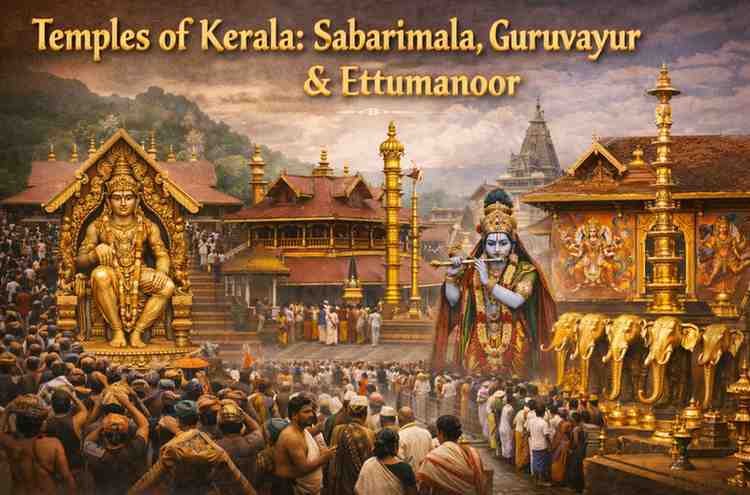
Among the countless temples scattered across the state, Sabarimala, Guruvayur, and Ettumanoor hold a unique place. Each represents one of the principal deities of Hinduism — Lord Ayyappa, Lord Krishna, and Lord Shiva. Together, they form a sacred triangle that draws devotees from every corner of India and beyond.
The Sabarimala Temple, located deep in the Periyar Tiger Reserve, is one of the world’s largest pilgrimage centers. Millions of devotees undertake a rigorous journey to reach the temple of Lord Ayyappa, climbing the sacred 18 steps with deep faith and discipline.
The Guruvayur Temple in Thrissur district is a divine abode of Lord Krishna. Known as Bhuloka Vaikuntha (Heaven on Earth), it is regarded as the Dwarka of South India. Pilgrims come here to seek the blessings of Lord Guruvayurappan, whose idol is believed to have been worshiped by Lord Krishna himself.
The Ettumanoor Mahadeva Temple, dedicated to Lord Shiva, stands as a testimony to Kerala’s architectural excellence and spiritual depth.
These three temples symbolize the core of Kerala’s spiritual heritage — purity, devotion, and self-realization. Every visit to these shrines brings peace to the heart and clarity to the soul. The fragrance of sandalwood, the sound of temple bells, and the rhythm of chants create an atmosphere that connects the devotee directly with the divine.
Kerala’s temple culture represents a blend of spirituality, discipline, and inclusiveness. This blog takes you on a sacred journey through these three legendary temples — exploring their history, legends, rituals, architecture, and divine energy that continues to inspire millions.
Also Read :- Temples Where Wishes Come True: India’s Miraculous Shrines
The Spiritual Essence of Kerala’s Temples
Temples in Kerala are not just places of worship; they are living representations of faith and tradition. The rituals, music, and festivals performed here reflect centuries of devotion and cultural unity.
The architecture of Kerala temples is unique and harmonizes with the region’s climate and environment. Wooden structures, sloping roofs, and detailed carvings make them distinct from temples in other Indian states.
Sabarimala teaches discipline and equality. Guruvayur stands as a symbol of divine love and mercy. Ettumanoor expresses the power and compassion of Lord Shiva.
The temples of Kerala are the heart of the state’s spiritual and cultural identity. They represent the continuity of tradition in a modern world and remind devotees that the path to God lies through purity, humility, and devotion.
Also Read :- Famous Vishnu Temples in India: From Tirupati to Badrinath
Sabarimala Temple – The Sacred Hill of Lord Ayyappa
The Sabarimala Temple, located in the Pathanamthitta district, is one of India’s most renowned pilgrimage centers. Surrounded by lush forests and mountains, it sits on a hilltop at about 4,000 feet above sea level. The temple is dedicated to Lord Ayyappa, the eternal symbol of dharma, discipline, and devotion.
The most remarkable aspect of the Sabarimala pilgrimage is that devotees undertake a strict 41-day penance called Vratham. They wear black or blue attire, walk barefoot, and carry the sacred Irumudi Kettu on their heads. Devotees chant “Swamiye Saranam Ayyappa” as they climb through dense forests and steep paths.
One of the temple’s most sacred features is the Pathinettam Padi, or 18 holy steps. These steps represent the human journey from ignorance to enlightenment. Each step symbolizes an aspect of worldly bondage that must be overcome to attain spiritual liberation. Only those who have completed the penance can climb these steps with the Irumudi.
People from all religions are welcome here, making it a true representation of unity in diversity.
Also Read :- South India Temple Circuit: Tamil Nadu & Kerala Pilgrimage Route
The Divine Legend of Lord Ayyappa
The story of Lord Ayyappa is one of courage, purity, and divine purpose. This divine origin represents the union of energy and consciousness — Shiva and Vishnu.
Ayyappa was found as a baby on the banks of the Pampa River by the King of Pandalam, who adopted him as his son and named him Manikandan. He grew up to be a brave and wise prince, beloved by his people.
This legend forms the core of Sabarimala’s philosophy — self-control, equality, and surrender to divine will. Lord Ayyappa’s devotees follow his example by living simply, practicing discipline, and seeking peace through devotion.
The temple’s sacred location in the dense forest represents the inner forest of the mind that must be purified through penance. Every step toward the temple is symbolic of the soul’s journey toward enlightenment.
Today, millions undertake this pilgrimage with faith that transcends religion, caste, and social barriers.
The Pilgrimage Experience to Sabarimala
The pilgrimage to Sabarimala is considered one of the most challenging and spiritually rewarding journeys in the world.
At the top, the sight of the 18 golden steps fills the heart with divine emotion. Each step crossed feels like shedding a layer of ego and worldly attachment.
The air around the temple vibrates with spiritual energy. The chants, the fragrance of flowers, and the devotion of thousands create an atmosphere beyond description.
Many pilgrims describe their first glimpse of the deity as a life-changing moment. It strengthens their belief that faith and purity can overcome all obstacles.
It teaches humility, patience, and devotion — values that guide devotees long after they return home.
Sabarimala Temple Rituals and Traditions
Strict 41-Day Vratham
The Sabarimala pilgrimage begins with the Vratham, a 41-day period of fasting and self-control.
Devotees wear black or blue clothes symbolizing renunciation.
They avoid meat, alcohol, and worldly pleasures.
The Vratham teaches discipline and surrender to divine energy.
Journey Through the Forest Paths
The pilgrimage to Sabarimala includes a trek through thick forests and steep hills.
Devotees walk barefoot carrying the sacred Irumudi Kettu.
It contains offerings like ghee-filled coconut, rice, and camphor.
The forest route represents life’s challenges and the devotee’s surrender to the divine.
The journey unites millions in shared devotion and simplicity.
Makara Jyothi – The Celestial Miracle
The highlight of the pilgrimage is witnessing Makara Jyothi.
A celestial light appears on Makara Sankranti, symbolizing Lord Ayyappa’s divine presence.
This sacred event attracts millions of pilgrims every year.
It represents faith’s triumph and spiritual illumination.
Equality and Brotherhood at Sabarimala
Sabarimala promotes equality among all devotees.
People from all religions and castes are allowed to worship Lord Ayyappa.
Every pilgrim calls others Swami, meaning “divine soul.”
This practice eliminates social differences and fosters spiritual unity.
It is a temple where faith transcends boundaries.
Significance of Sabarimala Rituals
Each ritual at Sabarimala carries spiritual meaning.
The trek represents life’s challenges, and the Makara Jyothi signifies enlightenment.
Guruvayur Temple – The Abode of Lord Krishna
The Divine Idol and Belief
The Guruvayur Temple in Thrissur is one of the most sacred shrines in Kerala.
It houses the enchanting idol of Lord Guruvayurappan, a four-armed form of Lord Krishna.
The idol is said to have been worshipped in Dwaraka by Lord Krishna himself.
After Dwaraka’s submergence, the idol was brought to Kerala by sage Brihaspati and Vayu Deva.
This story adds immense sanctity to the temple.
Temple Architecture and Layout
Guruvayur temple’s architecture follows the traditional Kerala style.
The central shrine is called the Sreekovil, surrounded by high walls and golden flagposts.
The walls feature beautiful carvings of Hindu gods and scenes from the Mahabharata.
The entire temple radiates divine energy and serenity.
Rituals and Offerings
Thousands of devotees participate in the Nirmalyam, Usha Puja, and Deeparadhana.
The rhythmic sound of bells and conch shells fills the air with divinity.
Offerings like Thulabharam (weighing offerings against the devotee) are very popular.
Each ritual connects devotees with Lord Krishna through love and surrender.
Legends of Miracles
Many miracles are associated with Guruvayur temple.
It is believed that Lord Guruvayurappan once cured King Manaveda’s disease.
These legends make Guruvayur a symbol of divine grace and protection.
Cultural and Spiritual Importance
The temple promotes Bhakti, music, and dance as forms of devotion.
For millions, Guruvayur represents unconditional faith in Lord Krishna.
Festivals of Guruvayur Temple
Guruvayur Ekadasi
It falls in the Malayalam month of Vrischikam (November–December).
On this day, devotees observe fasting and engage in continuous prayer.
The temple remains open for 24 hours, and special pujas are performed.
The belief is that visiting Guruvayur on this day grants ultimate salvation.
Chembai Sangeetholsavam
This is a unique music festival held in memory of Carnatic legend Chembai Vaidyanatha Bhagavatar.
Hundreds of musicians gather to sing devotional songs dedicated to Lord Krishna.
The temple vibrates with melodies and spiritual devotion.
Other Important Celebrations
The Ashtami Rohini festival marks Lord Krishna’s birthday.
Beautiful flower decorations, processions, and cultural performances are organized.
These celebrations create a divine and festive atmosphere in Guruvayur.
Every event strengthens the bond between devotees and their beloved deity.
Elephant Sanctuary of Guruvayur
The Punnathur Kotta Elephant Sanctuary houses temple elephants.
They participate in processions and are treated with utmost care.
This sanctuary is an example of Kerala’s deep respect for animals in temple culture.
Visitors often visit it after worshipping at the temple.
Spiritual Essence of Guruvayur Festivals
Each festival here promotes devotion, discipline, and compassion.
They unite devotees through music, rituals, and collective prayer.
The Guruvayur festivals reflect Kerala’s rich tradition of merging art with spirituality.
Ettumanoor Mahadeva Temple – The Shrine of Lord Shiva
The Ancient Temple of Power
Ettumanoor Mahadeva Temple, located in Kottayam, is a major Shiva temple of Kerala.
It dates back several centuries and holds immense religious importance.
Lord Shiva here is worshipped as Ettumanoorappan, the protector and destroyer of evil.
Pilgrims believe that the deity grants strength, wisdom, and success.
The temple is known for its majestic architecture and spiritual atmosphere.
Architectural Highlights
The temple follows the Dravidian and Kerala architectural style.
The copper-plated roof and golden flagstaff stand as symbols of divine energy.
The entrance features magnificent wooden carvings depicting Shiva legends.
The inner walls are adorned with murals illustrating scenes from Hindu epics.
The most famous mural is the Nataraja painting, one of Kerala’s finest artworks.
Rituals and Daily Worship
Priests perform three main pujas every day — Usha Puja, Noon Puja, and Athazha Puja.
Devotees offer ghee, flowers, and oil lamps to Lord Shiva.
The atmosphere fills with chants and the fragrance of sandalwood.
Worship here is believed to remove obstacles and bless devotees with peace.
Many devotees light lamps on Mondays, considered highly auspicious for Shiva.
Cultural Significance
Ettumanoor has inspired poets, saints, and rulers for centuries.
It was once a cultural hub of art and education.
The temple festival attracts artists and musicians from across Kerala.
Ettumanoor represents the union of divine worship and cultural excellence.
It continues to be a source of spiritual strength for millions.
Divine Energy of Ettumanoor
Every ritual performed here connects the devotee to Shiva’s cosmic power.
The chants of “Om Namah Shivaya” resonate through the temple.
It is believed that a single visit can cleanse one’s karma.
Ettumanoor stands as an eternal beacon of Lord Shiva’s grace.
The Ezhara Ponnana Festival of Ettumanoor
Origin and Meaning
The Ezhara Ponnana Festival is one of the most celebrated events in Ettumanoor Temple.
The word Ezhara Ponnana means Seven and a Half Golden Elephants.
These golden idols are considered sacred gifts to Lord Shiva.
Legends say they were offered by the Maharaja of Travancore centuries ago.
The festival symbolizes prosperity, devotion, and royal reverence.
Festival Rituals
It lasts ten days, filled with rituals, processions, and cultural performances.
The highlight is the procession of the golden elephants inside the temple premises.
Devotees gather in thousands to witness this divine spectacle.
The rhythmic drums and chants create a powerful spiritual ambiance.
Art, Music, and Culture
The festival promotes Kerala’s traditional art forms like Kathakali and Chenda Melam.
Musicians and dancers perform as offerings to Lord Shiva.
The temple courtyard becomes a cultural stage of devotion and artistry.
This blend of faith and culture attracts tourists and devotees alike.
The festival represents Kerala’s living heritage of temple traditions.
Spiritual Importance
Participating in the Ezhara Ponnana festival is considered highly auspicious.
Devotees believe it brings wealth, happiness, and divine blessings.
The golden elephants represent strength, wisdom, and prosperity.
The festival’s divine energy leaves devotees deeply inspired.
Ettumanoor’s Role in Kerala’s Temple Legacy
Through festivals like Ezhara Ponnana, Ettumanoor preserves Kerala’s spiritual culture.
It connects modern generations with ancient traditions of worship and community celebration.
Ettumanoor stands as a shining example of devotion blended with cultural heritage.
Pilgrimage Experience in Kerala – A Journey of Faith
The Spirit of Devotion
A pilgrimage in Kerala is not just a trip.
It is an emotional and spiritual awakening.
Every step taken toward a temple symbolizes surrender and faith.
Pilgrims believe that visiting sacred places purifies the soul and removes sins.
The temples of Sabarimala, Guruvayur, and Ettumanoor are central to this spiritual journey.
The chanting of hymns, the fragrance of camphor, and the sound of bells create divine energy.
Each temple visit brings a sense of peace and connection with higher consciousness.
The journey through Kerala’s landscapes, filled with rivers and forests, adds to the sacred experience.
Every pilgrim returns transformed, carrying divine blessings in their hearts.
Unity in Diversity
One of the most beautiful aspects of Kerala’s temple culture is inclusiveness.
Pilgrims from different states, languages, and communities come together in devotion.
At Guruvayur, people from all backgrounds offer prayers to Lord Krishna.
Ettumanoor welcomes everyone who seeks the blessings of Lord Shiva.
This unity in diversity represents the essence of India’s spiritual tradition.
Kerala temples remind everyone that divinity transcends barriers and boundaries.
Faith becomes the common language that connects millions of hearts.
Cultural Beauty of Temple Journeys
The journey between temples introduces travelers to Kerala’s rich art, music, and cuisine.
Each region has unique temple songs, dance forms, and local delicacies.
Devotees often visit nearby temples, waterfalls, and heritage sites along the route.
This combination of devotion and exploration makes the pilgrimage fulfilling. It allows travelers to feel peace, gratitude, and spiritual strength.
Best Time to Visit Kerala Temples
Festival Season Advantage
Temple festivals in Kerala are unique experiences.
Devotees can witness elephant processions, lamp lighting, and classical performances.
Festivals bring joy, devotion, and togetherness in every temple.
Participating in these celebrations helps visitors understand Kerala’s living traditions.
The Makara Jyothi at Sabarimala, Ekadasi at Guruvayur, and Ezhara Ponnana at Ettumanoor attract lakhs of pilgrims.
These times offer unforgettable spiritual memories for travelers.
Travel Planning Tips
Most temples open early morning and close by noon, reopening in the evening.
Carrying traditional attire like dhoti or saree is recommended.
Proper planning ensures a peaceful and fulfilling pilgrimage.
Travel Tips and Temple Etiquette
Respecting Temple Traditions
Kerala temples follow strict customs.
Visitors must wear traditional clothes — men in mundu or dhoti, women in sarees or salwar.
Shoes are not allowed inside the temple complex.
Photography is restricted in most temple interiors.
Maintaining silence and cleanliness is a mark of respect.
Offerings and Donations
Temples accept donations for annadanam (free meals) and maintenance.
Contributing to these causes earns great spiritual merit.
Behavior and Conduct
Visitors must maintain humility and devotion.
Avoid loud conversations and mobile use near sanctums.
Queue discipline is essential in busy temples like Guruvayur.
Respecting rituals and priests shows reverence for the divine energy.
Responsible Travel
Kerala promotes eco-friendly tourism.
Avoid plastic waste, and carry reusable bottles.
Support local artisans by buying temple souvenirs.
Responsible travel keeps Kerala’s sacred spaces clean and beautiful.
A respectful traveler becomes a true devotee in action and spirit.
Spiritual Meaning Behind Kerala Temple Architecture
Design Inspired by Divinity
Kerala temple architecture reflects harmony between spirituality and nature.
The sloping roofs, wooden carvings, and courtyards blend with Kerala’s tropical beauty.
Each temple layout follows Vastu Shastra, aligning energy flow with cosmic balance.
The sanctum (sreekovil) symbolizes the inner soul — the seat of divine power.
The flagpost, lamps, and temple pond represent purity and connection between heaven and earth.
Every detail carries meaning beyond aesthetics.
Art, Symbolism, and Energy
Wooden sculptures depict stories from Hindu epics like Ramayana and Mahabharata.
They remind devotees of moral values and divine lessons.
The murals in Ettumanoor and Guruvayur are masterpieces of spiritual art.
The rhythmic sound of bells and drums creates vibrational energy.
Together, they turn temples into living energy centers.
Each step inside a temple is symbolic.
Removing footwear represents leaving behind ego and impurity.
Circumambulating the sanctum signifies harmony between the soul and universe.
Spiritual Architecture of the Three Temples
Sabarimala stands atop a forested hill, symbolizing the path of asceticism.
Its climb represents rising above worldly attachments.
Guruvayur, with its square sanctum and golden walls, represents devotion and love.
Ettumanoor embodies divine wisdom through its Shiva-inspired murals.
Preserving the Legacy
Kerala’s temple architecture needs continuous preservation.
Many organizations and devotees contribute to restoration and cultural promotion.
Maintaining these temples means protecting the heritage of faith and art.
Their design continues to inspire architects and spiritual seekers worldwide.
Frequently Asked Questions (FAQs) – Temples of Kerala
1. Which temples are covered in the Kerala temple pilgrimage?
The Kerala temple pilgrimage often includes Sabarimala Ayyappa Temple, Guruvayur Sri Krishna Temple, and Ettumanoor Mahadeva Temple. These temples are among the most spiritually significant destinations in Kerala.
2. What is the significance of Sabarimala Temple?
Sabarimala Temple is dedicated to Lord Ayyappa and is one of the largest annual pilgrimage sites in the world. Devotees undertake a strict 41-day vrata (austerity) before visiting the temple.
3. Why is Guruvayur Temple famous?
Guruvayur Temple is dedicated to Lord Krishna and is often called the “Dwarka of the South.” It is one of the most visited Krishna temples in India.
4. What is special about Ettumanoor Mahadeva Temple?
Ettumanoor Mahadeva Temple is dedicated to Lord Shiva and is famous for its ancient Kerala temple architecture and beautiful murals depicting scenes from Hindu mythology.
5. When is the best time to visit these temples in Kerala?
The best time to visit Sabarimala, Guruvayur, and Ettumanoor temples is between October and March when the weather is pleasant and many temple festivals take place.
6. What is the Mandala season at Sabarimala?
The Mandala season is the most important pilgrimage period at Sabarimala, usually observed between November and January. Millions of devotees visit the temple during this time.
7. Are there any dress codes for visiting Kerala temples?
Yes, traditional dress is required. Men usually wear dhoti or mundu, while women wear saree, salwar kameez, or traditional attire when visiting temples like Guruvayur and Sabarimala.
8. What rituals are performed at Guruvayur Temple?
Popular rituals at Guruvayur Temple include Tulabharam, Annadanam, Krishna Archana, and special offerings made by devotees seeking blessings from Lord Krishna.
9. How can pilgrims reach these Kerala temples?
Guruvayur and Ettumanoor are well connected by road and rail, while Sabarimala requires a trek from Pamba after reaching the base by bus or car.
10. Can pilgrims visit all three temples in one trip?
Yes, pilgrims often combine visits to Sabarimala, Guruvayur, and Ettumanoor temples in a multi-day Kerala temple tour itinerary.
Conclusion – The Eternal Grace of Kerala’s Temples
A Land Blessed by the Divine
They are living centers of spirituality, art, and devotion.
Sabarimala, Guruvayur, and Ettumanoor together tell Kerala’s timeless story of faith.
Each temple connects devotees with divine energy through rituals and architecture.
Their sacred atmosphere brings inner peace and spiritual awakening.
Journey from Discipline to Devotion
Sabarimala teaches self-control and purity.
Guruvayur symbolizes love and service through Lord Krishna’s grace.
Ettumanoor represents knowledge and strength from Lord Shiva.
Together they guide devotees through every stage of spiritual evolution.
A visit to these temples is a complete journey — physical, emotional, and divine.
Kerala – God’s Own Land of Faith
The temples of Kerala remind humanity of universal truth — all paths lead to the same divine.
They invite every soul to experience devotion beyond religion and culture.
The serene landscapes, sacred chants, and timeless rituals blend into divine harmony.
Final Blessing for Every Devotee
A pilgrimage to Sabarimala, Guruvayur, and Ettumanoor purifies the heart.
It fills life with gratitude, compassion, and wisdom.
Kerala’s temple traditions continue to shine as a beacon of Indian spirituality.
Every devotee who bows here carries divine blessings forever.