
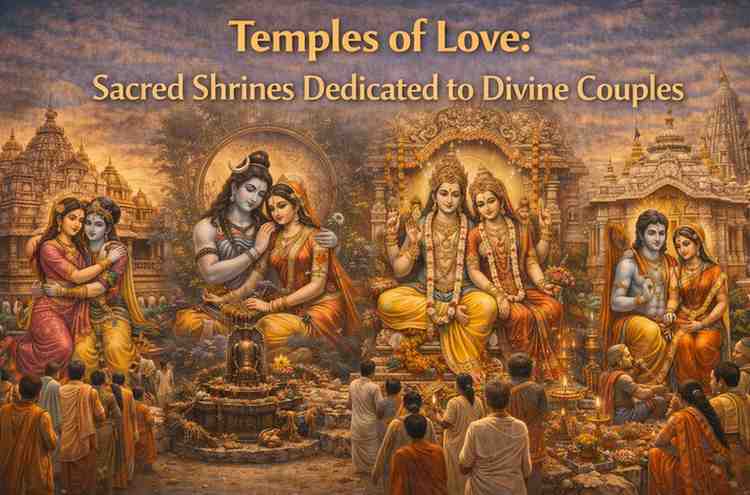
Temples of Love: Sacred Shrines Dedicated to Divine Couples
India’s divine landscape is adorned with countless temples, but among them stand a unique category — the Temples of Love, sacred shrines dedicated to divine couples whose relationships reflect purity, devotion, and the cosmic balance of Shiva-Shakti, Radha-Krishna, and Vishnu-Lakshmi. These temples are not only places of worship but sanctuaries of emotional and spiritual bonding, where devotees seek blessings for eternal companionship, understanding, and divine love.
From the mystical forests of Braj to the tranquil hills of Uttarakhand and the grand Dravidian temples of Tamil Nadu, these sacred sites narrate timeless tales of love that transcend the mortal realm. Each embodies a distinctive energy—devotion in Vrindavan, harmony in Madurai, sacred union in Triyugi Narayan, and compassion in Kanchipuram.
Also Read :- Gujarat Temple Tour: Exploring Somnath, Dwarka & Ambaji Circuit
The Divine Concept of Sacred Union in Hindu Philosophy
In Hinduism, divine couples represent the balance of masculine and feminine energies—creation and sustenance intertwined. Shiva and Parvati, Vishnu and Lakshmi, Krishna and Radha, Rama and Sita—all demonstrate how love and duty coexist. Their stories illustrate companionship built on respect, selflessness, and spiritual alignment.
The philosophy of Ardhanarishvara, depicting Lord Shiva and Goddess Parvati as one, conveys a powerful message — the divine operates as a singular consciousness in two forms. Similarly, the eternal love of Radha and Krishna symbolizes the spiritual seeker’s yearning for union with the Supreme. Thus, visiting temples dedicated to these divine couples allows devotees to contemplate love not merely as emotion but as a path to enlightenment.
Also Read :- Madhya Pradesh Temple Trail: A Journey through Khajuraho, Omkareshwar & Mahakaleshwar
Bhandirvan Temple, Vrindavan – The Sacred Wedding of Radha and Krishna
Nestled in the Braj region near Mathura, Bhandirvan Temple holds a special place in the hearts of devotees. Legend narrates that under the ancient Vata Vriksha (Banyan tree), Lord Krishna and Radha were married in a celestial ceremony conducted by Lord Brahma himself.
Couples flock here to perform rituals symbolizing eternal union — tying sacred threads around the same banyan tree, praying for enduring love and understanding. The serene forest, filled with birdsong and divine fragrance, remains one of the most romantic and spiritually potent places in Vrindavan.
Also Read :- Eco Temples of India: Sustainable Shrines Protecting Nature
Triyugi Narayan Temple, Uttarakhand – The Eternal Flame of Love
High in the Garhwal Himalayas of Uttarakhand stands Triyugi Narayan Temple, a sacred site where Lord Shiva and Goddess Parvati were married in the presence of Lord Vishnu. The temple’s most mystical feature is the Akhand Jyoti, an eternal flame said to have burned since their divine wedding.
Couples visit this temple to seek blessings for marital harmony and stability. The tradition of collecting ashes from the sacred fire and keeping them as a marital talisman continues even today. The nearby rivers — Mandakini and Saraswati — add a tranquil charm to this pilgrimage site, making it one of the most spiritually uplifting temples of love in India.
Also Read :- Healing Temples of India: Sacred Places Known for Miracles & Health
Madurai Meenakshi Amman Temple, Tamil Nadu – The Cosmic Wedding of Shiva and Meenakshi
Among the grandest representations of divine union stands the Madurai Meenakshi Amman Temple, dedicated to Goddess Meenakshi (a form of Parvati) and Lord Sundareswarar (Shiva). Its splendid towers narrate the celestial wedding of Meenakshi and Shiva, celebrated annually as the Chithirai Thiruvizha, one of Tamil Nadu’s grandest festivals.
The temple’s architecture mirrors divine perfection, reflecting not just devotion but magnificent artistry. Each sculpture, mural, and gopuram tells stories of divine romance, cosmic creation, and the eternal cycle of love and rebirth. Pilgrims visiting Madurai believe that witnessing the deities here grants one harmony in family life and the fortune of soul-deep companionship.
Also Read :- Himachal Devi Temples: A Divine Journey to Naina Devi, Chintpurni & Jwala Ji
Kamakshi Amman Temple, Kanchipuram – The Seat of Compassion and Divine Grace
In the holy city of Kanchipuram, the Kamakshi Amman Temple celebrates the goddess of love, strength, and grace. Kamakshi, an incarnation of Parvati, represents unconditional compassion and the power of emotional balance within relationships.
Couples seeking reconciliation or emotional fortitude often visit this shrine, praying before the goddess who conquered Lord Shiva’s heart through devotion. The temple’s serene sanctum and golden roof reflect the spiritual warmth of love sustained by mutual respect and understanding.
Rukmini Devi Temple, Dwarka – The Devotion of Rukmini and Krishna
While Radha represents spiritual love, Rukmini embodies marital devotion and steadfast partnership. The Rukmini Devi Temple, located near Dwarka in Gujarat, honors this aspect of divine love. The legend tells of a momentary misunderstanding between Krishna and Rukmini that led to her becoming separated from Dwarka. Yet, her devotion never waned.
Couples visiting this temple learn that true love endures through trials and that emotional closeness transcends misunderstandings. Rituals here focus on dharma within marriage, patience, and forgiveness — virtues essential to building lasting relationships.
Ramanathaswamy Temple, Rameswaram – The Pious Love of Rama and Sita
On the southern tip of India, Ramanathaswamy Temple at Rameswaram stands as a monument to Lord Rama’s devotion to Sita and Lord Shiva. Built by Rama after his victory over Ravana, the temple symbolizes repentance, faith, and love transformed into dharma.
Its long corridors and sacred tanks witness countless couples taking holy dips to strengthen their marital vows.
Andal and Ranganatha at Srirangam – A Tale of Devotion Fulfilled
In the temple town of Srirangam, Tamil Nadu, lies the enchanting story of Andal, the only female Alvar saint whose devotion to Lord Ranganatha (Vishnu) was so deep that she merged with the deity. The Ranganathaswamy Temple honors this divine love story, where Andal’s spiritual longing culminated in ultimate union.
The Andal Thirukalyanam (divine wedding ceremony) celebrated annually revives the grandeur of love fueled by total surrender. For devotees, Andal and Ranganatha demonstrate that devotion itself can transform into eternal companionship, transcending all barriers of the human world.
Kailash Temple, Ellora – The Sculpted Symbol of Divine Love
At Ellora in Maharashtra, the Kailash Temple stands as a magnificent stone testament to the union of Shiva and Parvati. Carved from a single rock, the temple is an architectural marvel illustrating cosmic love and balance.
The sculptures vividly depict divine marriage, family scenes of Shiva, Parvati, and Ganesha, and delicate portrayals of affection.
Cultural and Artistic Influence of Temples of Love
The devotion expressed in these temples has transcended religion to influence every branch of Indian art and culture. Classical dance forms like Bharatanatyam, Odissi, and Kathak often depict episodes from divine love stories — from Radha’s longing to Meenakshi’s coronation. Poets like Jayadeva and Andal immortalized these relationships in verses filled with spiritual passion.
Temples dedicated to divine couples also inspire visual arts, miniature paintings, music, and temple festivals across the subcontinent. Love, devotion, and harmony thus become central motifs uniting spiritual practice with aesthetic expression.
The Spiritual Message of India’s Temples of Love
Each temple of love offers a profound message: true companionship transcends material desire. It is built upon selfless giving, emotional equilibrium, and shared dharma. These sacred shrines remind humanity that divine love, when mirrored in human relationships, transforms both hearts and lives.
Couples who visit these temples do not merely seek blessings—they aspire to strengthen spiritual bonds, to learn patience, compassion, and acceptance from the divine archetypes themselves. For singles, these places kindle introspection about love’s higher purpose — uniting the soul with the Supreme.
Notable Temples of Divine Couples Across India
| Temple Name | Deities Worshipped | State | Significance |
|---|---|---|---|
| Bhandirvan Temple | Radha and Krishna | Uttar Pradesh | Site of Radha-Krishna’s celestial wedding |
| Triyugi Narayan Temple | Shiva and Parvati | Uttarakhand | Eternal flame of divine marriage |
| Meenakshi Temple | Meenakshi and Shiva | Tamil Nadu | Cosmic wedding celebrated annually |
| Kamakshi Amman Temple | Kamakshi (Parvati) | Tamil Nadu | Temple of love, grace, and inner harmony |
| Rukmini Devi Temple | Rukmini and Krishna | Gujarat | Symbol of marital fidelity |
| Ramanathaswamy Temple | Rama and Sita | Tamil Nadu | Sacred site of penance and devotion |
| Ranganathaswamy Temple | Andal and Ranganatha | Tamil Nadu | Story of devotional love fulfilled |
| Kailash Temple | Shiva and Parvati | Maharashtra | Architectural embodiment of divine unity |
Visiting the Temples of Love – A Journey of the Heart
A pilgrimage to these shrines is more than travel — it is a journey through India’s sacred geography of emotion and enlightenment. Each temple, with its atmosphere of devotion and divine serenity, uplifts the heart. Chanting hymns, walking in pradakshina, offering flowers and prayers — all deepen the connection to the celestial love stories that shaped Indian spirituality.
Many devotees also undertake vows for marital prosperity, participate in symbolic wedding rituals, or observe fasts on special days like Vaikuntha Ekadashi or Mahashivratri, linked to divine unions.
Legendary Temples and Their Divine Love Stories
Bhandirvan Temple, Uttar Pradesh: The Divine Marriage of Radha and Krishna
Deep within the mystical forests of Braj Bhoomi lies Bhandirvan, celebrated as the place where the celestial wedding of Radha and Krishna was solemnized by Lord Brahma himself. According to ancient texts such as the Garga Samhita and Gita Govinda, this sacred grove witnessed the transformation of the infant Krishna into his youthful form to wed Radha amid the fragrant banyan trees.
Here, couples partake in the heartfelt ritual of tying sacred threads around the ancient Vata Vriksha (Banyan tree), symbolizing their prayers for steadfast love mirroring that divine union. The annual Radha-Krishna Vivah Mahotsav recreates this celestial ceremony, bringing together devotees in joyous celebration of love’s divine power.
Triyugi Narayan Temple, Uttarakhand: The Eternal Flame of Shiva-Parvati’s Marriage
In the serene Garhwal Himalayas, the Triyugi Narayan Temple is revered as the sacred site where Lord Shiva and Goddess Parvati were united in marriage, witnessed by Lord Vishnu. The temple houses the famous Akhand Jyoti, an eternal flame that has been burning since the day of their union, symbolizing their undying love and eternal commitment.
This shrine serves as a beacon for couples seeking blessings of marital longevity and spiritual harmony. The temple has also gained popularity as a divine wedding destination where modern couples come to infuse their vows with cosmic energy.
Madurai Meenakshi Amman Temple, Tamil Nadu: The Majestic Wedding of Meenakshi and Sundareshwarar
The city of Madurai is home to the majestic Meenakshi Amman Temple, where the warrior goddess Meenakshi (an incarnation of Parvati) wed Lord Sundareswarar (Shiva) in a grand celestial ceremony. Meenakshi’s story is one of valor, devotion, and transformation — born with three breasts that vanished upon meeting her destined husband.
Every year, the temple’s Chithirai Thiruvizha festival re-enacts their divine marriage, blending myth with living tradition. Pilgrims visit to witness this cosmic union that inspires devotion, family harmony, and spiritual strength.
Kamakshi Amman Temple, Kanchipuram: The Embrace of Compassion and Love
In Kanchipuram, the Kamakshi Amman Temple, dedicated to Goddess Kamakshi (a form of Parvati), radiates maternal love and divine compassion. Known for her healing and protective gaze, Kamakshi blesses devotees with emotional healing, marital bliss, and strength. Couples seek her blessings to cultivate love grounded in empathy and understanding.
The temple’s serene environment fosters spiritual regeneration, making it a sought-after destination for those seeking to restore balance in relationships.
Rukmini Devi Temple, Dwarka: The Story of Marital Fidelity
Dedicated to Rukmini, Krishna’s chief queen and incarnation of Lakshmi, the Rukmini Devi Temple in Dwarka resonates with tales of marital devotion and endurance. Separated from Krishna due to a sage’s curse, Rukmini’s unwavering love and meditation ultimately lifted the curse after 12 years.
Couples are reminded here that love perseveres even trials and separation, encouraging forgiveness and patience within relationships.
Ranganathaswamy Temple, Srirangam: Andal’s Devotional Love
The Tamil saint Andal, famed for her unyielding devotion to Lord Ranganatha (Vishnu), is celebrated at Srirangam’s Ranganathaswamy Temple. Her divine wedding is symbolized in the annual Andal Thirukalyanam festival.
Temples of Love with Artistic and Cultural Dimensions
These temples are also epicenters where art, dance, literature, and communities celebrate divine love. The Khajuraho Group of Temples in Madhya Pradesh, famously called “Temples of Love,” showcase intricate carvings of sensuality, depicting human and divine love with grace and artistry. Built during the Chandela dynasty (950-1050 CE), their erotic sculptures honor love as a sacred expression of life force and divine union.
Classical dance forms like Bharatanatyam and Odissi often narrate episodes from the lore of these divine couples, translating mythology into rhythmic storytelling. Festivals re-enact these sacred weddings, uniting communities in celebration and devotion.
Symbolism and Spiritual Teachings
Beyond their mythological narratives, these temples encapsulate profound spiritual lessons:
- Unity through Duality: The divine couples represent the synthesis of complementary energies — masculine and feminine, action and devotion, creation and preservation.
- Love as Devotion: The bonds represent love’s highest form — selflessness and spiritual surrender.
- Endurance through Trials: Every story illustrates that divine love withstands separation, misunderstanding, and sacrifice.
- Pathway to Enlightenment: Love is both goal and method, leading devotees toward self-realization and union with the Divine.
Practical Guide for Devotees and Visitors
When visiting these temples, devotees partake in specific rituals to invoke blessings:
- Tying threads or ‘mouli’ on sacred trees or idols as a symbol of eternal bond (e.g., Bhandirvan’s banyan tree).
- Offering floral garlands to the deities representing divine couples.
- Participating in symbolic marriages or renewal ceremonies, especially at Triyugi Narayan Temple.
- Observing fasting or participating in marriage-related festivals like Chithirai Thiruvizha or Andal Jayanti.
These rituals harmonize human relationships with the cosmic rhythm, fortifying emotional and spiritual connections.
Temples Dedicated to Divine Couples
Bhandirvan Temple (Radha-Krishna Vivah Sthali)
Located near Vrindavan in Uttar Pradesh, Bhandirvan is the legendary site of Radha and Krishna’s celestial marriage, conducted by Lord Brahma himself. Couples tie sacred threads around the ancient Vata Vriksha (banyan tree) here, praying for an enduring bond inspired by the divine duo’s love.
Prem Mandir, Vrindavan
Prem Mandir is a marble temple in Vrindavan dedicated to Radha-Krishna and Sita-Ram. Its artistic sculptures and illuminated gardens celebrate the ideals of pure love and inspire couples and visitors to seek harmony in relationships.
Triyugi Narayan Temple, Uttarakhand
In Uttarakhand’s Garhwal hills, Triyugi Narayan marks the site of Shiva and Parvati’s cosmic wedding. The temple’s eternal flame has burned since their union, symbolizing unwavering marital commitment.
Meenakshi Amman Temple
One of South India’s architectural marvels, Meenakshi Temple is devoted to Goddess Meenakshi (Parvati) and Lord Sundareswarar (Shiva). Newlyweds visit to seek marital harmony, especially during the vibrant Meenakshi Thirukalyanam festival celebrating divine union.
Kamakshi Amman Temple, Kanchipuram
Dedicated to Goddess Kamakshi, this temple offers blessings for emotional healing, marital strength, and overall well-being. The rituals are believed to foster harmony and grace in relationships.
Srivilliputhur Andal Temple
In Tamil Nadu, Srivilliputhur is sacred to Andal, the poet-saint who united with Lord Rangamannar (Vishnu) through pure devotion. Festivals like Aadi Pooram commemorate their union and inspire hope for spiritual love and fulfillment.
Shri Radha Rani Temple, Barsana
Located in Uttar Pradesh, this temple honors Radha’s unconditional love for Krishna and is a symbol of eternal bonding and devotion for visiting couples.
Vaishno Devi Temple, Jammu & Kashmir
Known for blessing couples with protection and prosperity, Vaishno Devi Temple’s pilgrimage is a cherished tradition for newlyweds seeking divine favor for a harmonious married life.
Many of these temples host annual festivals re-enacting divine weddings. At Sambalpur in Odisha, the Sital Sasthi festival blends human and divine as devotees organize the marriage of Shiva and Parvati with all ceremonies of a traditional Hindu wedding, symbolizing gods as family members among villagers.
Temples of love also echo in India’s mythology, art, and literature—Meenakshi and Shiva’s cosmic union, Radha and Krishna’s eternal longing, Andal’s devotional poems, and unforgettable tales like those at Orchha’s Rai Praveen Mahal, where love and devotion have shaped cultural memory.
For couples and singles alike, these sacred spaces offer inspiration and blessings for loyalty, understanding, and spiritual partnership.
Frequently Asked Questions (FAQs) – Temples of Love
1. What are Temples of Love in Hindu tradition?
Temples of Love are sacred shrines dedicated to divine couples such as Shiva-Parvati, Radha-Krishna, and Lakshmi-Narayana, symbolizing spiritual unity, devotion, and divine harmony.
2. Which divine couples are commonly worshipped in these temples?
The most commonly worshipped divine couples include Shiva and Parvati, Radha and Krishna, Lakshmi and Vishnu, and Rama and Sita.
3. Why do devotees visit temples dedicated to divine couples?
Devotees visit these temples seeking blessings for love, marriage harmony, family happiness, and spiritual connection.
4. Are there famous temples dedicated to divine couples in India?
Yes, famous temples include Meenakshi Temple in Madurai (Shiva-Parvati), Radha Raman Temple in Vrindavan (Radha-Krishna), and Badrinath Temple (Lakshmi-Narayana).
5. What rituals are performed in Temples of Love?
Common rituals include aarti, abhishekam, flower offerings, and prayers for marital harmony and loving relationships.
6. Are these temples associated with marriage blessings?
Yes, many couples visit these temples to seek blessings for a happy marriage, relationship harmony, and family prosperity.
7. Which festivals celebrate divine couples?
Festivals such as Radhashtami, Rama Navami, Vivah Panchami, and Meenakshi Thirukalyanam celebrate divine love and sacred marriages.
8. Are Temples of Love important in Hindu philosophy?
Yes, these temples symbolize the balance of masculine and feminine cosmic energies known as Shiva-Shakti or Purusha-Prakriti.
9. Can unmarried devotees visit these temples for blessings?
Yes, many unmarried devotees pray in these temples seeking blessings for a loving partner and a harmonious marriage.
10. Why are divine couples significant in Hindu culture?
Divine couples represent ideal relationships based on devotion, respect, balance, and spiritual unity.
Conclusion
India’s Temples of Love stand as eternal beacons of divine harmony, reminding humanity that love—when rooted in faith and dharma—transcends mortality. Whether in the gentle laughter of Radha and Krishna in Vrindavan or the sacred fire of Shiva and Parvati in Triyugi Narayan, these stories whisper the same truth: love is the foundation of creation itself.
Visiting these temples is not only a religious act but a celebration of life’s most beautiful force — the power of love that unites souls, sustains the cosmos, and reflects the presence of divinity in every relationship.

7 Comments