
Introduction to Temples of Rajasthan
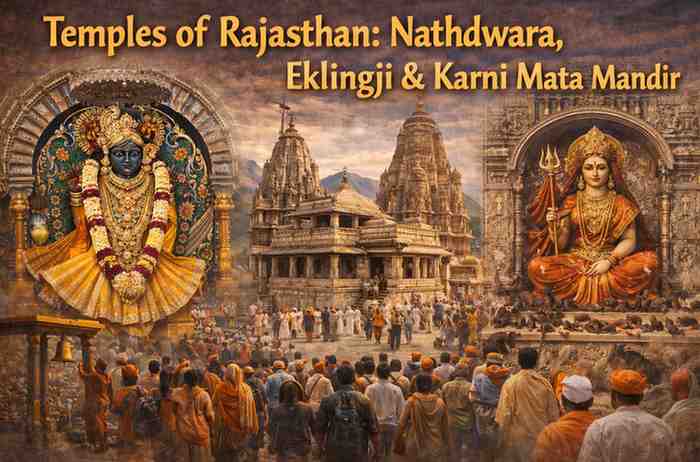
Rajasthan is a land rich in royal heritage and spiritual traditions, home to some of the most ancient and architecturally magnificent temples in India. The temples of Rajasthan attract millions of devotees and tourists alike, reflecting the deep-rooted devotion, vibrant festivals, and unique cultural blend of the region. Among the most significant are Nathdwara Temple, renowned for the divine Krishna idol; Eklingji Temple, the revered abode of Lord Shiva; and Karni Mata Mandir, famed worldwide for its mystical rat devotees. This blog delves into their history, myths, rituals, and visitor experiences.
Also Read:- Maharashtra Temples: Shirdi, Trimbakeshwar & Pandharpur Yatra
Nathdwara Temple: The Divine Dwarkadhish
Historical Background
Built in the 17th century, the Nathdwara Temple houses the idol of Lord Krishna as Dwarkadhish (King of Dwarka). The idol was shifted here from Dwarka to protect it from Mughal invaders, turning Nathdwara into a lively center of Krishna devotion.
Architectural Style and Highlights
The temple showcases classic Rajput architecture merged with intricate carvings and a striking black stone idol of Krishna, adorned with vibrant garments and jewels. Visitors are enchanted by the evening aarti and rhythmic bhajans.
Devotional Significance and Festivals
Nathdwara pulsates with devotion, especially during Janmashtami and Holi celebrations. The Pushtimarg sect, founded by Shri Vallabhacharya, maintains the temple and upholds strict rituals.
Visiting Information
Tips for timing visits, dress code, and participating in darshan and prasadam offerings.
Eklingji Temple: The Lord Shiva’s Abode of Mewar
Mythological Origins
Eklingji Temple, located near Udaipur, is considered the ruling deity of the Mewar kingdom. Established in the 8th century and reconstructed over centuries, its legend connects the temple’s deity with divine will governing the royal family’s power.
Architectural Grandeur
A blend of Nagar style temple architecture with tall shikharas and richly sculpted pillars. The temple complex houses several smaller shrines and sacred tanks.
Religious Practices and Rituals
The temple follows Shaiva tradition with elaborate rituals conducted daily. Mewar kings historically sought the deity’s blessings before ascending the throne.
Tourist Guide
Best visiting hours, dress etiquette, and significant festivals like Maha Shivratri celebrated with great fervor.
Karni Mata Mandir: The Temple of Rats
Unique Spiritual Phenomenon
Known as the “Temple of Rats” in Deshnoke, Karni Mata Mandir is famous for its large population of rats considered sacred, believed to be reincarnated souls blessed by the goddess Karni Mata.
Historical and Cultural Context
The temple’s origin traces back to the 14th century, honoring Karni Mata, a revered female saint and incarnation of Durga. The rats, called kabbas, roam freely and are fed by devotees.
Visitor Experience
Guidelines on visiting, dos and don’ts, rituals involving the rats, and significance of spotting a white rat believed to be especially auspicious.
Mythology and Legends
Stories surrounding Karni Mata’s miracles and her vow to protect her devotees, continuing through the temple’s living traditions.
Architectural Marvels of Rajasthan’s Temples
Eklingji Temple Architecture
Eklingji Temple near Udaipur stands as a remarkable example of medieval Rajput architecture. It features a double-storied temple structure with multiple pyramidal shikharas (spire towers) crafted in the traditional Nagar style. The temple complex hosts 108 smaller shrines, richly decorated with carvings of gods and goddesses. Noteworthy are its massive silver doors and two sacred kunds (ponds), Karz Kund and Tulsi Kund, whose waters are used in temple rituals. The intricate stone craftsmanship and the sprawling temple layout embody the grandeur of the Mewar kingdom and its spiritual devotion.
Nathdwara Temple Architecture
The Nathdwara Temple, home to Shrinathji, reflects classic Rajasthani temple design with influences from Pushtimarg devotional traditions. Its central sanctum houses the black stone idol of Krishna as the young lord of Dwarka, resplendent in heavy adornments and festive attire that change seasonally. While the temple blends simplicity in form, it places emphasis on vibrant decoration, including colorful murals and embroidered canopies. The temple arrangement encourages close community worship, with emphasis on daily aartis and elaborate festivities.
Karni Mata Mandir Architecture
Karni Mata Temple in Bikaner presents a unique blend of Rajputana and Mughal architectural styles. Built largely in marble, the temple facade impresses with its intricately carved silver doors illustrating legends of the goddess Karni Mata. The temple interior hosts the idol of Karni Mata surrounded by her sisters, with ornate woodwork and marble inlays showing exceptional craftsmanship. Its open design accommodates thousands of rats regarded as sacred devotees, creating a one-of-a-kind spiritual environment. The temple has undergone enhancements over the centuries, including 20th-century contributions by prominent local artisans.
This focused architectural content showcases how the temples of Rajasthan—Eklingji, Nathdwara, and Karni Mata Mandir—reflect their religious importance through architectural innovation, artistry, and cultural history. It contributes an additional rich layer to your expansive blog on the temples of Rajasthan, blending spiritual significance with the tangible heritage and design aesthetics.
Nathdwara Temple Rituals and Festivals 2025
Daily Rituals and Darshan Schedule
Nathdwara’s Shrinathji Temple conducts elaborate rituals treating the deity as a living child. The temple opens the sanctum for darshan eight times daily, where devotees witness the idol adorned with exquisite garments and jewels. These rituals include holy bathing (Abhishek), dressing (Shringar), meals (Bhog), and rest intervals. The shrine also hosts lively aartis and singing sessions accompanied by traditional instruments, creating a devotional ambiance that uplifts every visitor’s spirit.
Major Festivals
The temple shines brightest during festivals, attracting countless pilgrims:
- Janmashtami: The birth of Lord Krishna is celebrated here with grand processions, devotional dances, and night-long bhajans. The temple and town come alive with vibrant decorations, filling the air with joy and spirituality.
- Holi: Nathdwara’s Holi celebrations are colorful and sacred, with special rituals marking the divine love of Krishna for Radha.
- Diwali and Annakuta: Marked with elaborate offerings including the mountain of food (Annakuta) presented to Shrinathji, these festivals symbolize abundance and divine grace.
- Basant Season: The forty-day spring season is considered a continuous festival, where the deity’s celebrations merge with the changing seasons.
Devotee Experience
Visitors describe darshan at Nathdwara as a deeply spiritual moment when one feels the presence of Lord Krishna intimately. The tradition of treating Shrinathji as a living being enhances the connection, making the temple a unique religious experience beyond mere sightseeing.
Tips for Visiting in 2025
Engage with local guides to understand the intricate rituals and temple history.
Plan visits around major festivals for immersive cultural experiences.
Early accommodation booking is advised during peak seasons.
Respect temple customs, dress modestly, and follow round-the-clock darshan timings.
Eklingji Temple Rituals and Festivals 2025
Daily Rituals and Worship
Eklingji Temple near Udaipur follows Shaiva traditions with a disciplined schedule of prayers. The temple opens early morning for the first aarti (4:30 AM to 6:30 AM), followed by mid-day pujas, and ends the day with evening aarti (5:00 PM to 7:30 PM). The priests perform detailed Vedic and tantric rituals, offering milk, bilva leaves, and ghee to the Shiva lingam. The Maharana of Mewar traditionally acts as the temple’s Dewan (minister), symbolizing the deity as the kingdom’s true sovereign.
Maha Shivratri Festival
The biggest celebration at Eklingji Temple is Maha Shivratri. Thousands of devotees gather to fast, worship, and participate in elaborate rituals honoring Lord Shiva. The temple is adorned with precious ornaments during the festival, and massive quantities of milk, honey, and ghee are offered in devotion. The festival is a time of spiritual rejuvenation and well-attended by locals and pilgrims from afar.
Other Festivals and Cultural Events
Eklingji also hosts festivals like Guru Purnima and the annual Harihar Dance Festival, marked by ceremonial pujas, traditional dances, and community feasts. The surrounding region celebrates Holi with vibrant processions featuring decorated elephants, horses, and folk dances, adding cultural zest to devotional activities.
Devotee Experience
Pilgrims often describe the Eklingji Temple as a center of spiritual energy and royal heritage. The temple’s rituals blend structured priest-led ceremonies with opportunities for individual worship and quiet reflection, offering a balanced spiritual atmosphere.
Visiting Information
The temple remains open for darshan from early morning to mid-morning and again in the afternoon and evening. Visitors should observe the dress codes and participate respectfully in the temple’s customs to experience its sanctity fully.
Frequently Asked Questions (FAQs) – Temples of Rajasthan
1. Which temples are included in the famous Rajasthan temple pilgrimage?
The Rajasthan temple pilgrimage often includes Nathdwara Shrinathji Temple, Eklingji Temple near Udaipur, and Karni Mata Temple in Deshnok. These temples are important spiritual destinations in Rajasthan.
2. What is Nathdwara Temple famous for?
Nathdwara Temple is dedicated to Lord Shrinathji, a form of Lord Krishna. It is one of the most sacred pilgrimage sites for devotees of Krishna and the Pushtimarg tradition.
3. Where is Eklingji Temple located?
Eklingji Temple is located near Udaipur in Rajasthan and is dedicated to Lord Shiva. The temple complex contains more than 100 shrines and is considered the spiritual protector of the Mewar kingdom.
4. Why is Karni Mata Temple famous?
Karni Mata Temple in Deshnok is famous for its thousands of sacred rats known as “kabbas.” Devotees believe seeing a white rat brings special blessings.
5. When is the best time to visit these temples?
The best time to visit Nathdwara, Eklingji, and Karni Mata temples is between October and March when the weather in Rajasthan is pleasant for pilgrimage.
6. What rituals are performed at Nathdwara Temple?
Nathdwara Temple follows the Pushtimarg tradition where several daily darshan rituals are performed, including Mangla Darshan, Shringar Darshan, Rajbhog Darshan, and Sandhya Aarti.
7. Is there a dress code for visiting these temples?
Visitors are advised to wear modest and traditional attire while visiting temples in Rajasthan as a mark of respect for religious traditions.
8. How far are Nathdwara and Eklingji temples from Udaipur?
Eklingji Temple is about 22 km from Udaipur, while Nathdwara Temple is approximately 48 km away, making it easy for pilgrims to visit both temples in one trip.
9. Are tourists allowed inside Karni Mata Temple?
Yes, tourists and pilgrims are allowed to visit Karni Mata Temple. Visitors must remove their footwear before entering the temple complex.
10. Can all three temples be visited in one Rajasthan pilgrimage trip?
Yes, many devotees plan a Rajasthan temple tour covering Nathdwara, Eklingji, and Karni Mata Temple within a few days.
Conclusion
The temples of Rajasthan are gateways to spiritual heritage and cultural magnificence. Nathdwara, Eklingji, and Karni Mata mandirs uniquely embody Rajasthan’s religious fabric through their divine presence, historic grandeur, and living legends. A pilgrimage to these temples offers not only religious fulfillment but also deep cultural immersion.
1 Comment