
Introduction
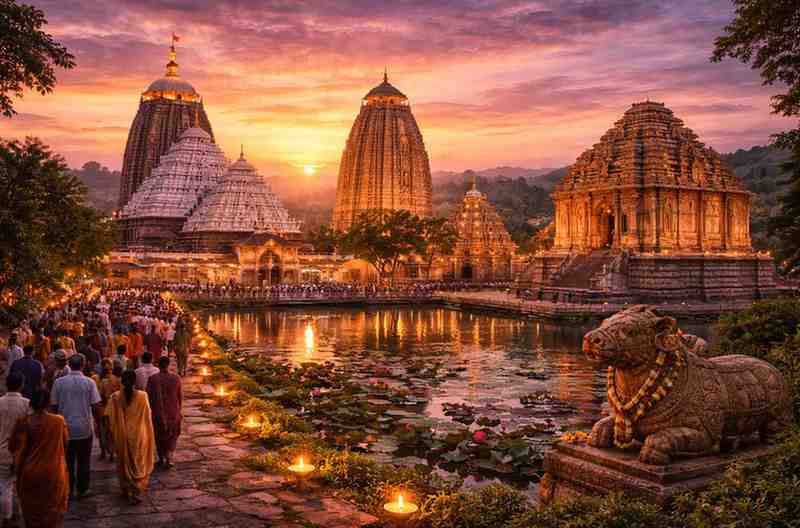
Orissa (Odisha) stands out as a land of divine architecture, spiritual bliss, and cultural heritage, especially through its iconic temple triangle—Jagannath Puri, Lingaraja Temple, and Konark Sun Temple. These temples are not only architectural marvels but also embody profound spiritual philosophies, making them the core of Odisha’s religious landscape and attracting millions of devotees and tourists every year.
Jagannath Puri: The Temple of the Lord of the Universe
Also Read :- Tirupati Balaji Temple: Darshan Booking, Timings & Dress Code 2025
Historical Background and Significance
Jagannath Temple in Puri, built in the 12th century by King Anantavarman Chodaganga of the Eastern Ganga dynasty, is one of the Char Dham pilgrimage sites. It is famous for the deity Jagannath (a form of Krishna), along with sister Subhadra and brother Balabhadra. The temple’s origins trace back to ancient Vedic traditions, with its present structure reflecting a fusion of Kalinga architecture and religious symbolism.
Architectural Features and Rituals
The temple boasts a tall Rekha Shikhara (tower), intricately carved with mythological stories and deities. Its key feature is the huge Ratha Yatra, where giant chariots exit the temple, symbolizing divine procession and community unity. Daily rituals include Mangal Aarti, Bhoga, and Niladri Bije—a grand closing ceremony honoring Jagannath’s return into the sanctum.
Cultural Impact
The Jagannath Temple is renowned for its universal appeal, attracting devotees from all socio-economic backgrounds, reaffirming Odisha’s spiritual ethos. Its influence extends into cultural music, dance, and literature.
Lingaraja Temple: The Living Heritage
Also Read :- Top Vishnu Temples in South India: Divine Abodes of Lord Narayana
Historical and Architectural Marvel
Constructed during the 11th–13th centuries, the Lingaraja Temple in Bhubaneswar epitomizes the pinnacle of Kalinga architecture. With a towering spire (Shikhara) reaching 55 meters and surrounded by numerous smaller shrines, it showcases ornate stone carvings, sculptures of deities, and mythological scenes.
Rituals and Festivities
Lingaraja is a hub of ongoing spiritual activities, from daily pujas to annual festivals like Mahashivratri and Rath Yatra. Devotees offer bel leaves, flowers, and perform Abhishekam on Shiva lingams, seeking blessings for prosperity and spiritual growth.
Spiritual Significance
It is believed that Lord Shiva resides here in a form that blesses devotees with liberation. The temple’s sanctum hall is traditionally open for daily worship, preserving age-old rituals.
Konark Sun Temple: The Artistic Sun Chariot
Also Read :- Akshardham Temple Delhi 2026: Architecture, Light Show & Darshan Guide
Architectural Grandeur and UNESCO World Heritage Site
Built in 1250 CE by King Narasimhadeva I, the Konark Sun Temple is a legendary monument designed as a massive chariot with 24 carved wheels and seven horses, symbolizing the Sun God’s journey across the sky.
Mythology and Symbolism
Dedicated to Surya, the Sun God, the temple’s architecture echoes the divine chariot of the Sun, with wheels representing the 12 months and the horses symbolizing the seven days of the week. The sculptures depict celestial dancers, deities, and themes of love, sacrifice, and eternal power.
Preservation and Festivals
Despite partial destruction over centuries, the remaining structure is a UNESCO World Heritage site. The annual Chandrabhaga Mela attracts thousands of pilgrims, emphasizing the Sun’s vital role in Odisha’s spiritual life.
Connecting the Circuit: A Pilgrimage of Inner and Outer Light
This Orissa temple triangle offers more than sightseeing; it provides a spiritual journey through the core of Odisha’s religious soul. Pilgrims often undertake the Odisha Temple Circuit, combining devotion, architecture, and cultural festivities:
- Visit Jagannath Puri during Rath Yatra to witness divine procession and community spirit.
- Explore Bhubaneswar’s temples like Lingaraja for inner spiritual reflection.
- Experience Konark Sun Festival to connect with cosmic energy and artistic marvels.
Practical Tips for Pilgrims and Tourists
- Best Time to Visit: October to March, during festivals like Rath Yatra and Sun Festival.
- Travel: Well-connected by rail and road; many organized pilgrimage tours available.
- Accommodation: From budget lodges near temples to luxury hotels in major cities.
- Local Cuisine: Savor Odishan delicacies like Kharbhaja, Dalma, and Pakhala.
Architectural Marvels of Odisha Temples: The Kalinga Style
Also Read :- Ancient Temples of India: Exploring 5,000 Years of Faith
Historical Overview of Odisha’s Temple Architecture
Odisha’s temple architecture, known as the Kalinga style, is a distinguished form of the northern Nagara style that flourished between the 6th and 16th centuries CE. This architectural tradition is marked by a unique blend of spiritual symbolism, artistic intricacy, and structural ingenuity. The style first developed during the Bhauma-Kara dynasty and was perfected by the Ganga rulers, who built grand temples like Jagannath in Puri and Konark Sun Temple.
Key Architectural Features of Kalinga Style
The temples of Odisha typically exhibit three main parts:
- Rekha Deula: The sanctum sanctorum containing the primary deity, characterized by a tall, curvilinear spire (shikhara) which tapers as it ascends. The Lingaraja Temple’s towering shikhara is a prime example of Rekha Deula.
- Pidha Deula: The assembly or gathering hall, often with a pyramidal roof made of horizontal tiers or platforms, as seen in the Jagannath Temple’s jagamohana (prayer hall).
- Khakhara Deula: A distinctive elongated, barrel-shaped temple form with a semi-cylindrical roof focusing on the worship of feminine divine energies, such as the Vaitala Temple dedicated to Goddess Chamunda.
Ornamentation and Sculpture
Odisha temples are famous worldwide for their detailed stone carvings. These carvings show myths, gods, celestial beings, flowers, and daily life scenes. They cover walls, pillars, doors, and ceilings, showcasing the state’s rich culture and devotion.
Exemplary Temples Reflecting Architectural Brilliance
- Lingaraja Temple, Bhubaneswar: An architectural masterpiece with a lofty spire rising nearly 55 meters. It combines Rekha and Pidha styles and features a symmetry and detail that encapsulates the Kalinga school’s essence.
- Jagannath Temple, Puri: Boasts a massive complex with typical Kalinga elements, serving as both a religious center and a haven for history and art enthusiasts.
- Konark Sun Temple: The chariot-like appearance, with wheels and horses sculpted in stone, symbolizing the Sun God’s divine journey across the heavens, represents the zenith of Odisha’s temple art in the 13th century.
Influence on Later Indian Temple Architecture
The sophisticated techniques of Odisha’s temple builders influenced temple architecture in neighboring regions and continue to inspire preservation and restoration worldwide. Odisha served as a critical cultural hub during medieval India, where its unique art and architecture were emblems of religious devotion and regional identity.
Festivals, Rituals, and Traditions of Odisha Temples
Also Read :- Braj Bhoomi Temple Guide: Mathura, Vrindavan & Barsana
Rath Yatra in Puri
The most famous festival in Odisha is the Rath Yatra or Chariot Festival of Jagannath Puri. Every year, the deities Jagannath, Balabhadra, and Subhadra are placed on elaborately decorated chariots and pulled through the streets by millions of devotees. This procession symbolizes the journey of the divine to meet their devotees, fostering community participation and spiritual fervor. Throughout the festival, devotees sing devotional songs and gather in large numbers, rejuvenating their faith in Lord Jagannath.
Chandan Yatra (Sandalwood Festival)
Chandan Yatra is celebrated mainly in the Jagannath temple during the hot months to cool the deities with sandalwood paste. The six-week festival comprises outdoor and indoor rituals, with the deities taken on decorated boats for ceremonial processions. This festival highlights the deep connection between devotion and nature’s seasons in Odisha.
Mahabisuva Sankranti (Odia New Year)
Also known as Pana Sankranti, this festival marks the traditional new year in Odisha. The festival involves making Pana, a sweet drink offered to the deities, along with temple rituals and acts of charity. The festival also coincides with other Vedic seasonal observances and reflects Odisha’s rich agrarian and cultural heritage.
Konark Sun Temple Festivals
Konark celebrates notable festivals like Ratha Saptami, marking the sun’s movement into Capricorn, and the Konark Dance Festival, showcasing classical Indian dances against the backdrop of the majestic temple ruins. Daily Surya Namaskar rituals are also dedicated to the Sun God, symbolizing devotion and reverence for cosmic energy.
Durga Puja and Tribal Festivals
Durga Puja lasts sixteen days in Odisha, longer than in many other states, underscoring the goddess’s importance as a protector and warrior. Odisha also hosts several tribal festivals involving traditional dances like Dhemsa and community feasts that blend indigenous culture with Hindu traditions.
Daily Rituals and Temple Etiquette
These ceremonies connect devotees to the cycles of devotion and maintain the temple’s spiritual energy. Visitors adhere to traditional dress and ceremonial decorum while participating in pujas and darshans to preserve sanctity and cultural integrity.
Frequently Asked Questions – The Orissa Temple Triangle
1. What is the Orissa Temple Triangle?
The Orissa Temple Triangle refers to the sacred circuit of Puri, Bhubaneswar, and Konark, home to the Jagannath Temple, Lingaraj Temple, and Sun Temple.
2. Which temples are part of this sacred circuit?
The three main temples are Jagannath Temple in Puri, Lingaraj Temple in Bhubaneswar, and the Sun Temple in Konark.
3. Why is the Orissa Temple Triangle spiritually important?
This circuit represents the divine trinity of Vishnu, Shiva, and Surya, making it a powerful spiritual journey for devotees.
4. How many days are needed to cover the circuit?
Ideally, 3 to 4 days are sufficient to visit all three temples comfortably.
5. What is the best time to visit these temples?
October to March is the best time due to pleasant weather. Rath Yatra in Puri is especially auspicious.
6. Can non-Hindus enter all temples?
Non-Hindus are not allowed inside Jagannath Temple, but they can view it from outside. Other sites are open to all.
7. Is this circuit suitable for family travel?
Yes, the Orissa Temple Triangle is family-friendly with good roads, hotels, and guided tours.
8. What rituals are commonly performed?
Devotees perform darshan, offer prayers, take holy dips, and participate in temple aartis.
9. Are guided tours available?
Yes, both government and private operators offer guided spiritual tours covering all three destinations.
10. What makes this yatra unique?
The circuit unites three powerful deities and centuries of temple heritage, offering a complete spiritual and cultural experience.
Conclusion
The Orissa Temple Guide curated around the sacred triangle encapsulates a blend of devotion, history, and architecture unmatched in India. These temples are living symbols of Odisha’s cultural grandeur, offering a deep spiritual experience amidst divine artistry. Whether you seek spiritual awakening, architectural marvels, or cultural immersion, this pilgrimage promises profound fulfillment and timeless memories.
2 Comments