
Introduction
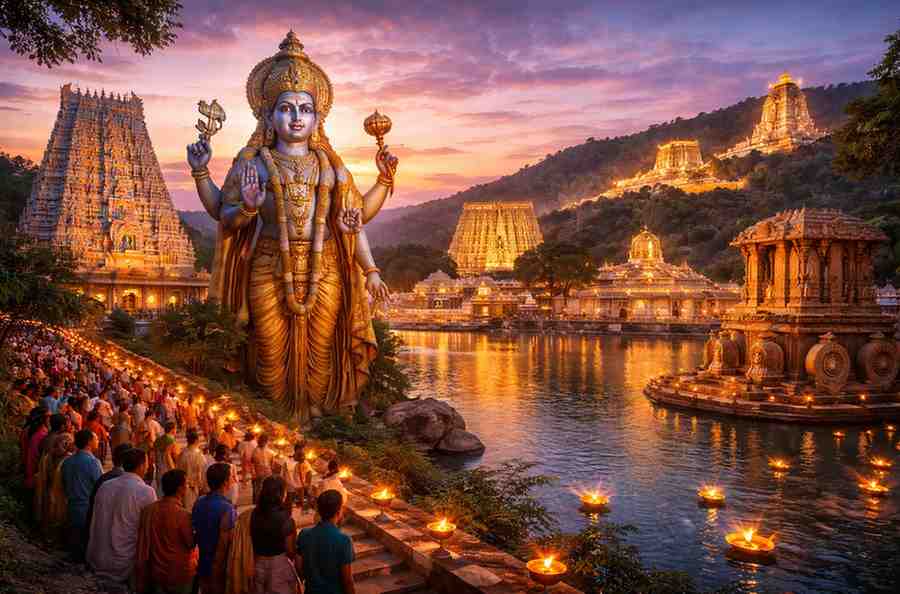
South India is renowned for its magnificent Vishnu temples, which are not only centers of profound spiritual devotion but also architectural marvels showcasing the grandeur of Dravidian temple architecture. Revered as divine abodes of Lord Narayana, an incarnation of Lord Vishnu, these temples serve as pilgrimage destinations celebrated for their ancient history, intricate sculptures, and vibrant festivals. This comprehensive blog explores the top Vishnu temples in South India, highlighting their significance, unique features, legends, and practical travel guidance for devotees aiming to experience the divine presence of Lord Vishnu.
Also Read :- Akshardham Temple Delhi 2026: Architecture, Light Show & Darshan Guide
Significance of Vishnu Temples in South India
The Vishnu temples of South India hold immense religious importance, as Lord Narayana is worshipped here in various forms, including Ranganatha, Venkateswara, Padmanabha, and Krishna. These temples are often listed as Divya Desams, dedicated divine shrines praised by the Alwar saints in Tamil Vaishnavism. Beyond spirituality, these temples have played a vital role in fostering regional art, music, and cultural traditions while standing as symbols of enduring faith across centuries.
Architectural Grandeur of South Indian Vishnu Temples
South Indian Vishnu temples are predominantly built in the Dravidian architectural style characterized by towering gopurams (gateway towers), spacious mandapas (pillared halls), intricate carvings, and vast temple complexes. The temples traditionally feature a sanctum (garbhagriha) housing the main deity, surrounded by concentric prakaras (enclosures) adorned with sculptures of gods, goddesses, and mythical creatures. They also include water tanks, temple chariots, and halls for various rituals and cultural activities.
Top Vishnu Temples in South India
Also Read :- Ancient Temples of India: Exploring 5,000 Years of Faith
1. Sri Ranganathaswamy Temple, Srirangam, Tamil Nadu
- Significance: The largest functioning Hindu temple complex in the world, dedicated to Lord Ranganatha (reclining Vishnu).
- Architecture: Exemplifies Dravidian style with 21 gopurams, vast corridors, and exquisite sculptures.
- Festivals: Celebrates Vaikunta Ekadashi with grand processions drawing millions of pilgrims.
- Travel Tips: Well connected by rail and road; best visiting season from October to March.
2. Sri Venkateswara Temple, Tirupati, Andhra Pradesh
- Significance: Also called Tirupati Balaji temple, it is one of the richest and most visited temples dedicated to Lord Venkateswara (an avatar of Vishnu).
- Architecture: Built in Dravidian style with richly decorated mandapas and a majestic rajagopuram.
- Festivals: Brahmotsavam, the annual festival, is a spectacular event attracting global devotees.
- Travel Tips: Connectivity via Tirupati Airport and railway station; crowded during festivals.
3. Sri Padmanabhaswamy Temple, Thiruvananthapuram, Kerala
- Significance: Lord Vishnu is worshipped here as Padmanabha, reclining on the serpent Ananta. Famous for vast treasure discovered in its vaults.
- Architecture: Combines Kerala style with Dravidian elements; notable for wood carvings and mural paintings.
- Festivals: Annual bi-annual celebrations with elaborate rituals.
- Travel Tips: Accessible via Trivandrum International Airport and local transport.
4. Guruvayur Temple, Kerala
- Significance: Dedicated to Lord Krishna (Vishnu avatar), revered as Bhuloka Vaikuntha (heaven on earth).
- Architecture: Traditional Kerala temple architecture with a golden roof and elephant sanctuary.
- Festivals: Celebrates Guruvayur Ekadashi and Krishna Janmashtami with vibrant festivities.
- Travel Tips: Well connected by road and rail; nearest airport is Kochi.
5. Kallazhagar Temple, Madurai, Tamil Nadu
- Significance: Dedicated to Lord Vishnu’s form as Kallazhagar (Alagar), famous for the celestial wedding reenactment during Chithirai Festival.
- Architecture: Exemplifies exquisite Dravidian style with ornate gopurams and pillared halls.
- Festivals: Chithirai Festival draws thousands of devotees annually.
- Travel Tips: Madurai airport and railway station facilitate easy access.
6. Sarangapani Temple, Kumbakonam, Tamil Nadu
- Significance: One of the Pancharanga Kshetrams; Lord Vishnu is worshipped as Sarangapani (Lord with a bow).
- Architecture: Huge Dravidian temple complex with a 12-story rajagopuram.
- Festivals: Annual float festival and Vaikunta Ekadashi are major draws.
- Travel Tips: Kumbakonam is connected by rail and road.
7. Ulagalantha Perumal Temple, Kanchipuram, Tamil Nadu
- Significance: Dedicated to Lord Vishnu’s Vamana avatar; famous for its unique depiction of Lord Narasimha extending across the temple grounds.
- Architecture: Dravidian style with beautifully carved vimanam and mandapas.
- Festivals: Celebrates major Vaishnavite festivals, including Brahmotsavam.
- Travel Tips: Accessible via Kanchipuram Railway Station and Chennai Airport.
Legends and Spiritual Stories Around These Temples
Each Vishnu temple in South India carries unique legends highlighting divine interventions, miracles, and episodes from the epics Ramayana and Mahabharata. For example, the Sri Ranganathaswamy Temple is linked to Lord Rama’s devotion during his exile, while Tirupati Balaji temple is associated with Lord Vishnu’s pledge to help humanity during Kaliyuga.
Pilgrimage and Devotional Practices
Pilgrims visiting these temples participate in rituals like abhishekam (holy bathing of the deity), archana (chanting of names), and prasad distribution. Many undertake the pilgrimage as part of the Vaishnava tradition, aiming for spiritual upliftment, blessings, and relief from worldly troubles.
Practical Travel Guide
- Best Time to Visit: October to March avoids monsoon and summer heat.
- Transportation: Easily accessible by trains, flights, and state roadways with good hospitality infrastructure.
- Accommodation: Temples offer dharmshalas and nearby hotels provide various comfort levels.
- Tips: Advance booking during festivals is recommended due to large crowds.
Cultural Importance and Festivals
Vishnu temples in South India are hubs of classical music, dance, and religious literature. Festivals like Vaikunta Ekadashi, Brahmotsavam, and Krishna Janmashtami celebrate religious fervor with processions, devotional music (bhajans, kirtans), and traditional dance performances like Bharatanatyam.
Historical Background of Vishnu Worship in South India
The worship of Lord Vishnu in South India dates back to ancient times, with inscriptions and temple remains tracing back over two millennia. The Bhakti movement from the early medieval period saw the rise of devoted Alwar saints whose hymns exalted Vishnu’s many forms, leading to the establishment and patronage of numerous temples. Royal dynasties such as the Pallavas, Cholas, and Vijayanagara rulers greatly contributed to the construction, expansion, and artistic flourishing of Vishnu temples. These temples served as centers of not just worship but social and cultural life, forging lasting legacy evident today.
Symbolism in Vishnu Temple Architecture
Vishnu temples in South India embody profound symbolism:
- Garbhagriha (Sanctum Sanctorum): Houses the main idol of Lord Narayana, symbolizing the cosmic womb and divine essence.
- Gopurams (Gateway Towers): Tall, intricately carved towers mark the temple’s boundaries, symbolizing spiritual ascent and cosmic connection.
- Mandapas (Halls): Spaces for congregational worship, music, and dance embodying community participation in divine celebration.
- Temple Tanks: Water bodies serve both ritual purification and metaphoric cleansing of the soul.
This symbolism intertwines architecture with theology, inviting devotees into a sacred narrative of creation, preservation, and spiritual awakening.
Lesser-Known Vishnu Temples Worth Visiting
1. Sri Andal Temple, Srivilliputhur, Tamil Nadu
- Dedicated to the divine poetess Andal, an incarnation of Goddess Lakshmi and a devotee of Lord Vishnu.
- Known for its distinctive tower with images from Andal’s devotional poetry.
2. Srirangam Oppiliappan Temple, Tamil Nadu
- Renowned as one of the Pancharanga Kshetrams, worshiping Lord Ranganatha in his form as Oppiliappan.
- Celebrated for its elaborate food offerings and strict rituals.
3. Thiruvahindrapuram Divya Desam, Tamil Nadu
- A less frequented Divya Desam featuring unique legends of Lord Vishnu’s protection and blessings.
- Combines serene ambience with architectural finesse.
Festivals Celebrated at Vishnu Temples in South India
Vaikunta Ekadashi
Celebrated with grand processions marking the opening of the divine “Vaikunta Dwaram” (Heaven’s gateway). Devotees observe fasts and perform all-night vigils to invoke Lord Vishnu’s blessings.
Brahmotsavam
A week-long festival showcasing chariot processions, classical music, dance recital, and communal feasts, famously observed at Tirupati and Srirangam.
Krishna Janmashtami
Especially significant in Krishna temples like Guruvayur, it celebrates the birth of Lord Krishna with devotional singing, dramas, and cultural activities.
Also Read :- Braj Bhoomi Temple Guide: Mathura, Vrindavan & Barsana
Art and Cultural Influence of Vishnu Temples
South Indian Vishnu temples have inspired classical art forms including:
- Carnatic Music: Many kritis (compositions) praise Lord Vishnu and are performed within temple enclosures.
- Bharatanatyam Dance: Temples serve as stages for traditional dance narratives depicting Vishnu’s avatars and legends.
- Temple Sculptures: Intricately carved panels narrate stories from the Ramayana, Mahabharata, and Puranas, serving as visual scripture.
These artistic expressions reinforce spiritual teachings while sustaining India’s rich cultural tapestry.
Devotee Experiences and Spiritual Practices
Pilgrims visiting Vishnu temples recount profound experiences of peace, healing, and divine grace. Temple priests often guide personalized rituals including homas (fire sacrifices), abhishekams (ritual bathing), and prasad distribution. Many devotees undertake vrata (fasting) or pilgrimages aligned with astrological timings to deepen their connection with Lord Narayana.
Eco-Spiritual Initiatives in Temple Management
Modern initiatives include eco-friendly practices like rainwater harvesting within temple tanks, organic flower offerings, and waste management protocols during festivals. These sustainable practices reflect a growing awareness of environmental stewardship aligned with temple philosophies of harmony with nature.
Travel Tips for Vishnu Temple Pilgrimage in South India
- Advance Planning: Festivals see spike in visitors; early accommodation booking is essential.
- Local Transportation: Many temples offer shuttle services; use local guides for rich experiences.
- Cultural Etiquette: Follow dress codes, remove footwear, respect photography restrictions, and participate respectfully in rituals.
- Health Precautions: Carry water, light snacks, and medications; be prepared for crowded spaces.
Prominent Vishnu Temples by Region
| State | Famous Vishnu Temples | Notable Features |
|---|---|---|
| Tamil Nadu | Srirangam, Tirupati, Kanchipuram | Large temple complexes, festivals |
| Kerala | Padmanabhaswamy, Guruvayur | Unique Kerala architecture, Krishna worship |
| Andhra Pradesh | Tirupati, Srikalahasti | Rich temple patronage, legends |
| Karnataka | Melukote, Udupi | Famous for Dasa literature, rituals |
Top Vishnu Temples in South India – FAQs
Q1. Which are the most famous Vishnu temples in South India?
The most famous Vishnu temples in South India include Tirupati Balaji (Andhra Pradesh), Ranganathaswamy Temple (Srirangam), Padmanabhaswamy Temple (Kerala), Udupi Krishna Temple (Karnataka), and Divya Desams across Tamil Nadu.
Q2. Why is Tirupati Balaji considered the richest Vishnu temple?
Tirupati Balaji is known as the richest Vishnu temple due to massive daily donations from devotees, including gold, cash, and offerings made to Lord Venkateswara.
Q3. What are Divya Desams in South India?
Divya Desams are 108 sacred Vishnu temples glorified in the hymns of Alwars. Most of these holy shrines are located in Tamil Nadu and form an important pilgrimage circuit.
Q4. Which Vishnu temple in South India is dedicated to Ananta Shayana?
The Padmanabhaswamy Temple in Thiruvananthapuram is dedicated to Lord Vishnu in the Ananta Shayana (reclining) form on the serpent Adi Shesha.
Q5. When is the best time to visit Vishnu temples in South India?
October to March is the best time to visit Vishnu temples in South India due to pleasant weather and easier travel conditions.
Q6. Are there any dress codes for Vishnu temples?
Yes, most Vishnu temples in South India follow a modest dress code. Men are often required to wear dhoti or mundu, and women should wear sarees or salwar suits.
Q7. Which is the largest Vishnu temple complex in South India?
Srirangam Ranganathaswamy Temple in Tamil Nadu is the largest functioning Hindu temple complex dedicated to Lord Vishnu.
Q8. Can foreigners visit Vishnu temples in South India?
Most Vishnu temples allow foreign visitors, though some inner sanctums may have restrictions. It is advisable to check temple rules before entry.
Q9. What rituals are common in Vishnu temples?
Common rituals include Suprabhatam, Abhishekam, Archana, Sahasranama chanting, and special seva offerings to Lord Narayana.
Q10. What makes South India special for Vishnu devotees?
South India is home to ancient Vishnu temples, Divya Desams, rich Vaishnava traditions, and powerful pilgrimage circuits that make it spiritually significant for devotees of Lord Narayana.
Conclusion
The Vishnu temples of South India reflect a harmonious blend of spirituality, art, and culture. They offer devotees an immersive experience of ancient traditions, divine grace, and architectural splendor. Visiting these divine abodes of Lord Narayana is a journey of faith, cultural enrichment, and inner peace, inviting all to explore the spiritual heritage of South India.
3 Comments