
Introduction
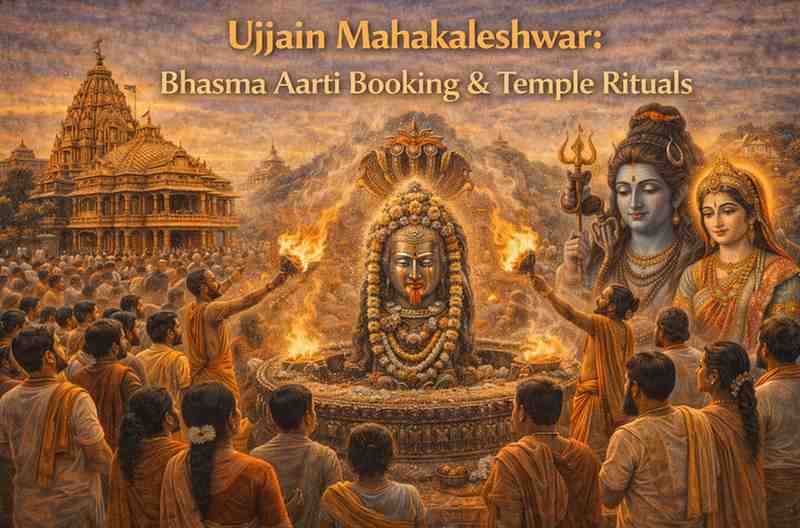
Ujjain Mahakaleshwar temple is one of the twelve Jyotirlingas and is revered as the spiritual heart of Ujjain, Madhya Pradesh. Dedicated to Lord Shiva in his fierce form as Mahakaleshwar—the Lord of Time and Death—the temple is especially famous for its unique Bhasma Aarti ritual, drawing devotees seeking divine blessings and spiritual purification. Bhasma Arti at the temple continues to be a significant attraction, with the year 2025 seeing continued traditions of Bhasma Aarti alongside temple rituals, festivals, and darshan practices, making it a divine destination for spiritual seekers.
Also Read :- 12 Jyotirlinga Temples in India: Complete Darshan & Travel Guide
Historical Significance and Mythology of Mahakaleshwar
The origins of the Mahakaleshwar temple trace back to ancient Sanskrit texts like the Matsya Purana, with its establishment linked to divine intervention when Lord Shiva appeared to protect Ujjain from invading forces by manifesting as the Mahakal Jyotirlinga. The temple has endured through medieval reconstructions, royal patronage under the Paramaras, and foreign invasions, maintaining an unbroken legacy of sanctity and devotion.
Also Read :- Temples of Love: Sacred Shrines Dedicated to Divine Couples
The Unique Bhasma Aarti Ritual
The temple priests conduct the Bhasma Aarti daily between 4:00 AM and 6:00 AM, adorning the Shiva Linga with bhasma (sacred ash), which symbolizes the transient nature of life and the cycle of creation and destruction. This ancient Vedic ceremony provides devotees with a glimpse into timeless spiritual traditions that embody Lord Shiva’s power over life and death. Pilgrims from across India and abroad consider witnessing the Bhasma Aarti a profound spiritual experience.
How to Book Bhasma Aarti Darshan in 2025
Booking Process
Devotees must book Bhasma Aarti tickets in advance due to high demand and limited availability. The booking can be done:
- Online: Visit the official Mahakaleshwar temple website and click on the “Bhasma Aarti Booking” link. Select the preferred date and complete the payment process. The ticket price online is approximately ₹200 per person.
- Offline: Limited tickets are available at the temple’s authorized counters for ₹100 per person. Booking offline is recommended a day prior to your visit to avoid unavailability.
Important Instructions for Visitors
- Arrive by 3:30 AM on the day of the ceremony to access the premises via the Neelkanth Gate.
- Carry original photo ID and a printed copy of the booking receipt.
- Follow the prescribed dress code to maintain sanctity.
- Maintain silence and discipline during the ritual to enhance the spiritual atmosphere.
Other Daily Rituals and Darshan Timings
Also Read :- Gujarat Temple Tour: Exploring Somnath, Dwarka & Ambaji Circuit
The temple remains open for darshan from 4:00 AM to 11:00 PM daily. Apart from Bhasma Aarti, other rituals include:
- Dadyodak Aarti (Morning Aarti): 7:00 AM to 7:30 AM
- Bhog Aarti: 10:00 AM to 10:30 AM
- Sandhya Puja (Evening Aarti): 5:00 PM to 5:30 PM
- Shri Mahakal Aarti (Night Aarti): 7:00 PM to 7:30 PM
- Shayan Aarti (Night Sleep Aarti): 10:30 PM to 11:00 PM
Festival Celebrations at Mahakaleshwar Temple
Also Read :- Madhya Pradesh Temple Trail: A Journey through Khajuraho, Omkareshwar & Mahakaleshwar
Mahakal Shahi Sawari (July-August 2025)
Held on all Sawan (Shravan) Mondays in 2025, this royal procession takes the idol of Lord Mahakal through Ujjain streets in an ornately decorated palanquin, enabling devotees to seek blessings. The event depicts Lord Shiva’s divine presence as the ruling king of Ujjain and attracts massive crowds, combining spirituality with cultural grandeur.
Maha Shivaratri and Other Hindu Festivals
Devotees celebrate Maha Shivaratri with night-long vigils, perform special poojas, and organize cultural programs. Other festivals like Navratri and Shravan Months bring additional energy and festivities to the temple premises.
Also Read :- Eco Temples of India: Sustainable Shrines Protecting Nature
Temple Architecture and Spiritual Experience
The Mahakaleshwar temple complex is an architectural marvel with intricate carvings, the self-manifested Jyotirlinga idol, and majestic temple halls. Visiting the temple offers a deeply spiritual ambience where the energy of devotion and ancient rituals is palpable. Pilgrims often report transformative spiritual experiences during darshan and aarti.
Accommodation and Travel Tips
- Nearest Airport: Devi Ahilya Bai Holkar Airport, Indore (about 55 km from Ujjain)
- Railway Station: Ujjain Junction connects with major Indian cities.
- Stay: Various hotels and dharmshalas around the temple cater to different budgets. Advance booking during festivals is recommended.
- Local Transport: Auto-rickshaws and taxis connect the temple to nearby localities.
Tips for a Successful Darshan and Bhasma Aarti Experience
- Book Bhasma Aarti tickets well in advance via official portals or authorized counters.
- Arrive early and adhere to timings strictly to avoid missing the ritual.
- Respect temple protocols, including the dress code and silence during the Aarti.
- Carry light belongings to facilitate smooth movement through crowds.
Detailed Significance of Mahakaleshwar Jyotirlinga
Devotees consider Mahakaleshwar the most powerful among the twelve Jyotirlingas and regard its swayambhu (self-manifested) lingam as representing Lord Shiva’s role as the controller of time and death. This temple holds a unique position in Shaivism, symbolizing the eternal cycle of creation and destruction. Devotees believe that worshipping here can bring liberation from the cycle of rebirth and grant protection from untimely death.
Spiritual Dimensions of Bhasma Aarti
The Bhasma Aarti is deeply symbolic, reflecting the philosophies of renunciation and impermanence in Hindu theology. The sacred ash (bhasma) used during the ritual originates from burnt dried cow dung and represents purity and detachment from material existence. The ritual reminds devotees of the transient body and encourages surrender to Lord Shiva’s divine will. Devotees consider participating in or witnessing the Bhasma Aarti an opportunity for spiritual cleansing and renewal.
Exclusive VIP and Special Darshan Options for 2025
To accommodate the growing number of devotees, Mahakaleshwar temple management has introduced VIP darshan packages that offer:
- Priority entry during peak hours and festival seasons.
- Special guided darshan experiences with temple scholars explaining the rituals and history.
- Access to private viewing galleries for the Bhasma Aarti.
- Customized ritual participation sessions on request.
Devotees can book VIP darshan online through the official Mahakaleshwar temple website or through authorized pilgrimage tour operators.
Important Rituals Besides Bhasma Aarti
- Rudrabhishek: A holy bath performed on the Shiva Linga with water, milk, honey, and other sacred substances, believed to invoke Shiva’s blessings for health and prosperity.
- Mahanyasa Purvaka Abhisheka: A complex Vedic ritual involving the chanting of hymns and gradual purification of the lingam.
- Offering of Bilva Leaves: The Bilva (Bel) leaf is sacred to Lord Shiva and offered in large quantities during various offerings.
These rituals form an integral part of the temple’s daily worship and festival celebrations.
Accommodation and Nearby Attractions
- Accommodation: Ujjain provides a broad spectrum of lodging, from basic dharamshalas to premium hotels near the temple. Visitors often prefer staying near the Mahakaleshwar temple for easy access.
- Nearby Attractions: Besides Mahakaleshwar, Ujjain hosts several other sacred sites, including the Kshipra River Ghats, Kal Bhairav Temple, Harsiddhi Temple, and Ram Ghat. Pilgrims often combine visits to these places to enrich their spiritual journey.
Accessibility and Transportation in Detail
- By Air: The nearest airport is Devi Ahilya Bai Holkar Airport in Indore, approximately 55-60 km from Ujjain.
- By Rail: Ujjain Junction is well-connected to major cities like Delhi, Mumbai, and Bhopal via regular trains.
- By Road: State highways and frequent bus services connect Ujjain with prominent cities in Madhya Pradesh and neighboring states.
- Local Transport: Auto-rickshaws, private taxis, and app-based cabs provide connectivity within Ujjain city.
Dress Code and Etiquette for Visitors
Temple authorities request visitors to wear modest traditional attire such as sarees, dhotis, or kurta-pajamas to respect the sanctity of Mahakaleshwar temple. Visitors must remove footwear before entering the temple premises. The temple prohibits photography inside the sanctum sanctorum and during the Bhasma Aarti. Silence and decorum help maintain the spiritual atmosphere.
Environmental and Social Initiatives
The Mahakaleshwar temple administration actively leads cleanliness drives, manages waste, and promotes eco-friendly practices during large gatherings, especially festivals. They also support local communities by employing residents as temple staff, guides, and accommodation hosts, fostering sustainable tourism.
Testimonials from Devotees
Many devotees share transformative experiences after visiting Mahakaleshwar and witnessing the Bhasma Aarti. They speak of feeling a profound inner calm, healing energy, and a renewed commitment to spiritual living. The ritual’s intense sights and sounds evoke deep reverence for Lord Shiva and inspire lifelong devotion.
Historical Legacy of Mahakaleshwar Temple
Mahakaleshwar temple stands as a living testament to centuries of devotion and resilience. Hindu mythology recounts that Prajapati Brahma first established a Shiva shrine at this location. Over time, various dynasties including the Paramaras and Marathas have contributed to its reconstruction and embellishment, with the current structure showcasing a blend of Maratha, Chalukya, and Bhumija architectural styles. Despite facing attacks and destruction during invasions by rulers like Iltutmish and Jalaluddin Khilji, the temple has risen repeatedly, reinforcing its spiritual and cultural importance.
Mythology and Legends
According to legend, King Chandrasena of Ujjain was a fervent devotee of Shiva. A young boy named Shrikhar, inspired by the king’s devotion, began worshipping a stone symbolizing Lord Shiva. Although initially rejected, his unwavering faith eventually led Lord Shiva to manifest as the Jyotirlinga at this place to protect the city from invading forces. The temple also forms one of the 18 Maha Shakti Peethas, connected with the story of Sati Devi’s body parts falling to Earth.
Spiritual Importance and Pilgrimage
Devotees regard Mahakaleshwar as the shrine of eternal moksha—a gateway to liberation from the cycle of birth and death. The swayambhu Jyotirlinga here is a powerful symbol of Shiva’s cosmic role as Mahakala, the Lord of Time and Death. Pilgrimage to this temple is considered highly auspicious, especially during festivals like Maha Shivaratri and Sawan Somwar, when massive crowds attend the Bhasma Aarti and other rituals.
Architectural Grandeur
The temple’s architectural aura captivates visitors with its towering shikhar, intricate carvings, and massive multi-storied construction. The design reflects a unique synthesis of Maratha’s robust style with the delicate elegance of Chalukya and Bhumija elements. The imposing temple complex houses several shrines, halls, and sacred tanks, all contributing to a holistic spiritual and artistic experience.
Contemporary Cultural Impact
Beyond spirituality, Mahakaleshwar temple continues to influence local culture through festivals, religious music, traditional dances, and community gatherings. The temple integrates modern governance with traditional administration, maintaining its status as a vibrant hub for devotees and cultural discourse.
Recent Developments and Renovation Projects
In 2025, the Mahakaleshwar temple complex has undergone significant beautification and expansion under the Mahakal Lok Corridor project, aimed at increasing the temple’s premises from approximately 2.82 hectares to 47 hectares. This vast development plan is executed in phases by the Ujjain district administration, incorporating the expansion of the Rudrasagar lake and upgrading temple facilities to accommodate the growing number of pilgrims, estimated to increase from 1.5 crores to nearly 3 crores annually.
Environmental and Urban Management Efforts
The temple area recently witnessed government-led actions to remove illegal encroachments around the premises, especially in the Begumbagh locality. These actions are part of broader efforts to ensure smooth crowd management, enhance the spiritual environment, and improve infrastructure around the temple.
Social and Legal Issues
In 2025, a notable legal event involved the Supreme Court upholding the Madhya Pradesh high court ruling relating to the demolition of a 200-year-old mosque near the temple grounds. The case stirred discussions on religious rights versus urban development for enhancing the Mahakal Lok complex, reflecting the delicate balance between heritage conservation and infrastructure modernization.
Temple Safety and Incident Management
A minor fire broke out at the Mahakaleshwar temple in May 2025, causing injuries to several priests. Prompt action ensured no major damage occurred. The temple committee has since heightened safety measures, including fire prevention protocols, to protect the sanctity and visitors’ safety.
Community Engagement and Spiritual Tourism
The temple administration actively promotes spiritual tourism through regular cultural programs, wellness summits, and community-oriented festivals. These events bolster local economy and encourage holistic visitor experiences combining devotion, wellness, and cultural immersion.
Looking Forward: Vision for Mahakaleshwar Temple
The temple’s ongoing projects emphasize sustainable development, spiritual enrichment, and accessibility. Future plans include enhanced digital ticketing, improved accommodations for pilgrims, eco-friendly initiatives, and enriched cultural offerings to maintain Mahakaleshwar’s status as a premier spiritual destination in India.
Frequently Asked Questions (FAQs) – Ujjain Mahakaleshwar Temple
1. What is the Mahakaleshwar Temple in Ujjain?
Mahakaleshwar Temple is one of the twelve Jyotirlinga temples of Lord Shiva and is located in Ujjain, Madhya Pradesh. It is one of the most sacred pilgrimage sites for Shiva devotees.
2. What is the Bhasma Aarti at Mahakaleshwar Temple?
Bhasma Aarti is a special early morning ritual where sacred ash (bhasma) is offered to Lord Mahakal during the aarti ceremony.
3. How can devotees book the Bhasma Aarti?
Devotees can book the Bhasma Aarti online through the official Mahakaleshwar Temple website or through the temple administration in Ujjain.
4. What time does the Bhasma Aarti take place?
The Bhasma Aarti is performed early in the morning, usually around 4:00 AM, before sunrise.
5. Is there a dress code for attending Bhasma Aarti?
Yes, men must wear traditional dhoti without upper garments, while women are required to wear saree or traditional attire.
6. Why is Mahakaleshwar Jyotirlinga unique?
Mahakaleshwar is the only south-facing Jyotirlinga and is believed to protect devotees from negative energies and untimely death.
7. What are the main rituals performed at Mahakaleshwar Temple?
Major rituals include Bhasma Aarti, Rudrabhishek, Shiva Abhishekam, and various daily aartis dedicated to Lord Shiva.
8. When is the best time to visit Mahakaleshwar Temple?
The best time to visit is between October and March. Festivals like Maha Shivaratri and the Shravan month attract large numbers of devotees.
9. Is Mahakaleshwar part of the Jyotirlinga pilgrimage?
Yes, Mahakaleshwar in Ujjain is one of the twelve sacred Jyotirlingas of Lord Shiva in India.
10. Can devotees attend Bhasma Aarti without prior booking?
No, due to the high number of pilgrims, prior booking or registration is usually required to attend the Bhasma Aarti.
Conclusion
The Mahakaleshwar temple in Ujjain offers a unique blend of ancient tradition, spiritual fervor, and architectural grandeur. The revered Bhasma Aarti is a highlight of devotion, symbolizing Lord Shiva’s cosmic role. With its rich history, vibrant festivals, and sacred rituals, Mahakaleshwar temple 2025 continues to inspire and uplift millions of devotees, making it a must-visit spiritual sanctuary.

12 Comments