
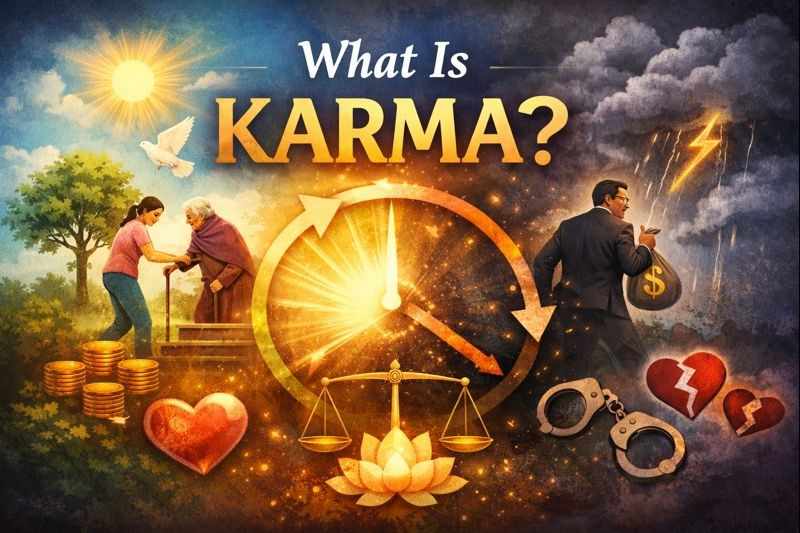
Introduction: Understanding Karma Without Confusion
The word Karma is often used casually in daily conversations. People say things like, “Don’t worry, Karma will catch up,” or “That’s just Karma.” While these phrases sound simple, the actual meaning goes much deeper than instant reward or punishment.
In simple terms, Karma is the universal principle of cause and effect. Every action, thought, and intention creates an outcome—either now or in the future. This idea comes from ancient Indian philosophy and is deeply rooted in Hinduism, Buddhism, and Jainism, yet it applies universally to all human beings.
This blog explains Karma in very simple language, using relatable examples, practical explanations, and spiritual clarity—so even someone new to spirituality can fully understand how it works.
Also Read :- March 2026 Vrat & Fasting Calendar: Ekadashi, Shivratri & Sankashti
What Is Karma in Simple Terms?
Karma means action.
Every action you perform—whether physical, verbal, or mental—creates a reaction.
Good actions bring positive results.
Negative actions bring challenges or lessons.
Karma is not fate. It is not punishment. It is a natural law, just like gravity. You don’t need to believe in Karma for it to work—it simply does.
Think of it like planting seeds:
- Plant mango seeds → you get mangoes
- Plant thorny seeds → you get thorns
The universe works the same way.
Also Read :- All Ekadashi of the Year 2026 — Dates, Muhurat, Significance, Fasting Rules & Global Parana Timings
The Origin and Meaning of Karma
The concept of Karma comes from Sanskrit, where the word literally means “to do” or “to act.” Ancient Vedic texts explained that human life is shaped by accumulated actions across time.
Unlike modern misunderstandings, Karma was never meant to scare people. Instead, it was meant to empower individuals by teaching them that their future is shaped by their present choices.
How Karma Works in Everyday Life
Every action we perform—whether physical, verbal, or mental—creates an effect. This cause-and-effect principle explains why certain experiences repeat in our lives while others fade away. Karma is not about immediate rewards or punishments; it works through time, intention, and awareness. Small daily choices, such as how we speak to others or respond to challenges, quietly shape our future circumstances.
When actions are driven by kindness, honesty, and responsibility, the results tend to be supportive and peaceful. When actions come from anger, greed, or deception, the outcomes often create obstacles or lessons that push us toward growth.
Also Read :- Astrology Signs and Personality Traits: A Complete Guide to the 12 Zodiac Signs
Types of Karma Explained Simply
Ancient wisdom explains that actions accumulate in different ways. Some consequences appear quickly, while others remain dormant until the right moment. Understanding this helps explain why life may feel unfair at times.
Stored actions from the past influence present situations, while current behavior creates future outcomes. This cycle continues until awareness breaks unconscious patterns. By choosing mindful actions today, individuals reduce the weight of past mistakes and shape a more balanced tomorrow.
Also Read :- Astrology Houses Explained: A Simple Guide to the 12 Houses in Astrology
Why Good People Face Difficult Situations
One of the most common questions people ask is why sincere and ethical individuals still experience hardship. The answer lies in accumulated actions that are still unfolding. Not every challenge reflects present behavior; some experiences exist to bring maturity, patience, or emotional strength.
Rather than viewing struggles as punishment, they can be seen as opportunities for learning and inner development. This perspective transforms suffering into wisdom and resentment into acceptance.
Can Karma Be Changed or Reduced?
While past actions cannot be erased, their impact can be softened. Conscious living, service to others, humility, and personal responsibility play a major role in reshaping outcomes. When a person acts with awareness instead of impulse, they stop creating negative cycles.
Positive effort does not cancel past mistakes instantly, but it changes the direction of life. Over time, repeated right actions weaken old patterns and create stability, peace, and clarity.
The Role of Intention Behind Actions
Intentions matter as much as actions themselves. Helping someone for recognition creates a different result than helping out of compassion. The inner motivation behind choices determines the quality of outcomes.
When intentions are pure, even small actions carry powerful positive effects. When motives are selfish, even large gestures may bring inner dissatisfaction. Awareness of intention brings emotional balance and spiritual growth.
Karma in Relationships and Emotions
Repeated emotional patterns often appear in relationships. Trust issues, attachment, conflicts, or strong instant connections are not random. These experiences exist to teach boundaries, empathy, and self-respect.
By recognizing recurring patterns and responding consciously instead of reactively, individuals stop repeating the same emotional lessons. This awareness leads to healthier connections and deeper understanding.
Daily Actions That Shape Your Future
Life is shaped less by major events and more by daily behavior. Words spoken in anger, moments of patience, acts of generosity, and honest efforts quietly build long-term results.
When awareness becomes part of everyday life, decisions align naturally with balance and harmony. Over time, this conscious way of living creates stability, peace, and meaningful growth.
{ “@context”: “https://schema.org”, “@type”: “FAQPage”, “mainEntity”: [ { “@type”: “Question”, “name”: “What is Karma in simple words?”, “acceptedAnswer”: { “@type”: “Answer”, “text”: “Karma means every action creates a result. Positive actions lead to positive outcomes, while negative actions lead to challenges.” } }, { “@type”: “Question”, “name”: “Does Karma work immediately?”, “acceptedAnswer”: { “@type”: “Answer”, “text”: “Karma does not always work instantly. Some effects appear immediately, while others take time.” } }, { “@type”: “Question”, “name”: “Is Karma punishment from God?”, “acceptedAnswer”: { “@type”: “Answer”, “text”: “No. Karma is a natural law of cause and effect, not a punishment system.” } }, { “@type”: “Question”, “name”: “Can bad Karma be changed?”, “acceptedAnswer”: { “@type”: “Answer”, “text”: “While past actions cannot be erased, their impact can be reduced through positive actions and awareness.” } }, { “@type”: “Question”, “name”: “Does Karma affect future lives?”, “acceptedAnswer”: { “@type”: “Answer”, “text”: “Many spiritual traditions believe Karma carries forward and influences future lifetimes.” } } ] }
Frequently Asked Questions About Karma
What is Karma in simple words?
Karma means that every action has a consequence. Good actions bring positive outcomes, and negative actions bring challenges.
Does Karma work immediately?
Not always. Some results appear instantly, while others take time depending on circumstances and readiness.
Is Karma punishment from God?
No. Karma is a neutral law of cause and effect, not divine punishment.
Can bad Karma be reduced?
Yes. Conscious actions, kindness, service, and self-awareness help reduce negative impacts.
Does Karma affect future lives?
According to spiritual traditions, Karma can carry forward and influence future lifetimes.
Final Thoughts: Living With Awareness
Karma is not about fear.
It is about awareness.
When you live consciously, act kindly, and choose integrity, you naturally create a peaceful future. Even challenges become meaningful lessons instead of suffering.
The moment you understand Karma, you stop asking, “Why is this happening to me?”
And start asking, “What is this teaching me?”
That shift changes everything.


5 Comments