
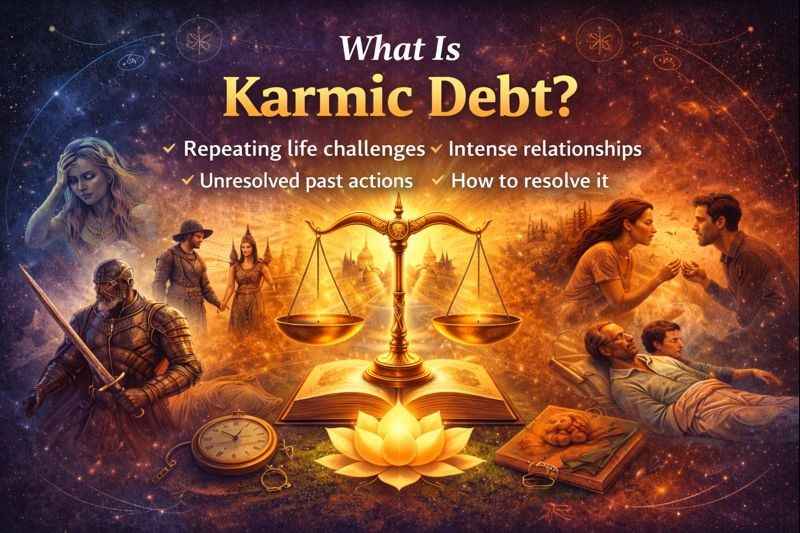
Introduction: When Life Feels Heavier Than Usual
Have you ever felt that no matter how hard you try, certain challenges keep returning in your life? You may put in effort, stay honest, and still feel blocked, delayed, or emotionally burdened. Many people describe this feeling as carrying an invisible weight—one that doesn’t fully make sense through logic alone.
Spiritual traditions explain this experience through the concept of Karmic Debt. Unlike ordinary life lessons, it represents unresolved responsibilities created by past actions, intentions, or choices that now require balance. This idea is not about punishment, but about learning, correction, and personal growth.
Understanding this principle can transform frustration into clarity and struggle into purpose.
Also Read :- What Is Past Life Karma?
What Is Karmic Debt in Simple Terms
In simple words, this concept refers to unresolved actions from the past that require conscious effort to balance in the present. These actions may come from this lifetime or, according to spiritual belief systems, from previous ones.
Just as financial obligations require repayment, unresolved karmic responsibilities require awareness, accountability, and corrective action. Until lessons are understood, similar situations tend to repeat in different forms.
Its purpose is to guide evolution—not to create suffering.
Also Read :- What Is Saturn Return and Why It’s So Intense
The Spiritual Origin of This Concept
The idea comes from ancient Indian philosophies such as Hinduism, Buddhism, and Jainism. These traditions teach that every action leaves an energetic imprint. When choices are driven by ego, harm, avoidance, or irresponsibility, imbalance is created.
That imbalance does not disappear. Instead, it seeks resolution through future experiences designed to teach accountability, compassion, discipline, or humility.
Karma vs Karmic Debt: What’s the Difference?
Not all karma is debt.
- Karma includes all actions and their consequences—positive and negative
- Karmic Debt specifically refers to unresolved or imbalanced actions
Positive actions create supportive outcomes. Neutral actions create learning experiences. Debt forms only when lessons are ignored or responsibility is avoided, which is why some challenges feel heavier or more persistent.
Also Read :- Free Astrology Tools You Can Use Without Signup
How Karmic Debt Is Created
Such imbalance forms through repeated or intense actions like:
- Misuse of power or authority
- Dishonesty or manipulation
- Neglecting responsibilities
- Causing emotional or physical harm
- Avoiding accountability
- Acting purely from ego or fear
When these actions remain unresolved, life creates situations that encourage correction and growth.
Also Read :-Mercury Retrograde Dates in 2026: Complete Guide for Planning, Travel & Communication
Signs You May Be Carrying Unresolved Karma
Certain patterns strongly indicate karmic imbalance. These signs often appear across different areas of life.
Repeating Life Challenges
Facing the same obstacles despite changing circumstances often points to deeper lessons waiting to be learned.
Feeling Blocked Despite Effort
You may work hard, yet progress feels delayed or unstable. This usually signals that inner change is needed before outer success can flow.
Intense Emotional Reactions
Strong guilt, fear, anger, or shame without a clear cause may reflect unresolved inner responsibilities.
Recurring Relationship Issues
Repeated patterns of betrayal, control, abandonment, or emotional imbalance often suggest unresolved relational lessons.
Karmic Lessons in Relationships
Relationships are one of the most common ways karmic lessons surface. Partners, family members, and close connections often trigger emotional growth.
You may experience:
- Power struggles
- Emotional dependency
- Repeating conflicts
- Difficult separations
These experiences exist to teach boundaries, empathy, respect, and emotional maturity.
Also Read :- March 2026 Vrat & Fasting Calendar: Ekadashi, Shivratri & Sankashti
Family Patterns and Karmic Responsibility
Family dynamics often carry strong karmic significance. Parents and siblings may reflect unresolved authority, responsibility, or emotional lessons.
Difficult family relationships are not accidents. They are opportunities to break old cycles through awareness and compassion.
Career Challenges and Spiritual Accountability
Professional struggles may also reflect karmic patterns, especially when issues repeat across different jobs or roles.
Lessons here often involve:
- Ethical behavior
- Responsibility
- Leadership integrity
- Patience and discipline
When these lessons are learned, professional life often stabilizes naturally.
Financial Struggles and Balance
Financial instability can sometimes reflect lessons around value, generosity, or responsibility. This does not mean wealth is negative—it simply means balance is required.
Learning to respect resources, give responsibly, and act ethically often helps dissolve these patterns.
Health and Emotional Imbalance
Unresolved emotional stress can manifest physically over time. While medical treatment is essential, emotional awareness also plays a role.
Chronic stress, guilt, or fear may weaken the body if left unaddressed. Healing often involves both inner and outer care.
Also Read :- What Is Karma in Simple Terms: Meaning, Examples, and How It Works
Karmic Debt Numbers in Numerology
In numerology, karmic debt is often associated with specific numbers derived from birth dates:
- 13 – Discipline and responsibility
- 14 – Self-control and moderation
- 16 – Ego correction and humility
- 19 – Independence and leadership
These numbers do not predict failure. They simply highlight areas requiring conscious effort.
Is Karmic Debt a Punishment?
No. Karmic Debt is not punishment.
It is a system of balance. Life does not seek to harm—it seeks to teach. Challenges appear to encourage growth, not suffering.
Once lessons are understood, the intensity of challenges often decreases.
Can Karmic Debt Be Cleared?
Yes. Awareness is the key.
While past actions cannot be undone, their influence can be transformed through conscious choices, responsibility, and ethical living. Growth naturally dissolves imbalance.
How to Resolve Karmic Debt
Self-Awareness
Recognize repeating patterns without blame or denial.
Accountability
Take responsibility for choices instead of blaming circumstances or others.
Ethical Living
Act with honesty, fairness, and integrity in daily life.
Forgiveness
Release resentment toward others and yourself.
Service
Helping others without expectation creates energetic balance.
Conscious Action
Respond thoughtfully instead of reacting emotionally.
The Role of Free Will
Unresolved karma influences situations, but it never removes choice. You always have the freedom to respond differently.
Awareness transforms limitation into opportunity.
Why Some People Resolve It Faster
Those who practice self-reflection, humility, and compassion often resolve karmic patterns faster than those who resist accountability. Growth accelerates when ego softens.
Common Myths About Karmic Debt
❌ It means you were bad in a past life
❌ You must suffer to repay it
❌ It cannot be changed
✅ It highlights growth areas
✅ Awareness reduces intensity
✅ Conscious action creates freedom
How Karmic Debt Transforms Life
When lessons are learned:
- Emotional weight lifts
- Relationships improve
- Confidence increases
- Life feels lighter and clearer
Challenges no longer feel random—they feel meaningful.
Living Without Fear of Karmic Debt
Fear delays growth. Awareness accelerates it.
When you act with honesty, compassion, and responsibility, balance restores naturally. Life becomes less about struggle and more about alignment.
Frequently Asked Questions About Karmic Debt
What is karmic debt?
Karmic debt refers to unresolved actions or responsibilities from the past that create repeated challenges and lessons in the present life.
How is karmic debt different from karma?
Karma includes all actions and results, while karmic debt specifically refers to unresolved or imbalanced actions that require correction.
What are common signs of karmic debt?
Common signs include repeating life challenges, emotional heaviness, recurring relationship issues, and feeling blocked despite effort.
Is karmic debt a punishment?
No. Karmic debt is not punishment. It exists as a system of balance designed to support growth and awareness.
Can karmic debt be cleared or reduced?
Yes. Awareness, ethical living, accountability, forgiveness, and conscious actions help reduce karmic imbalance over time.


3 Comments