
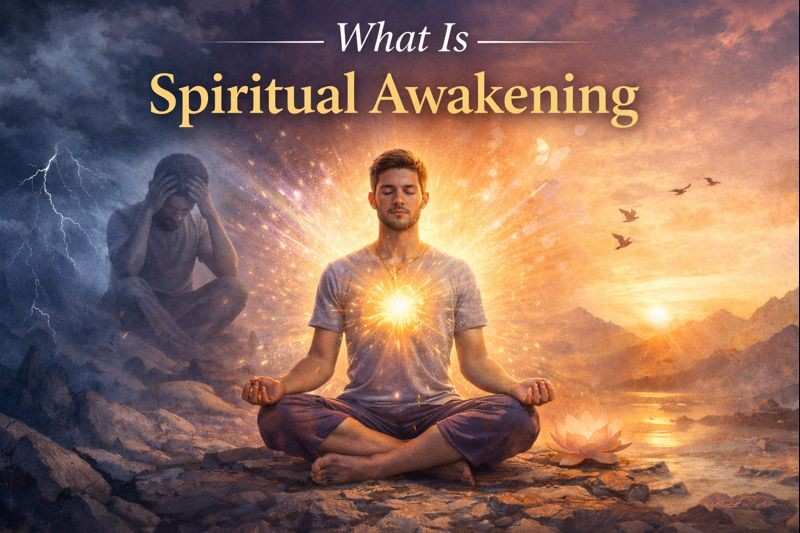
Introduction
Many people reach a point in life where external success, relationships, or daily routines no longer bring fulfillment. Questions arise that feel deeper than career goals or material comfort: Who am I really? Why am I here? Is there more to life than this?
These moments often signal the beginning of an inner awakening—a shift in awareness that invites deeper self-inquiry and reflection.
Spiritual awakening is not about religion, escape, or becoming someone special. It is a profound internal transformation where your perception of reality, identity, and purpose begins to evolve. What once seemed important may lose significance, while inner truth, awareness, and authenticity take center stage.
This article offers a grounded and human explanation of spiritual awakening—its meaning, how it unfolds, the challenges it brings, and why it ultimately leads to clarity rather than confusion.
Also Read :- How to End a Karmic Relationship: Signs, Healing & Letting Go
What Is Spiritual Awakening? (Simple Meaning)
Spiritual awakening refers to the process of becoming consciously aware of your true nature beyond ego, conditioning, and false identities. It is a shift from living on autopilot—guided by fear, habits, and external validation—to living with awareness, presence, and inner alignment.
To understand this experience, imagine waking up from a long dream. You begin to see life clearly instead of reacting automatically. You no longer feel separate from existence but deeply connected to it.
This process does not add anything new to you. Instead, it removes illusions and unconscious patterns, revealing clarity, compassion, and inner truth.
Also Read :- Why Karmic Relationships Are So Intense: Spiritual, Emotional & Psychological Reasons Explained
What Spiritual Awakening Is NOT
Before going deeper, it is important to clear common misconceptions.
Spiritual awakening is not:
- Constant happiness or forced positivity
- Escaping responsibilities or emotions
- Rejecting material life
- Becoming morally superior
- Gaining supernatural abilities
In fact, awakening often feels uncomfortable because it dismantles false beliefs rather than reinforcing comfort.
Also Read :- Soulmate vs Karmic Relationship: Meaning, Signs, Differences & Spiritual Purpose
Why Spiritual Awakening Happens
Inner awakening often begins during periods of emotional, mental, or existential crisis. These moments shake the foundations of identity and force deeper questioning.
Common triggers include:
- Emotional breakdowns or heartbreak
- Loss of a loved one
- Persistent dissatisfaction with life
- Burnout or depression
- Traumatic experiences
- Sudden inner clarity without explanation
Such experiences push awareness beyond surface-level living. The soul begins seeking truth instead of distraction.
Also Read :- Karmic Relationship Signs: How to Recognize Powerful but Challenging Soul Connections
Early Signs of Spiritual Awakening
Recognizing the signs helps bring clarity to the awakening process. These experiences vary but often include:
1. Deep Questioning of Reality
You begin questioning beliefs, social norms, and values that once felt unquestionable.
2. Loss of Interest in Old Patterns
Activities, goals, or conversations that once mattered may now feel empty or meaningless.
3. Heightened Self-Awareness
You observe thoughts, emotions, and reactions instead of being controlled by them.
4. Emotional Sensitivity
Emotions may feel stronger as suppressed feelings rise to the surface.
5. Desire for Solitude
Silence and alone time feel nourishing rather than lonely.
These are not signs of confusion—they indicate expanding awareness.
Also Read :- Understanding Karmic Relationships: Signs, Stages, and Soul Lessons
The Ego vs the Awakened Self
A key part of awakening involves understanding the ego.
The ego is the identity formed through:
- Social conditioning
- Past experiences
- Fear-based survival patterns
Awakening does not eliminate the ego but loosens its control. You stop identifying with thoughts, emotions, and roles and begin observing them.
This creates freedom—not detachment from life, but engagement without emotional bondage.
Also Read :- Signs of Past Life Karma: How to Recognize Karmic Patterns in Your Life
Stages of Spiritual Awakening
Though not linear, many people experience similar phases:
1. The Wake-Up Call
Life feels repetitive, empty, or misaligned.
2. The Dark Phase
Old beliefs collapse. Emotional pain, confusion, and identity loss arise.
3. Seeking Truth
You explore spirituality, psychology, philosophy, or inner practices.
4. Inner Realization
Moments of clarity, peace, and insight appear.
5. Integration
Awareness becomes part of everyday life.
Each stage removes illusion and deepens authenticity.
Also Read :- What Is Karmic Debt? Meaning, Signs, Numbers, and How to Resolve It
The Dark Night of the Soul Explained
Many assume awakening brings immediate peace, but often the opposite comes first.
This phase involves:
- Dissolving old identities
- Temporary loss of meaning
- Emotional intensity
- Feelings of isolation
It is not punishment—it is purification. Deep subconscious patterns are released to make space for awareness.
Also Read :- What Is Past Life Karma?
Spiritual Awakening vs Mental Health Issues
A common concern is distinguishing awakening from emotional distress.
Key differences include:
- Awareness increases, not confusion
- Responsibility deepens, not avoidance
- Compassion expands, not detachment
That said, professional mental health support is essential when emotional overwhelm becomes severe. Both paths can coexist.
How Awakening Changes Relationships
As awareness grows, relationships naturally evolve.
You may:
- Outgrow certain connections
- Establish stronger boundaries
- Value authenticity over approval
- Feel disconnected from superficial dynamics
This shift reflects alignment, not superiority.
Spiritual Awakening and Emotional Healing
Awakening brings suppressed emotions to the surface.
Instead of avoiding pain, you learn to:
- Observe emotions without judgment
- Heal childhood wounds
- Release trauma patterns
- Practice self-compassion
Healing becomes conscious rather than reactive.
Does Awakening Mean Renouncing the World?
No. One of the biggest misconceptions is that awakening requires withdrawal from life.
True awareness allows you to:
- Participate fully in the world
- Enjoy comfort without attachment
- Work and love consciously
- Live with responsibility and compassion
Spirituality integrates into daily life—it does not replace it.
Practices That Support Awakening
While awakening cannot be forced, certain practices support clarity:
- Meditation and mindfulness
- Self-inquiry and journaling
- Breath awareness
- Time in nature
- Conscious solitude
These quiet mental noise and deepen presence.
Common Challenges During Awakening
Challenges often include:
- Feeling misunderstood
- Emotional turbulence
- Identity confusion
- Fear of losing control
- Loneliness
These are temporary and necessary stages of transformation.
Life After Awakening
As awareness stabilizes, life feels lighter and more grounded.
You experience:
- Inner peace independent of circumstances
- Reduced fear and anxiety
- Clearer decisions
- Authentic relationships
- Deep gratitude
Life remains imperfect—but suffering decreases.
Is Spiritual Awakening Permanent?
Awareness unfolds in layers. Moments of clarity may come and go.
Integration happens gradually through lived experience, not sudden enlightenment.
The True Purpose of Spiritual Awakening
At its core, awakening is about remembering truth.
It reconnects you with:
- Inner peace
- Universal connection
- Conscious choice
- Compassion
- Presence
It is not about becoming someone new—it is about returning to who you already are.
Frequently Asked Questions
What is spiritual awakening in simple words?
Spiritual awakening is the process of becoming aware of your true self beyond ego, fear, and social conditioning. It is a shift in consciousness where you begin to see life with clarity, presence, and deeper understanding.
What are the first signs of spiritual awakening?
Early signs include questioning the meaning of life, feeling disconnected from old habits, heightened self-awareness, emotional sensitivity, and a strong desire for inner peace or solitude.
Is spiritual awakening a religious experience?
No, spiritual awakening is not limited to any religion. It is a personal inner experience that can occur regardless of religious beliefs and often focuses on awareness rather than doctrine.
Why does spiritual awakening feel painful?
Spiritual awakening can feel painful because old beliefs, emotional wounds, and false identities dissolve. This phase is often called the dark night of the soul and is a natural part of inner transformation.
How long does spiritual awakening last?
Spiritual awakening is not a one-time event but an ongoing process. It unfolds in stages over time as awareness deepens and integrates into daily life.
Can spiritual awakening affect relationships?
Yes, spiritual awakening often changes relationships. You may outgrow certain connections, seek deeper authenticity, or establish healthier emotional boundaries.
Is spiritual awakening the same as enlightenment?
No, spiritual awakening is the beginning of awareness, while enlightenment refers to a more stable and profound realization. Awakening is a journey, not a final destination.
Can anyone experience spiritual awakening?
Yes, spiritual awakening can happen to anyone. It often begins during life challenges or deep self-reflection, regardless of age, background, or belief system.
Final Thoughts
Spiritual awakening is not an escape from life but a deeper embrace of it. It removes illusion, not meaning. It replaces fear with awareness and confusion with clarity.
If you are questioning reality, identity, or purpose, it may not be a breakdown—it may be a breakthrough.
Awakening begins when you stop searching outside and start listening within.
Also Read :- March 2026 Vrat & Fasting Calendar: Ekadashi, Shivratri & Sankashti

1 Comment