
People across cultures and generations turn to horoscopes for guidance, clarity, and reassurance. Whether someone is making a career decision, facing emotional uncertainty, or simply curious about what lies ahead, astrology often feels like a trusted compass. Sometimes horoscope predictions resonate so deeply that they feel uncannily precise. At other times, however, they seem vague, irrelevant, or completely off the mark.
This contrast naturally leads to a powerful and often misunderstood question: what truly determines horoscope accuracy?
Many skeptics dismiss astrology as guesswork, while believers assume predictions should always come true exactly as stated. In reality, astrology sits somewhere in between. It is neither blind belief nor random fortune-telling. Instead, horoscope accuracy depends on multiple technical, interpretive, and human factors working together.
By understanding these elements clearly, you can judge why some horoscopes feel astonishingly accurate while others fail to connect—and how to get more meaningful insights from astrology.
Also read – How Is Horoscope Calculated? Step-by-Step Explanation
Understanding Horoscope Accuracy: A Bigger Picture
Before diving into technical details, it is important to understand one core principle:
Astrology reveals patterns, tendencies, and timing—not fixed outcomes.
A horoscope is like a weather forecast for life. It tells you when conditions are favorable or challenging, but it does not force you to carry an umbrella or stay indoors. This fundamental truth explains why accuracy varies so widely from one reading to another.
Now, let us explore the key factors that influence horoscope accuracy in depth.
The Foundation of Horoscope Accuracy: Birth Details
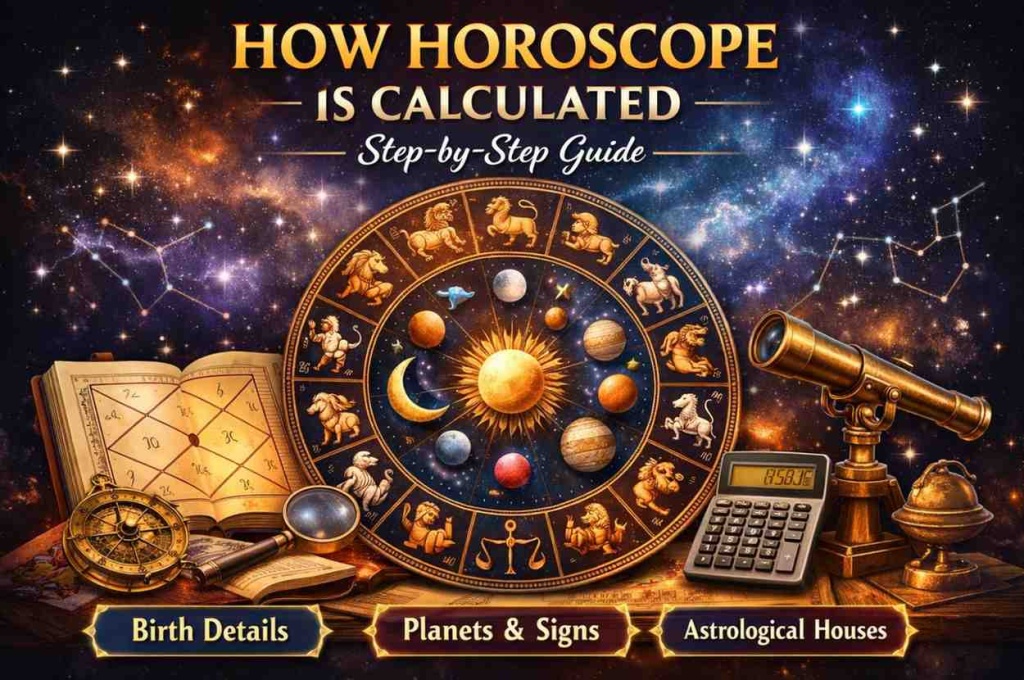
Accurate astrology always begins with accurate data. The date, time, and place of birth form the backbone of any horoscope. Without precise birth details, even the most skilled astrologer cannot deliver reliable predictions.
Why Birth Time Matters So Much
A difference of just four minutes in birth time can change the ascendant (rising sign) in many charts. This shift alters:
- House placements
- Planetary strengths
- Life themes such as career, marriage, and health
For example, a planet placed in the 10th house (career) may move into the 9th house (beliefs and travel) with a slight time variation. Naturally, predictions based on these placements will differ.
Birth Place and Its Role
The geographical location of birth determines:
- House cusps
- Planetary angles
- Local horizon and meridian
Even two cities within the same country can produce noticeably different charts.
When Birth Details Are Inaccurate
When exact birth time is unknown, astrologers often rely on:
- Time ranges
- Event-based rectification
- Approximate charts
While experienced astrologers can still extract insights, accuracy inevitably reduces. Therefore, the more precise the birth data, the more refined and dependable the horoscope becomes.
Role of Planetary Calculations and Charts
Astrology is deeply mathematical. Behind every horoscope lies a complex system of calculations involving planetary motion, angles, and cycles.
Precision in Planetary Degrees
Each planet occupies a specific degree within a zodiac sign. A difference of even one degree can:
- Change planetary strength
- Modify aspects
- Alter results during transits and dashas
Accurate horoscope readings require:
- Correct ephemeris data
- Reliable chart software
- Proper ayanamsa selection (in Vedic astrology)
Importance of House Systems
Different house systems can produce different interpretations. When calculations are incorrect or inconsistent, predictions lose clarity.
On the other hand, when charts are mathematically sound, horoscope accuracy improves dramatically and delivers deeper insights.
Astrology Is Not One Technique: Systems That Affect Accuracy
Many people assume astrology works in a single universal way. In reality, multiple systems and layers exist.
Sun Sign Astrology vs Full Horoscope
Most newspaper and app horoscopes rely only on sun signs, which represent just one component of a birth chart.
A full horoscope considers:
- Ascendant (Lagna)
- Moon sign
- Planetary dignities
- Nakshatras
- House rulerships
This is why generic horoscopes often feel vague—they are designed for millions of people at once.
Personalized Charts Offer Higher Accuracy
When predictions are based on the complete birth chart, including dashas and transits, they feel more specific and relevant. Naturally, depth of analysis directly affects horoscope accuracy.
Importance of the Astrologer’s Skill and Experience
Astrology is both a science and an interpretive art. While charts provide raw data, interpretation gives them life.
Why Experience Matters
An experienced astrologer understands:
- Planetary exceptions
- Contradictory combinations
- Contextual influences
Books may state that a certain planetary position is unfavorable, but real-life experience teaches when and how that influence actually manifests.
Rigid Interpretation vs Practical Insight
Inexperienced astrologers often apply rules mechanically, leading to fear-based or inaccurate readings. Skilled astrologers, however, blend:
- Knowledge
- Intuition
- Human understanding
This balance significantly enhances horoscope accuracy.
Also read – Sun Sign vs Moon Sign vs Rising Sign: What’s the Difference?
Depth of Analysis Versus Generic Predictions
One of the biggest reasons horoscopes feel inaccurate is over-simplification.
Why Generic Horoscopes Fail
Generic horoscopes:
- Use only sun signs
- Avoid timelines
- Apply broad statements
These predictions rely on probability rather than precision.
Why Personalized Analysis Works Better
A detailed horoscope examines:
- Strengths and weaknesses of planets
- Current dasha periods
- Upcoming transits
- Yogas and cancellations
The more layers considered, the more meaningful and accurate the prediction becomes.
Also read – Can Two People With the Same Zodiac Sign Have Different Lives?
Timing Techniques and Their Impact on Accuracy
Astrology places immense importance on timing. Even accurate predictions lose value if timing is wrong.
Dashas and Planetary Periods
In Vedic astrology, systems like Vimshottari Dasha determine:
- When results activate
- Which planet dominates life phases
A beneficial planet may exist in the chart, but its results manifest only during its dasha.
Transits and Gochar Analysis
Planetary transits trigger events by activating natal placements. Without analyzing transits, predictions may describe events correctly but fail to align with real-life timelines.
Correct timing bridges the gap between theory and experience.
Also read – Does Time Zone Affect Horoscope Results?
Free Will and Personal Choices
One of the most misunderstood aspects of astrology is its relationship with free will.
Astrology Does Not Remove Choice
Astrology shows tendencies, not compulsory outcomes. Two people with similar charts may experience life very differently based on:
- Decisions
- Effort
- Awareness
Why Predictions Sometimes “Fail”
When individuals:
- Ignore opportunities
- Repeat harmful habits
- Avoid responsibility
Outcomes may differ from predictions. Horoscope accuracy improves when people actively engage with their life path rather than passively waiting for fate.
Also read – What Makes a Horoscope Accurate or Inaccurate?
Emotional Readiness of the Reader
Sometimes horoscopes feel inaccurate simply because the reader is not emotionally ready to accept the message.
Psychological Resistance
People often:
- Reject uncomfortable truths
- Focus only on positive predictions
- Expect instant results
Astrological insights often unfold gradually. What seems irrelevant today may make sense months later.
Also read – Why Horoscope Changes Every Day? Astrology Logic Explained
Cultural Expectations and Misinterpretation
Modern astrology consumption often distorts expectations.
Entertainment vs Guidance
Social media astrology prioritizes:
- Instant gratification
- Emotional reassurance
- Catchy phrasing
True astrology, however, requires patience, reflection, and context. Confusing the two reduces perceived accuracy.
Also read – DAILY HOROSCOPE VS PERSONALIZED HOROSCOPE: WHAT’S MORE ACCURATE?
Common Reasons Horoscopes Feel Inaccurate
Several recurring factors reduce horoscope accuracy:
- Incorrect or estimated birth time
- Overreliance on sun-sign astrology
- Inexperienced or rushed interpretation
- Ignoring dashas and transits
- Expecting astrology to replace effort
- Emotional resistance to difficult insights
Recognizing these limitations helps set realistic expectations.
Also read – WHY HOROSCOPE PREDICTIONS CHANGE OVER TIME
How to Improve Horoscope Accuracy for Yourself
You can actively enhance horoscope accuracy by taking a conscious approach.
Practical Steps to Follow
- Verify your birth details whenever possible
- Choose experienced astrologers, not instant predictions
- Ask for explanations, not just outcomes
- Track predictions over time
- Use astrology as guidance, not absolute destiny
When approached wisely, astrology becomes a powerful tool for self-awareness rather than dependency.
Also read – HOW OFTEN SHOULD YOU CHECK YOUR HOROSCOPE? A COMPLETE, SCIENCE-BACKED AND ASTROLOGY-WISE GUIDE
Astrology as a Tool for Self-Understanding
Astrology works best when viewed as a mirror rather than a verdict.
It highlights:
- Inner patterns
- Strengths and weaknesses
- Favorable and challenging periods
Used responsibly, it empowers people to make better decisions rather than surrender control.
Also Read :- Why Millions of People Check Their Horoscope Every Day
Conclusion: Astrology Works Best With Awareness
Horoscope accuracy is not a matter of blind belief or total skepticism. It depends on precision, expertise, depth, timing, and conscious participation.
Astrology reveals energetic patterns, but human choices complete the story. When accurate data meets skilled interpretation and mindful action, horoscopes transform from vague predictions into meaningful guidance.
Rather than asking whether astrology works, the better question is:
How wisely are we using it?
Also read – How to Read Your Horoscope Correctly (Most People Do It Wrong)
Frequently Asked Questions (FAQ) About Horoscope Accuracy
Are horoscopes really accurate?
Horoscopes can be accurate when they are based on precise birth details, correct planetary calculations, and skilled interpretation. Personalized horoscopes are far more accurate than generic sun-sign predictions because they analyze the full birth chart rather than a single zodiac sign.
Why do some horoscopes feel extremely accurate?
Horoscopes feel accurate when they align with current life situations, emotional states, and planetary timing. This often happens when dashas or transits activate specific areas of the birth chart. Self-awareness also increases how strongly insights resonate.
Why are daily horoscopes often vague?
Daily horoscopes are written for millions of people sharing the same sun sign. Because they do not include ascendant, moon sign, or planetary periods, they rely on broad statements and offer general guidance rather than precise predictions.
Is sun-sign astrology enough for accurate predictions?
No. Sun-sign astrology represents only one aspect of a horoscope. Accurate predictions require analysis of the ascendant, moon sign, planetary strengths, houses, dashas, and transits. Relying only on sun signs significantly reduces accuracy.
Can astrology predict exact future events?
Astrology does not predict events with absolute certainty. Instead, it highlights tendencies, probabilities, and favorable or challenging periods. Personal choices, effort, and circumstances shape how planetary influences manifest.
Why do some predictions come true years later?
Predictions may manifest later due to planetary timing. Certain outcomes activate only during specific dasha periods or major transits. What seems inaccurate today may become relevant when the right planetary conditions arise.
Does wrong birth time affect horoscope accuracy?
Yes, significantly. Even a few minutes’ difference in birth time can change the ascendant and house placements. Incorrect birth time often leads to inaccurate predictions, especially in areas like career, marriage, and life direction.
Can horoscope accuracy improve over time?
Yes. Horoscope accuracy improves when birth details are verified, charts are properly rectified, predictions are tracked over time, and individuals develop greater self-awareness. Astrology often reveals deeper clarity as life unfolds.
Why do two people with similar horoscopes have different lives?
Free will, upbringing, mindset, and personal decisions play a major role. Astrology shows potential, not destiny. How individuals respond to planetary influences determines their outcomes.
Is astrology scientific or belief-based?
Astrology follows structured calculations, consistent systems, and time-tested rules. However, it does not function like experimental science. It operates as a symbolic and observational system focused on patterns rather than laboratory testing.
How can I get the most accurate horoscope reading?
Accuracy improves when you provide exact birth details, consult experienced astrologers, ask for explanations instead of fixed predictions, focus on timing and long-term patterns, and use astrology as guidance rather than control.
Should horoscopes be used to make major life decisions?
Horoscopes should support decision-making, not replace it. They work best as tools for awareness, preparation, and understanding life cycles—not as absolute commands.
Sources & References
- Shloka.life – Astrology Accuracy, Birth Charts & Horoscope Insights
- Gurucool.life – Indian Knowledge Systems, Psychology & Self-Awareness
- Encyclopaedia Britannica – Astrology: History, Meaning & Methods
- Astro.com (AstroWiki) – How Horoscopes Are Created and Interpreted
- Cafe Astrology – Birth Chart Interpretation and Accuracy
- NASA Jet Propulsion Laboratory – Planetary Motion & Astronomical Data
- Drik Panchang – Panchang, Tithi & Astronomical Calculations
5 Comments