
Introduction: Why Is Diwali Celebrated Across India and the World
Why does this festival arrive each year with such splendor, illumination, happiness, and deep devotion? Known as Deepavali, it stands among the most significant celebrations in India and within Indian communities across the globe. Far beyond lamps and fireworks, it represents a profound spiritual occasion that reflects the triumph of brightness over darkness, virtue over wrongdoing, and wisdom over ignorance.
Its significance cannot be traced to a single legend or belief. Instead, this celebration holds many layers of meaning, shaped by ancient Hindu epics, spiritual teachings, historical moments, and diverse regional customs. Different communities observe it for their own sacred reasons, yet all traditions are connected by shared themes of hope, renewal, and inner transformation.
This comprehensive guide delves into the festival’s origins, spiritual importance, religious narratives, rituals, symbolic practices, and its lasting relevance in today’s modern world.
What Is Diwali? Understanding the Festival of Lights
Diwali (from the Sanskrit word Deepavali, meaning “row of lamps”) is a five-day festival observed according to the Hindu lunar calendar, usually falling in October or November.
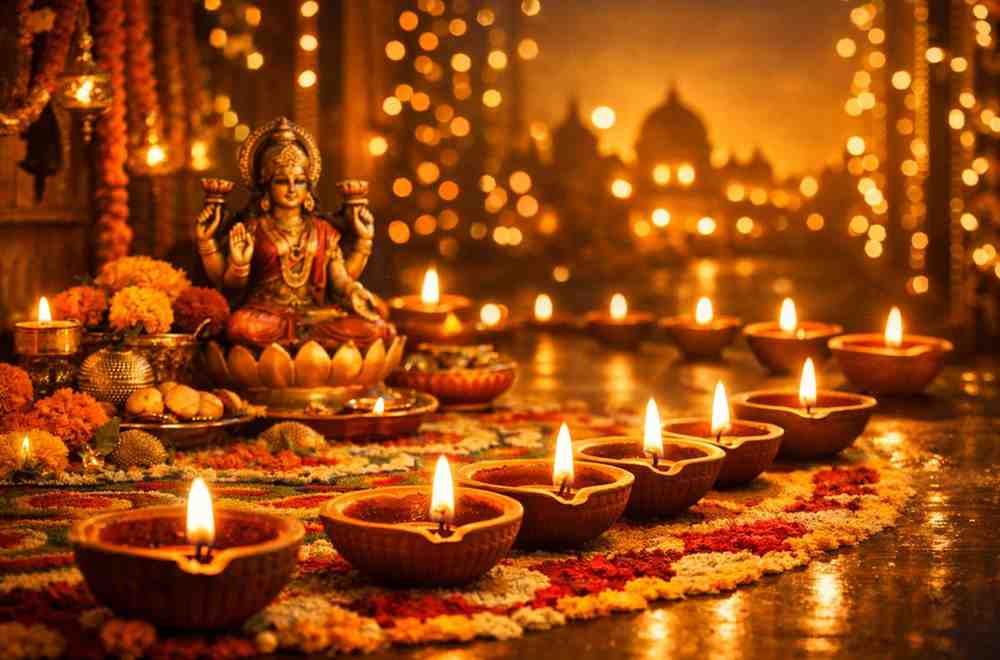
The tradition of illuminating homes with diyas and candles reflects a deeper belief in awakening inner light and driving away spiritual ignorance.
The Five Days of Diwali
- Dhanteras – Wealth, health, and new beginnings
- Naraka Chaturdashi (Choti Diwali) – Victory over evil
- Lakshmi Puja (Main Diwali Day) – Prosperity and divine blessings
- Govardhan Puja – Gratitude and humility
- Bhai Dooj – Bond between siblings
Each day adds another layer of spiritual significance, transforming the celebration into more than a single evening of festivity.
1. Return of Lord Rama to Ayodhya
One of the most popular reasons why Diwali is celebrated is to mark the return of Lord Rama to Ayodhya after 14 years of exile, following his victory over Ravana.
- Lord Rama represents dharma (righteousness)
- Ravana symbolizes ego, ignorance, and injustice
- Ayodhya was lit with oil lamps to welcome Rama, Sita, and Lakshmana
This story teaches that truth and righteousness always prevail, reinforcing why Diwali is celebrated as a moral and spiritual reminder.
2. Goddess Lakshmi and the Blessing of Prosperity
One important reason behind the festival is the worship of Goddess Lakshmi, revered as the embodiment of wealth, prosperity, and abundance.
According to belief:
- Lakshmi emerged from the Samudra Manthan (cosmic churning)
- She blesses homes that are clean, bright, and virtuous
- Lighting lamps invites spiritual and material prosperity
This is why Diwali is celebrated with home cleaning, rangoli, and Lakshmi Puja.
3. Victory of Lord Krishna Over Narakasura
In many parts of South India, why Diwali is celebrated is linked to Lord Krishna defeating the demon Narakasura, who terrorized the world.
This legend emphasizes:
- Freedom from fear
- Liberation of oppressed souls
- Triumph of divine justice
Why Is Diwali Celebrated in Jainism?
For Jains, why Diwali is celebrated has deep spiritual importance rather than mythological celebration.
Diwali marks the nirvana (liberation) of Mahavira, the 24th Tirthankara.
- Mahavira attained moksha on Diwali night
- Lamps were lit to symbolize the light of eternal knowledge
- Jains reflect on non-violence, truth, and self-discipline
Thus, why Diwali is celebrated in Jainism centers on spiritual awakening and liberation of the soul.
Diwali coincides with Bandi Chhor Divas, commemorating the release of Guru Hargobind from Mughal imprisonment.
- Guru Hargobind secured freedom for 52 princes
- The Golden Temple is illuminated with lamps
- The event symbolizes liberation and courage
This reinforces why Diwali is celebrated as a festival of freedom across faiths.
The Spiritual Meaning: Why Is Diwali Celebrated Beyond Religion?
At its core, why Diwali is celebrated goes beyond stories—it is a spiritual philosophy.
Light vs Darkness
- Light = knowledge, awareness, compassion
- Darkness = ignorance, fear, ego
Lighting a diya represents:
- Awakening inner wisdom
- Removing negative thoughts
- Choosing righteousness in daily life
This universal symbolism explains why Diwali is celebrated globally, even by non-religious communities.
Why Is Diwali Celebrated with Lamps (Diyas)?
The act of lighting lamps is central to understanding why Diwali is celebrated.
- Oil represents karma
- Wick represents ego
- Flame represents consciousness
When ego is surrendered through righteous action, the soul shines—this is the deeper reason why Diwali is celebrated spiritually.
Rituals and Traditions: Why Is Diwali Celebrated with These Customs?
1. Cleaning Homes
Removes stagnant energy and invites positivity
2. Wearing New Clothes
Symbolizes renewal and fresh beginnings
3. Sharing Sweets
Promotes love, harmony, and forgiveness
4. Fireworks
Symbolize celebration and joy (traditionally, not extravagance)
All these rituals help explain why Diwali is celebrated as a festival of holistic renewal—mind, body, and soul.
Why Is Diwali Celebrated Differently Across India?
- North India: Rama’s return
- South India: Krishna and Narakasura
- West India: Lakshmi and prosperity
- East India: Kali worship
Despite differences, the essence of why Diwali is celebrated remains the same—victory of divine light.
Modern Relevance: Why Is Diwali Celebrated Today?
In today’s fast-paced world, the significance of this festival feels more meaningful than ever.
- Encourages digital detox and family bonding
- Promotes gratitude and mindfulness
- Inspires ethical living and inner clarity
Diwali reminds us to pause, reflect, and realign with our values.
Also Read :- Spiritual Awakening Symptoms: Signs, Stages & What to Expect
Why Is Diwali Celebrated Worldwide Now?
With global Indian diaspora, Diwali is celebrated in:
- USA
- UK
- Canada
- Australia
- Singapore
Many countries now officially recognize Diwali, highlighting its role as a global celebration of hope and positivity.
Also Read :- What Is Diwali: A Complete Guide to the Festival of Lights
Environmental Perspective: Rethinking Why Diwali Is Celebrated
Traditionally, the festival was never centered on loud celebrations or environmental pollution.
True Diwali values:
- Simplicity
- Inner joy
- Spiritual illumination
Modern celebrations are slowly returning to eco-friendly practices.
Also Read :- Shadow Work Explained: Guide to Inner Healing and Integration
Frequently Asked Questions About Diwali
What is Diwali?
Diwali, also known as Deepavali, is the Festival of Lights celebrated primarily in India and by Indian communities worldwide. It symbolizes the victory of light over darkness and good over evil.
Why is Diwali called the Festival of Lights?
Diwali is called the Festival of Lights because homes, temples, and public spaces are illuminated with oil lamps (diyas), candles, and lights to represent inner awakening and spiritual illumination.
How many days is Diwali celebrated?
Diwali is traditionally celebrated over five days: Dhanteras, Naraka Chaturdashi (Choti Diwali), Lakshmi Puja, Govardhan Puja, and Bhai Dooj.
Which religions celebrate Diwali?
Diwali is celebrated in Hinduism, Jainism, Sikhism, and Buddhism, with each religion associating the festival with its own historical or spiritual significance.
What is the spiritual meaning of Diwali?
The spiritual meaning of Diwali lies in self-reflection, inner purification, and the removal of ignorance, symbolized by the lighting of lamps.
Why is Goddess Lakshmi worshipped during Diwali?
Goddess Lakshmi is worshipped during Diwali as the deity of wealth, prosperity, and abundance. Devotees believe she blesses clean and well-lit homes with good fortune.
Why do people burst crackers on Diwali?
Traditionally, fireworks were used to express joy and celebration. However, modern observances increasingly promote eco-friendly and quieter alternatives.
Is Diwali celebrated outside India?
Yes, Diwali is celebrated in many countries including the USA, UK, Canada, Australia, Singapore, and more, and is officially recognized in several regions.
Final Thoughts: The Timeless Answer to Why Is Diwali Celebrated
So, why is Diwali celebrated?
Because humanity needs reminders that:
- Light always overcomes darkness
- Good ultimately wins over evil
- Inner awakening leads to lasting peace
Diwali is not just a festival—it is a spiritual reminder to live consciously, compassionately, and courageously.
When you light a diya this Diwali, remember—you are not just lighting a lamp, you are awakening the light within.


6 Comments