
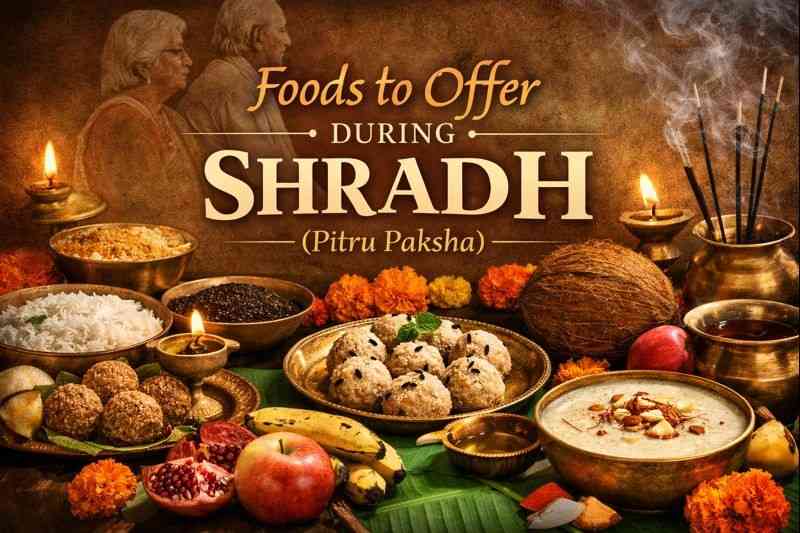
Shradh, observed during the sacred fortnight of Pitru Paksha, is an important ancestral ritual practiced across India. During this period, families honor departed ancestors through offerings of food, prayers, and charity. Because Shradh rituals revolve around foods offered to ancestors, the selection and preparation of these foods hold deep cultural and spiritual meaning.
Although Shradh is performed throughout India, the foods to offer during Shradh vary significantly depending on region, culinary heritage, and community customs. Understanding these regional traditions helps preserve lineage continuity and supports families who wish to observe Shradh with authenticity.
Also read – Navratri 2026 Guide: Dates, Rituals, Fasting Foods, Colours & Regional Traditions Explained
When is Pitru Paksha 2026? (Shradh Dates)
Pitru Paksha 2026 will begin on Monday, 21 September 2026 and end on Monday, 5 October 2026, concluding on Sarva Pitru Amavasya. During these fifteen lunar days, Shradh rituals are performed to honor and offer food to departed ancestors.
The period aligns with the Krishna Paksha (waning phase of the moon) in the month of Bhadrapada according to the Hindu lunar calendar. Additionally, the final day, also known as Mahalaya Amavasya, is considered the most important for collective Shradh offerings.
Pitru Paksha 2026 Calendar (Tithi Overview)
| Ritual Day | Tithi / Event | Date (2026) |
|---|---|---|
| Day 1 | Pratipada Shradh | 21 Sept 2026 |
| Day 2 | Dwitiya Shradh | 22 Sept 2026 |
| Day 3 | Tritiya Shradh | 23 Sept 2026 |
| Day 4 | Chaturthi Shradh | 24 Sept 2026 |
| Day 5 | Panchami Shradh | 25 Sept 2026 |
| Day 6 | Shashthi Shradh | 26 Sept 2026 |
| Day 7 | Saptami Shradh | 27 Sept 2026 |
| Day 8 | Ashtami Shradh | 28 Sept 2026 |
| Day 9 | Navami Shradh | 29 Sept 2026 |
| Day 10 | Dashami Shradh | 30 Sept 2026 |
| Day 11 | Ekadashi Shradh | 1 Oct 2026 |
| Day 12 | Dwadashi Shradh | 2 Oct 2026 |
| Day 13 | Trayodashi Shradh | 3 Oct 2026 |
| Day 14 | Chaturdashi Shradh | 4 Oct 2026 |
| Day 15 | Sarva Pitru Amavasya | 5 Oct 2026 |
Also read – KUNDLI MATCHING FOR MARRIAGE IN AUSTRALIA: COMPLETE NRI GUIDE
Why Sarva Pitru Amavasya Matters
Sarva Pitru Amavasya (also called Mahalaya Amavasya) is important because:
✔ those who missed earlier tithis can perform Shradh on this day
✔ collective offerings are accepted for all ancestors
✔ food donations and pinda daan hold extra merit
Therefore, many families choose this day for Shradh if they are unsure about their ancestor’s tithi.
What Happens After Pitru Paksha?
Immediately after Pitru Paksha ends, Navratri begins, marking a shift from ancestral rituals to Devi worship. Hence, Shradh food offerings and rituals must be completed before Navratri preparations start.
Why Foods Offered During Shradh Matter
In Hindu thought, food is both physical nourishment and spiritual medium. Scriptures state that ancestors receive offerings during Shradh through pinda, tarpan, and Brahmin feeding. These symbolic foods allow families to express gratitude, uphold filial duty, and ensure continuity between generations. Consequently, the foods offered during Shradh must adhere to satvik purity, simplicity, and ritual norms.
Moreover, families believe that content ancestors grant prosperity, health, and spiritual protection to future generations. This belief continues to sustain the practice across regions, even in modern urban settings.
General Rules for Foods to Offer During Shradh
Across India, Shradh cuisine retains similar dietary rules to preserve ritual purity. Therefore, the foods offered during Shradh must be:
✔ Vegetarian
✔ Satvik
✔ Freshly prepared
✔ Cooked without tasting
✔ Cooked in ghee (preferably cow ghee)
✔ Served before noon
Common restrictions include:
✖ No onion, garlic, mushroom
✖ No meat, eggs, fish
✖ No alcohol or stimulants
✖ No fermented foods (idli/dosa avoided in many regions)
✖ No packaged foods
✖ No leftovers
These rules ensure the Shradh bhojan remains sattva-dominant, which aligns with the nature of ancestral rituals.
Core Foods Offered During Shradh (Pan-India)
Despite regional differences, certain foods consistently appear in Shradh offerings. These include:
✔ Rice (Anna)
✔ Moong dal
✔ Khichdi
✔ Kheer / Payasam / Payesh
✔ Ghee
✔ Black sesame (Til)
✔ Seasonal fruits
✔ Coconut
✔ Satvik vegetables
✔ Panchaphal (five fruits)
✔ Pinda (rice + sesame balls)
These foods align with the symbolic qualities of purity, nourishment, sweetness, and spiritual elevation.
Significance of Sesame (Til) in Shradh Food Offerings
Among foods to offer during Shradh, sesame holds a special position. Ritual texts describe sesame as a pitru shuddhi dravya, meaning it purifies and uplifts the departed souls. Consequently, sesame appears in:
✔ tarpan
✔ pinda
✔ sweets
✔ annam offerings
Sesame offerings are believed to bring peace (pitrusanti) and remove obstacles (pitrudosha).
Regional Foods Offered During Shradh Across India
Because India’s culinary traditions are diverse, the foods offered during Shradh vary widely across states and communities.
Below are key regional traditions:
1. Bengal – Elaborate Satvik Bhog Tradition
During Pitru Paksha, Bengali households prepare a refined Shradh bhog served on banana leaves. Foods offered during Shradh in Bengal include:
✔ Bhoger Khichuri
✔ Labra (mixed veg)
✔ Beguni (brinjal fritter)
✔ Tomato chutney
✔ Papad
✔ Payesh
Bengal emphasizes balance, moderation, and mild sweetness without onion or garlic.
2. Uttar Pradesh & Bihar – Simple Satvik Bhojan
UP and Bihar highlight simplicity and ritual correctness. Foods offered during Shradh include:
✔ Puris or rotis
✔ Aloo sabzi (no onion)
✔ Chana dal
✔ Boondi or halwa
✔ Kheer
✔ Panchaphal (five fruits)
Moreover, feeding Brahmins, cows, and the needy is central to virtue accumulation (punya).
3. Maharashtra – Varan Bhaat Tradition
Maharashtrian Shradh offerings focus on natural flavors. Common items include:
✔ Varan bhaat (turmeric dal + rice)
✔ Sheera
✔ Shrikhand (optional)
✔ Ghavan
✔ Steamed vegetables
✔ Ghee
These foods emphasize satvik lightness.
4. Gujarat & Rajasthan – Til & Jaggery Usage
In Gujarat and Rajasthan, sesame and jaggery feature strongly. Regional Shradh foods include:
✔ Rotli
✔ Moong dal
✔ Sukhi bhaji
✔ Basundi
✔ Til laddoos
✔ Jaggery-based sweets
Sesame usage aligns with scriptural requirements.
5. Odisha & Andhra – Coconut & Rice-Based Offerings
Odisha and Andhra highlight coconut, rice, and jaggery. Foods offered include:
✔ Payasam / Kheeri
✔ Boiled vegetables
✔ Coconut-based sweets
✔ Bananas
✔ Sugarcane pieces
✔ Pakhala bhata (Odisha-specific)
These offerings use local produce widely.
6. Tamil Nadu & Kerala – Structured Banana Leaf Meal
South Indian Shradh includes a sequence-based serving protocol on banana leaves. Foods offered during Shradh include:
✔ Sambar (without onion)
✔ Rasam
✔ Koottu
✔ Poriyal
✔ Curd rice
✔ Idiyappam or Appam
✔ Payasam
✔ Banana
Banana leaf serving symbolizes humility and purity.
Foods Avoided During Shradh
Certain foods are avoided to maintain ritual purity:
✖ Onion
✖ Garlic
✖ Meat, eggs, fish
✖ Alcohol
✖ Potato in some communities
✖ Brinjal (seed impurity belief)
✖ Mushrooms
✖ Fermented foods
Avoidance reflects the satvik dietary discipline expected during Shradh.
Foods Offered During Pinda Shradh
Shradh rituals also require offering pinda. Pinda is made from:
- Rice
- Barley or wheat flour
- Sesame
- Ghee
- Honey (optional)
Pinda symbolizes nourishment for the subtle body of the ancestors.
Satvik Recipes: Foods to Offer During Shradh at Home
Below are easy satvik recipes aligned with Shradh rules.
1. Bhoger Khichuri (Moong Khichdi)
Ingredients: Rice, moong dal, cumin, turmeric, ghee, salt
Method: Roast dal, combine with rice, cook gently, and finish with ghee.
2. Varan Bhaat
Ingredients: Toor dal, turmeric, rice, ghee, salt
Method: Pressure cook dal with turmeric, mash lightly, and serve with rice and ghee.
3. Kheer / Payasam
Ingredients: Milk, rice, sugar/jaggery, ghee, cardamom
Method: Slow-cook rice in milk until thick, sweeten, and finish with cardamom.
4. Aloo Sabzi (No-onsion)
Ingredients: Potato, cumin, turmeric, ghee, coriander
Method: Sauté cumin in ghee, add boiled potatoes with turmeric and salt.
5. Til Laddoos
Ingredients: Sesame, jaggery, ghee
Method: Melt jaggery, mix sesame, and roll into laddoos.
Modern Adaptations to Shradh Food Offerings
Urban families are adapting Shradh in practical ways. As a result:
✔ Shradh meals can be catered
✔ Pandits & pind daan can be booked online
✔ Donations replace Brahmin feeding in some cases
✔ Online tarpan and Gaya Shradh services exist
Modern adaptations preserve the sentiment while offering convenience.
Also read – HOW TO CHANT THE HANUMAN CHALISA: TIMINGS, RULES, BENEFITS & SCIENTIFIC EFFECTS
Conclusion
Shradh food offerings reflect spiritual sentiment, regional heritage, and ancestral duty. Regardless of region, the foods offered during Shradh remain satvik, simple, and deeply symbolic. Through these offerings, families honor lineage, uphold tradition, and seek blessings for continuity and prosperity.
FAQ
These FAQs are based on actual user search intent patterns during Pitru Paksha:
Common Shradh offerings include rice, moong dal, kheer, pinda, sesame (til), ghee, fruits, and other satvik vegetables.
No. Onion and garlic are avoided because they are considered tamasic during Shradh rituals and Pitru Paksha.
Banana, coconut, pomegranate, grapes, and seasonal fruits such as guava or apple are commonly offered during Shradh.
No. Shradh meals must remain purely vegetarian and satvik since non-vegetarian food is not considered suitable for ancestral offerings.
Fermented foods like dosa, idli, and dhokla are typically avoided in many regions during Shradh because fermentation is not considered satvik.
Traditionally no. Shradh food should be cooked at home without tasting and served fresh to maintain ritual purity.
Kheer, payasam, sheera, rice kheer, and til laddoos are the most common sweets offered during Shradh and Pitru Paksha rituals.
Sesame is believed to purify the ritual and uplift the departed souls, which is why til is used in pinda, tarpan, and Shradh bhojan.
Yes. Different regions have their own Shradh food lists and satvik dishes depending on cultural and culinary traditions.
Yes. Many urban areas now offer satvik Shradh catering and pandit booking services for Pitru Paksha rituals.
Hindi FAQ
श्राद्ध में चावल, मूंग दाल, खीर, पिंड, तिल, घी, फल और सत्त्विक सब्जियां अर्पित की जाती हैं।
नहीं। श्राद्ध और पितृ पक्ष में प्याज़ और लहसुन को तामसिक माना जाता है, इसलिए इनका प्रयोग नहीं किया जाता।
केला, नारियल, अनार, अंगूर और मौसम के अनुसार उपलब्ध अन्य फल श्राद्ध में अर्पित किए जाते हैं।
नहीं। श्राद्ध का भोजन पूर्णतः शाकाहारी और सत्त्विक होता है, इसलिए मांस, मछली, अंडा आदि वर्जित हैं।
किण्वित भोजन जैसे इडली, डोसा, ढोकला आदि कई क्षेत्रों में श्राद्ध में नहीं बनाए जाते क्योंकि इन्हें सत्त्विक नहीं माना जाता।
परंपरागत रूप से श्राद्ध का भोजन घर पर बिना चखे और सत्त्विक ढंग से बनाया जाता है; बाहर का भोजन उपयुक्त नहीं माना जाता।
खीर, पायसम, शीरा, चावल की खीर और तिल के लड्डू श्राद्ध में सामान्यतः चढ़ाए जाते हैं।
मान्यता है कि तिल पितरों का शुद्धिकरण करता है और उनकी आत्मा को शांति प्रदान करता है, इसलिए तर्पण, पिंड और अर्पण में तिल का प्रयोग होता है।
हाँ। भारत के अलग-अलग राज्यों और समुदायों में श्राद्ध के भोजन और सत्त्विक व्यंजनों में भिन्नता देखने को मिलती है।
हाँ। आजकल कई शहरों में सत्त्विक श्राद्ध भोजन और पंडित बुकिंग ऑनलाइन उपलब्ध है।

1 Comment