
Introduction
In times of illness, emotional struggle, uncertainty, and fear, people often seek strength beyond the material world. Across India and many spiritual traditions, sacred rituals have long provided emotional stability, divine connection, and hope during difficult phases of life. Among the most respected Vedic rituals for healing and protection is the Mahamrityunjaya Puja.
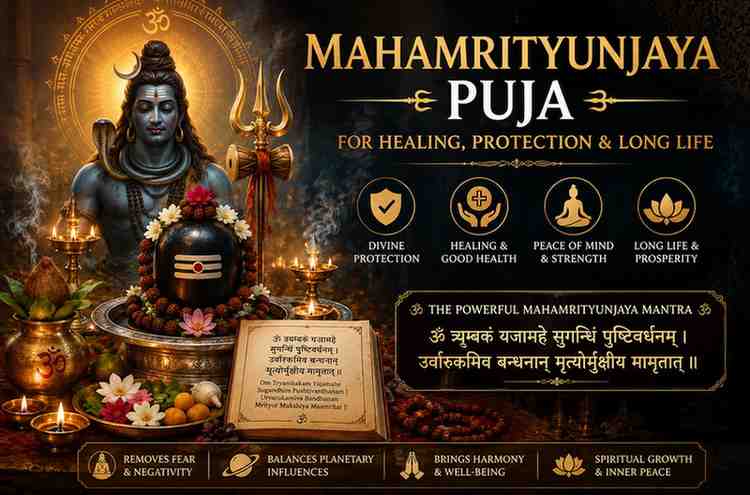
This sacred ceremony is dedicated to Lord Shiva in his powerful form as the conqueror of death and suffering. The ritual is centered around the famous Mahamrityunjaya Mantra, one of the most powerful mantras found in the Rig Veda. Chanting this mantra with devotion is believed to invite divine healing, remove negativity, protect against untimely dangers, and strengthen physical and mental well-being.
For centuries, sages, saints, and spiritual practitioners have performed this ritual for individuals facing severe illnesses, emotional distress, planetary challenges, or life-threatening situations. Today, families continue this ancient tradition not only for physical recovery but also for peace, positivity, and spiritual growth.
This complete guide explores the meaning, history, process, benefits, spiritual importance, and modern relevance of the Mahamrityunjaya Puja while helping readers understand why this timeless Vedic ritual remains deeply significant even in today’s fast-paced world.
Also Read :- Santan Gopal Puja – Child Blessing Ritual
Meaning and Significance of the Ritual
Also Read :- Chandra Grahan Lunar Eclipse: Spiritual Rituals, Remedies, and Sacred Practices
The term “Mahamrityunjaya” comes from Sanskrit.
- “Maha” means great.
- “Mrityu” means death.
- “Jaya” means victory.
Together, the phrase means “the great victory over death.” However, the spiritual meaning goes far beyond physical death. The ritual symbolizes victory over fear, suffering, disease, negative karma, emotional pain, and spiritual ignorance.
Lord Shiva is worshipped as the ultimate protector and cosmic healer. In this divine form, he blesses devotees with courage, strength, inner peace, and liberation from fear. The ritual reminds individuals that true healing involves the mind, body, emotions, and soul together.
Unlike ordinary prayers, this Vedic ceremony combines sacred chanting, spiritual intention, disciplined rituals, and fire offerings to create a deeply transformative experience.
The Sacred Story of Sage Markandeya
Also Read :- Vedic Solar Eclipse Traditions: Sacred Rituals, Remedies, and Spiritual Wisdom
The origins of this ritual are closely connected to the legendary story of Sage Markandeya.
According to ancient scriptures, a devoted couple named Mrikandu and Marudmati prayed to Lord Shiva for a child. Shiva offered them a choice between a long-lived but unintelligent son or a brilliant and spiritually gifted son with a short lifespan. The couple chose wisdom and devotion over longevity.
Their son Markandeya grew into an extraordinary devotee of Lord Shiva. However, it was predicted that he would die at the age of sixteen. As his final day approached, the young sage immersed himself in intense devotion and continuously chanted Shiva mantras.
When Yama, the god of death, arrived to claim his soul, Markandeya embraced the Shiva Lingam and prayed with complete surrender. Lord Shiva appeared from the Lingam in a fierce form, defeated Yama, and blessed Markandeya with immortality.
This story symbolizes the immense power of faith, devotion, and divine grace. It also forms the spiritual foundation of the Mahamrityunjaya Mantra and its healing energy.
Also Read :- Shiva and Parvati’s Union: Living Authentically
The Power of the Mahamrityunjaya Mantra
At the center of the ritual lies the sacred mantra:
“Om Tryambakam Yajamahe Sugandhim Pushtivardhanam Urvarukamiva Bandhanan Mrityor Mukshiya Maamritat.”
This ancient Vedic chant invokes Lord Shiva’s blessings for protection, healing, and liberation.
Spiritual Meaning of the Mantra
The mantra can be understood as a prayer asking the divine to free the soul from suffering and fear just as a ripe fruit naturally separates from its stem.
Each word carries deep spiritual symbolism:
- “Tryambakam” refers to the three-eyed Lord Shiva.
- “Sugandhim” symbolizes positive energy and spiritual fragrance.
- “Pushtivardhanam” means nourishment and growth.
- “Mrityor Mukshiya” asks for liberation from death and suffering.
- “Maamritat” seeks immortality and divine consciousness.
The mantra is considered highly powerful because its sound vibrations are believed to positively affect the mind, emotions, and surrounding energy.
Why People Perform This Sacred Ritual
Families and devotees perform this ceremony for various spiritual and practical reasons.
Healing During Illness
One of the most common reasons is to seek divine support during serious health conditions. The ritual is believed to strengthen emotional resilience and promote positivity during recovery.
Mental Peace and Emotional Strength
Fear, anxiety, stress, and emotional instability can deeply affect daily life. The chanting creates a calming environment that helps individuals feel spiritually supported.
Protection from Negative Energies
Many believe the ritual protects against harmful influences, negativity, evil eye effects, and spiritual disturbances.
Long Life and Well-Being
The ceremony is traditionally associated with longevity, vitality, and overall wellness.
Spiritual Growth
Beyond material benefits, the ritual helps devotees connect with higher consciousness and inner peace.
Astrological Importance
In Vedic astrology, planetary alignments are believed to influence health, emotions, and life circumstances. Astrologers often recommend spiritual remedies during difficult planetary periods.
The Mahamrityunjaya Puja is frequently advised during:
- Challenging Saturn periods
- Rahu and Ketu afflictions
- Health-related planetary combinations
- Major life obstacles
- Fearful or unstable phases
- Repeated emotional disturbances
The vibrations created during the ceremony are believed to balance negative planetary influences and strengthen positive energy.
How the Ritual is Performed
A complete Vedic ceremony follows a systematic and disciplined process conducted by experienced priests.
Sankalp
The ritual begins with a sacred intention known as Sankalp. The devotee’s name, purpose, and prayer are offered before the divine.
Ganesh Invocation
Lord Ganesha is worshipped first to remove obstacles and ensure the smooth completion of the ritual.
Kalash Sthapana
A sacred pot representing divine energy is established and energized with Vedic chants.
Shiva Worship
The Shiva Lingam is worshipped using milk, honey, water, flowers, sandalwood, and sacred leaves.
Mantra Chanting
Priests chant the Mahamrityunjaya Mantra repeatedly. In large ceremonies, the mantra may be chanted thousands of times.
Homa or Fire Ritual
A sacred fire ceremony is conducted where herbs, clarified butter, and offerings are placed into the fire while chanting continues.
Final Blessings
The ritual concludes with prayers for peace, healing, protection, and prosperity.
Importance of the Fire Ceremony
The Homa is considered one of the most powerful aspects of the ritual.
In Vedic tradition, fire represents purity, transformation, and divine communication. Offerings placed into the sacred fire are believed to carry prayers directly to the divine realms.
The smoke created from sacred herbs is also believed to purify the atmosphere and generate positive vibrations.
Common Sacred Ingredients
- Cow ghee for purity and divine light
- Black sesame seeds for karmic cleansing
- Herbs for healing energy
- Durva grass for longevity
- Sandalwood for spiritual purification
Each offering symbolizes surrender, healing, and transformation.
Spiritual and Psychological Benefits
Ancient Vedic traditions emphasize that healing begins within the mind and soul.
Reduced Stress and Anxiety
The repetitive chanting creates a meditative effect that calms the nervous system and reduces mental restlessness.
Emotional Stability
Devotees often experience hope, strength, and emotional clarity after participating in the ritual.
Positive Environment
The sacred sounds and spiritual atmosphere create a feeling of peace and positivity in homes and temples.
Strengthened Faith
Faith itself can inspire courage and resilience during difficult phases of life.
Spiritual Awareness
The ritual encourages self-reflection, surrender, and deeper connection with divine consciousness.
Sacred Places for the Ritual
Although the ceremony can be performed at home or local temples, certain spiritual locations are considered especially powerful.
Ujjain and Mahakaleshwar Temple
The Mahakaleshwar Jyotirlinga in Ujjain is one of the most revered Shiva temples in India. Lord Shiva is worshipped here as Mahakal, the master of time and death.
Devotees believe prayers offered here carry extraordinary spiritual energy.
Trimbakeshwar Temple
Located near Nashik, Trimbakeshwar is another sacred Jyotirlinga associated with healing, karmic cleansing, and spiritual growth. Moreover, this revered temple is considered one of the most spiritually powerful destinations for devotees seeking peace and divine blessings. Additionally, the temple is closely connected with the origin of the sacred Godavari River, which further enhances its religious importance.
Furthermore, many devotees visit Trimbakeshwar to perform rituals for ancestral healing, planetary peace, and spiritual purification. As a result, the temple attracts pilgrims from across India throughout the year. In addition, spiritual seekers believe that prayers offered at this holy site help remove karmic obstacles and negative energies.
Consequently, Trimbakeshwar has become a major center for Vedic rituals, meditation, and sacred ceremonies. Therefore, people often choose this Jyotirlinga for Mahamrityunjaya Puja, Rudrabhishek, and other healing practices connected to Lord Shiva.
Kashi Vishwanath
Varanasi is known as the city of Lord Shiva and remains a major center for spiritual rituals and liberation.
Kedarnath
Situated in the Himalayas, Kedarnath represents deep devotion, spiritual strength, and divine grace.
Performing rituals at these sacred locations is believed to intensify spiritual benefits.
The Role of Priests and Vedic Scholars
Authentic Vedic rituals require precision, discipline, and deep spiritual knowledge.
Experienced priests spend years studying Sanskrit pronunciation, Vedic scriptures, ritual procedures, and sacred chanting methods.
The correct pronunciation of Vedic mantras is extremely important because each syllable carries vibrational significance.
Well-trained scholars also maintain disciplined lifestyles involving purity, prayer, and spiritual practices, allowing them to conduct rituals with focused energy and devotion.
Choosing knowledgeable and authentic priests helps ensure that the ceremony is performed properly and respectfully.
Connection Between Spirituality and Healing
Modern life often separates physical health from emotional and spiritual wellness. However, ancient traditions viewed healing as a holistic process involving the entire human experience.
The Mahamrityunjaya Puja reflects this holistic philosophy.
While modern medicine addresses physical symptoms, spiritual practices may help individuals maintain hope, emotional strength, and inner peace.
Many families perform the ritual alongside medical treatments, believing that faith and positivity support the healing journey.
The ritual does not replace medical care. Instead, it complements medical treatment by creating emotional stability and spiritual comfort.
Preparing for the Ceremony
Spiritual preparation enhances the experience of the ritual.
Maintain Purity
Participants often follow a vegetarian diet and avoid intoxicants before the ceremony.
Positive Intention
A calm and sincere mindset helps deepen spiritual connection.
Clean Environment
The ritual space should be peaceful, clean, and spiritually uplifting.
Devotional Participation
Family members are encouraged to participate actively through prayers and chanting.
Preparation is not only external but also internal. Faith, gratitude, and surrender play an important role.
Continuing Spiritual Practice After the Ritual
The spiritual effects of the ceremony are often strengthened through regular daily practices.
Daily Mantra Chanting
Even chanting the mantra 11 or 108 times daily can help maintain positivity and peace.
Meditation
Meditation helps calm the mind and deepen spiritual awareness.
Charity and Compassion
Acts of kindness and generosity are considered spiritually beneficial.
Temple Visits
Regular visits to Shiva temples help maintain devotional energy.
Positive Lifestyle
Balanced living, emotional control, and spiritual discipline support long-term well-being.
The ritual becomes more meaningful when integrated into everyday spiritual life.
Relevance in Modern Times
Today’s world is filled with stress, uncertainty, fast-paced lifestyles, and emotional pressure. Many individuals experience anxiety, burnout, loneliness, and fear.
Ancient spiritual traditions continue to offer emotional grounding and inner peace in modern society.
The Mahamrityunjaya Puja remains deeply relevant because it addresses universal human needs:
- The desire for healing
- Protection from uncertainty
- Emotional peace
- Hope during difficult times
- Spiritual connection
- Freedom from fear
Technology and medicine have advanced significantly, yet spiritual practices continue to provide comfort and meaning.
The ritual reminds people that healing is not only physical but also emotional, mental, and spiritual.
Common Misconceptions
It Is Only for Severe Illness
Although people commonly associate the ritual with health crises, devotees also perform it for peace, protection, positivity, and spiritual growth.
Only Priests Can Chant the Mantra
Anyone can respectfully chant the mantra with devotion and sincerity.
It Guarantees Miracles
Spiritual rituals support emotional and spiritual well-being but should not replace practical responsibilities or medical treatment.
It Belongs Only to One Community
The universal themes of healing, faith, peace, and divine connection make the ritual meaningful for many spiritual seekers.
Importance of Faith and Devotion
Faith and devotion play a central role in the effectiveness of the Mahamrityunjaya Puja. While the ritual involves sacred mantras, fire offerings, and Vedic procedures, spiritual traditions emphasize that inner sincerity and unwavering belief significantly strengthen the energy of the ceremony. Devotees approach Lord Shiva with humility, surrender, and trust, believing that divine grace can provide emotional strength, healing, and protection during difficult times.
Faith as a Source of Inner Strength
During periods of illness, uncertainty, or emotional distress, faith helps individuals remain mentally resilient. The continuous chanting of the Mahamrityunjaya Mantra creates a calming atmosphere that encourages peace, positivity, and hope. Many devotees believe that this spiritual connection reduces fear and helps the mind remain balanced even during challenging circumstances.
Devotion and Spiritual Healing
Devotion transforms the ritual from a formal ceremony into a deeply personal spiritual experience. Offering prayers, flowers, water, and sacred items to Lord Shiva symbolizes surrendering worries and negative emotions to the divine. This emotional release often brings comfort, clarity, and a renewed sense of purpose.
The Power of Collective Prayer
Families frequently participate together in the Mahamrityunjaya Puja, creating a collective field of positive intention and spiritual support. Group chanting and shared devotion strengthen emotional bonds and help create a peaceful environment for healing and spiritual growth.
Building Long-Term Spiritual Discipline
Faith and devotion practiced regularly through mantra chanting, meditation, fasting, and prayer can also encourage long-term spiritual discipline. Many followers continue reciting the Mahamrityunjaya Mantra daily even after the puja concludes, believing it maintains positive energy, inner stability, and divine protection in everyday life.
Mahamrityunjaya Puja is a sacred Vedic ritual dedicated to Lord Shiva for healing, protection, peace, and longevity. It is centered around the powerful Mahamrityunjaya Mantra.
This puja is believed to promote physical healing, mental peace, spiritual strength, protection from negative energies, and relief from fear and stress.
It is commonly performed during health challenges, difficult planetary periods, major life obstacles, or for spiritual well-being and protection.
The main mantra is the Mahamrityunjaya Mantra:
“Om Tryambakam Yajamahe Sugandhim Pushtivardhanam Urvarukamiva Bandhanan Mrityor Mukshiya Maamritat.”
Many devotees believe the puja provides spiritual support, emotional strength, and positive healing energy during illness and recovery.
Common counts include 108, 1008, or 125,000 chants depending on the purpose and scale of the ritual.
Anyone seeking healing, protection, peace, or spiritual growth can perform or sponsor the puja regardless of age or background.
Mondays, Maha Shivaratri, Pradosh Vrat, and Shravan month are considered highly auspicious for this ritual.
According to Vedic beliefs, the puja helps purify the environment, calm the mind, and reduce negative influences and fear.
Common items include Shiva Lingam, holy water, bilva leaves, flowers, ghee lamps, incense, fruits, and sacred offerings for Lord Shiva.
Conclusion
The Mahamrityunjaya Puja stands as one of the most profound healing rituals in Vedic tradition. Rooted in ancient wisdom and sacred sound vibrations, this spiritual practice continues to inspire millions seeking protection, peace, healing, and divine blessings.
Dedicated to Lord Shiva, the ritual symbolizes victory over fear, suffering, negativity, and spiritual darkness. Through mantra chanting, fire offerings, devotion, and prayer, devotees experience emotional strength, spiritual comfort, and renewed hope.
Whether performed for health recovery, mental peace, astrological remedies, or spiritual growth, this timeless Vedic ritual offers a holistic approach to well-being.
In a world filled with uncertainty and stress, the wisdom behind this sacred tradition reminds humanity of the healing power of faith, devotion, positivity, and divine connection.
Ultimately, true healing begins when the mind finds peace, the heart finds faith, and the soul reconnects with higher consciousness.
References
- Encyclopaedia Britannica – Lord Shiva
- Sacred Texts Archive – Vedic Scriptures and Mantras
- Hinduism Today – Shiva Worship and Rituals
- Isha Foundation – Mahamrityunjaya Mantra and Spiritual Practices
- Vedic Heritage Portal – Vedic Traditions and Sacred Rituals
- Gurucool.life – Vedic Rituals and Spiritual Guidance
- Shloka.life – Sacred Mantras and Hindu Spiritual Wisdom

1 Comment