
Introduction
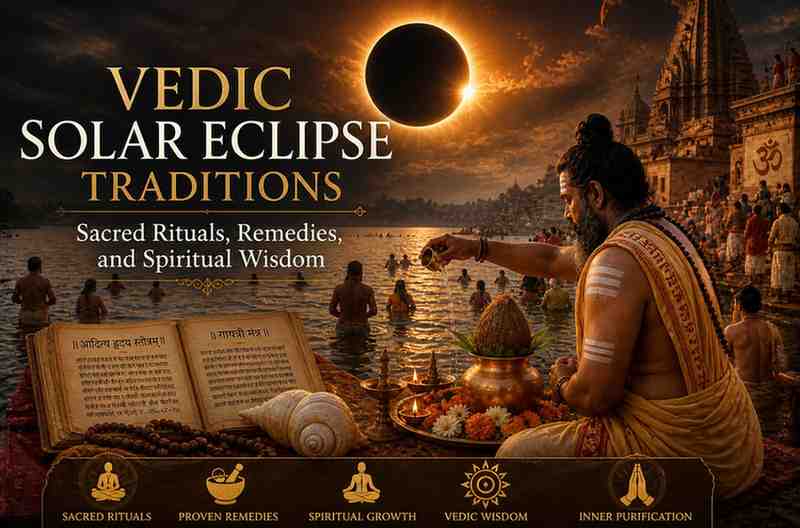
For thousands of years, humanity has observed celestial events with fascination, reverence, and spiritual curiosity. Ancient civilizations believed the movements of the Sun, Moon, and stars influenced both nature and human consciousness. Among these cosmic events, a solar eclipse holds deep spiritual meaning in Vedic philosophy.
In Hindu traditions, solar eclipses are not viewed only as astronomical phenomena. Instead, they are considered spiritually powerful periods that influence emotions, energy, karma, and consciousness. Therefore, Vedic solar eclipse traditions developed detailed rituals and protective practices to help people maintain emotional balance, spiritual awareness, and inner peace during these intense cosmic transitions.
These sacred customs include fasting, mantra chanting, meditation, purification rituals, charitable giving, and spiritual reflection. Although modern science explains the mechanics of eclipses, ancient wisdom focuses on their psychological and energetic impact on human life.
This comprehensive guide explores the meaning, mythology, rituals, astrological importance, and spiritual practices associated with Vedic solar eclipse traditions while explaining their relevance in modern times.
Also Read :- Shiva and Parvati’s Union: Living Authentically
Understanding the Spiritual Meaning of a Solar Eclipse
A solar eclipse occurs when the Moon moves between the Earth and the Sun, temporarily blocking sunlight. Scientifically, this is a predictable celestial alignment. Spiritually, however, the event symbolizes temporary darkness, inner transformation, and karmic reflection.
In Vedic philosophy, the Sun represents:
- Vitality
- Consciousness
- Confidence
- Leadership
- Soul energy
- Inner light
Therefore, when the Sun becomes obscured, spiritual traditions believe human energy and emotional clarity may also become temporarily unsettled.
However, this period is not viewed only negatively. Instead, many spiritual practitioners consider it a rare opportunity for meditation, self-reflection, emotional cleansing, and spiritual awakening.
Also Read :- The Divine Purpose and Significance of the Lakshmi Kubera Pooja
Mythological Story Behind the Eclipse
Also Read :- Financial Shifts in 2026 According to Astrology
Ancient scriptures explain eclipses through the story of Rahu and Ketu.
According to Vedic mythology, during the Samudra Manthan or cosmic ocean churning, the gods and demons searched for the nectar of immortality. A demon named Swarbhanu disguised himself and secretly consumed the nectar.
When Lord Vishnu discovered the deception, he used his Sudarshan Chakra to sever the demon’s head. However, because the nectar had already touched him, both halves survived.
- The head became Rahu
- The body became Ketu
These shadow planets continue pursuing the Sun and Moon, causing eclipses whenever they temporarily swallow them.
This myth forms the spiritual foundation of Vedic solar eclipse traditions because Rahu symbolizes illusion, confusion, obsession, and emotional turbulence.
Also Read :- The Spiritual Mindset of the Entrepreneur
Astrological Importance of Solar Eclipses
Also Read :- Astrology of 2026: How Planetary Shifts Will Reshape Your Life
In Vedic astrology, eclipses are considered highly influential periods because they affect the Sun, which governs vitality and self-awareness.
Astrologers believe eclipses may intensify:
- Emotional confusion
- Mental stress
- Restlessness
- Fear and uncertainty
- Hidden insecurities
- Karmic patterns
The effects may feel stronger for individuals experiencing challenging Rahu, Ketu, or Sun-related planetary periods.
Nevertheless, spiritual practices can help transform these energies into opportunities for healing and personal growth.
Also Read :- The Spiritual Mindset of the Entrepreneur
Understanding Sutak Kaal
One of the most important aspects of Vedic solar eclipse traditions is Sutak Kaal.
Sutak Kaal is the preparatory phase before the eclipse. Traditionally, it begins approximately twelve hours before the event.
During this period, people avoid unnecessary activities and focus on spiritual discipline.
Spiritual Significance of Sutak Kaal
Ancient traditions describe this time as energetically sensitive. Therefore, devotees prepare themselves mentally, physically, and spiritually through purification and mindfulness.
Common Practices During Sutak Kaal
- Cleaning the home
- Avoiding negative thoughts
- Reducing worldly distractions
- Practicing silence
- Preparing for fasting
- Chanting prayers and mantras
Additionally, many temples temporarily close during this phase because spiritual focus shifts inward.
Why Fasting Is Important
Fasting plays a major role in Vedic solar eclipse traditions.
According to Ayurveda, the digestive system is closely connected to solar energy. During a solar eclipse, digestive strength may temporarily weaken.
Benefits of Fasting
Fasting helps:
- Purify the body
- Improve concentration
- Reduce lethargy
- Support meditation
- Increase discipline
- Enhance spiritual awareness
Many devotees avoid heavy meals, processed foods, and non-vegetarian items during the eclipse period.
If complete fasting is not possible, light foods such as fruits or simple liquids are usually preferred.
Importance of Purifying the Home
Cleanliness is deeply connected with spiritual harmony in Hindu traditions.
Before the eclipse begins, families clean their homes and sacred spaces to remove stagnant energy and create a peaceful atmosphere.
Recommended Cleansing Practices
- Sweeping and mopping floors
- Organizing clutter
- Cleaning prayer rooms
- Lighting incense or lamps
- Using salt water for purification
- Creating a calm environment
Moreover, a clean space supports emotional stability and mental clarity during meditation.
Tulsi Leaves and Sacred Protection
Tulsi, or Holy Basil, holds immense spiritual importance in Hindu traditions.
During eclipses, people place Tulsi leaves in food and water containers because the plant is believed to absorb negative vibrations.
Spiritual and Ayurvedic Significance
Tulsi symbolizes purity, healing, and divine energy. Ayurveda also recognizes Tulsi for its antibacterial and immune-supporting properties.
This ancient practice reflects the close relationship between spirituality, nature, and wellness.
Meditation During the Eclipse
The eclipse period is considered especially powerful for meditation and spiritual practices.
As external distractions reduce, the mind naturally turns inward. Therefore, many people use this period for deep introspection and emotional cleansing.
Benefits of Meditation
Meditation during the eclipse may help:
- Calm anxiety
- Improve self-awareness
- Release emotional stress
- Increase focus
- Enhance intuition
- Strengthen spiritual connection
Furthermore, spiritual traditions believe that meditation performed during an eclipse produces intensified results.
Power of Sacred Mantras
Mantra chanting remains one of the most important practices in Vedic solar eclipse traditions.
Sacred sound vibrations help stabilize the mind and protect individuals from emotional negativity.
Important Mantras During the Eclipse
Gayatri Mantra
The Gayatri Mantra invokes wisdom, clarity, and divine light.
Mahamrityunjaya Mantra
This mantra dedicated to Lord Shiva promotes healing, protection, and emotional peace.
Om Namah Shivaya
This powerful Shiva mantra calms the mind and encourages spiritual awareness.
Aditya Hridayam
This sacred hymn honors the Sun and strengthens inner confidence and vitality.
Consistent chanting creates positive vibrations and emotional stability.
Precautions for Pregnant People
Traditional scriptures advise pregnant people to remain especially careful during the eclipse because developing children are believed to be energetically sensitive.
Common Recommendations
- Stay indoors during the eclipse
- Avoid stress and anxiety
- Rest peacefully
- Avoid strenuous activity
- Listen to calming spiritual music
- Maintain positive thoughts
Most importantly, emotional calmness and relaxation are strongly encouraged.
Activities Traditionally Avoided
Ancient traditions recommend avoiding certain activities during the eclipse period.
Common Restrictions
- Eating heavy meals
- Sleeping during the eclipse
- Starting important projects
- Engaging in arguments
- Excessive social interaction
- Negative thinking
Instead, spiritual traditions encourage silence, prayer, reflection, and mindfulness.
Spiritual Benefits of Eclipse Practices
Although eclipses may appear unsettling, they also offer opportunities for transformation and growth.
Emotional Cleansing
The eclipse encourages people to release emotional burdens and negative thoughts.
Increased Awareness
Meditation and silence improve self-reflection and inner understanding.
Spiritual Growth
Sacred practices strengthen connection with higher consciousness.
Mental Discipline
Fasting and mantra chanting improve emotional control and concentration.
Karmic Healing
Many traditions believe eclipses help individuals confront and release karmic patterns.
Importance of Ritual Bathing
After the eclipse ends, devotees traditionally take a cleansing bath.
This ritual symbolizes purification and renewal after exposure to heavy energies.
Common Practices
- Bathing with fresh water
- Adding sea salt or holy water
- Wearing clean clothes
- Cleaning the home again
- Lighting fresh incense or lamps
The ritual bath marks the transition from darkness toward renewed positivity.
Charity and Spiritual Balance
Acts of charity hold great importance after eclipses.
Giving to others symbolizes releasing attachment, negativity, and karmic burdens.
Common Donations
- Wheat
- Jaggery
- Copper items
- Red clothing
- Food donations
- Financial assistance
Additionally, helping those in need encourages compassion, humility, and emotional balance.
Honoring Ancestors
Another important aspect of Vedic solar eclipse traditions involves ancestral remembrance.
In Vedic astrology, the Sun represents lineage, family heritage, and ancestral blessings.
Therefore, many devotees perform prayers or offerings for departed ancestors after the eclipse.
Spiritual Significance
Ancestral rituals symbolize:
- Gratitude toward family lineage
- Emotional healing
- Karmic balance
- Spiritual continuity
- Family harmony
These practices help individuals feel connected to their roots and traditions.
Relevance in Modern Times
Modern life often creates emotional exhaustion, stress, digital overload, and mental restlessness.
Ancient spiritual traditions continue to offer valuable practices for emotional wellness and mindfulness.
The rituals connected with eclipses encourage people to:
- Slow down
- Disconnect from distractions
- Reflect inwardly
- Practice meditation
- Improve emotional awareness
- Cultivate inner peace
Even people who do not follow astrology may benefit from the mindfulness and self-reflection encouraged during these periods.
Common Misconceptions
Eclipses Always Bring Bad Luck
Although traditions recommend caution, eclipses are also viewed as opportunities for transformation and spiritual growth.
Spiritual Rituals Replace Science
Spiritual practices support emotional and mental well-being but should not replace scientific understanding or medical care.
Everyone Experiences Negative Effects
People experience eclipses differently depending on emotional sensitivity, beliefs, and spiritual practices.
Only Religious People Observe Eclipse Rituals
Many individuals practice meditation and mindfulness during eclipses without following strict religious customs.
Emotional and Spiritual Reflection
One of the deepest teachings connected with eclipses is the importance of confronting inner darkness.
Just as the Sun temporarily disappears behind a shadow, people also carry hidden fears, emotional pain, and unresolved thoughts within themselves.
The eclipse encourages honest self-reflection and emotional awareness.
Moreover, spiritual growth often begins when individuals learn to face uncertainty with patience, wisdom, and courage.
Therefore, the eclipse becomes not merely an astronomical event but also a symbolic journey toward healing and transformation.
Conclusion
Vedic solar eclipse traditions continue to inspire millions seeking emotional balance, spiritual awareness, and inner peace during powerful celestial events.
Through fasting, mantra chanting, meditation, purification rituals, charity, and ancestral prayers, these ancient customs encourage mindfulness and emotional healing.
Rather than promoting fear, these traditions guide people toward self-awareness, discipline, and spiritual resilience.
In modern life, where stress and distractions constantly affect mental well-being, the wisdom behind these sacred practices remains deeply meaningful.
Ultimately, the eclipse reminds humanity that darkness is temporary, transformation is possible, and inner light always returns stronger after every shadow passes.


3 Comments